Acids and Alkalis revision
When acids dissolve in water, they release hydrogen ions (H+).
This makes the solution acidic.
A solution’s acidity depends on the strength of the acid and the concentration of the solution.
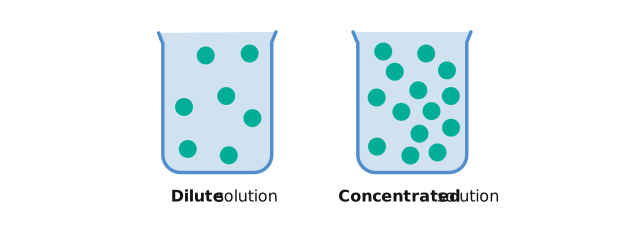
The higher the hydrogen ion concentration in the solution, the more acidic a solution is.
Common examples of acids are: sulfuric acid (H2SO4), nitric acid (HNO3), hydrochloric acid (HCl), carbonic acid (H2CO3), ethanoic acid (CH3COOH) and citric acid (C6H8O7).
Many substances that you encounter every day are acidic.
• Lemon juice contains citric acid.
• The acid in your stomach, which helps with digestion, is hydrochloric acid.
Acids can react with many different substances, such as metals.
An acid can be neutralised. This means that it is made less acidic.
Bases are substances that can neutralise acids.
Some bases are soluble in water. These are called alkalis.
Ammonia (NH3) and sodium hydroxide (NaOH) are examples of alkalis.
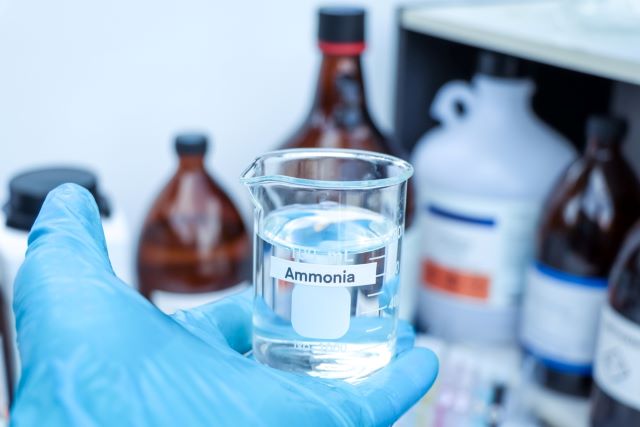
When an alkali dissolves in water, it releases hydroxide ions (OH-) into the solution.
These ions are what makes a solution alkaline.
Acids react with bases to form salts and water.
hydrochloric acid + sodium hydroxide → sodium chloride + water
This is a called a neutralisation reaction.
When an acid dissolves in water, it releases hydrogen ions (H+) into the solution.
This is what makes the solution acidic.
The higher the concentration of hydrogen ions in the solution, the more acidic the substance is.
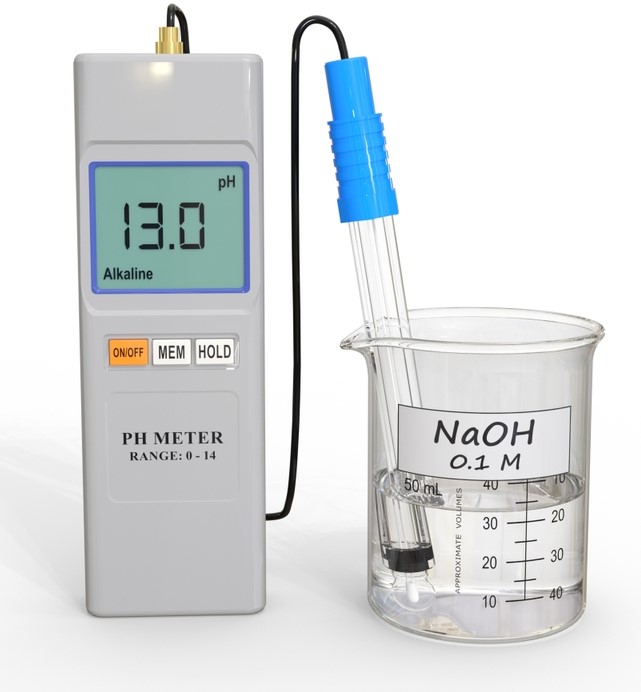
pH is a measure of how acidic a solution is.
The pH scale goes from 0 (very acidic) to 14 (very alkaline).
Neutral solutions have a pH of 7.
Pure water is neutral.
Acidic solutions have a pH below 7.
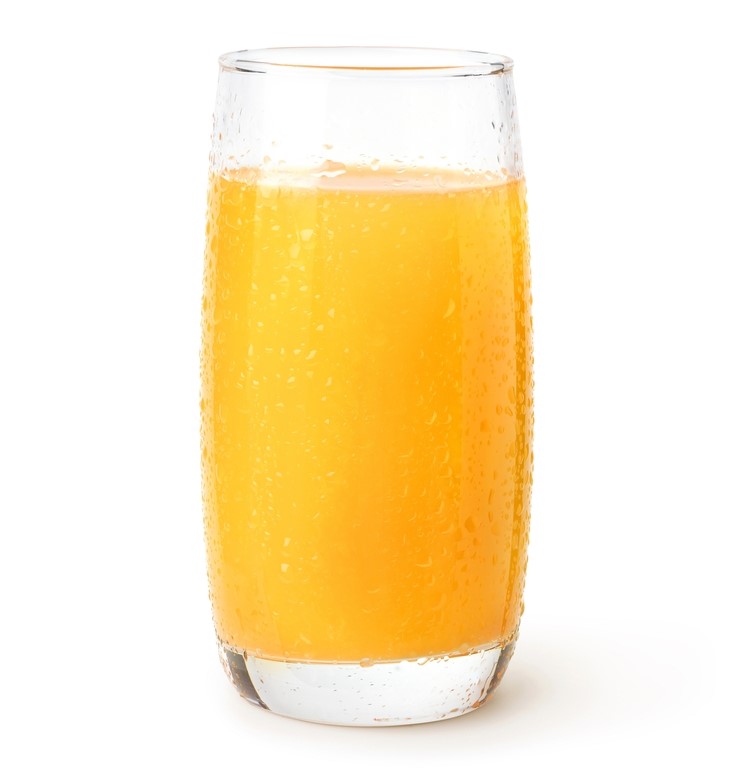
• Orange juice is slightly acidic. It has a pH of around 4.
• Concentrated hydrochloric acid is very acidic. It has a pH of around 1.
Alkaline solutions have a pH above 7.
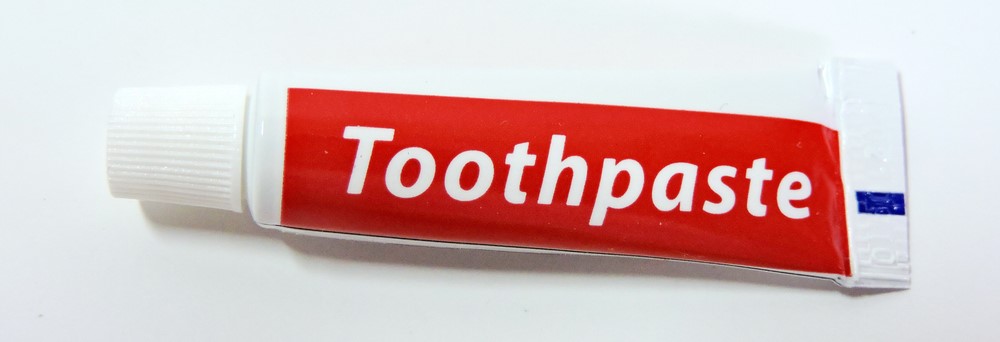
• Toothpaste is slightly alkaline. It has a pH of around 9.
• Bleach is very alkaline. It has a pH of around 13.
An indicator is a substance that dissolves in a solution and changes colour depending on the solution's pH.
Litmus is a natural dye that comes from lichen. Litmus changes colour in acidic or alkaline solutions.
Litmus is blue in alkaline solutions and red in acidic solutions.
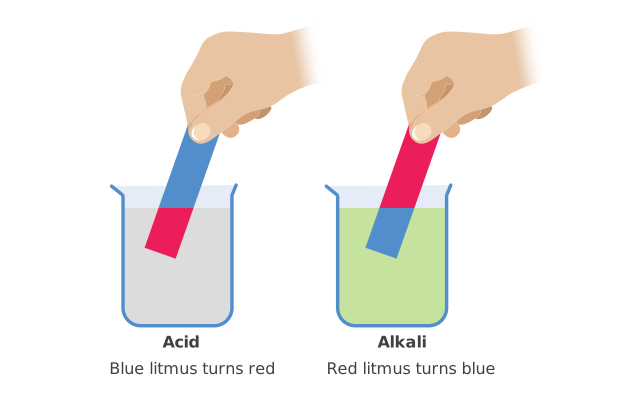
Litmus can be added to paper to make an easy-to-use indicator strip.
Litmus will show if a substance is acidic or alkaline, but it doesn't show the exact pH of the substance.
Litmus paper strips are common because they are cheap and easy to use, but there are lots of other types of indicators.
• Some plants are natural indicators. Hydrangeas grow blue flowers in acidic soil and pink flowers in alkaline soil.
• Bromothymol blue is an indicator that turns yellow in acidic solutions, green in neutral solutions, and blue in alkaline solutions.
• Methyl orange is an indicator that turns red-orange in acidic solutions, but yellow in neutral or alkaline solutions.
• Phenolphthalein is colourless in acidic and neutral solutions, but pink in alkaline solutions.
Universal indicator is a mix of three indicators: bromothymol blue, methyl orange, and phenolphthalein.
Universal indicator turns a certain colour based on the pH of the solution.
You can compare the result of universal indicator against a colour scale to identify what the pH of the solution is.
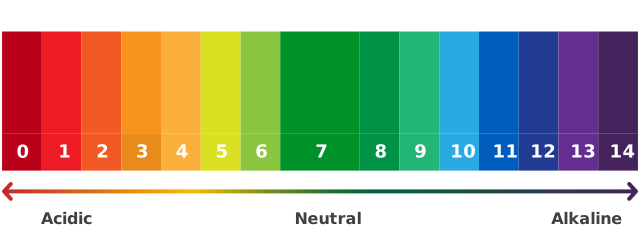
Universal indicator can be used to distinguish between very acidic, slightly acidic, neutral, slightly alkaline, and very alkaline solutions.
There are also electronic devices that can be used to accurately measure the pH of a solution.