Scenario 7
PH
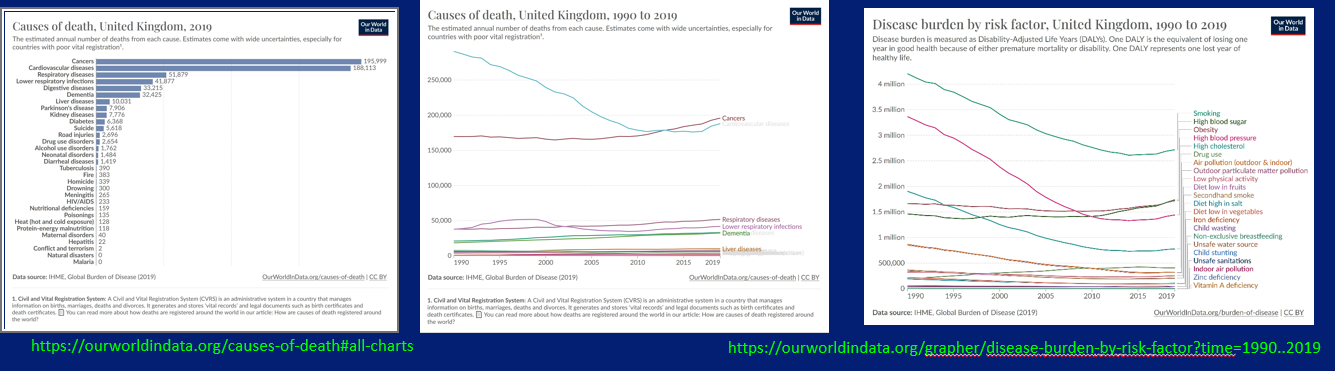
Why do we see these shifts in disease incidence rates and risk factors at the population level?
A) Mass changes in the choices made by individuals
B) Changes in the environment
Common Risk Factors
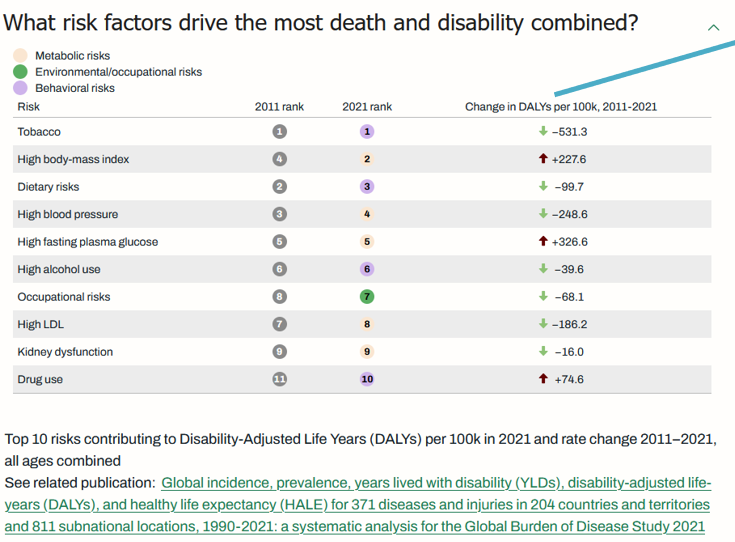
Large changes in population data over time = due to changes to the environment driving behaviour change:
Increasing restrictions on smoking: advertising, availability, price
High BMI/Obesity: industrialisation of food system, cost of living, time poverty
Blood pressure: NHS checks, pharmacy checks, increasing use of secondary prevention - beta blockers
PH
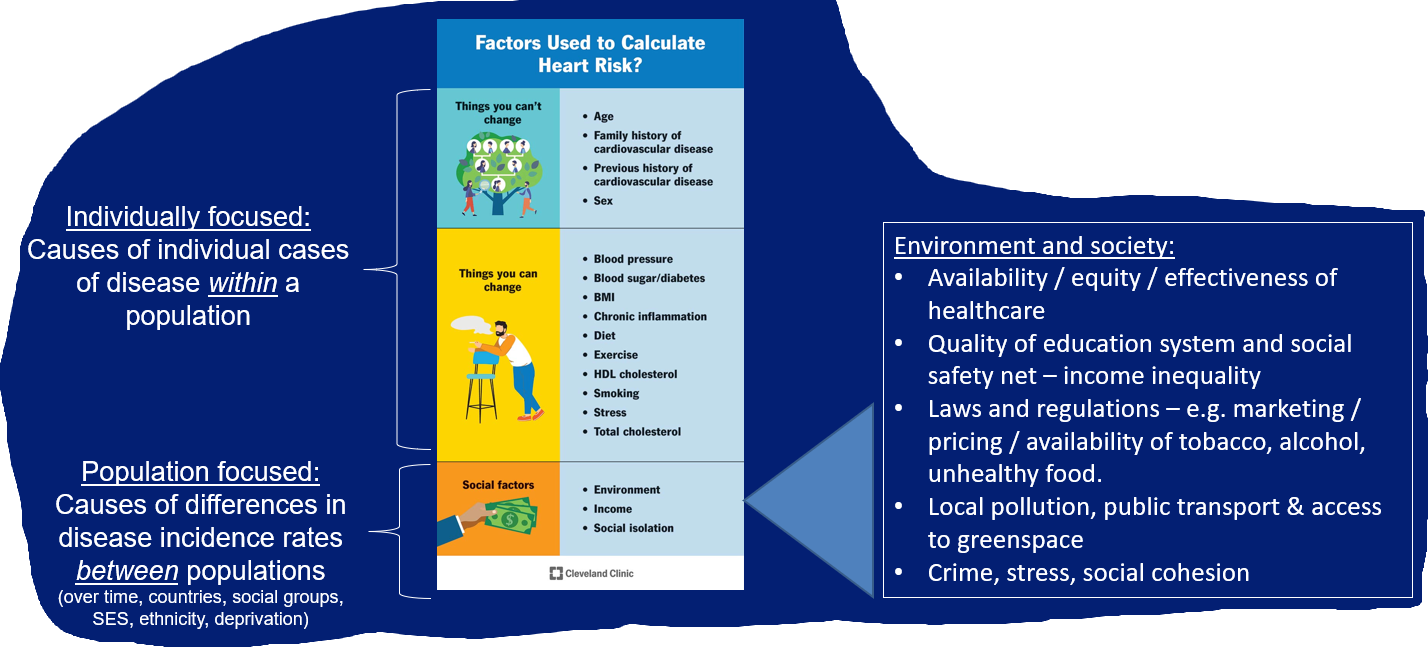
The causes of differences between groups (populations) are not about behavioural choices - they are structural, environmental
Social Inequalities
“Health inequalities are unfair and avoidable differences in health across the population, and between different groups within society”
Geography, SES, ethnicity, socially excluded groups
Action to reduce social inequalities between groups requires population level thinking (changes to environment, society laws, regulations, policy)
Remember…
Population strategies that rely on mass education campaigns, or uptake of clinically-delivered services will tend to amplify pre-existing social inequalities.
Population strategies based upon legislation/regulation, or policy to change the environment, will tend to reduce health inequalities
Key Points
Understanding disease at the population level:
Global burden of disease studies: explore the brilliant charts
Incidence rates - differences between populations, and changes over time - what influences this?
What are DALYs?
Appreciation of the need to address common risk factors underpinning many long-term conditions, through public health approaches to prevention:
Revisit:
Public health approaches to prevention