Ultrafiltration
Key components of urine
water
drinks
food
metabolic reactions
reabsorption controlled by hydration
urea
formed in the liver from deamination of amino acids
key nitrogenous waste product
glucose
from digested carbs
urine presence indicates diabetes
creatine
from breakdown of creatine in phosphate in muscles
used to clinically assess kidney function
Ultrafiltration
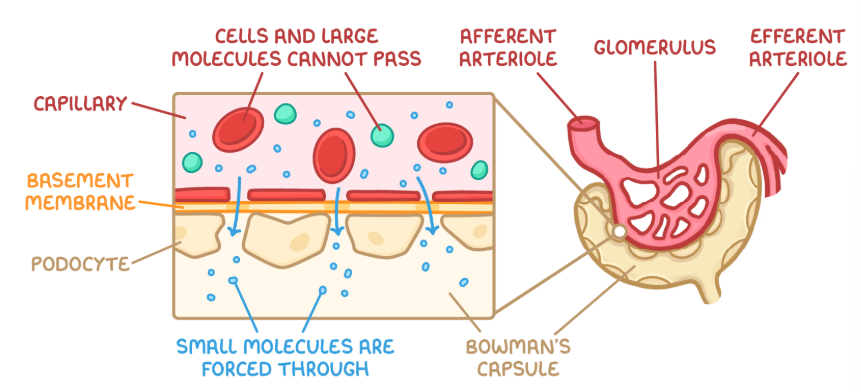
blood enters the glomerulus through the afferent arteriole
blood leaves the glomerulus via the smaller efferent arteriole
maintaining a high hydrostatic pressure (smaller lumen)
this high pressure forces molecules out of the blood through pores in the capillary endothelium
water and small solutes
the molecules move through the basement membrane
has collagen fibres that act as a selective filter
prevents large molecules an blood cells from passing into the Bowman’s capsule
the molecules moved through the Bowman’s capsule epithelium
has specialised cells called podocytes with extensions called pedicels that wrap around capillaries to help filter blood
filter fluid collects in Bowman’s capsule
Factors affecting filtration rate
blood pressure
higher pressure increases glomerular filtration rate (GFR)
hypertension damages filtration structures
arteriole diameter
constriction of afferent arteriole reduces GFR
efferent constriction can increase GFR
water potential
filtration depends on effective filtration pressure
the balance of hydrostatic and osmotic forces
Glomerular filtrate formation
Substances filtered into glomerular filtrate | Substances that remain in blood |
water | blood cells |
salts (ions) | platelets |
glucose | proteins |
urea |