Hemodynamics & Thermoregulation
Cardiovascular anatomy
Pulmonary circuit
deoxygenated blood leaves through R. side of heart
travels to lungs (pulmonary)
becomes oxygenated
travels back to heart L. side
Systematic circuit
oxygenated blood leaves heart from L. side
travels to body
drops off oxygen
returns to R. side of heart
Blood components
blood is
~55% plasma
90%H2O, 10% dissolved hormones, nutrients, gasses, antibodies, electrolytes, proteins,
<1% leukocytes & platelets (white cells)
& 45% erythrocytes (red cells)
Hematocrit: percentage of red blood cells to total blood volume
normal ranges 37-47% for women, 42-52% men
low hematocrit = low viscosity = high flow rate = difficulty in exchange (diffusion) & lower oxygen content in blood
anemia
high hematocrit= high viscosity = low flow rate =
polycythemia: many blood cells
viscosity: ratio of solids:liquids in a solution, stickiness/thickness
Poiseuille’s Law
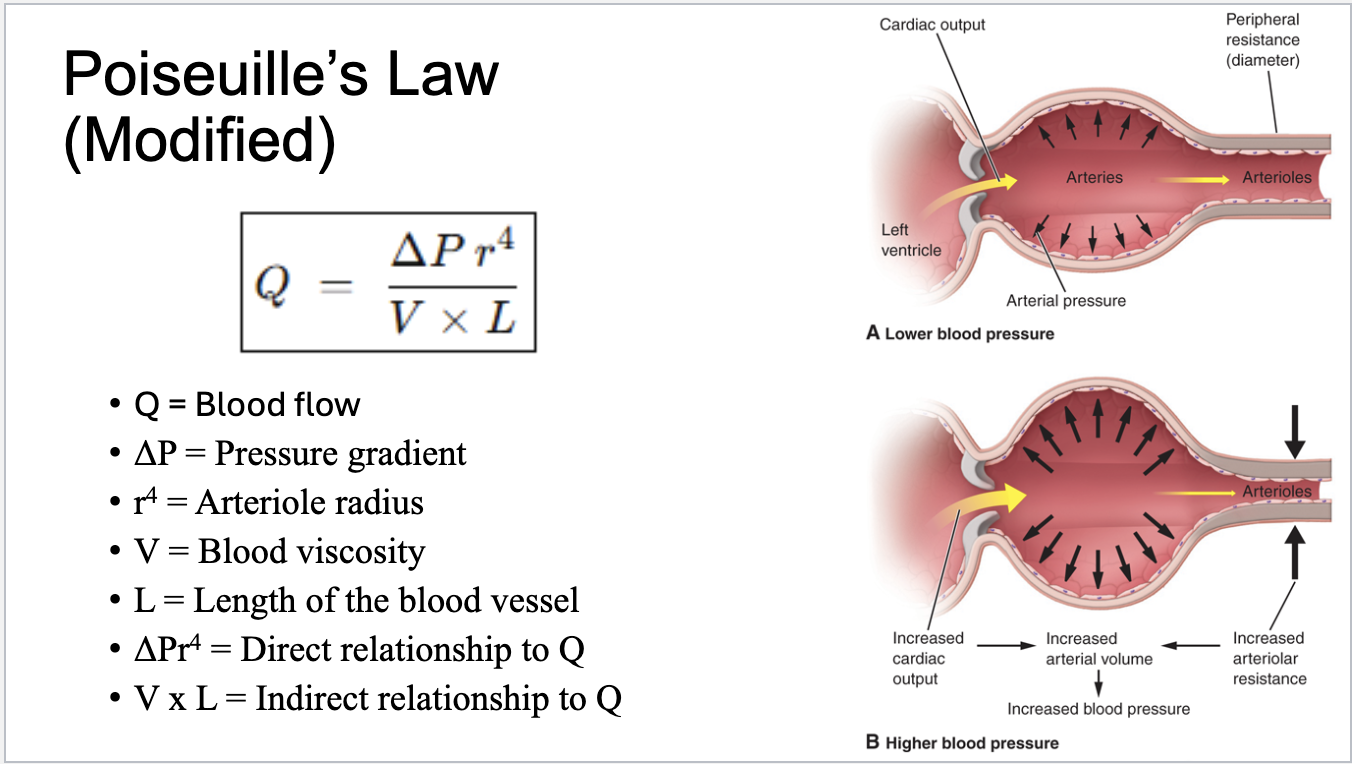
Resistance = (Length x Viscosity)/radius4
Blood flow increases when pressure gradient & arteriole radius increase
Blood flow will decrease when viscosity & length of blood vessel increase
If we want blood flow to go to a specific area, we want a greater pressure gradient (difference in BP) b/c blood flows from high → low pressure
changing the radius (r4) also results in a greater pressure gradient (increases volume = lower pressure (Boyle’s law) = bigger pressure difference)
Capillaries are able to change their length (angiogenesis)
longer capillaries means more time for diffusion
cancer cells can promote angiogenesis to help feed themselves
N.F.L.
Stimulus: change in core/ peripheral temp.
Sensors: thermoreceptors (peripheral used to anticipate changes in core temp)
Control center: hypothalamus
Efferent pathway: neuronal & hormonal
Effectors: cutaneous arterioles (vasocontrict/dilate via smooth muscle)
Cold stress
External/ internal temp decreases
peripheral & central thermoreceptors detect “cold”
hypothalamus integrates temp. information
hypothalamus increases sympathetic response to the skin (norepinephrine binds to receptors on cutaneous arterioles (smooth muscle))
cutaneous arterioles vasoconstrict, decreasing radius, causing more resistance in blood flow to the skin, meaning more blood flow to body’s core, maintaining/ raising core temp
Heat stress
internal/external temp increases
peripheral & central thermoreceptors detect “warm”
hypothalamus integrates info
hypothalamus deceases noradrenic sympathetic response and increases acetylcholine sympathetic response to cutaneous arterioles
cutaneous arterioles vasodilate
Clinical Application of Thermoregulation
Hypothalamus
hypothalamus set point is adjusted by:
pyrogens from immune cells
estrogen withdrawal
drugs (MDMA, stimulants)
circadian rhythm
Fever
pyrogens create chain reaction causing hypothalamus to raise set point of core temp.
makes you feel like your environment in colder than it actually is, causing thermogenesis (cutaneous vasoconstriction, piloerection, norepinephrine secretion, shivers, desire to bundle up and drink hot liquids)
epinephrine helps generate heat to increase metabolism & heart rate
fever breaks, and set point goes back to normal, acetylcholine secretion, cutaneous vasodilation, sweating
Hot Flashes
Estrogen stabilizes the thermoneutral zone
falling levels of estrogen cause zone to narrow & become less stable, causing normal fluctuations in temperature to register at too hot/cold
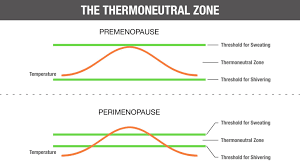
as estrogen levels become consistent after menopause, occurrence of hot flashes is reduced