Silver Modified Atraumatic Restorative Technique (SMART) / Atraumatic Restorative Treatment (ART) and Silver Diamine Fluoride (SDF)
Silver Modified Atraumatic Restorative Technique (SMART)
SMART is a minimally invasive approach to managing dental caries (tooth decay) that combines the use of Silver Diamine Fluoride (SDF) and Atraumatic Restorative Treatment (ART).
It is designed to arrest decay and restore the tooth without the need for traditional drilling.
How SMART Works:
Silver Diamine Fluoride (SDF) is applied to the decayed area to kill bacteria and stop the progression of decay.
A topical agent used to prevent and arrest dental caries.
Contains silver, which has antimicrobial properties, and fluoride, which helps remineralize tooth enamel.
Applied directly to decayed areas to halt cavity progression without drilling or removing tooth structure.
The softened decay is then gently removed using hand instruments only (no drilling), following the principles of Atraumatic Restorative Treatment (ART).
The cavity is restored with a fluoride-releasing glass ionomer cement to protect and strengthen the tooth.
Why Use SMART?
Minimally invasive and painless, often avoiding the need for local anesthesia.
Ideal for young children, elderly patients, or those with special healthcare needs.
Suitable for settings with limited dental equipment or resources.
Helps preserve healthy tooth structure and prevents further decay.
Silver Diamine Fluoride (SDF)
Silver Diamine Fluoride (SDF) is a topical dental solution primarily used to prevent and arrest dental caries (tooth decay).
It has become a valuable tool in minimally invasive dentistry due to its ability to stop cavity progression without the need for drilling or removing tooth structure.
Here are the key components and functions of SDF:
Composition:
Silver: Acts as an antimicrobial agent, killing bacteria that cause decay and preventing further infection.
Fluoride: Strengthens and remineralizes the tooth enamel, helping to protect against future decay.
Ammonia: Stabilizes the solution, allowing it to remain effective for longer periods.
Mechanism of Action:
Antimicrobial Action: The silver ions in SDF penetrate and disrupt bacterial cell membranes, preventing the bacteria from producing acids that cause tooth decay.
Caries Arrest: When applied to a decayed area, SDF halts the progression of the cavity by hardening the softened tooth structure.
Remineralisation: The fluoride component encourages the deposition of minerals into the damaged enamel, promoting natural repair of the tooth.
Application:
SDF is applied directly to areas of decay with a small brush, without the need for anesthesia or drilling. It is particularly useful in patients who may not tolerate traditional dental treatments, such as young children, the elderly, or those with special needs.
Indications:
Caries Arrest: SDF is widely used to arrest early-stage tooth decay, especially in primary teeth or areas where access to care is limited.
Caries Prevention: It can also be used as a preventive measure on high-risk teeth, such as those with deep grooves or those prone to decay.
Hypersensitivity: In some cases, SDF can be used to treat dentin hypersensitivity by sealing exposed dentinal tubules.
Advantages:
Non-invasive: It avoids the need for traditional, more invasive treatments like drilling or filling, making it ideal for patients with dental anxiety or limited access to care.
Cost-effective: SDF is an affordable alternative to restorative procedures and can be applied quickly in various clinical settings.
Limitations:
Staining: One of the main drawbacks of SDF is that it can permanently stain the treated areas of decay black. While this doesn’t affect the tooth's function, it can be a cosmetic concern for some patients.
Temporary Treatment: Although SDF effectively halts decay, it may not be a permanent solution, and some patients may still require restorative treatment in the future.
SMART Procedure
Step-by-Step Instructions
Step | Action | Details |
|---|---|---|
Step 1 | Assess and Diagnose | Visual and Tactile Examination: Use an intra-oral LED light and a mouth-mirror to examine the teeth. Remember to visualise the teeth wet and then dry. |
Step 2 | Prepare the Tooth | Remove Soft Carious Tissues: Use hand instruments (large spoon excavator) to gently remove superficial, soft enamel and dentinal tissues from the affected area. |
Step 3 | Apply Silver Diamine Fluoride (SDF) | Apply SDF Solution: Using a small disposable brush, apply 38% SDF solution to the cavity. |
Step 4 | Apply High Fluoride-Releasing Glass Ionomer (Optional) | Apply Glass Ionomer: If aesthetics are a concern or a more aesthetic outcome is desired, apply a flowable high fluoride-releasing glass ionomer material to the cavity. |
Step 5 | Follow-Up and Maintenance | Regular Check-Ups: Schedule follow-up examinations every 6 months to reassess caries risk and lesion progression. |
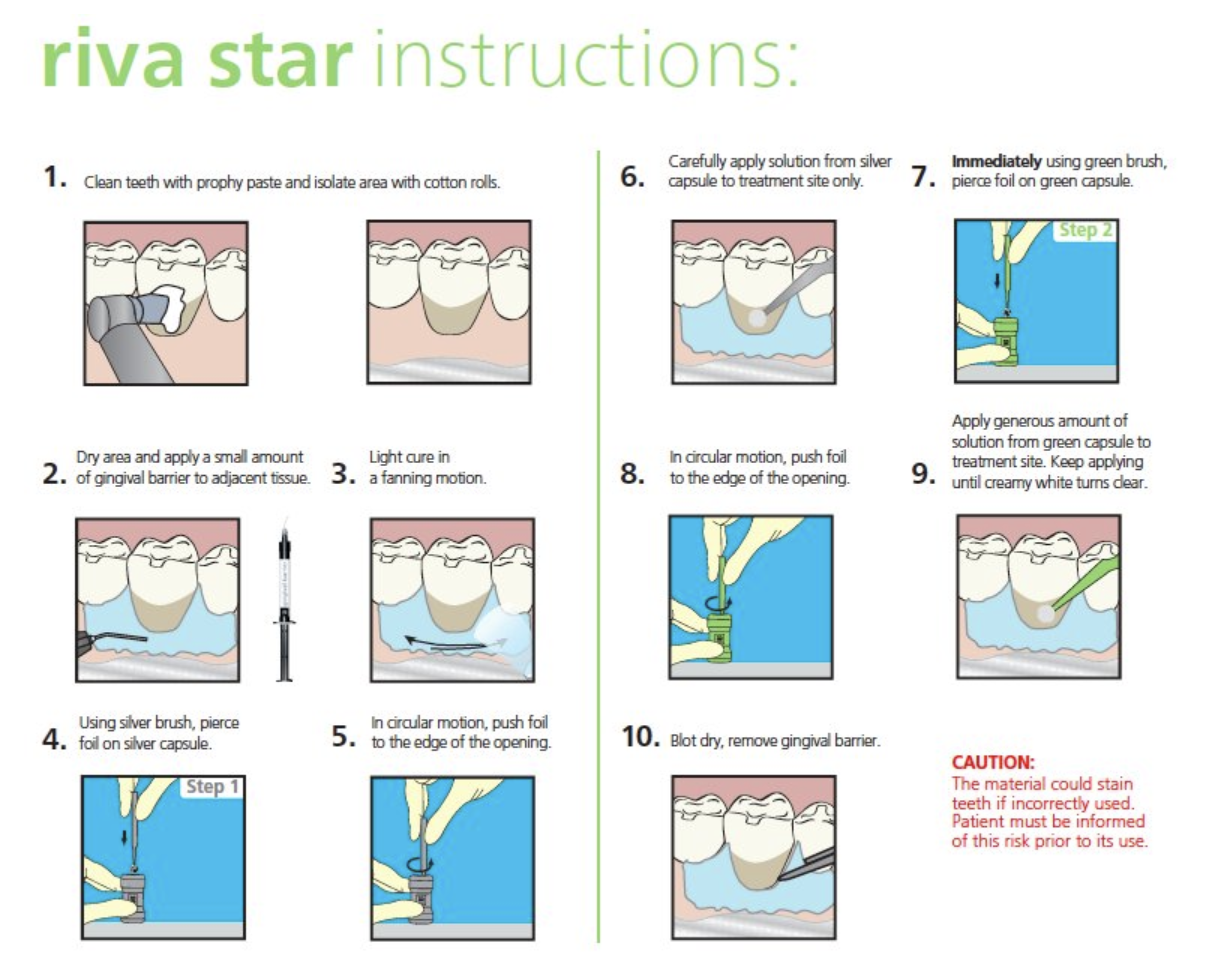
Safety Considerations for Silver Diamine Fluoride
Completion requirements
Here are the key safety considerations for using Silver Diamine Fluoride (SDF), specifically Riva Star®, in dental practice:
⚠ 1. Skin and Soft Tissue Staining
Riva Star® contains silver ions, which can permanently stain skin, mucosa, and clothing upon contact.
Use rubber dam isolation or petroleum jelly to protect soft tissues and lips.
Apply with care to avoid spillage or excess application.
👁 2. Eye Protection
SDF is an eye irritant and may cause serious damage if splashed into the eyes.
Always wear protective eyewear and advise patients to do the same during application.
If eye contact occurs, flush immediately with copious amounts of water and seek medical attention.
🧤 3. Personal Protective Equipment (PPE)
Wear gloves, mask, and protective eyewear during application.
Change gloves immediately if contaminated with SDF solution.
🚫 4. Contraindications
Avoid using in patients with:
Allergy to silver or fluoride
Ulcerative gingivitis or stomatitis
Large, open pulp exposures where the material could contact the pulp directly
Riva Star is not recommended for pregnant or breastfeeding women unless the benefits outweigh the risks.
🧪 5. Handling and Storage
Store in a cool, dry place away from light (silver is photosensitive).
Use only as directed and do not mix with other materials unless approved by the manufacturer.
Riva Star is a two-step system – applying only one step may reduce efficacy or increase adverse reactions.
🦷 6. Discolouration of Carious Lesions and Tooth Surfaces
SDF permanently stains carious dentine black, which is expected and indicates effectiveness.
May cause unintended staining of surrounding tooth structure, restorations, or enamel cracks if not carefully applied.
🧫 7. Environmental and Waste Considerations
Do not dispose of excess SDF into sinks due to environmental concerns with silver waste.
Follow your clinic's chemical waste disposal protocol for heavy metals.