papers and boards stock forms and applications
DENSITY
papers and boards all have different densities, measured in gsm, papers are under 220 gsm whereas boards are over 220 gsm. boards are measured in microns where 1000μm is 1 mm,. as gsm or microns increase the paper or board decreases in flexibility and becomes less fragile
SIZES
international paper size is controlled by ISO 216, there are many series used
A series is the standard for trimmed paper
B series is used for alternative uses
C series is used for envelopes
there are also commercial sizes which is untrimmed
RA series is 105% of A
SRA series is 115% of A
the untrimmed sizes are normally used when bleeding may occur and need to be trimmed off afterwards
to measure the thickness of a paper or board you can use a micrometer, laminated boards are often used to increase the strength, for a certain finish or for durability
PAPERS AND BOARDS
boards can be made from recycled paper, but not if they are to be food safe
paper is often more expensive it it is harder to use - photographic paper requires a high tech computer
corrugated card - contains liners with a folded flute between each layer increases rigidity creating a board with a good strength to weight ratio. it is shock absorbing and has good thermal insulation, making it suitable for packaging. the board is made from long softwoods sheets, and flutes are made from short hardwood sheets, often stuck together with a corn-starch adhesive
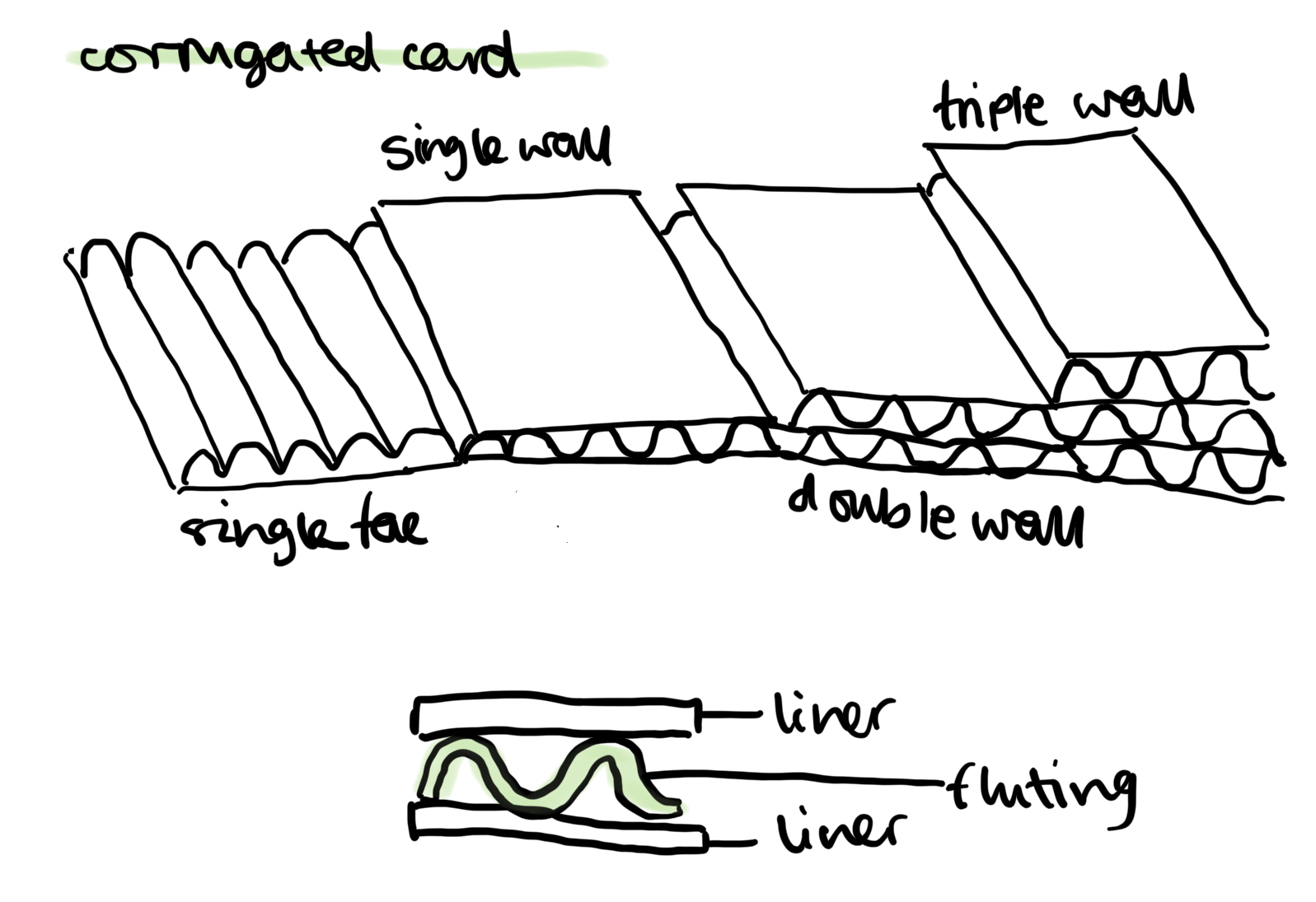 single wall is 3000-5000µm and can be used for small objects
double wall is 6000-10,000µm, suitable for pizza and food
triple wall is 12,000 - 15,000µm can be packaging for furniture
it can be packed and loaded easily, it has an outer layer that can be printed on easily, however reducing recyclability, it comes in many sizes and is fully recyclable. it is cheap as it has a natural finish and doesn’t require expensive raw materials
it absorbs moisture and can tear easily
tracing paper - a translucent paper that is slightly yellow, good for tracing and transferring ideas. it is strong and hard (40 - 120gsm). it us treated with acid making it moisture and grease resistant
layout paper - a semi transparent paper that is more opaque than tracing paper, off white around 50gsm. it is weak but takes paper well, it is often bound and can be used for tracing
bleed proof paper - it has lots of sizers to make it white, it is around 70gsm and solvent/alcohol based pens don’t bleed when used on it. it makes colour stronger when applied
cartridge paper - a slightly off white paper that takes lots of media well. it is rough and has a slightly textured finish
watercolour paper - used for watercolours as it is very absorbent using not much sizing agents, it is matte with a little texture, and remains flat even with moisture due to its high structural integrity
inkjet paper - a non-porous paper that has treatments to create a high detail sharp image
laser paper - paper with a surface finish to allow plastic in toner to bond to the paper easily
photographic paper - paper with a photochromic pigment meaning the image develops over time
mount board - a strong board that has a 45 degree angle bevelled edge, it comes in many colours can can be used for final models, but quite expensive
bleached card - a solid white board used for packing and cards, it is 200 - 600gsm and holds print well, however the single layer is not very absorbent of ink
duplex board - two layers that can’t be recycled, it is food safe and can be finished to increase moisture and oil resistance, it can be folded, cut and printed easily. it is 200 - 500gsm and can come in different colours
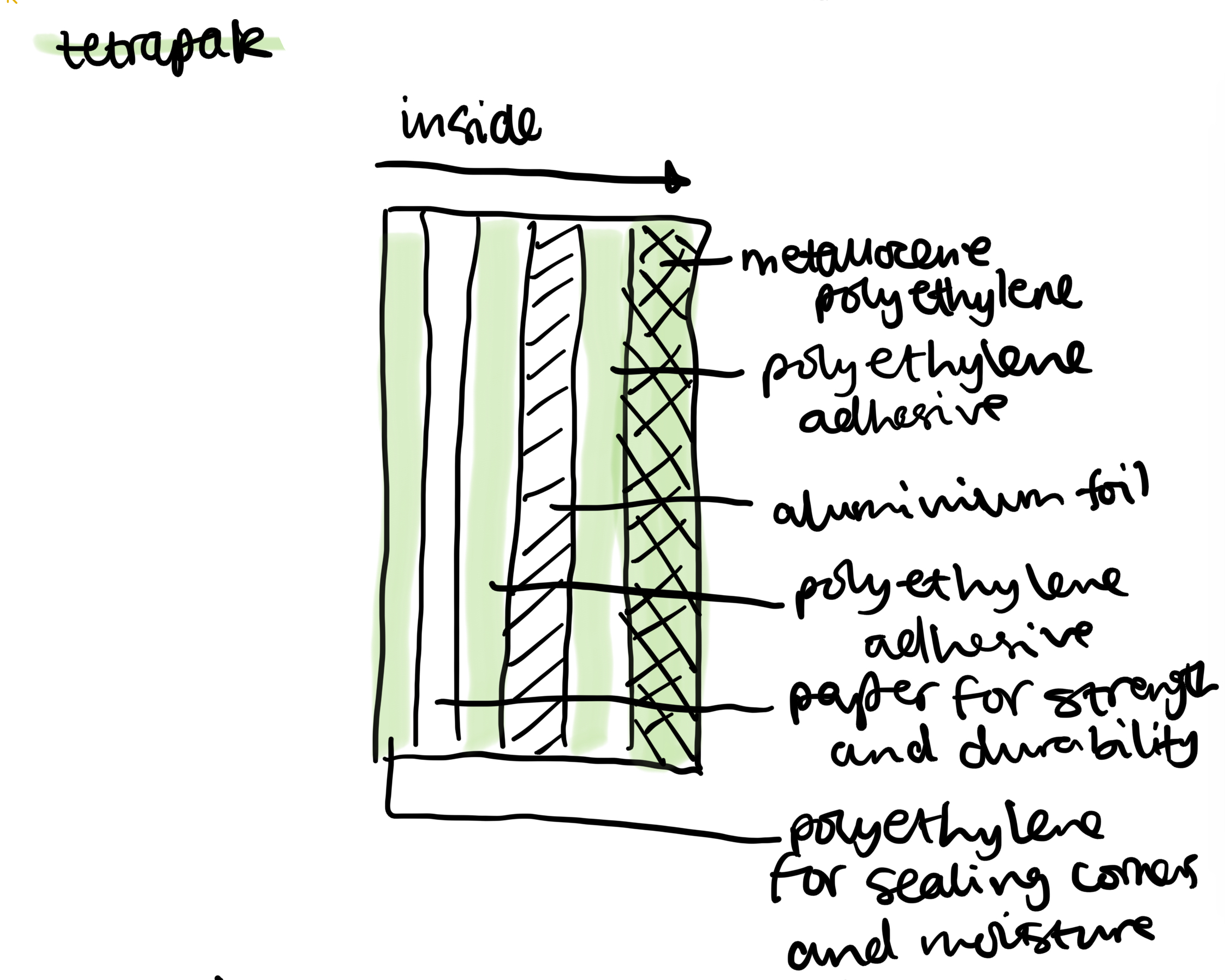
foil backed and laminated card - a board with foil prevent air odour, light and bacteria entering, used for containing reactive items. polyethene can be used as a food safe liner and is connected with an adhesive
tetra-pack® - tetra p[ack is made from 74% paperboard, 22% polyethylene and 4% aluminium foil, it is used for food storage as it is food safe and is sterile for a long time. tetra rex® is a plant based alternative and is made from sugarcane,. making it fully recyclable
metal effect card - a shiny layer can be added to card, this can have a texture added and can have a gloss finish, it can also be laminated for food grade products. it is similar to wrapping paper in its finish
moulded paper pulp - pulp can be moulded to make a hard to print but fully recyclable product. it can be moulded around steel with a mesh for an even stretch, chemicals can be added to make it liquid tight