#1 Graphing Linear Equations
Identifying Linear Functions and Equations
- Forms of a Linear Equation
Slope intercept form and standard form are the most commonly used equations by College Board. The point-slope form is very rare to come across, so if you’re cramming or have limited time, I wouldn’t stress too much about it
- Slope Intercept Form; y=mx+b (m=slope, b=y-intercept)
- Standard Form; Ax+Bx=C
- Point-Slope Form; y-y1=m(x-x1)
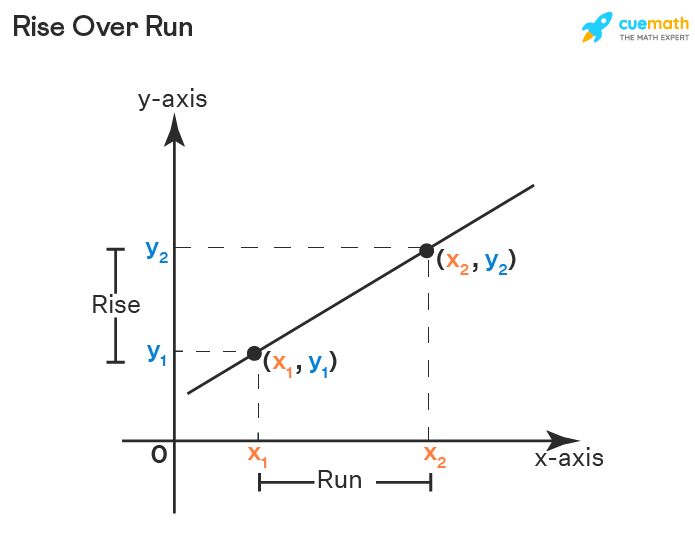
- Slope Formulas and Notes
- Slope from 2 points; m=y2-y1/x2-x1
- m=rise/run
- the steeper the line, the larger the slope
 Determining Linear Relationships From a Table
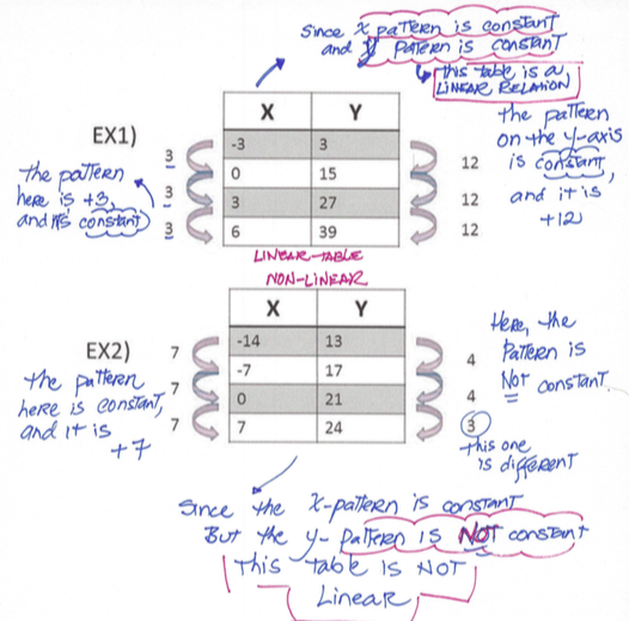
- If the patterns aren’t very clear, using the 2-point slope formula is also very effective. By choosing 2 points at a time and plugging them into the formula, you’ll be able to identify a linear segment. In some cases, you might come across linear segments that APPEAR different but are the same value (i.e. 1/2 and 2/4) so be aware of small tricks like that.
Determining a Line’s Slope and Y-Intercept
Determining the slope and y-intercept from Slope-intercept form is quite simple and most students are able to find them with no problem, however, students struggle more with Standard form. Here are some easy shortcuts.
- Slope; -A/B (If A is already negative, just switch the sign to a positive)
- Y-int; C/B
If you’re wondering how these shortcuts work, here is an example
- 5x+2y=8
- 2y=-5x+8
- y=-5/2x+4
(Remember, A is next to x, B is next to y, sometimes college board will try to trick you with equations like 3y+4x=10 that switch the places of A and B which can throw you off.)
Basically, by converting Slope-intercept form to standard form, you’re able to find the slope and y-intercept faster. Instead of going through this whole process and wasting precious SAT time, using the shortcuts from above will be much more efficient.
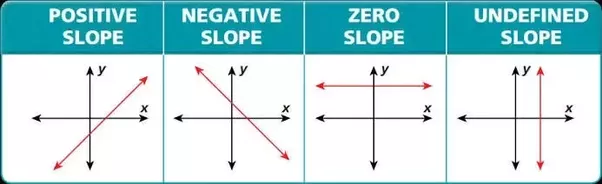
Positive and Negative Slopes
Equation of a Line From 2 Points
While College Board often times gives you an equation, sometimes they’ll test your knowledge by giving you 2 points and asking for he equation that contains them. Without a graph, this seems almost impossible for a lot of students, but I’m here to make that process seem less intimidating.
- Ex. What is the equation of the line containing (4,1) and (-1,3)?
- Determine the slope w/ the 2-point slope formula; 3-1/-1-4 = 2/-5
- Substitute the slope for m; -2/5x+b
- Plug a given point (so 4,1 or -1,3) into the equation to solve for b; 1=-2/5(4)+b > 1=-8/5+b > 13/5 = b
- Write final equation; y=-2/5x+13/5
By practicing these steps, you’ll master this in no time :)
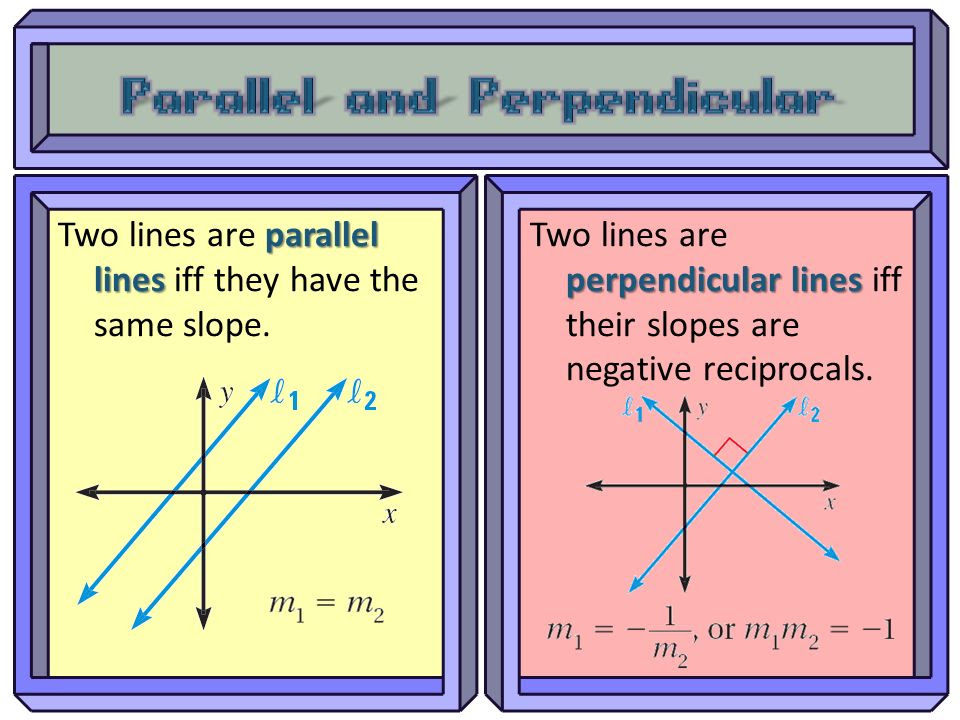
Parallel and Perpendicular Lines
- Parallel lines have EQUAL slopes
- Perpendicular lines have NEGATIVE RECIPRICAL slopes (.i.e. 2/5 and -5/2)
 Finding Intercepts
- To find the x-int; set y=0
- To find the y-int; set x=0
Other Tactics (Substitution)
While solving linear equations is relatively easy, sometimes substitution could be more efficient or overall easier for some people. If you have an equation and one or more give point, substitution is the way to go. Here’s an example of how it works.
- Ex. y=ax-4, (3,0)
- Plug in the point into the equation; 0=a(3)-4
- Solve like normal; 3a=-4
- a=-4/3