A&P 1 Chapter 1-4 Study Guide
An organ is a group of tissues that work together
The integumentary system is the organ system that refers to skin.
The normal pH of human blood is 7.35-7.45
The normal temperature for a human is 98.6
The production of oxytocin during labor is considered positive feed back
A person standing erect with palms facing outward is the example of anatomical position
The plane of the body that divides the body into an anterior portion and a posterior portion is Coronal Plane.
The prone position is a synonym to recumbent face down.
The pleural cavity covers the lungs.
An element has an atomic mass of 18. This means it has 9 protons and 9 neutrons
An element has an atomic number of 4 which means it has 4 protons.
Covalent bond is the type of chemical bond that causes the elements to share electrons with each other and can be divided into polar or non polar bonds.
A bond with partial charges in some of it’s elements that also is considered hydrophilic is polar bond.
All of the body’s processes that require energy are referred to as the body’s metabolism.
A hydrolysis reaction is a reaction that uses water to break apart bonds.
Decreased concentration would not speed up as a reaction.
Sucrose is NOT a monosaccharide of carbohydrates.
The monomer for proteins is known as amino acid
A steroid is made up of lipids.
A steroid is a precursor for cholesterol and hormones.
The function of the ribosome is to synthesize proteins.
The Golgi apparatus or Golgi Complex function is to further process and package proteins.
The mitochondria has it’s own other membrane.
Mitosis occurs in germ cells
The centrioles migrate to Opposite poles of the cells and release a spindle that attaches to the centrosome of the chromosome and aligns them at the center of the cell. This phase is metaphase.
The production of 2 diploid cells occurs in mitosis.
Initial DNA replication occurs in S phase of interphase.
Oocyte or egg cell has 23 chromosomes.
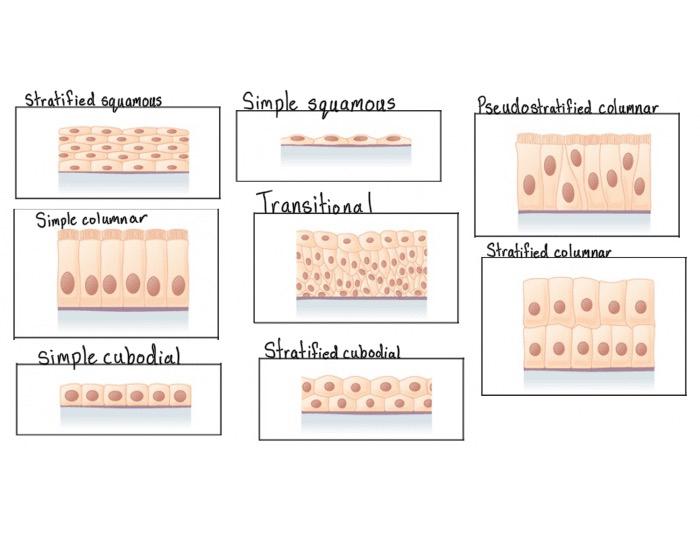
Transitional epithelium can be found in the bladder.
Stratified squamous epithelial tissue can be found in the epidermis.
The strongest type of cartilage is fibrocartilage.
Blood and lymph are examples of liquid matrix connective tissues.
Nerve cells and muscle cells are affected by electrical action potentials.
Serous membrane is a membrane that covers the internal organs of the body. This tissues is made from mesothelium and endothelium.
Desmosomes are a type of junctions that anchor the epithelial cell to the basement membrane.
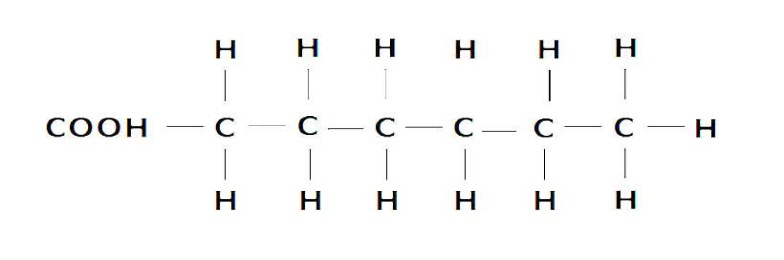
This molecule is an unsaturated fat.
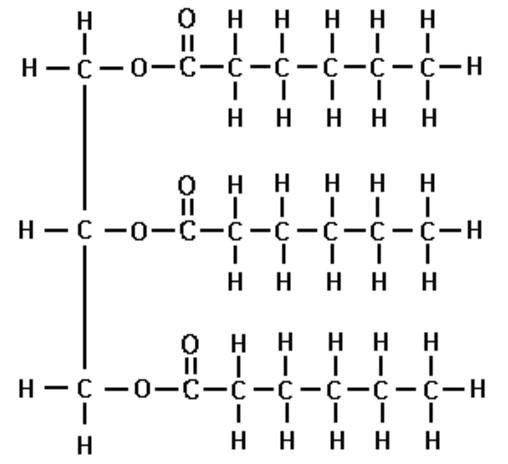
This molecule is a triglyceride.
A chondrocyte is a cell from cartilage.
Epithelial cells are avascular.
Starch is a polysaccharide.
Transitional connective tissue is found in tissues that have to stretch to shrink.
The sugar molecule found in RNA is ribose.