Nucleic Acids
Nucleic Acids
Nucleic acids are essential macromolecules found in all living organisms, primarily composed of long chains of nucleotides. There are two main types of nucleic acids: DNA (deoxyribonucleic acid) and RNA (ribonucleic acid).
Structure of Nucleic Acids
DNA (Deoxyribonucleic Acid)
Structure: DNA is a double helix composed of two long strands of nucleotides wound around each other.
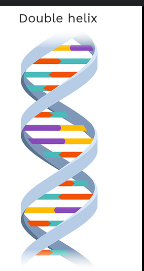
Nucleotide Composition: Each DNA nucleotide consists of:
A deoxyribose sugar
A phosphate group (℗)
One of four nitrogenous bases: adenine (A), thymine (T), cytosine (C), or guanine (G).
RNA (Ribonucleic Acid)
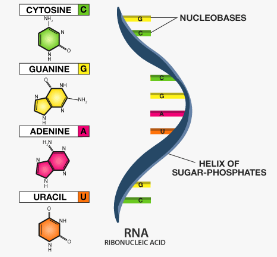
Structure: RNA is typically a single-stranded molecule, although it can fold into complex shapes.
Nucleotide Composition: Each RNA nucleotide consists of:
A ribose sugar
A phosphate group
One of four nitrogenous bases: adenine (A), uracil (U), cytosine (C), or guanine (G).
The Role of DNA and RNA in Cells
DNA:
Serves as the genetic blueprint for all living organisms.
Contains the instructions for building proteins (through genes).
DNA is stable and typically remains in the nucleus in eukaryotic cells.
RNA:
Involved in protein synthesis, functioning as a messenger (mRNA) that carries the genetic information from DNA to the ribosomes.
Types of RNA include mRNA (messenger RNA), tRNA (transfer RNA), and rRNA (ribosomal RNA).
RNA is more versatile but less stable than DNA and can be found in various locations within the cell.
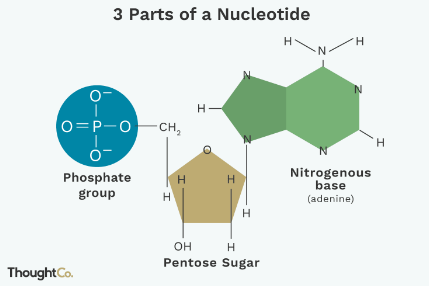
Nucleotide Structure
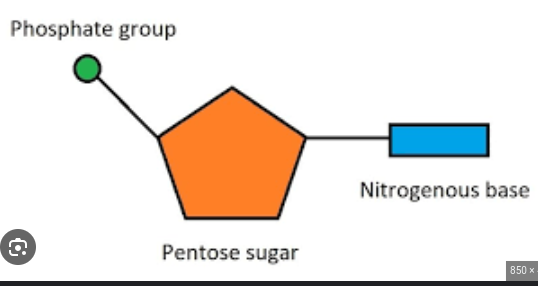
A nucleotide consists of:
Sugar:
Deoxyribose in DNA
Ribose in RNA
Phosphate Group:
Connects the sugar of one nucleotide to the sugar of another forming the backbone of the DNA or RNA strand.
Nitrogenous Bases: Include adenine (A), guanine (G), cytosine (C), thymine (T) in DNA, and uracil (U) in RNA.
Differences Between DNA and RNA Nucleotides
Sugar: DNA contains deoxyribose; RNA contains ribose (with one more oxygen atom).
Bases: DNA has thymine (T) while RNA has uracil (U).
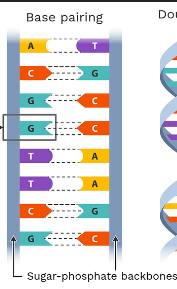
Base Pairing Rules
Base pairing is crucial for DNA replication and RNA transcription.
For DNA:
Adenine (A) pairs with Thymine (T)
Cytosine (C) pairs with Guanine (G)
For RNA:
Adenine (A) pairs with Uracil (U)
Cytosine (C) pairs with Guanine (G)
Understanding the structure and function of nucleic acids is fundamental in molecular biology and genetics as it provides insights into inheritance, gene expression, and overall cellular function.