C.4.1.2 Anxiety, IZOF and Catastrophe Theory
Cognitive Anxiety:
Mental component of anxiety
Worry and negative thoughts
Self-doubt and concerns about ability
Fear of failure or negative evaluation
Difficulty concentrating
Intrusive thoughts during performance
Somatic Anxiety
Physiological component of anxiety
Increased heart rate and blood pressure
Muscle tension and trembling
Sweating and butterflies in stomach
Dry mouth and rapid breathing
Physical sensations of nervousness
IZOF: Individual Zones of Optimal Functioning
Developed by Yuri Hanin, the IZOF model represents a paradigm shift in understanding the anxiety-performance relationship. Unlike previous theories
that assumed a universal optimal anxiety level, IZOF proposes that each athlete has a unique optimal zone.
1
Individual Optimal Zones
Each athlete has a unique optimal anxiety zone where they perform best. This zone can be high, moderate, or low depending on the individual.
2
No Universal Optimum Optimal performance does not occur at the same anxiety level for everyone. What works for one athlete may hinder another.
3
Positive and Negative Emotions Both positive and negative emotions may support or hinder performance, depending on whether they fall within the athlete's optimal zone.
High Anxiety Zone:
Optimal Performance Characteristics:
performs best when highly energised and activated
thrives on excitement and competitive atmosphere
low anxiety leads to underperformance and lack of focus
benefits of psyching up and intensity building strategies
Low Anxiety Zone:
Optimal Performance characteristics
Performs best when calm and relaxed
Prefers quiet preparation and minimal stimulation
High anxiety disrupts concentration and technique
Benefits from relaxation and mindfulness strategies
Catastrophe Theory: Catastrophe Theory, developed by Hardy and Fazey, offers a sophisticated multidimensional model that explains why performance can suddenly collapse under pressure. Unlike linear models, it considers the interaction between physiological arousal and cognitive anxiety.
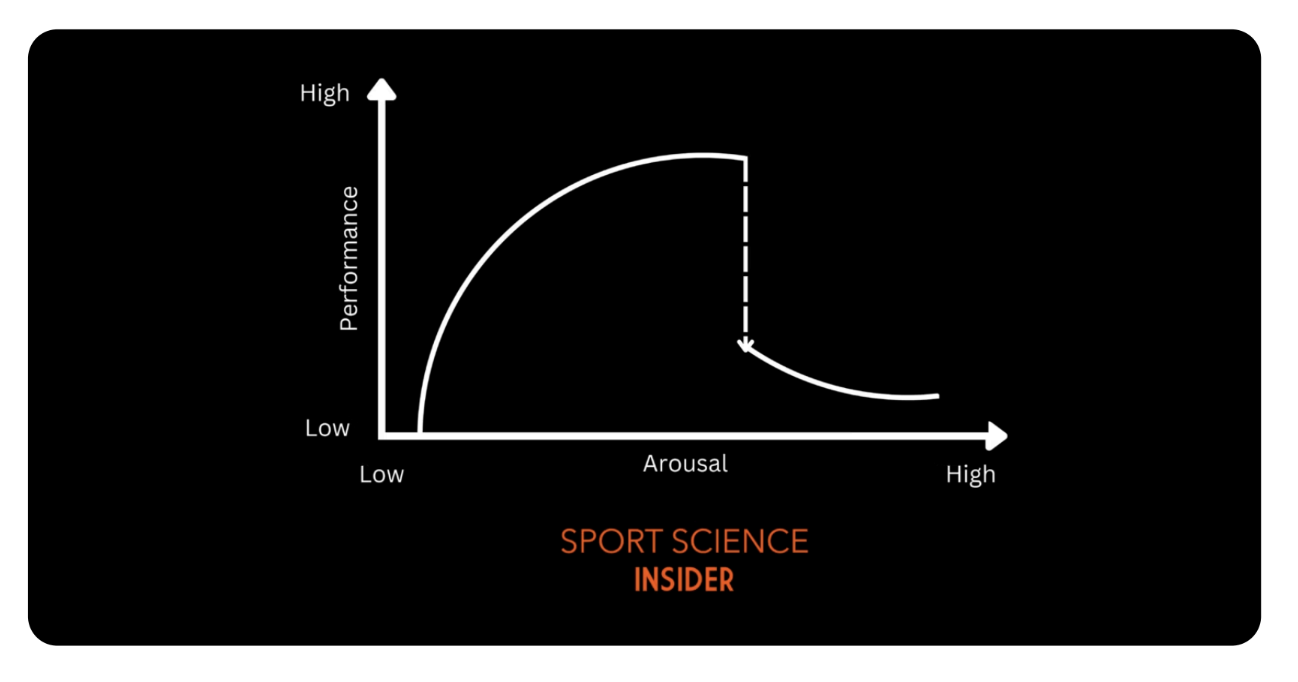
key components:
physiological arousal
cognitive anxiety
interactive effect
When cognitive anxiety is low, performance follows the Inverted-U pattern as arousal increases. However, when cognitive anxiety is high, increased arousal can lead to a sudden, dramatic performance collapse—the "catastrophe". This explains choking under pressure: the athlete's worry combines with high physiological activation to trigger a rapid breakdown in performance
key features:
explains sudden declines
considers dual factors
different recovery paths
disadvantages:
difficult to measure accurately
hard to locate athletes on the model
limited practical application
Explain how Catastrophe Theory accounts for performance breakdown under pressure? (6)
Catastrophe theory explains the multidimensional model that explains why performers break down under hemes of pressure. it considers different models unlike the linear approach which are: Arousal and cognitive anxiety. When cognitive anxiety is low, performance follows the Inverted-U pattern as arousal increases. However, when cognitive anxiety is high, increased arousal can lead to a sudden, dramatic performance collapse the "catastrophe". This explains choking under pressure: the athlete's worry combines with high physiological activation to trigger a rapid breakdown in performance. It explains sudden declines, considers dual factors, and different recovery paths. An example would be in tennis, during intense moments, the player can break down through double faulting in their serves which is something they usually need to master.