Genetic engineering
Genetic engineering
the alteration of the genetic code by artificial means
Examples
banana vaccines
Produce virus proteins
Not the infectious parts
Eating banana triggers immune response
Venomous cabbage
Altered to produce scorpion venom that is harmless to humans but kills caterpillars that try to eat it
Insulin
Insulin for diabetes was first extracted from animal pancreas
Some people had allergic reactions to animal proteins
Now made using genetically engineered bacteria
Production
isolate the gene to be transferred
Add the gene to new cells
Identify the organisms that have had the new genes successfully added
Isolating a gene
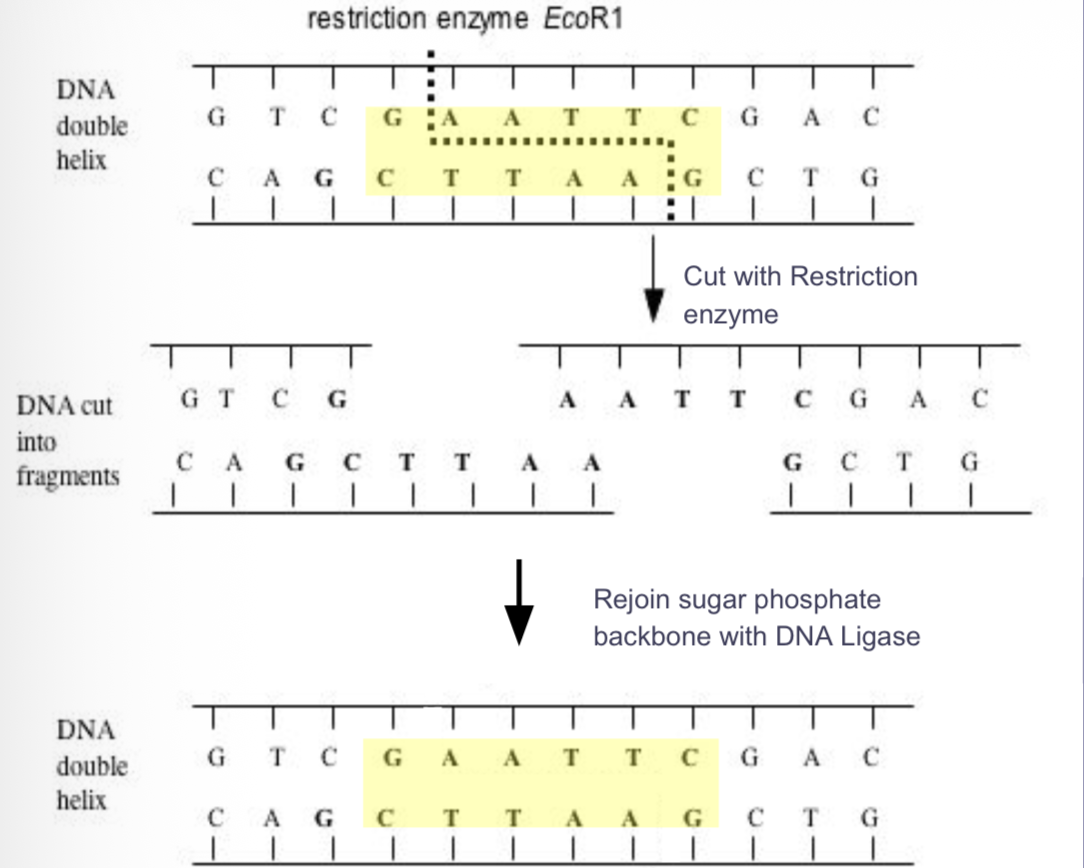
cut the gene out of a length of DNA using restriction enzymes OR
Make DNA from RNA present cells
Restriction enzymes
REs cut DNA at a particular series of bases
Recognition/restriction site
Most recognition sites are 4-8 bases long
They are palindromic
GTATAC
CATATG
lengths of DNA cut with restriction enzymes are called restriction fragments
Different pieces of DNA cut with the same restriction enzyme will have complementary sticky ends
Could then be joined together
DNA from RNA
making a gene from RNA
A gene that is active in a cell will make a protein product
It must be copied into mRNA first before the protein can be made
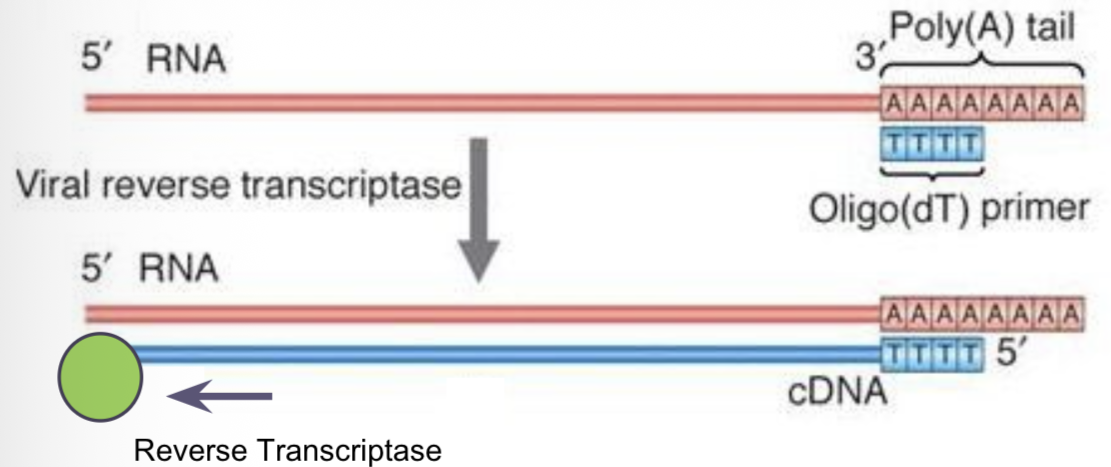
This mRNA can be isolated from cells and copied back into a DNA gene
reverse transcriptase copies single stranded mRNA into cDNA (complementary DNA)
This can be made into double stranded DNA
Adding the new DNA to a vector
a vector is used to transfer the isolated gene that makes the product we want into the host cell
Insulin gene into bacteria
Types of vector
Viruses
Plasmids
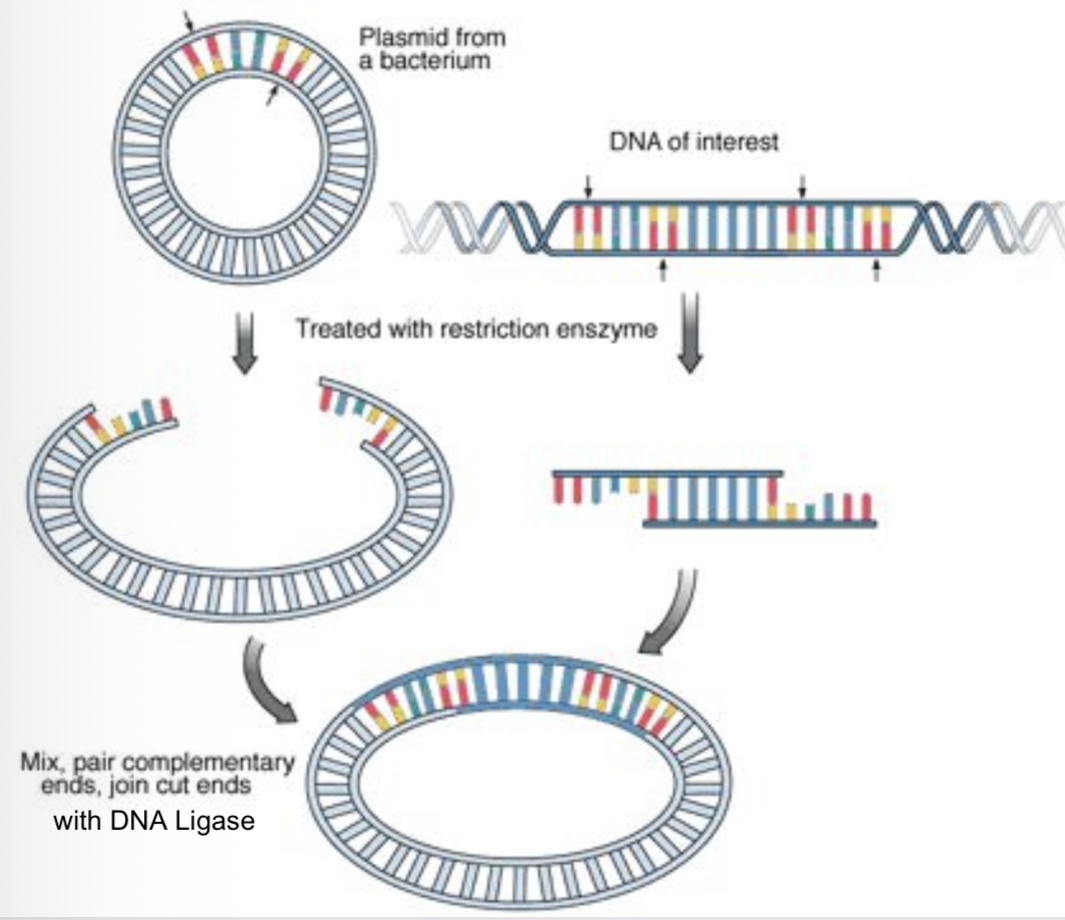
Cut out gene of interest using RE
Cut plasmid with same RE
Sitcky ends anneal by hydrogen bonding
Gene is inserted into plasmid
Repair sugar phosphate backbone using DNA ligase enzyme
Forms covalent bonds between nucleotides
Marker genes
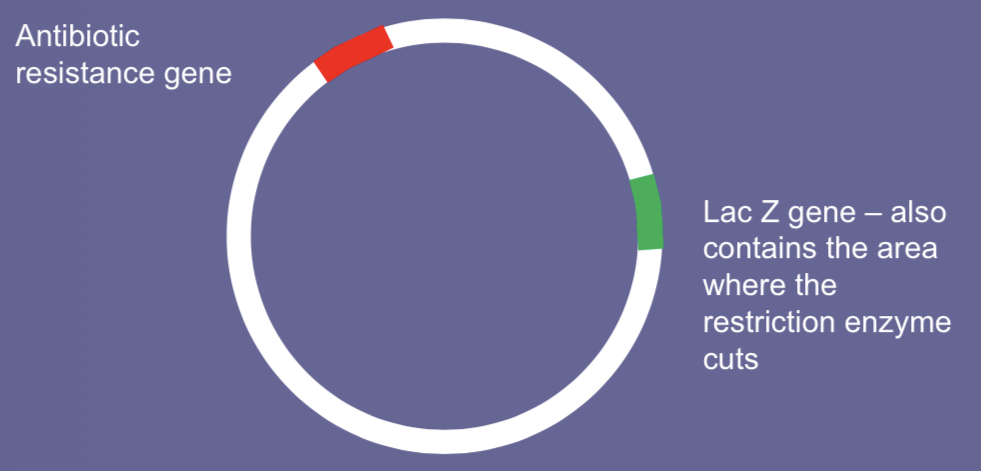
these are genes already present in the plasmid that allow the plasmids that have taken up the gene correctly to be identified
Transformation
once the gene has been added to the plasmid the plasmid must be inserted into a bacterium
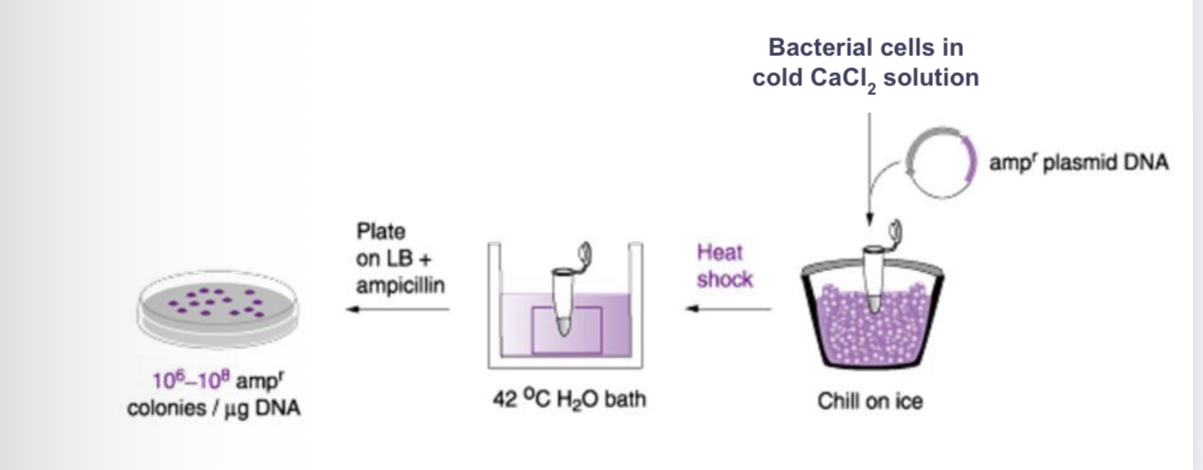
Heat shock after incubation in cold CaCl2
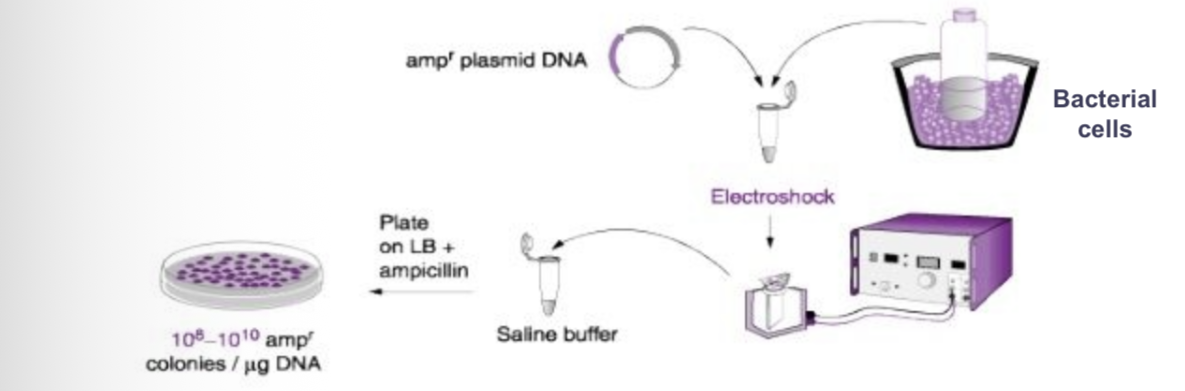
Electroporation
However DNA is not always inserted correctly into the vector
Not all bacteria transform
Need to be able to identify those that have had the modified vector correctly inserted
Heat shock
calcium and an increase in temperature cause the membrane to become permeable so the vector can enter the cell
Electroporation
small electric current is applied to the bacteria
Membranes become very porus so plasmids can enter the bacterial cells
Genetic markers
used to identify the bacteria with correctly added gene and vector
Checks:
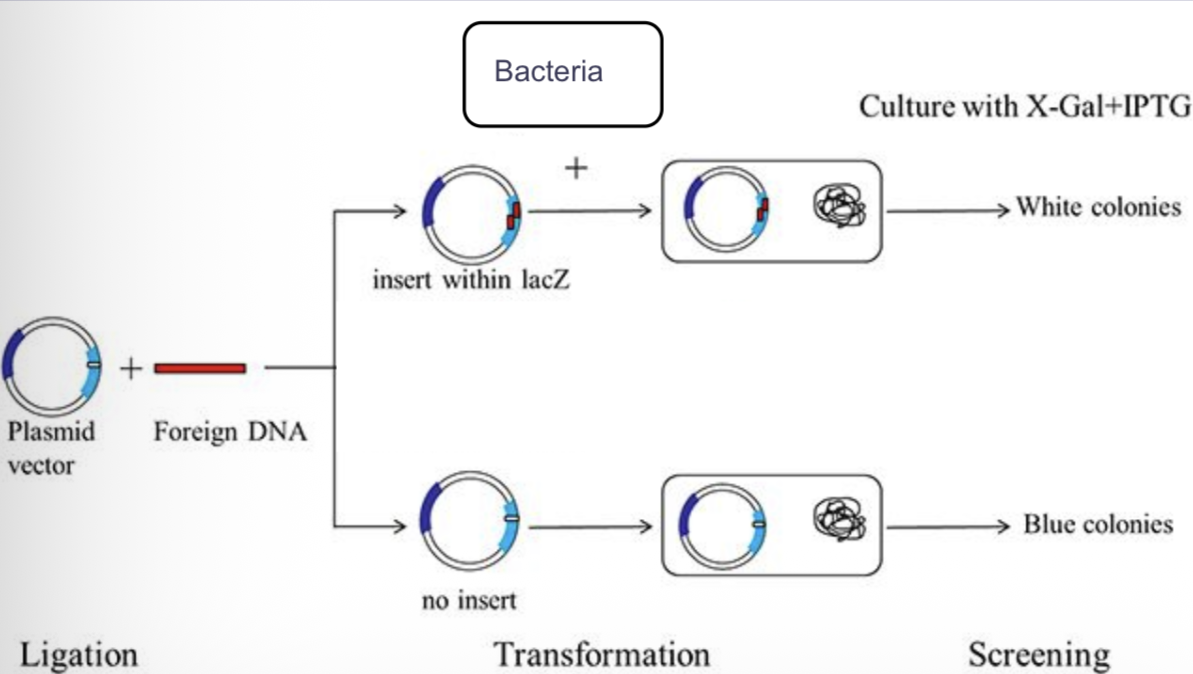
Has the gene been added to the vector
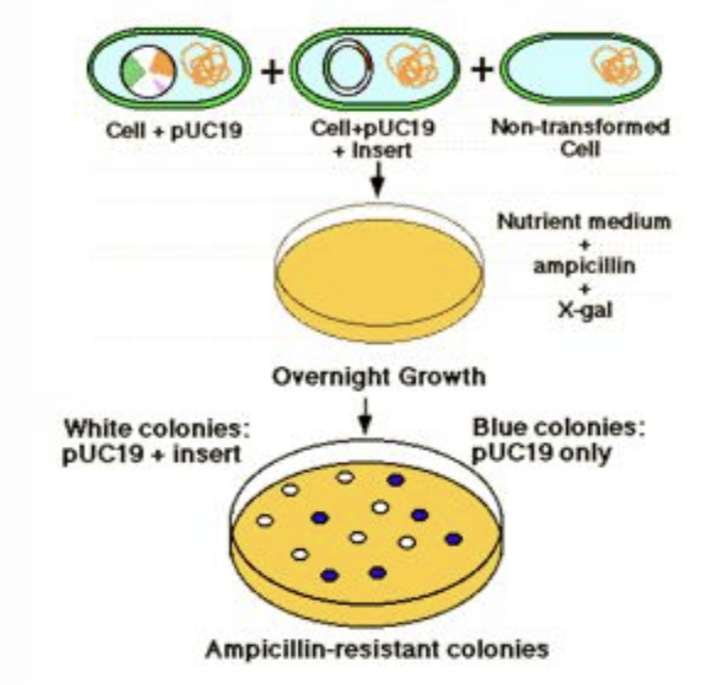
Has the vector been added to the bacteria
if no vector is inserted then white colonies will also form
Use antibiotic resistance to identify the bacteria containing the vector
Bacteria with no vector will not grow on agar with antibiotic as it does not have the inserted resistant gene
This can be carried out at the same time as lacZ