Lecture 17: The Adaptive Immune System
Innate Immunity vs. Adaptive Immunity
Innate immune cells recognize pathogens by:
PRR’s bind to PAMPs
Adaptive immune cells recognize pathogens by:
adaptive immune proteins bind to antigens
Adaptive Immune Cells
Antigens and Epitopes
Antigen: molecule found in a foreign structure
Example: Structures that are part of bacteria, viruses or other pathogens
Epitope: specific part of an antigen that is recognized by an adaptive immune system and are unique to specific pathogens
when epitope is recognized, adaptive immunity is activated and starts to kill anything that epitope
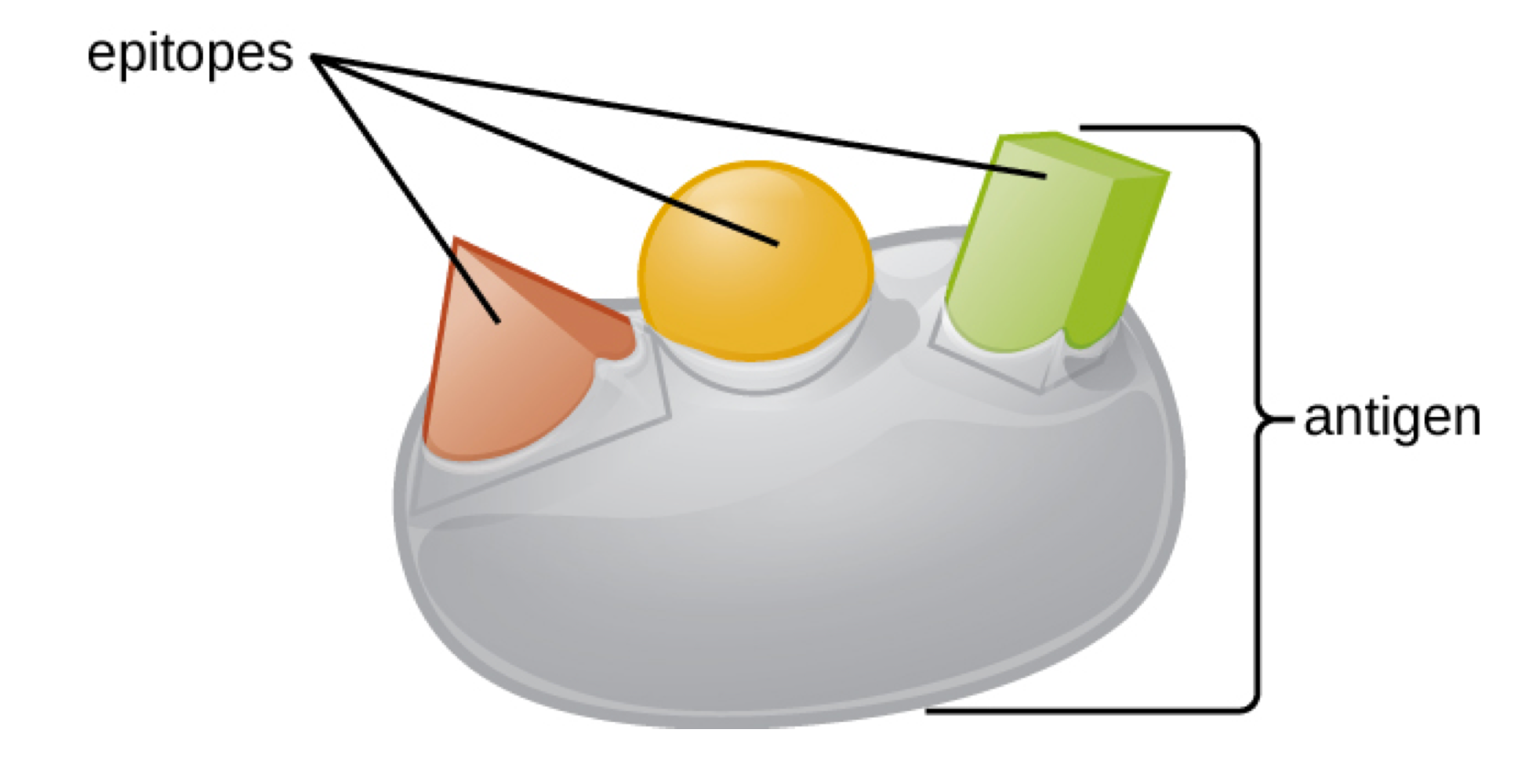
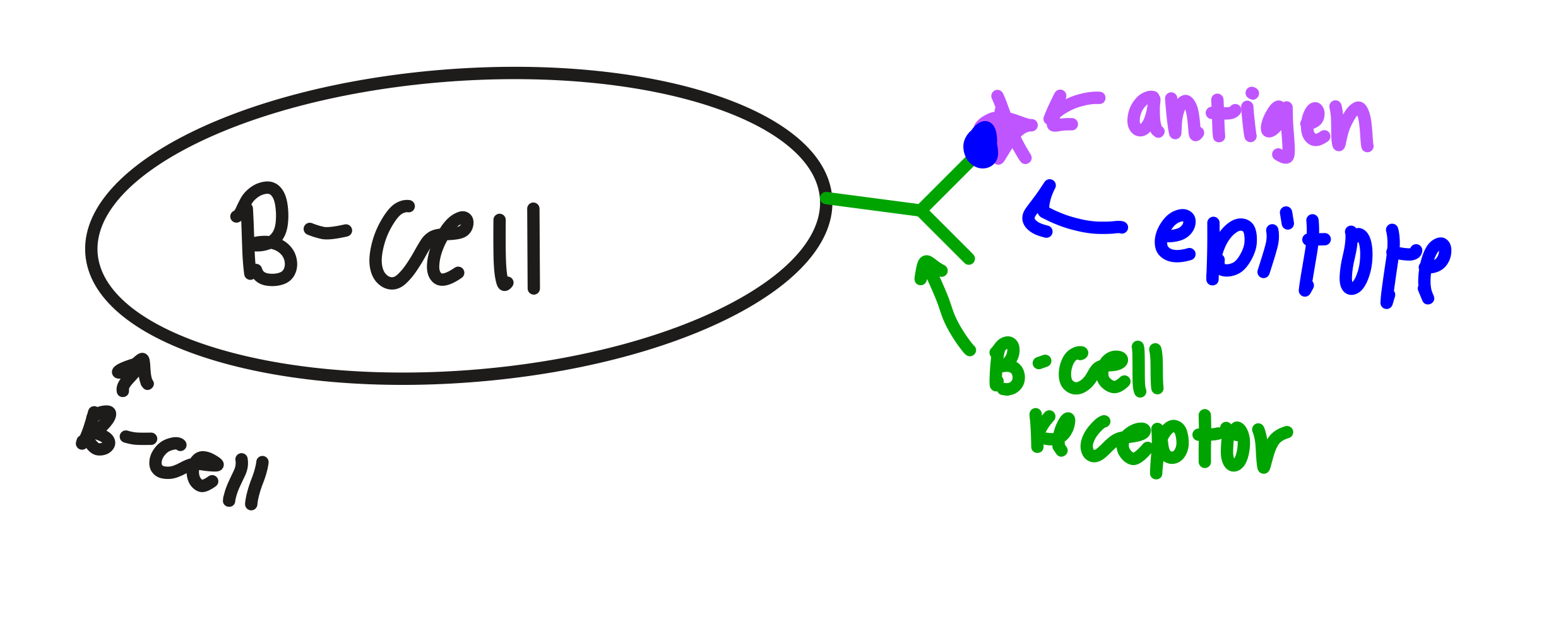
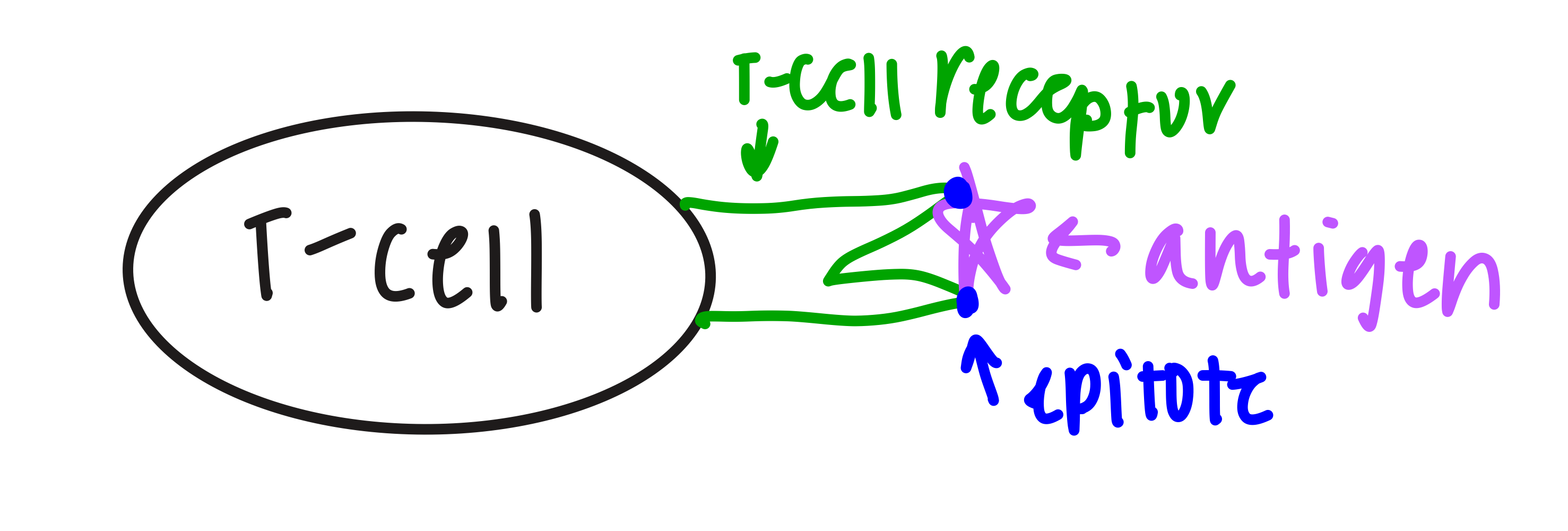
Epitopes is recognized by 3 different adaptive immune proteins:
antibodies: Y shaped protein produced by B cells
each has two arms that bind to antigenseach has two arms that bind to antigens

B-cell Receptor (BCR): antibody attached to a B-cell
T-cell Receptor (TCR): antibody attached to a T-cell
Major Adaptive Immunity Cells: T cells and B Cells
T cells
T cells:
T cells are made in bone marrow
mature in the thymus (T for thymus)
T cell maturation occurs during childhood, before puberty
thymic maturation selection selects for T cells that:
have a functional T cell receptor - needs to recognize foreign things
if T cell receptor recognize self only, they are killed
T cell has to be able to bind to MHC or they are killed
kills dysfunctional T cells
B cells
B cells: Responsible for producing antibodies.
B cells made AND mature in bone marrow
B cell maturation occurs during childhood, before puberty
B cell maturation selects for B-cells that:
have a functional B cell receptor that can bind to antigen
if B cell receptor recognize self only, they are killed
kills dysfunctional cells
Adaptive Immunity Process:
Antigen Presenting:
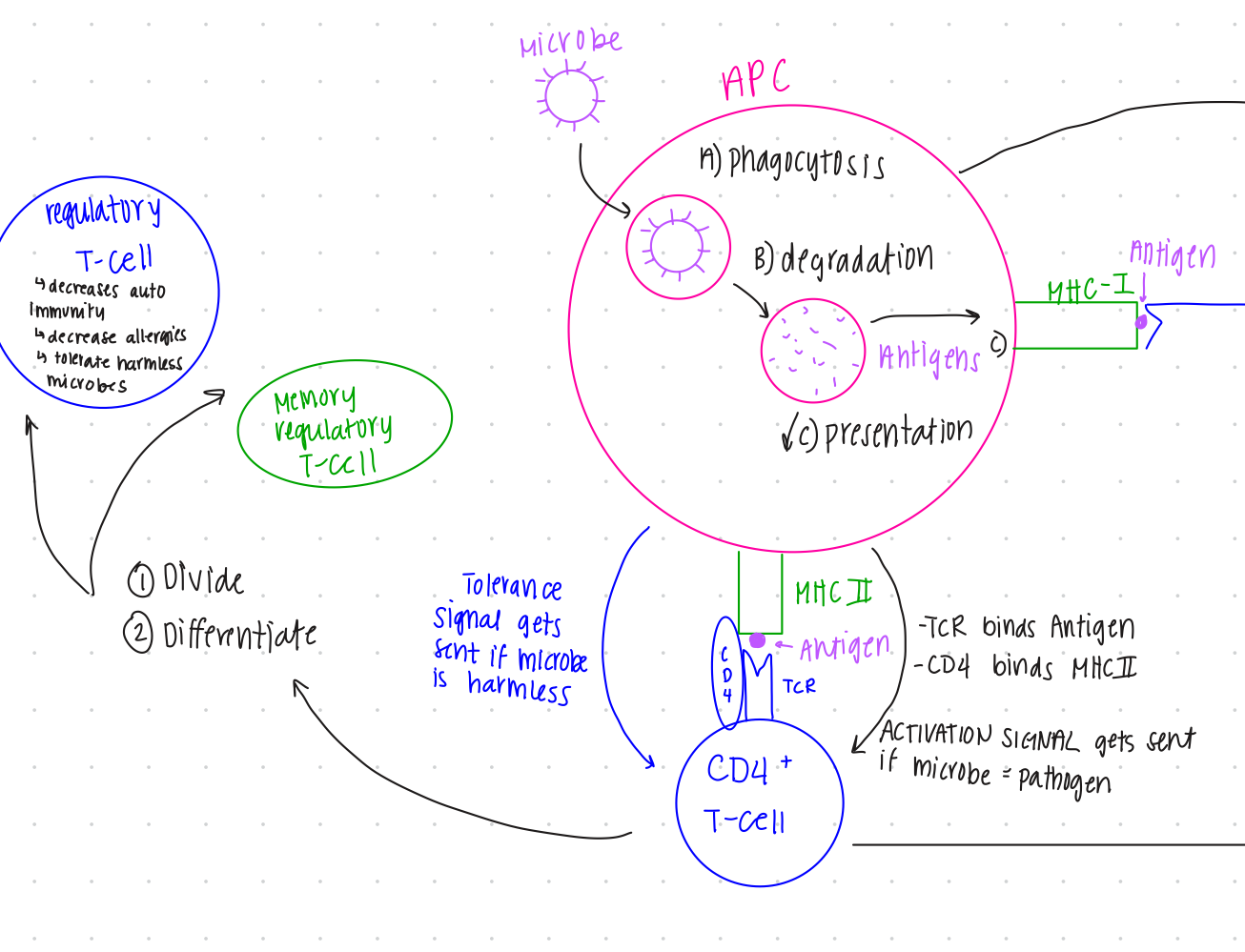
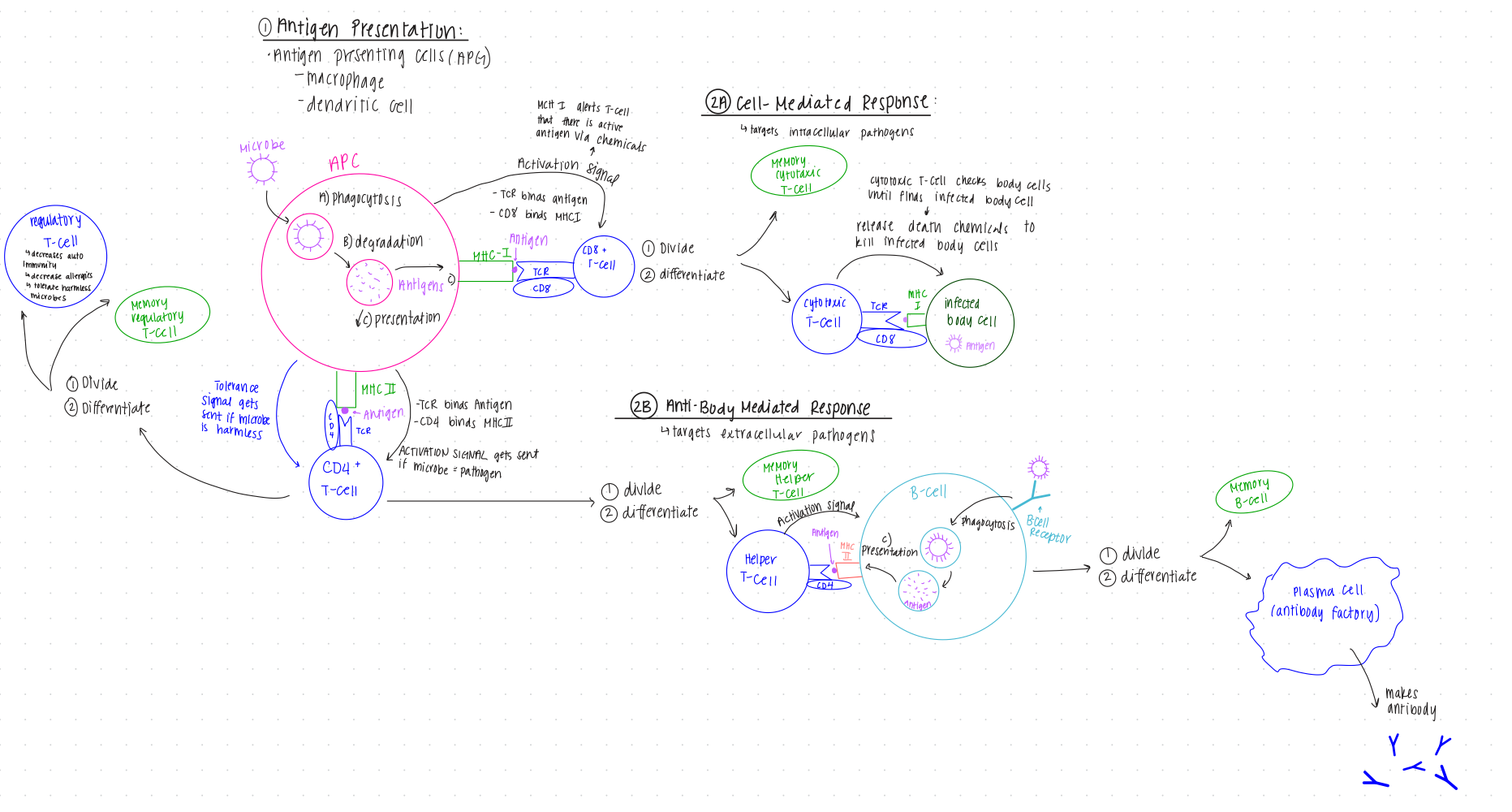
antigen presenting cell take microbe in by phagocytosis
Antigen Presenting cell (APC) : cell that detects and presents antigen to adaptive immune cells
includes:
macrophage
dendritic cell
both taken up pathogens by phagocytosis
microbe is degraded into antigens
APC takes pieces of pathogen (antigen) and presents them in their cells via MHC molecules
MHC I or MHC II
MHC I: Recognized by CD8+ T cells
MHC II: Recognized by CD4+ T cells.
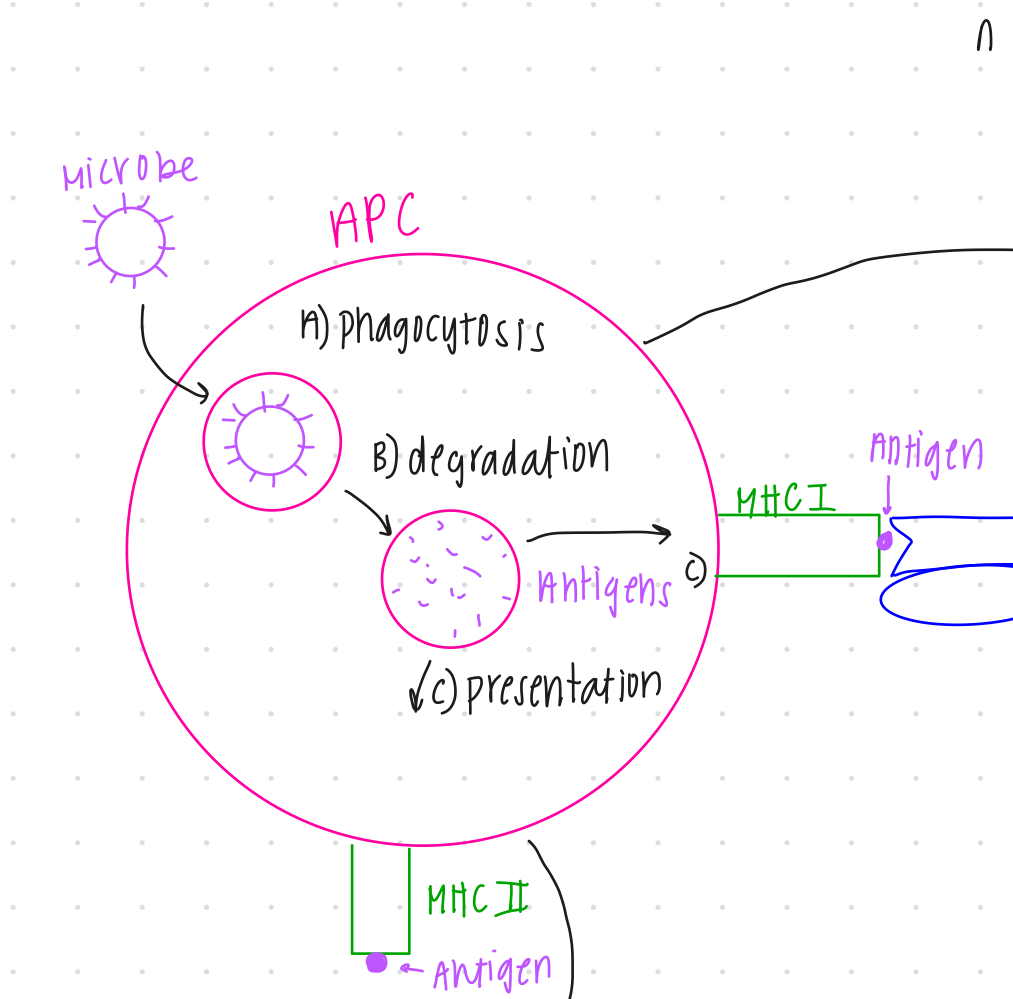
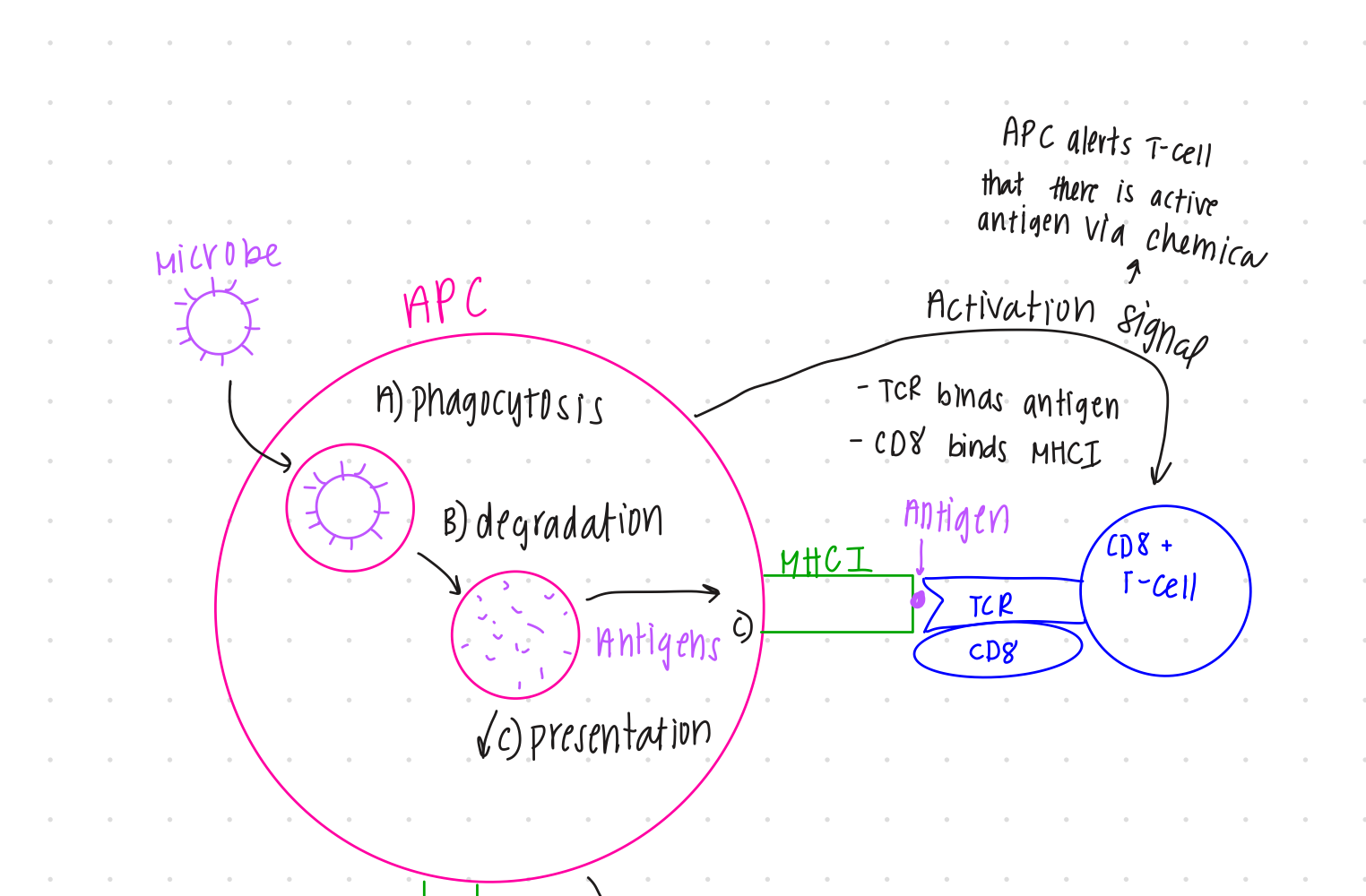
T-Cell:
numerous CD8 T cells come see if they have T cell receptor that matches antigen displayed on MHC I molecule
if matches, T-cell receptor binds to specific antigen
CD8 binds to MHC I molecule
APC sends out chemical activation signal to T Cell that there is an active antigen
triggers immune mediated response
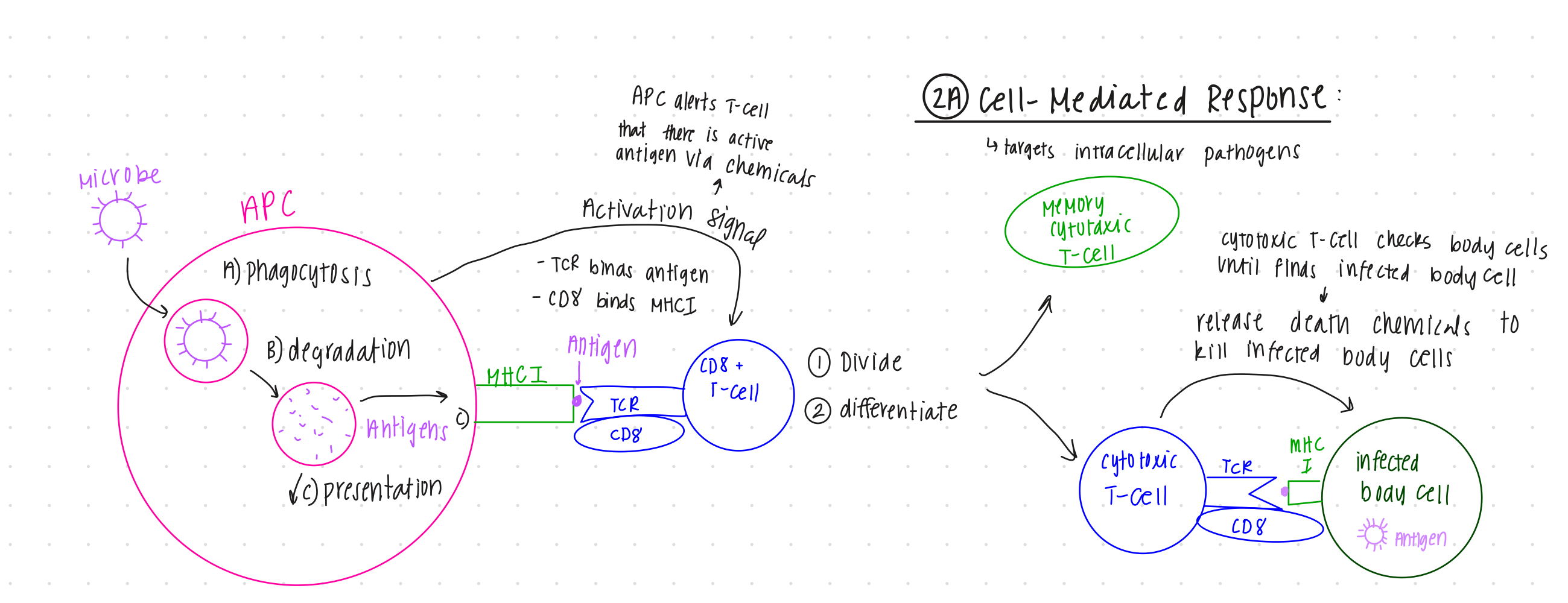
Cell-Mediated Response: targets intracellular pathogens
T cell divides
T cell differentiates
forms memory cytotoxic T cells
forms cytotoxic T cells
cytotoxic T cells have correct TCR to detect for specific microbes
if detects infected body cell, cytotoxic T cell binds to antigen
CD8 binds to MHC I on infected body cell
cytotoxic T cell releases death chemicals to kill infected body cell
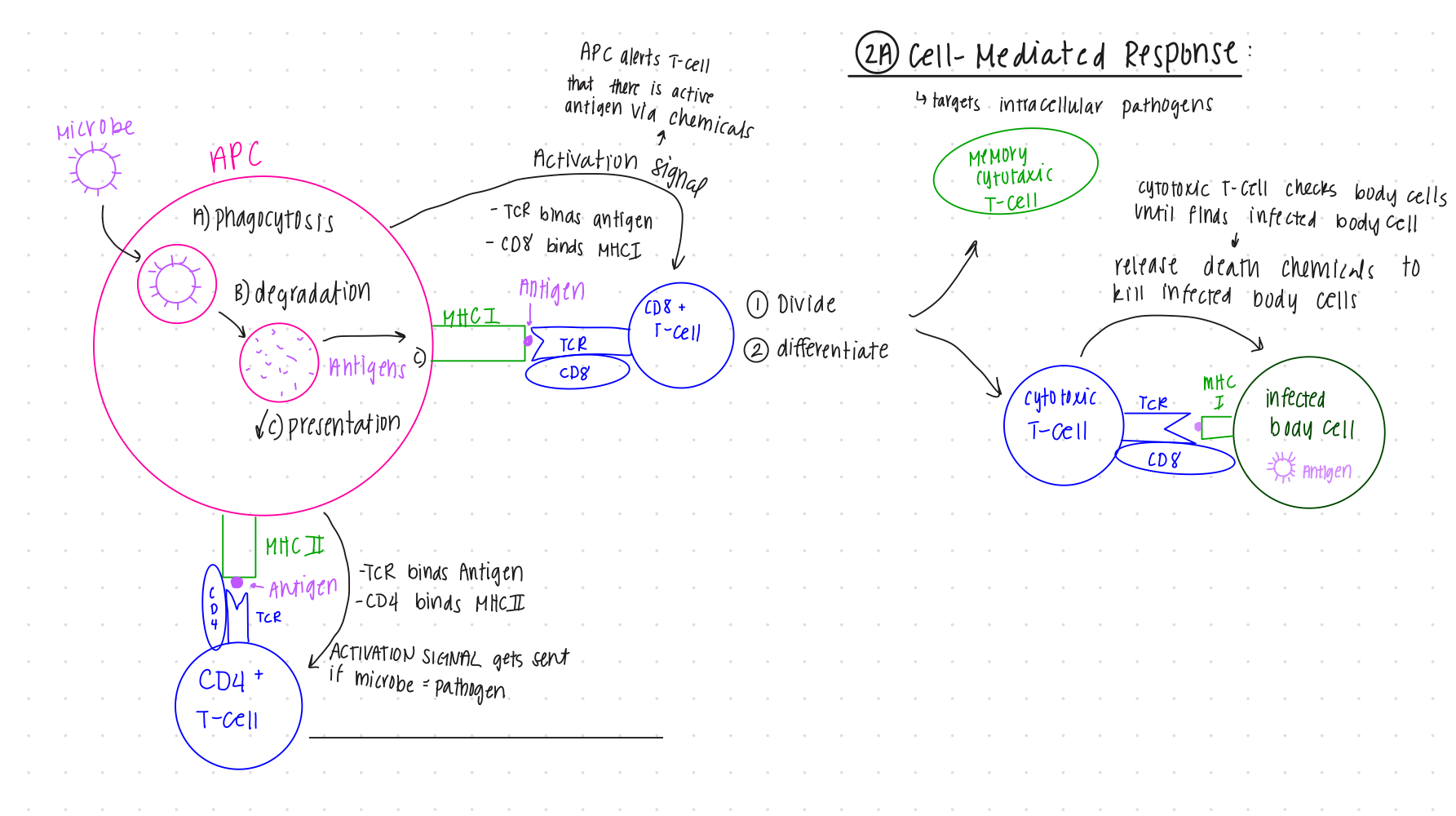
Antibody Mediated Response vs. Tolerance Signal
numerous CD4 T cells come see if they have TCR that matches antigen displayed on MHC II molecule
if matches, T cell receptor binds to to specific antigen and CD4 binds to MHC I molecule
if deemed pathogen by APC, activation signal is sent out to T cell and enters antibody mediated response
if deemed harmless and NOT a pathogen, APC sends out tolerance signal to T Cell
Antibody Mediated Response: targets extracellular pathogen
CD4 T cell receives activation signal
T cell divides and differentiates
forms memory helper cells
forms helper T cells
activates mediated response via B cells
B cells have BCR that independently encounter microbe
B cell must have BCR that recognizes specific antigen from microbe
if BCR matches antigen, phagocytosis of microbe into B cell
microbe is degraded within B cell
B cell takes pieces of pathogen (antigen) and presents them on their cells via MHC II
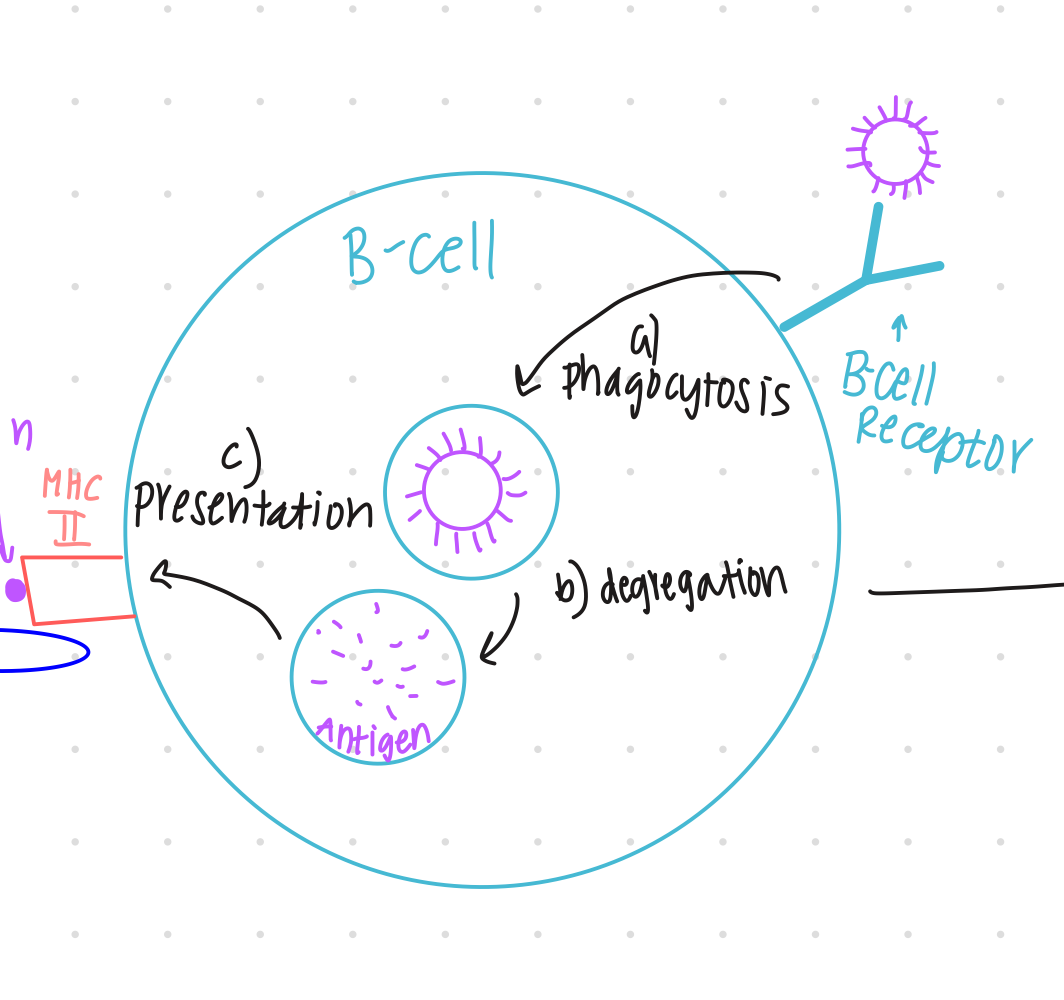
if Helper T cell with TCR that matches antigen displayed on MHC II comes, TCR binds to specific antigen and CD4 binds to MHC II molecule
activation signal is sent to B cell to active B cell
when B cell is activated, B cell divides and differentiates
forms memory B cells
forms plasma cells
plasma cells: antibodies factories, form antibodies
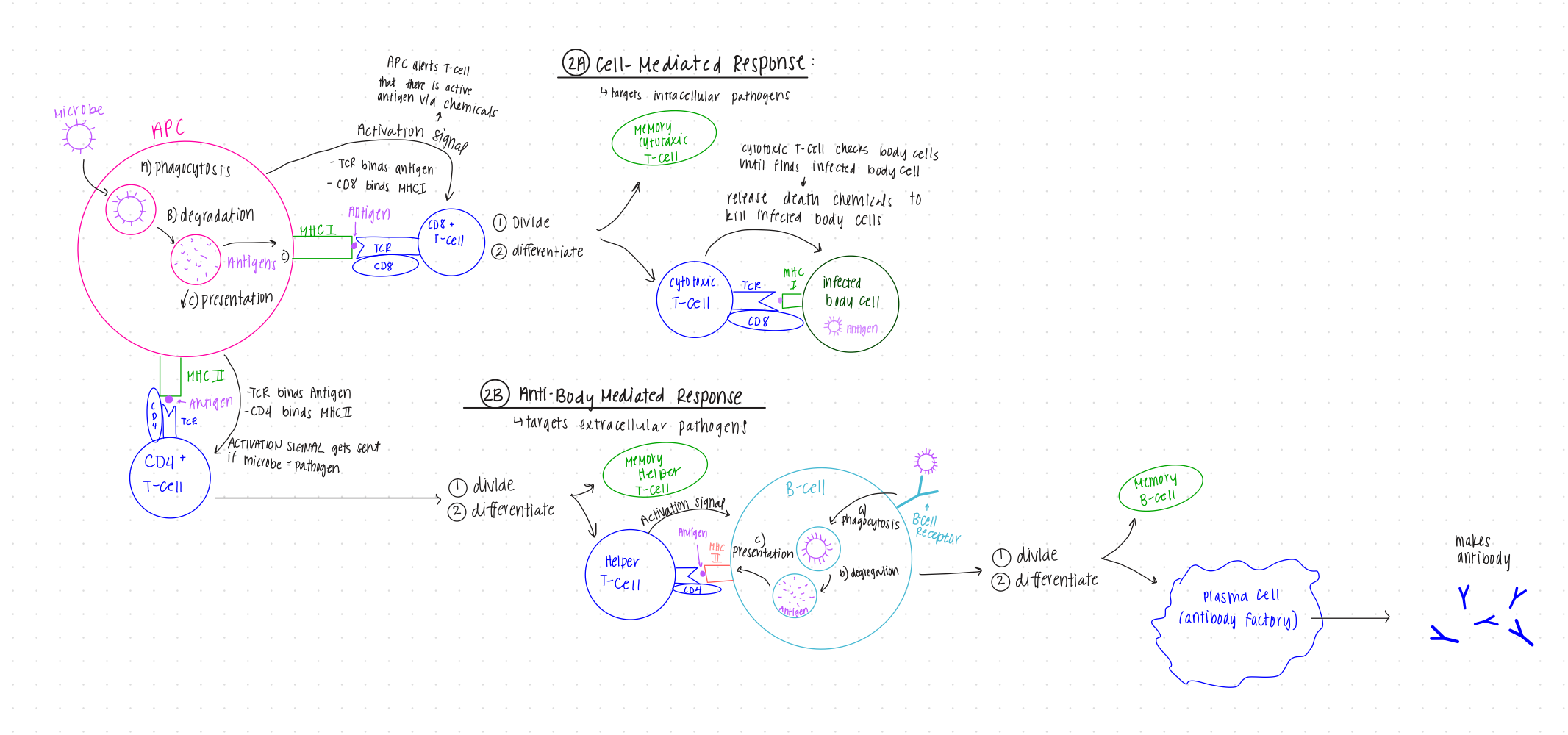
Tolerance SIgnal:
if microbe is harmless and NOT a pathogen, APC send out tolerance signal to CD4 T cell
CD4 T cell divides and differentiates
forms memory regulatory t-cells
forms regulatory t- cells
Regulatory cells functions to:
decrease auto-immunity
decrease allergies
allows for tolerance of harmless microbes
Antibodies
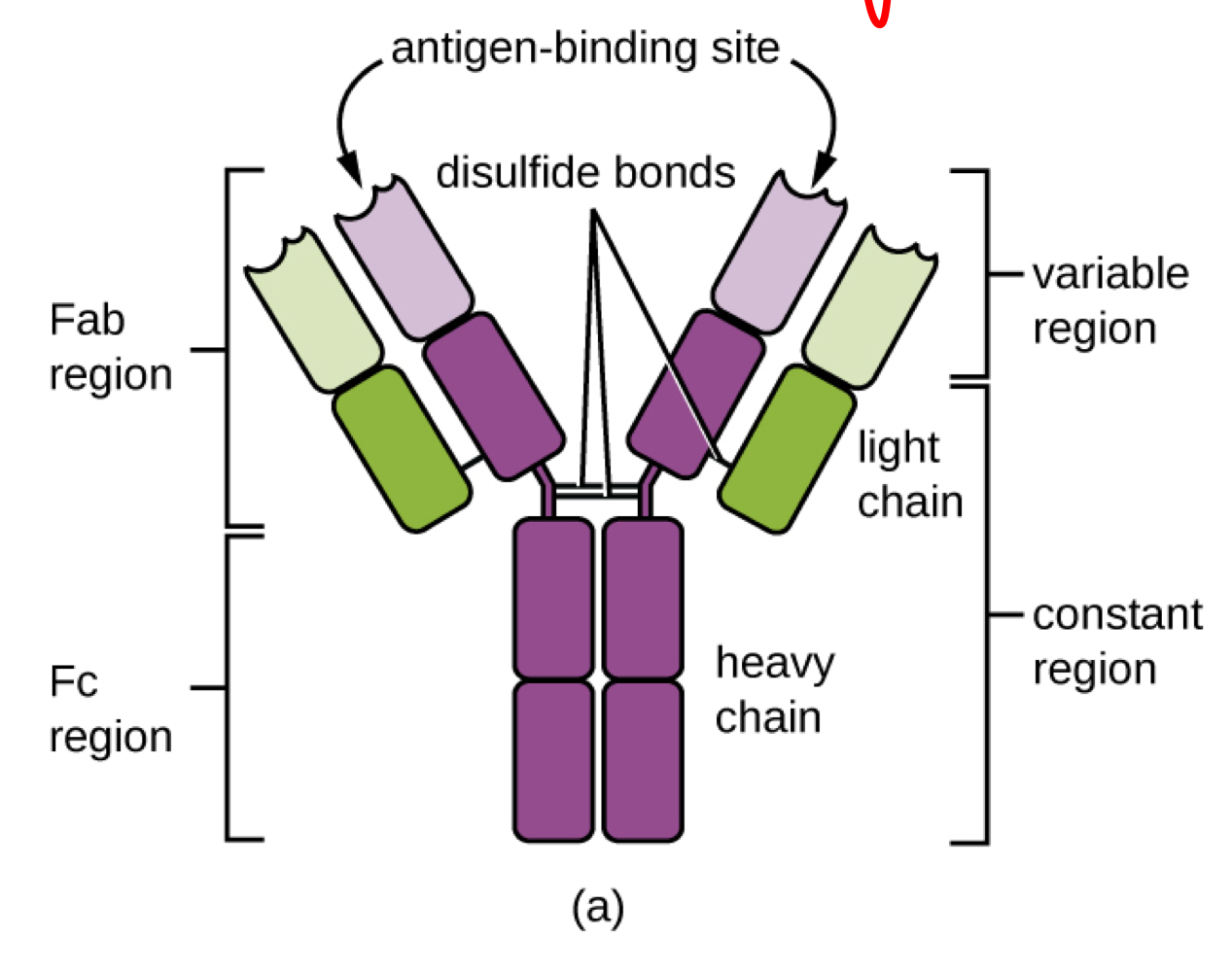
Antibodies (Immunoglobulins): Y-shaped proteins
bind specifically to ONE kind of epitope on an antigen
every type of antibody has a specific antigen binding site
Mechanisms of Antibody Action
Neutralization: Antibodies surrounds pathogens or toxin and prevents them from interacting with host cells.
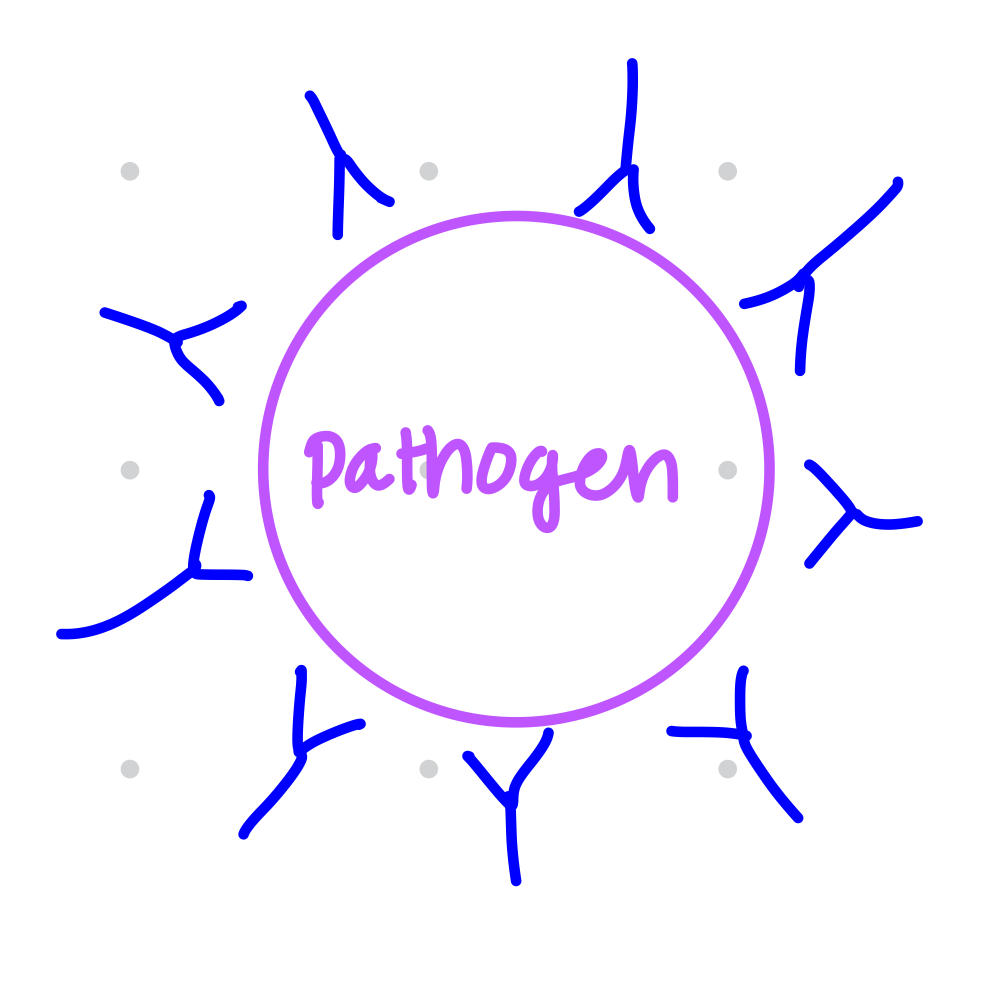
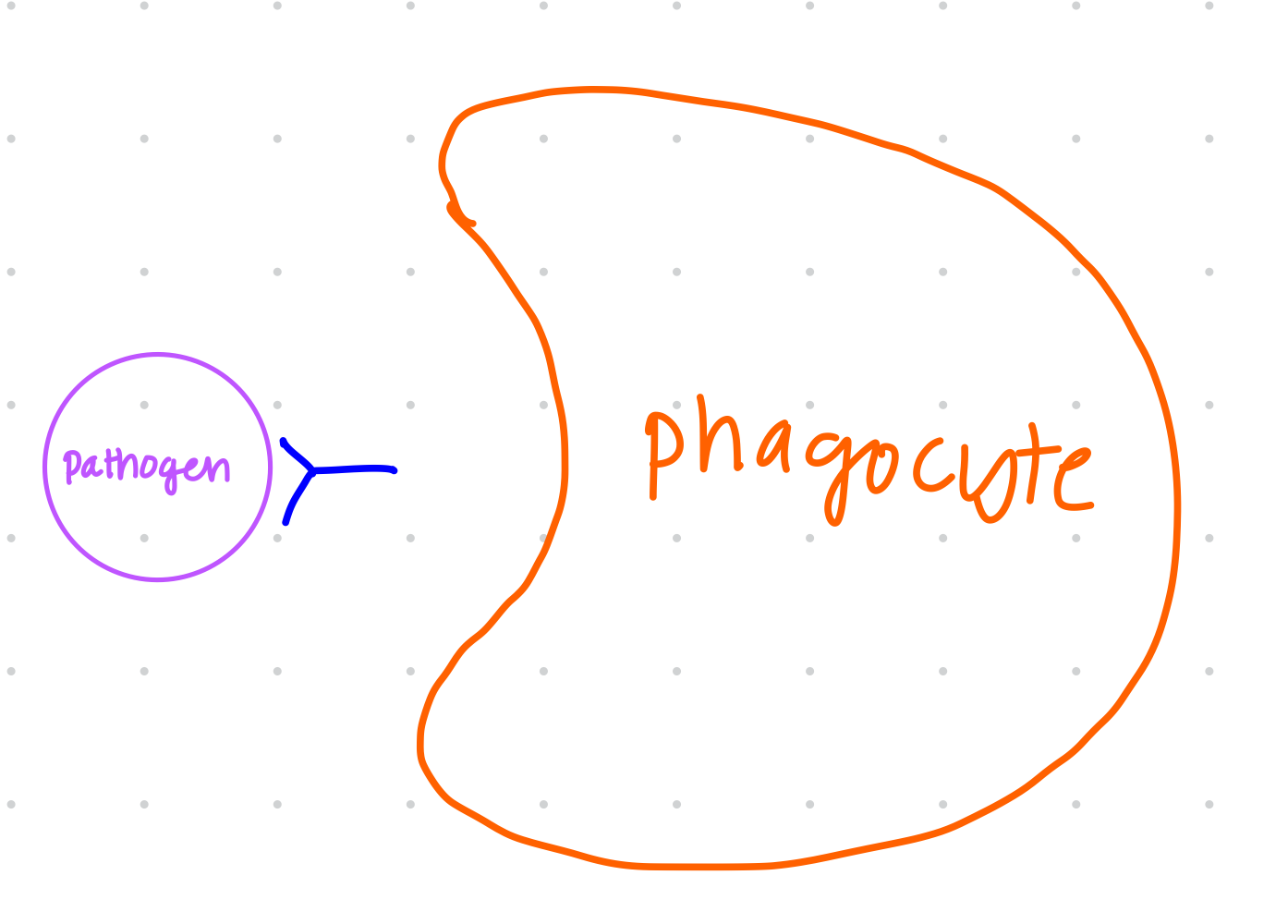
Opsonization: Antibodies tag pathogens and signals phagocytes to engulf cell
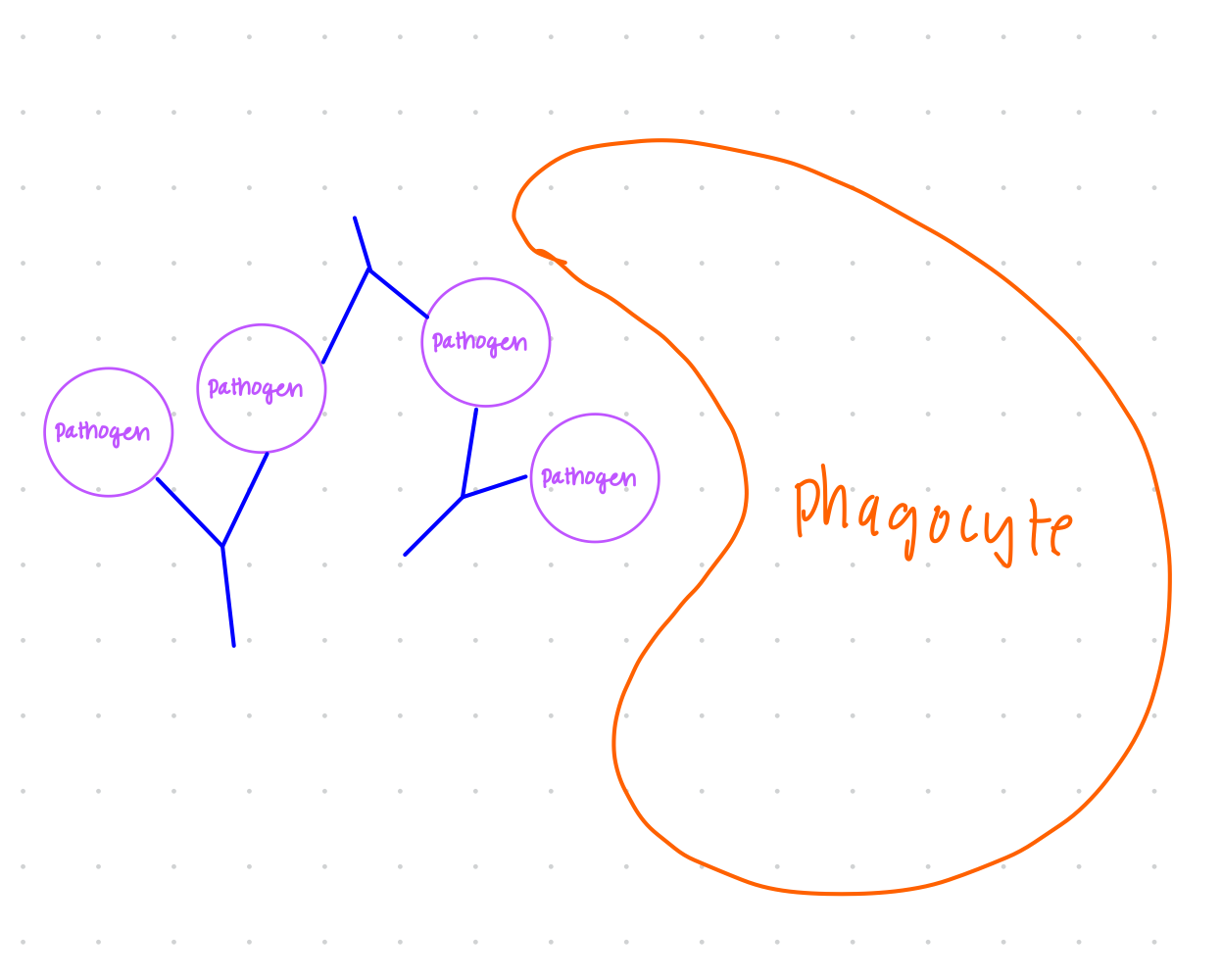
Agglutination: Antibodies clumps pathogens together, forming aggregates
antibodies can bind to two pathogens at a time and stick them together, making a whole clump
decreases pathogen function
makes it easier for phagocytosis
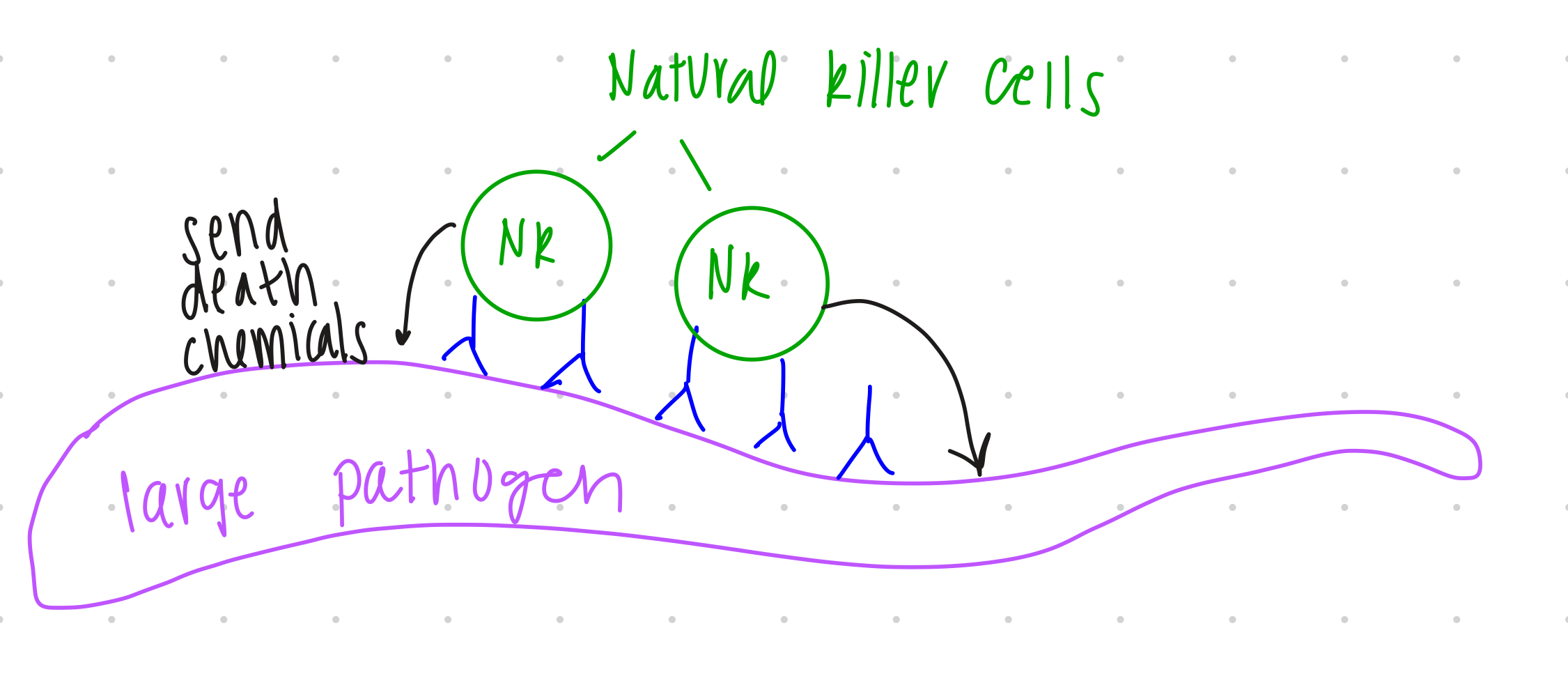
Antibody-Dependent Cellular Cytotoxicity (ADCC): antibodies tag larger pathogens and recruit Natural killer cells to kill large pathogen
occurs with pathogens that are too large to be phagocytosed
antibodies bind to large pathogen and other end of antibody is detected by natural killer cell
natural killer cells release death chemicals that poke holes in sides of large pathogen and eventually kill them
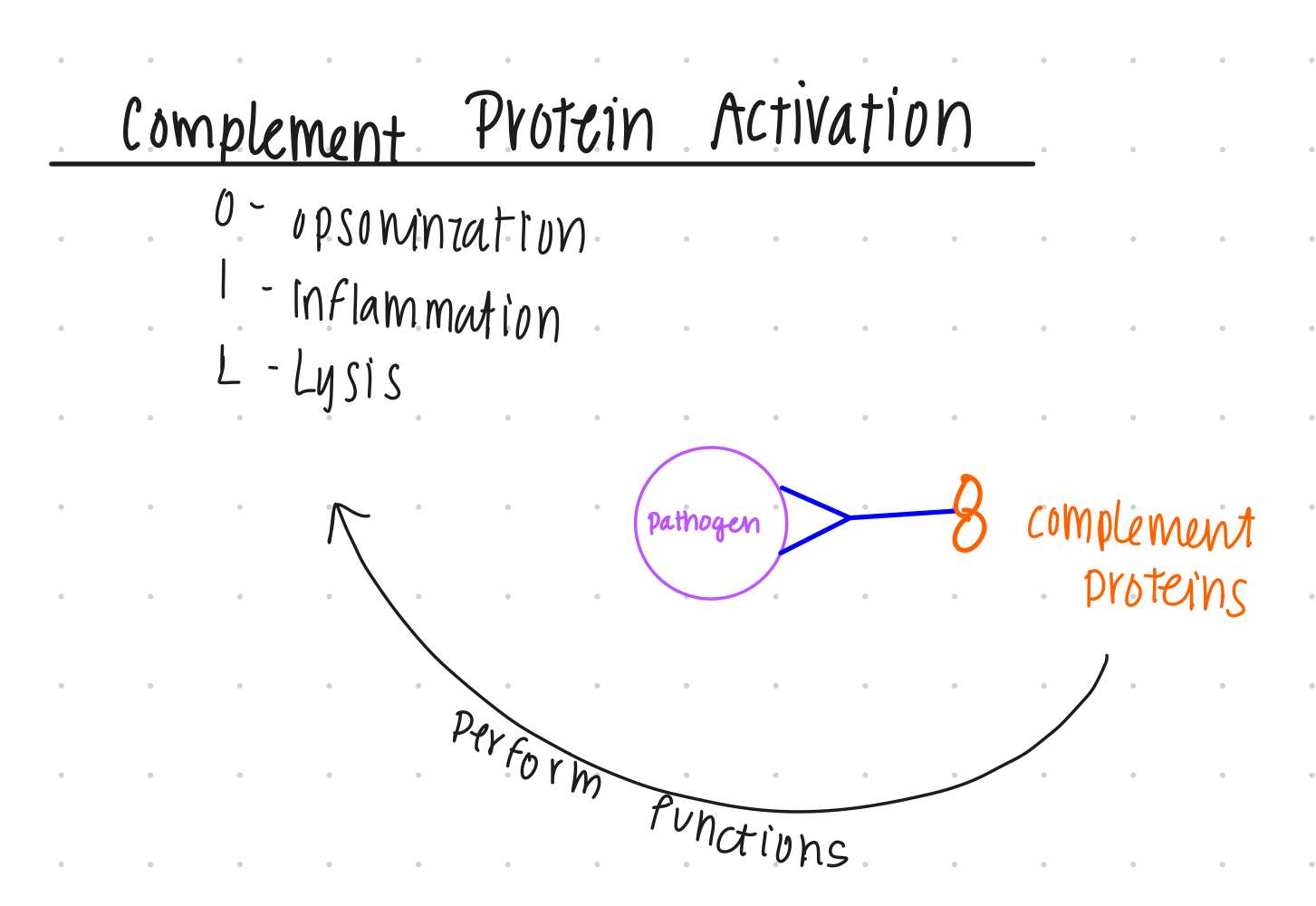
Complement Protein Activation: antibodies activate complement proteins
complement proteins perform opsonization, inflammation, and lysis of pathogens.
Opsonization: complement proteins stick to pathogens and make them more recognizable to white blood cells to be engulfed. (phagocytosis)
Inflammation: complement proteins make factors to signal and alert for white blood cells by causing inflammation
Lysis: complement proteins form holes in microbial cells to make cells leak and burst
Antibody classified into five major types:
all antibodies in a particular class have a same constant region and different variable regions
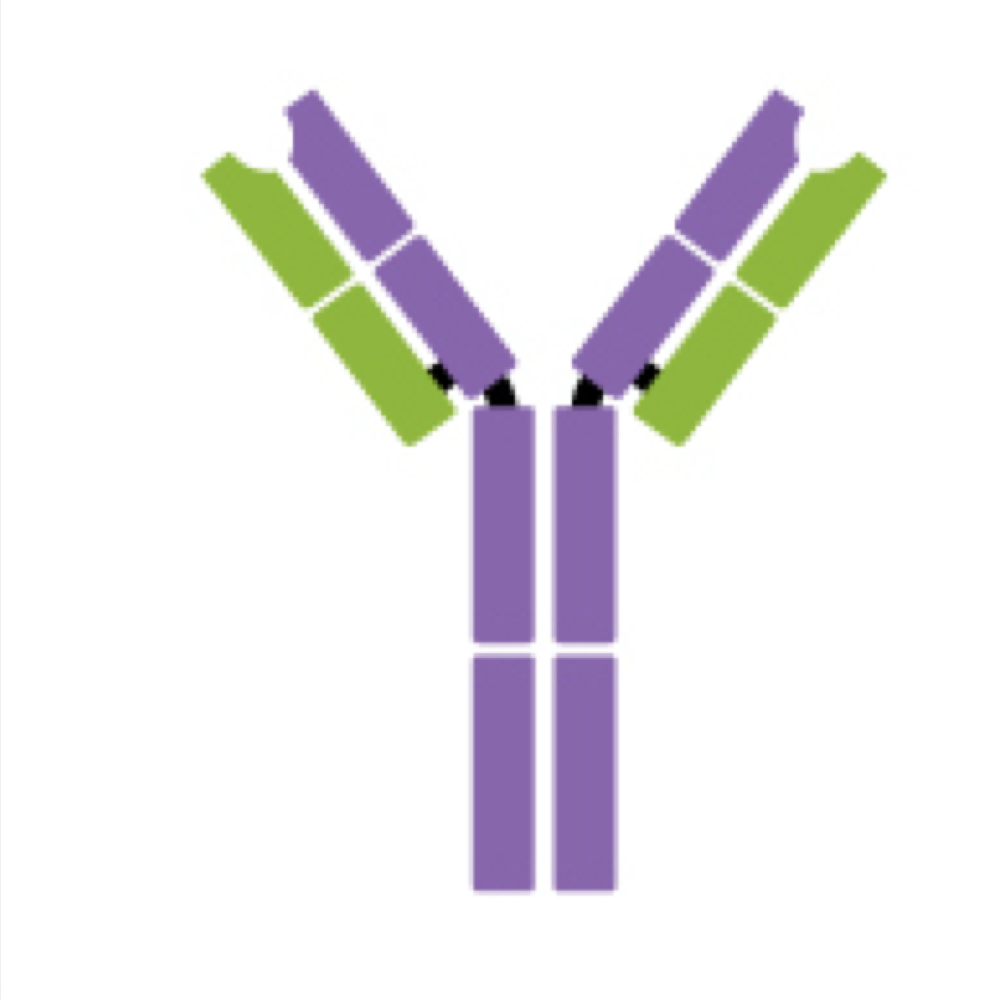
IgG: Most abundant in blood
only antibody that can cross the placenta and offer protections to fetus
Structure: Y shaped, with inner Y having same constant region and outer arms have different variable regions
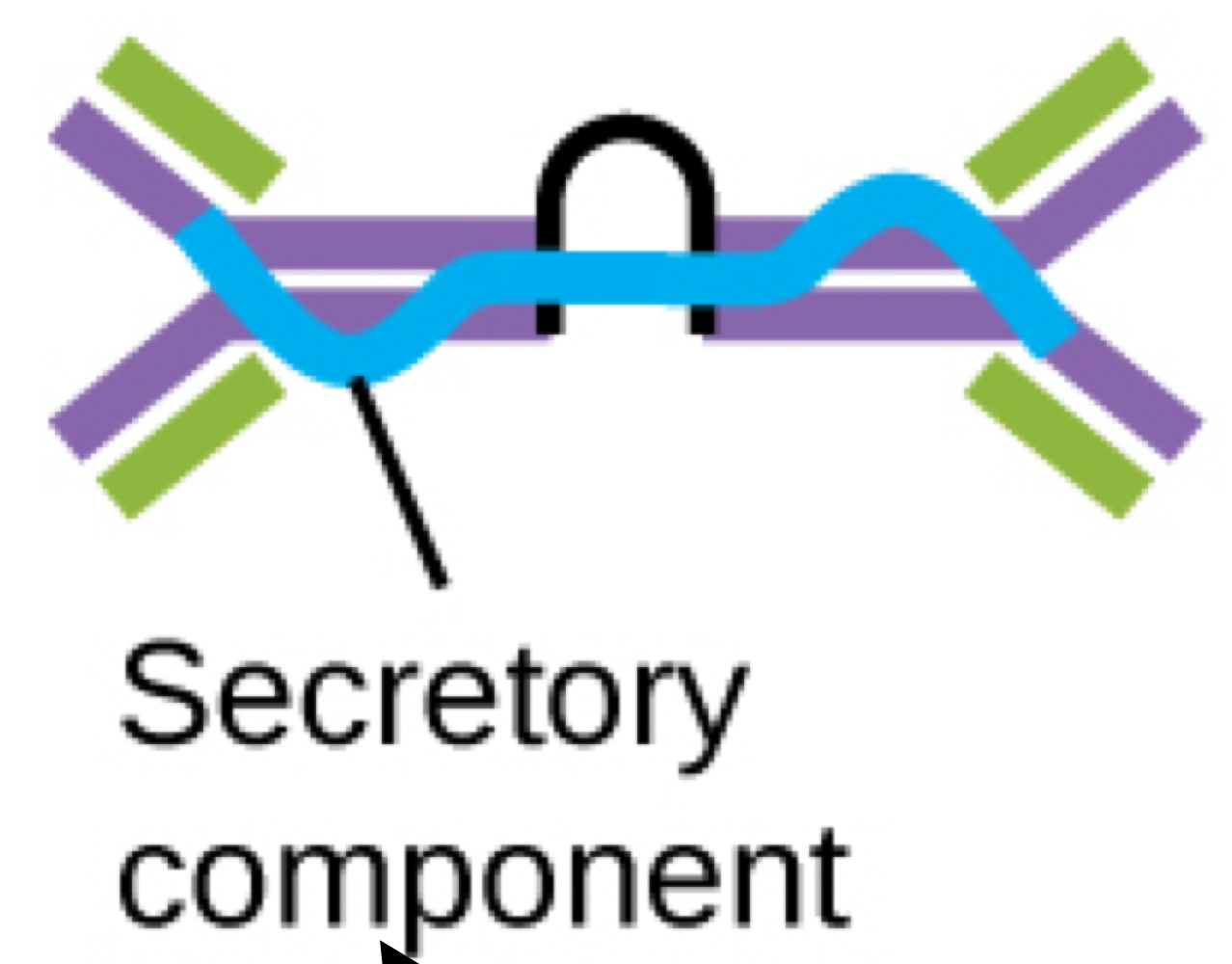
IgA: secreted in milk, tears, mucus in digestive system and respiratory system to help fight infections in those areas
Structure: forms a dimer, with two Y shaped antibodies facing away from each other
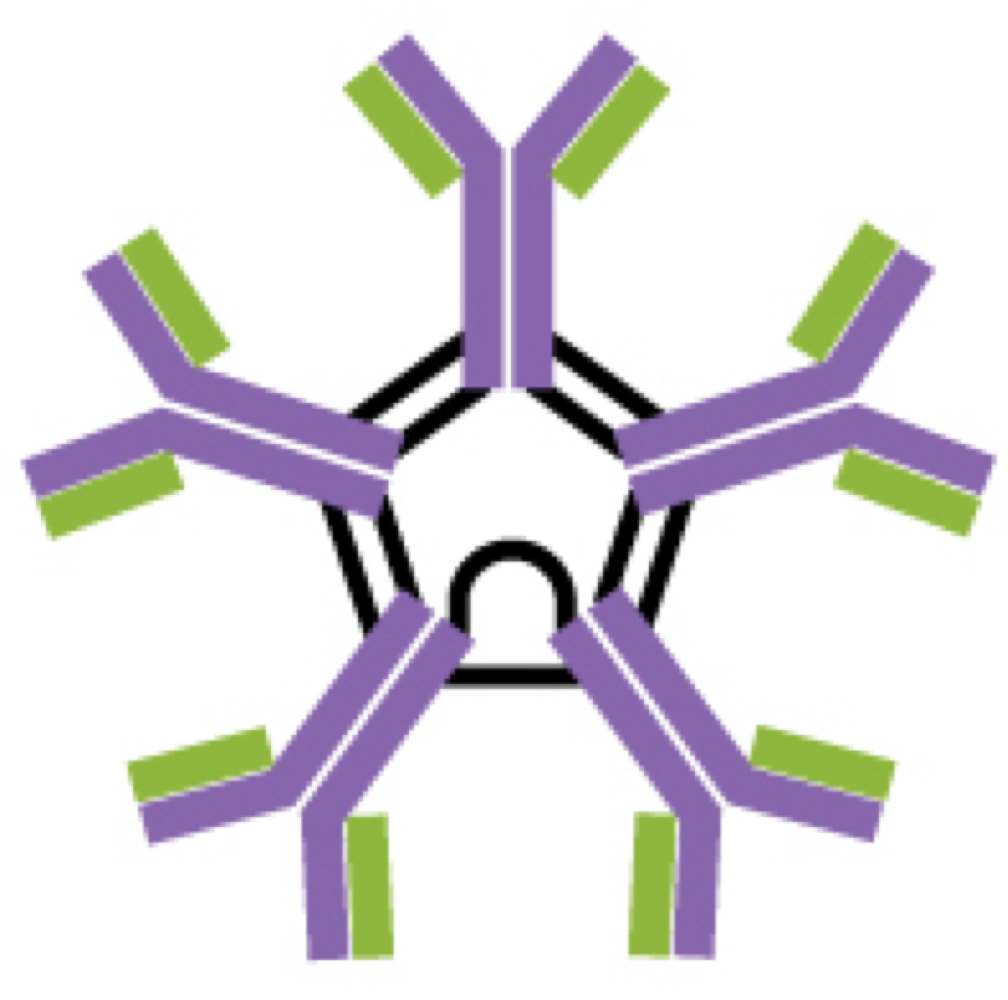
IgM: First class of antibody made by B cells after activated
can also serve as B cell receptor
Structure: 5 Y shaped antibodies forming a pentamer structure
IgD: serve as B cell receptor
Structure: Y shaped, with inner Y having same constant region and outer arms have different variable regions
IgE: fight parasites
pro-inflammatory
antibodies are mistakenly getting triggered by something harmless, causing allergies
Structure: Y shaped, with inner Y having same constant region and outer arms have different variable regions
Memory Cells and Immunity
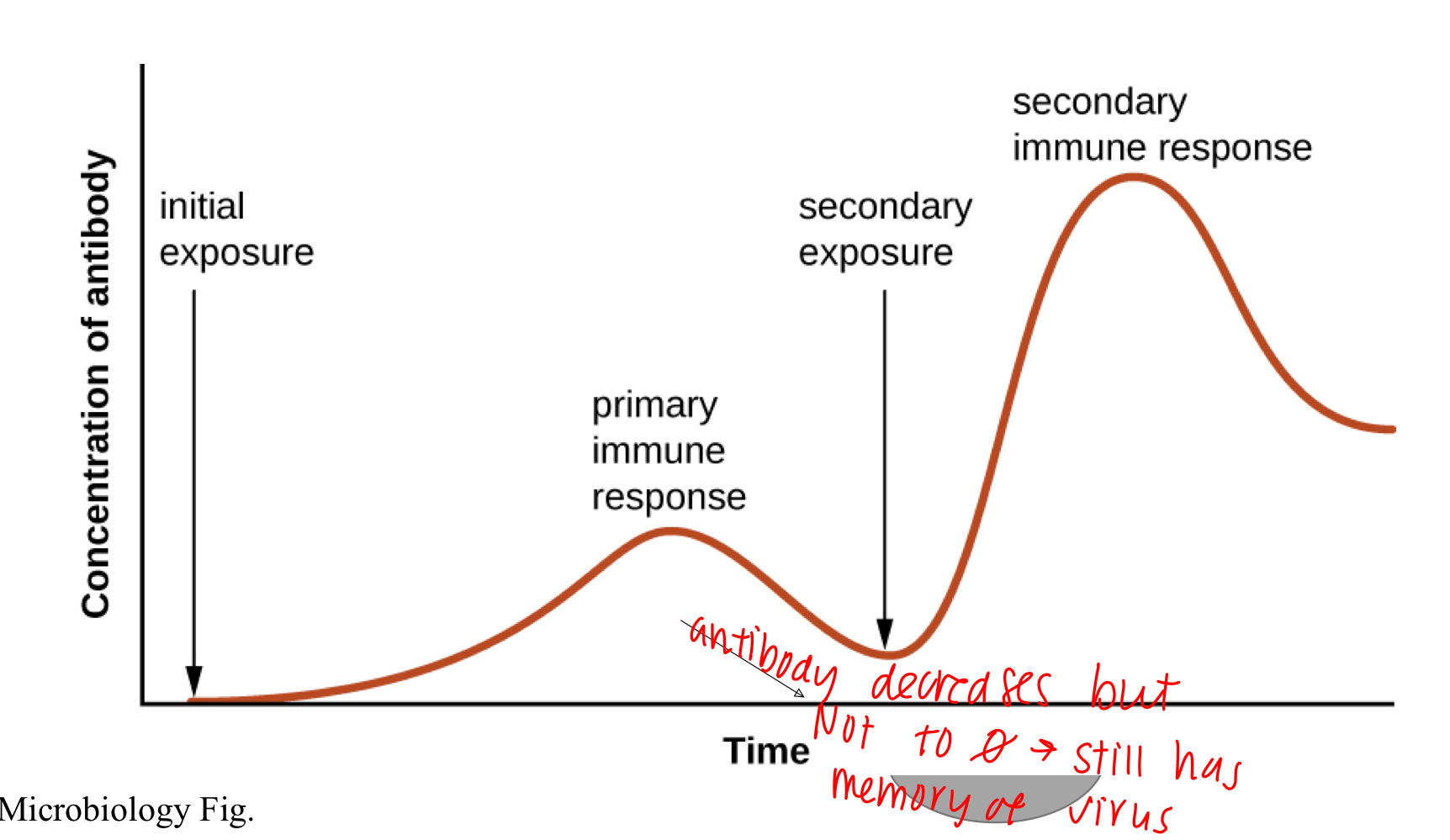
Memory cells (Memory T and B cells) remain in the body post-infection, ensuring rapid response upon re-exposure to the same pathogen.
antibody concentration decreases after initial exposure, but does not diminish completely
if same pathogen comes back, memory cytotoxic T cells, Memory helper T cells, and memory B cells go into attack mode
form antibodies in the body to eliminate pathogens before symptoms even occur
creates immunity