Literary analysis + unreliable narrator
Literary analysis: Certain argument about the central idea/theme of the story based on hard evidence from the text.
Setting: where and when story takes place
Plot: pattern of events in the story
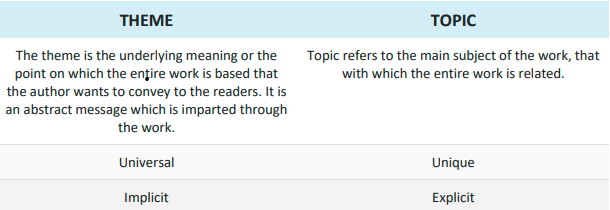
Theme: Underlying meaning→ multiple themes that explore universal ideas
Topic: Main subject or idea of a book
Narrative perspective
Narrative perspective is the position and character of the storyteller in relation to the narrative.
First-person: Narrator plays a role and talks from their perspective
Character voice (Reliable or Unreliable voice)
Stream of Consciousness voice (an ‘unedited’ rendering of a person’s thoughts)
Epistolary voice (letters or other documents, may contain third-person perspectives)
Second-person: The reader is the protagonist
Third-person: Narrator typically stands out of the universe of the book.
Omniscient/ God narrator: Knows everything
Subjective/ Limited: Narrator shares the thoughts, feelings, and opinions of characters. Story follows 1 character’s inner world: third-person limited.
→ reader is limited to the thoughts of some particular character as in the first-person mode, except still giving personal descriptions with third-person pronouns.
Objective: Unbiased point of view with no feelings or opinions→ fly-on-the-wall
Setting
Time and geographical location → provides background/mood/context
Pathetic fallacy: weather reflects a characters emotions
3 forms of setting:
Man-made places
Natural setting
Cultural/historical setting
Plot
Plot: the sequence of important events inside a story where each event affects the next through the principle of cause-and-effect.
Story refers to all events of the narrative, those told or shown, and those mentioned and inferred
Freytag’s Pyramid:
Exposition: starting point story
Rising action: Initial incident and begin of tension
Climax: Turning point with highest tension
Falling action: Unwinding of the story: consequences climax
Resolution: all conflict officially ends. Loose ends can be tied up and we know if the protagonist was successful or not
Character
Protagonist, antagonist, deuteragonist, tritagonist, love intrest, confidant, foil
Round vs flat
Style
How something is written
2 main components
Diction: authors words and language
Text composition: sentence structure, paragraphing, and overall organization.
Tone: author’s attitude
Mood: atmosphere the reader gets
Voice: the unique personality or identity of the author that remains consistent across texts, even if the tone changes.
In non-literary writing, style should match the audience and purpose and remain consistent.
In literary writing, style is used creatively to shape meaning, influence the reader, express characters, or highlight themes.
Unreliable narrator