Fundamentals of Financial Analysis: Module 1
🔍 What Is a Balance Sheet?
A balance sheet is a snapshot of a company’s financial health at one point in time. It shows:
What the company owns (Assets)
What it owes (Liabilities)
What is left for the owners (Shareholders' Equity)
👥 Who Uses the Balance Sheet and Why?
🧾 Shareholders (Owners)
Look at cash to see if the company can pay dividends.
Decide if the company is healthy enough to invest more money in.
🏦 Creditors (Lenders)
Check how much debt the company has compared to its equity.
Want to know if the company can pay back loans.
💼 Buyers (People Who Might Buy the Business)
Look for extra assets (like unused land or equipment) that could be sold.
Want to know how much the business is really worth.
📊 What’s on the Balance Sheet?
✅ Assets (What the Company Owns)
Current Assets: Things like cash, inventory, and money others owe the company (used within 1 year)
Long-term Assets: Buildings, land, machines (used for many years)
Tangible Assets: Physical things (e.g., buildings)
Intangible Assets: Non-physical (e.g., patents, brand value)
💸 Liabilities (What the Company Owes)
Current Liabilities: Bills due within a year (like wages or short-term loans)
Long-term Liabilities: Loans and obligations due in more than a year
Liabilities = What the company must pay back
📈 Shareholders' Equity (What’s Left for Owners)
This is what’s left after paying all debts:
Equity = Assets − LiabilitiesIncludes:
Money invested by shareholders
Profits kept in the company (retained earnings)
📌 Why It Matters
If you're a... | You care about... |
|---|---|
Shareholder | Enough cash and value to keep or grow the investment |
Lender or Bank | Risk of not getting paid back |
Potential Buyer | Real worth of the business and hidden value |
🧠 Key Takeaways
The balance sheet shows a company’s financial strength or weakness.
It helps people decide if a company is worth investing in, lending to, or buying.
A strong balance sheet usually means the company is in good shape.
Income Statement
🔍 What Is an Income Statement?
The income statement (also called the profit and loss statement or statement of operations) tells you:
👉 How much money a business earned and spent over a specific time (like a quarter or year).
It’s like a report card for how well the company is performing through its day-to-day work.
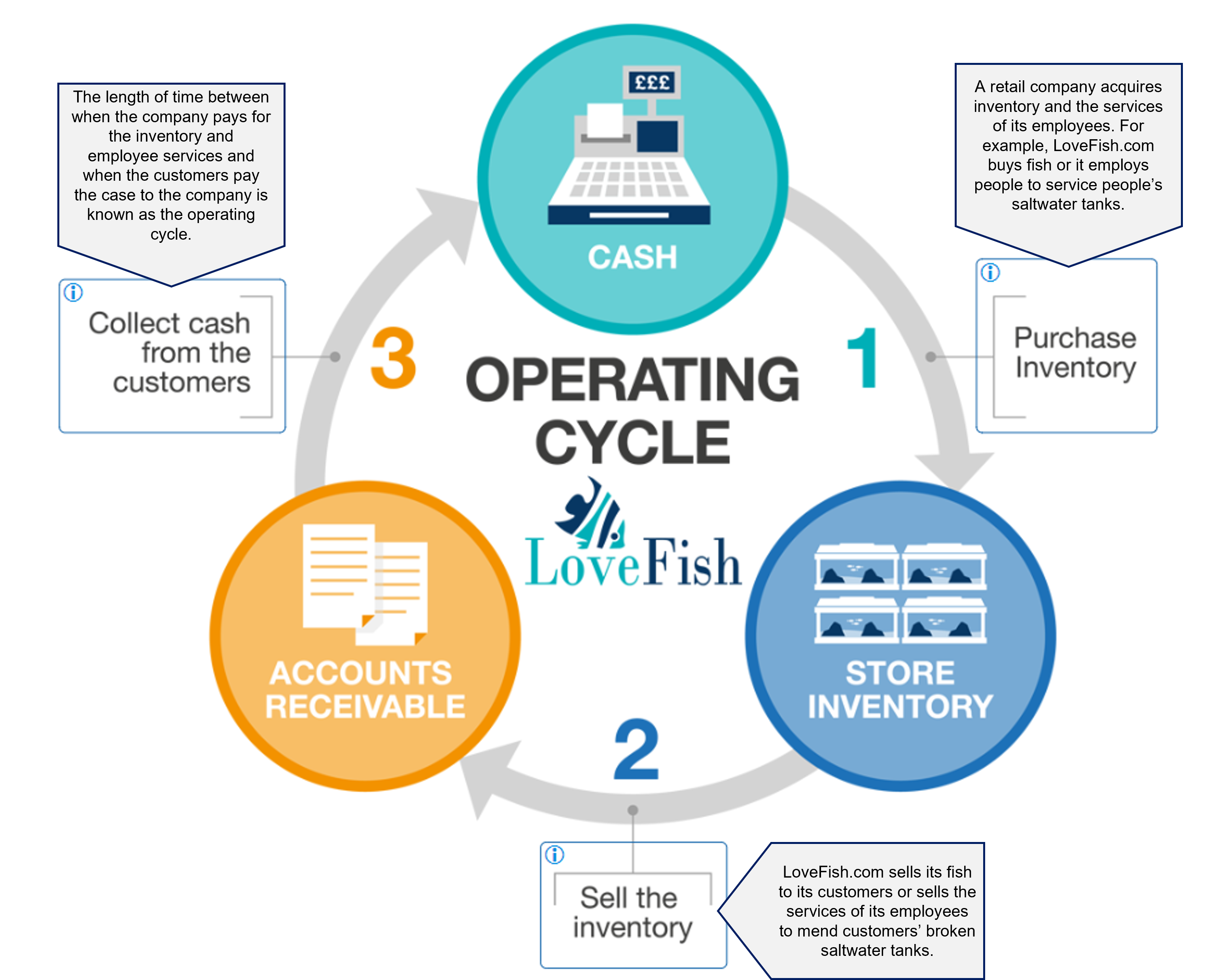
♻ Why It Matters: The Operating Cycle
Every business has an operating cycle, which repeats as long as the company runs:
🛒 Buy goods (inventory)
💸 Sell them to customers
💰 Collect cash from sales
The faster and more efficiently this cycle runs, the more profit the business makes.
A company wants to turn cash into more cash by using its operations, not just outside funding.
📊 What’s on an Income Statement?
1. Revenue (Money In)
This is all the money the company earned during the period.
Includes:
Sales of products or services
Other income like interest, rent, or dividends
More revenue = more business activity
2. Expenses (Money Out)
These are the costs of running the business.
Examples:
Cost of goods sold (COGS)
Salaries and wages
Rent, utilities, taxes, interest
Lower expenses = more efficient operations
3. Profit or Loss (Result)
This is what’s left after subtracting all expenses from revenue.
Profit (Net Income) = Revenue − Expenses
If negative, it’s a loss.
🧠 Why the Income Statement Matters
If you are... | You care about... |
|---|---|
A Manager | How to improve profits by cutting costs or increasing sales |
An Investor or Shareholder | Whether the business is growing and generating profit |
A Lender or Creditor | Whether the business earns enough to pay back loans |
A Buyer of the Business | If the company makes steady and growing profits from its normal operations |
🔑 Key Takeaways
The income statement shows how well a business is performing over time.
Profit means the company made more money than it spent.
It helps you decide if a business is healthy, efficient, and worth investing in.
Cash Flow Statements
🔍 What Is a Cash Flow Statement?
The cash flow statement shows where a company’s cash comes from and where it goes during a specific period (e.g., a quarter or year).
It’s split into three main sections:
🏢 CFO – Operating Activities
🏗 CFI – Investing Activities
🏦 CFF – Financing Activities
💡 Cash ≠ Profit. The cash flow statement tracks actual money in motion — not accounting profits.
📊 1. CFO – Cash Flow from Operating Activities
"How much cash does the business generate just by doing its job?"
Includes:
Cash received from customers
Payments to suppliers, employees, taxes
Changes in working capital (like inventory or accounts receivable)
✅ Positive CFO: Business is self-sustaining
❌ Negative CFO: Business relies on loans or investors to survive
🏗 2. CFI – Cash Flow from Investing Activities
"How is the business investing in its future?"
Includes:
Buying or selling property, equipment, technology
Acquiring or selling businesses
Buying or selling financial investments
✅ Positive CFI: Company is selling assets (possibly downsizing)
❌ Negative CFI: Company is investing in growth (usually a good sign if funded properly)
🏦 3. CFF – Cash Flow from Financing Activities
"How is the business raising or returning money?"
Includes:
Borrowing or repaying loans
Issuing or buying back stock
Paying dividends to shareholders
✅ Positive CFF: Company raised money from loans or investors
❌ Negative CFF: Company paid back debt or gave money to shareholders
📈 Example Summary Format:
Section | What It Stands For | Example |
|---|---|---|
CFO | Cash from Operating Activities | +$80,000 from sales, -$30,000 in wages |
CFI | Cash from Investing Activities | -$50,000 for new machinery |
CFF | Cash from Financing Activities | +$100,000 loan, -$10,000 dividends |
🔁 Net Change in Cash
CFO + CFI + CFF = Change in Cash
Add all three sections together. This tells you how much cash the company gained or lost over the time period.
🧠 Why Does This Matter?
Stakeholder | What They Look For |
|---|---|
Management | Can the business fund itself and grow? |
Investors | Is there enough cash to pay dividends and reinvest? |
Creditors/Lenders | Can the business repay loans and interest? |
Buyers | Is the cash flow strong and predictable long-term? |
🧮 Google Sheets Quick Tip Formulas
Goal | Formula Example |
|---|---|
Total CFO |
|
Total CFI |
|
Total CFF |
|
Net Change in Cash |
|
Ending Cash Balance |
|
🔑 Final Thoughts
CFO is most important — it reflects operational health
CFI reveals investment strategy
CFF shows funding structure and capital decisions
Healthy companies have strong, positive CFO, smart CFI, and disciplined CFF