Shifts in Aggregate Demand
The economy is constantly changing and for this reason AD shifts
Shift 1: Income:
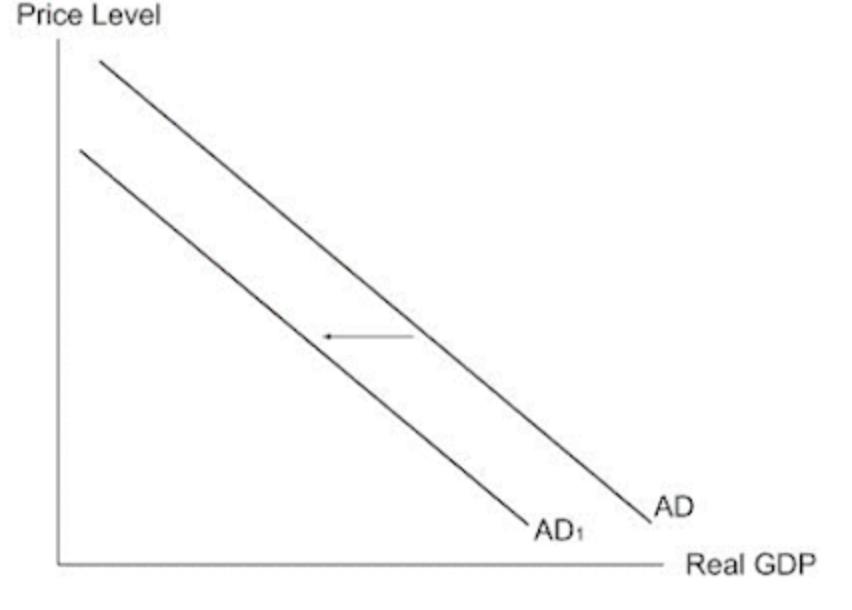
Reductions in Income
Loss of income means workers spends less as they have less disposable income - reduction in consumer spending (component of AD)
Loss of consumption means firms will make less profit and therefore will have to cut back on investment (component of AD)
If workers incomes decrease, the government will receive less money in income tax. If consumer spending decreases (component of AD), the government will receive less money in VAT. If firm’s profits decrease, the government will receive less money in coorperation tax.This means governments have less tax revenue and therefore government spending decrease (component of aggregate demand).
Thus, there has been a reduction in C, I and G - all components of AD - so a reduction in AD and a leftward shift on a graph.
Increase in income:
Increase in income will lead to greater consumer spending as consumers have greater disposable income (component of AD)
This will lead to an increase in firms profits as more goods and services are being purchased - they can now invest more (component of AD)
Increases in consumer spending mean more VAT for the government. Increases in profit and sold G+S mean greater coorporation tax to governments from firms. Increase in Income means greater income tax to the government. This leads to an increase in government reveneue and therefore government spending (Component of AD)
Thus, this leads to an increase in Aggregate demand and a rightward shift on a graph.
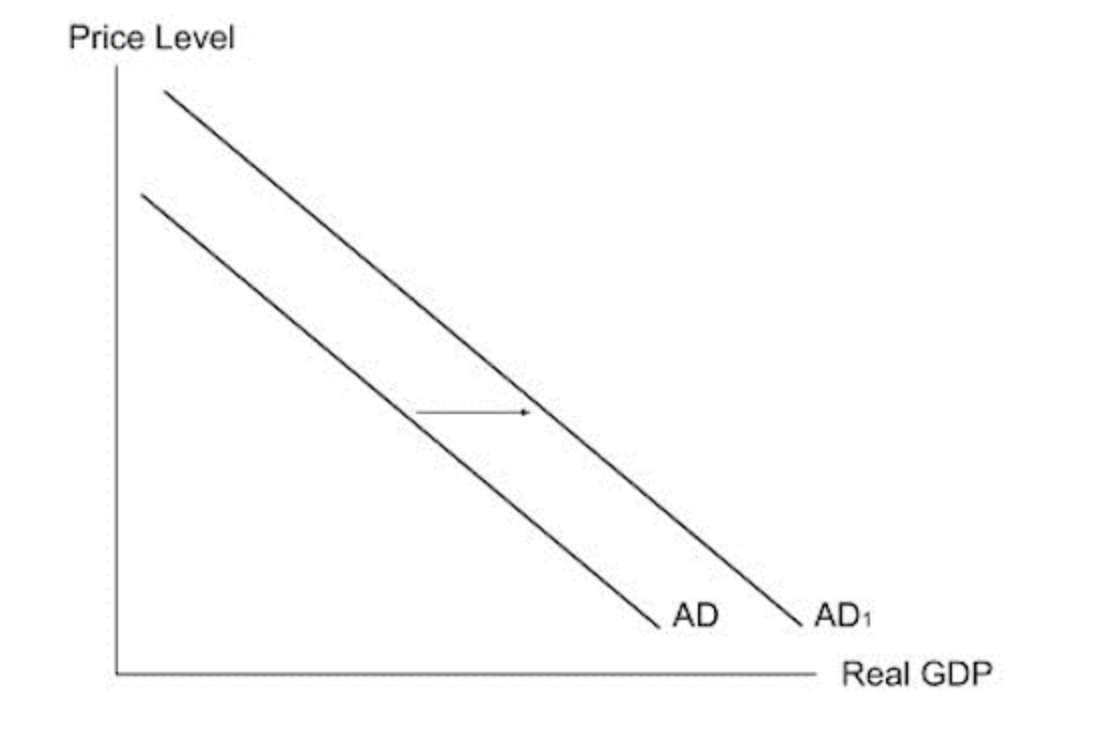
Summary on income: Increased income = right shift increase in AD. Decreased income = left shift decrease in AD
Disposable income vs Income = Income is the total earnings received by an individual before taxes while disposable income is the total money an individual earns after paying taxes
Multiplier Effect
When an initial increase in an injection (usually gov spending or investment) leads to a bigger overall increase in aggregated demand
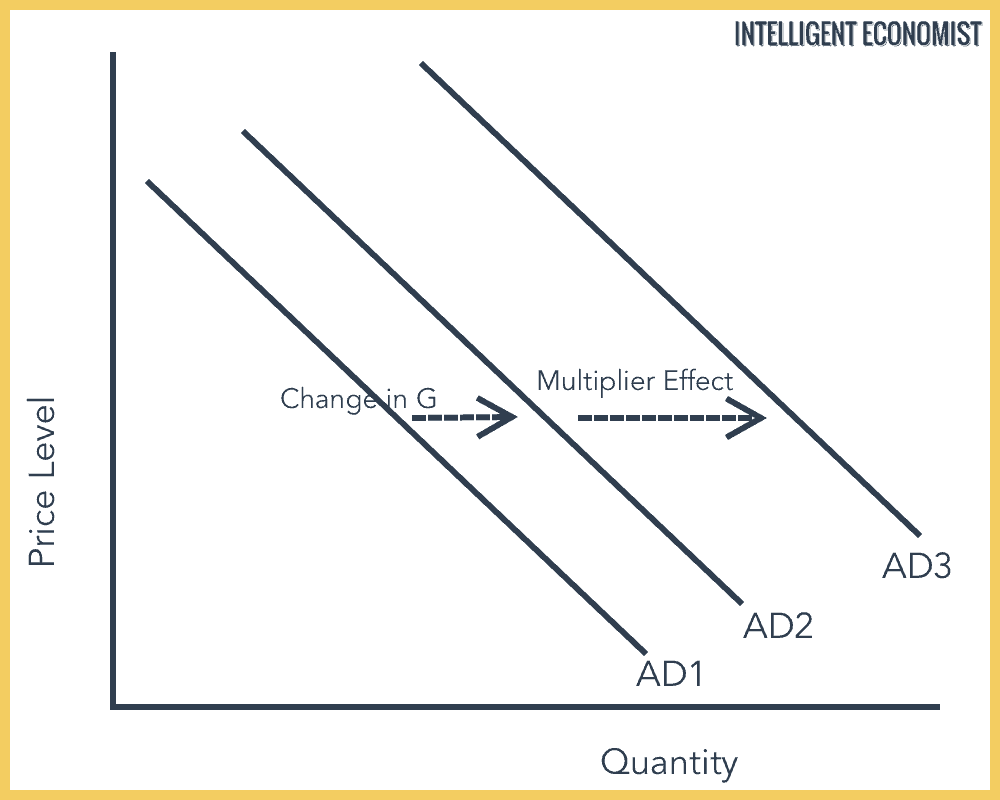
For example, in the UK 2012 London Olympics the government spent £8.8 billion (injection increase) but the AD increase was not proportional - real GDP increased by £16.5bn - by spending more on the olympics the government hired more workers: builders, cleaners etc - these workers then spent their incomes in the economy which means greater consumer spending which means greater firm profits which means greater investment. Also the greater income, coorporation tax and VAT means greater tax revenue which means greater government spending and the cycle repeats itself.
However, in different economies the multiplier may react differently. For this reason a Multiplier Ratio exists.
Uncommon way of calculating: Multiplier Ratio = Total change in Real GDP / Initial injection. For example, in the UK olympics the change in rgdp = 16.5bn / 8.8bn = 1.875
So the multiplier ratio tells us how much RGDP will increase following an initial injection into the economy
The Calculation that we need to know:
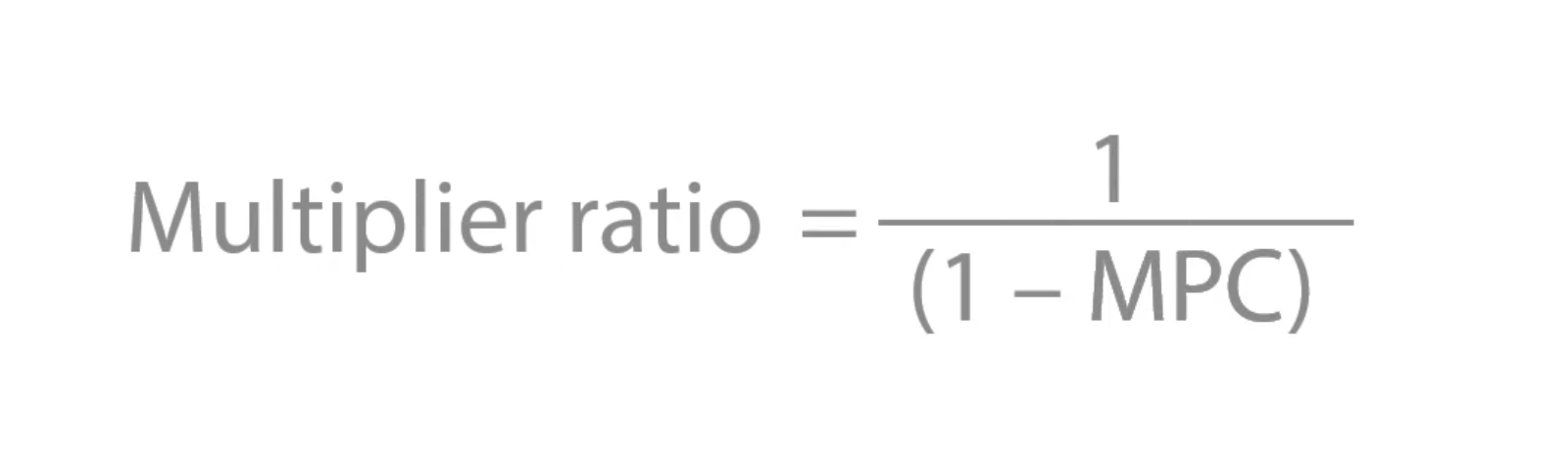
MPC = marginal propensity to consume
This calculation shows how much consumers are willing to spend if given an additional £
High MPC = more likely to spend it
Low MPC = less likely to spend it and more likely to save it
Downward multiplier effect
Opposite of the mutliplier - the downward effect on Aggregate demand and RGDP exceeds the initial leakage in the eocnomy.
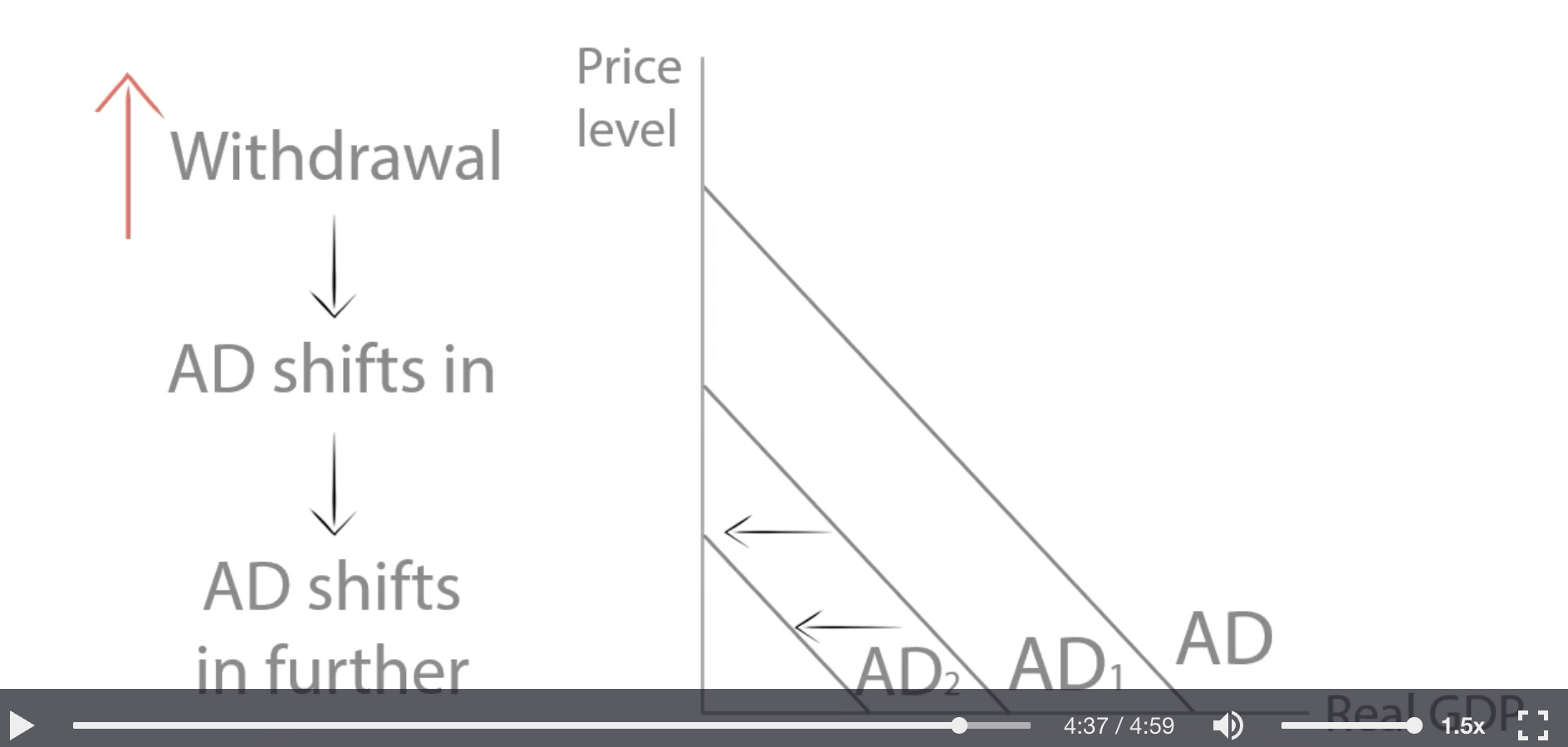
Example in 1970s with Denis Healey (chancellor of exchequor) increased the top income tax to 83% - taxation is a leakage from the circular flow - an increase in income tax means less disposable income which means less consumer spending which means less business profits which means less investment. Firms will also have to lay off workers which means less income. This means less tax revenue as VAT is reduced due to lower consumption, cooporation tax is reduced as firms are making less taxable profit and less income tax as unemployment increases. This all leads to a significant decrease real GDP and significant decrease in AD meaning a leftward shift on a graph.
Another example is the 2008 financial crisis.
Accelerator effect
the increase in Rgdp caused by the multiplier effect signals to firms that the economy is growing and therefore they invest in more capital eg. machinery to meet the growing demands from consumers.
So the accelerator effect is when: an increase in Real GDP accelerates investment.
Benefits
Benefits are payments made by the government to unemployed or low income workers who are struggling to support themselves or their families eg. job seekers allowance
Benefits, although paid by the government, is not government spending because the government isnt actually buying anything - it is simply transferring money to low income households and they are the ones that do the spending
THUS, benefits actually has its effect on consumer spending as a component of AD not government spending
Like income, increased benefits shift AD to the right, expanding the economy and can also expand more times via the multiplier effect.
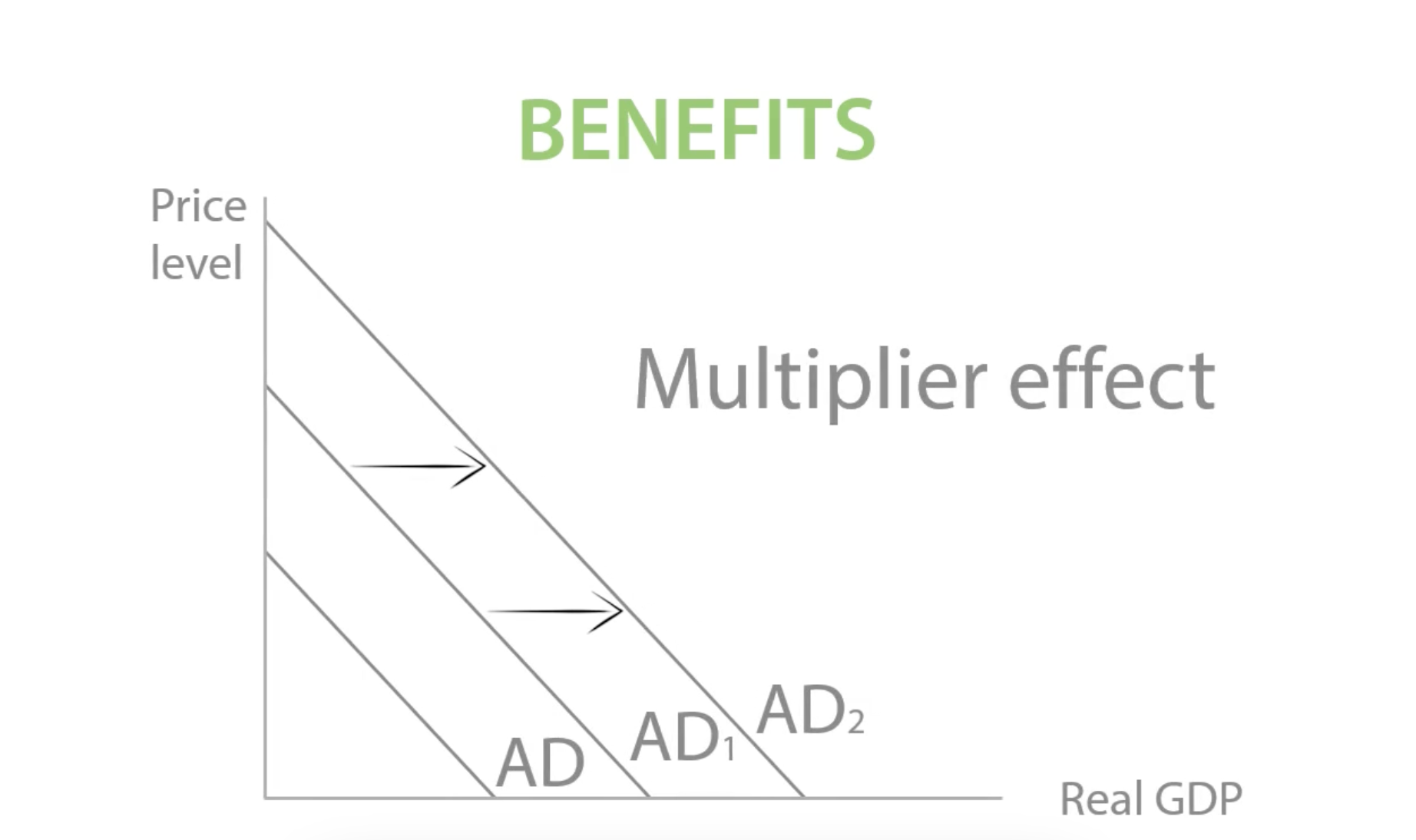
HOWEVER, (powerful evaluation), when the government pays out more benefits there is an OPPORTUNITY COST, meaning government spending reduces in other areas. Governments have less revenue. For example, the high speed cross-rail costing 1.9 billion
This leads to a contraction back to the left
Interest rates
Savings - interest rates show you how much interest you will earn from the bank for saving. The longer money is saved the more is made.
Mortgages - borrowing money to buy a house - interest rates on borrowing is the amount extra mortgage lenders have to pay the bank. The longer its borrowed the more is owed
An increase in interest rates means more people save as they get a larger return on their savings. It also means greater mortgage repayments which means consumers have less disposable income which means consumer spending decreases. Investment would also fall as firms would have larger repayments on loans. C and I and therefore also G means AD shifts to the left and RGDP falls.
A decrease in interest rates means the opposite
Consumer Confidence
Decrease confidence in the economy makes consumers consume less and save more to prepare for the future of the economy which they are will be bleak. This happened following the Brexit vote and leads to lower AD as consumption is a component of AD.
An increase does the opposite.
Investor Confidence - Animal spirits
When investor confidence is high they increase investment; taking out loans, raising money. For example during the start of .com businesses saw companies like Amazon and Ebay turning big profits and the investors confidence in the internet increased. This led to many firms raising huge sums of money to invest in .com for themselves. This leads to a shift in AD to the right as Investment is a component of AD. Rgdp also inceases.
However
When many .com firms crashed investors lost their confidence and reduced their investment in it. This leads to a shift in AD to the left as less investment (component of AD)
Wealth Effects
When assets rise in wealth consumers feel more confident leading to greater confidence and greater spending leading to greater consumption shifting aggregate demand to the right
The opposite occurs aswell; when asset values decline, consumer confidence diminishes, resulting in reduced spending and a leftward shift in aggregate demand.
Evaluation: the impact of wealth effects is dependent on how many people own a home. For example while the increase in house prices may lead to homeowners feeling more confident it will also mean people saving to buy a house have to spend more to buy the house and they become less confident.
Pensions
Lowered pensions means consumers are forced to save up more money to make up the difference. This means less disposable income which means a cut back in spending and lowered consumption meaning a leftward shift (reduction) in aggregate demand
Government spending
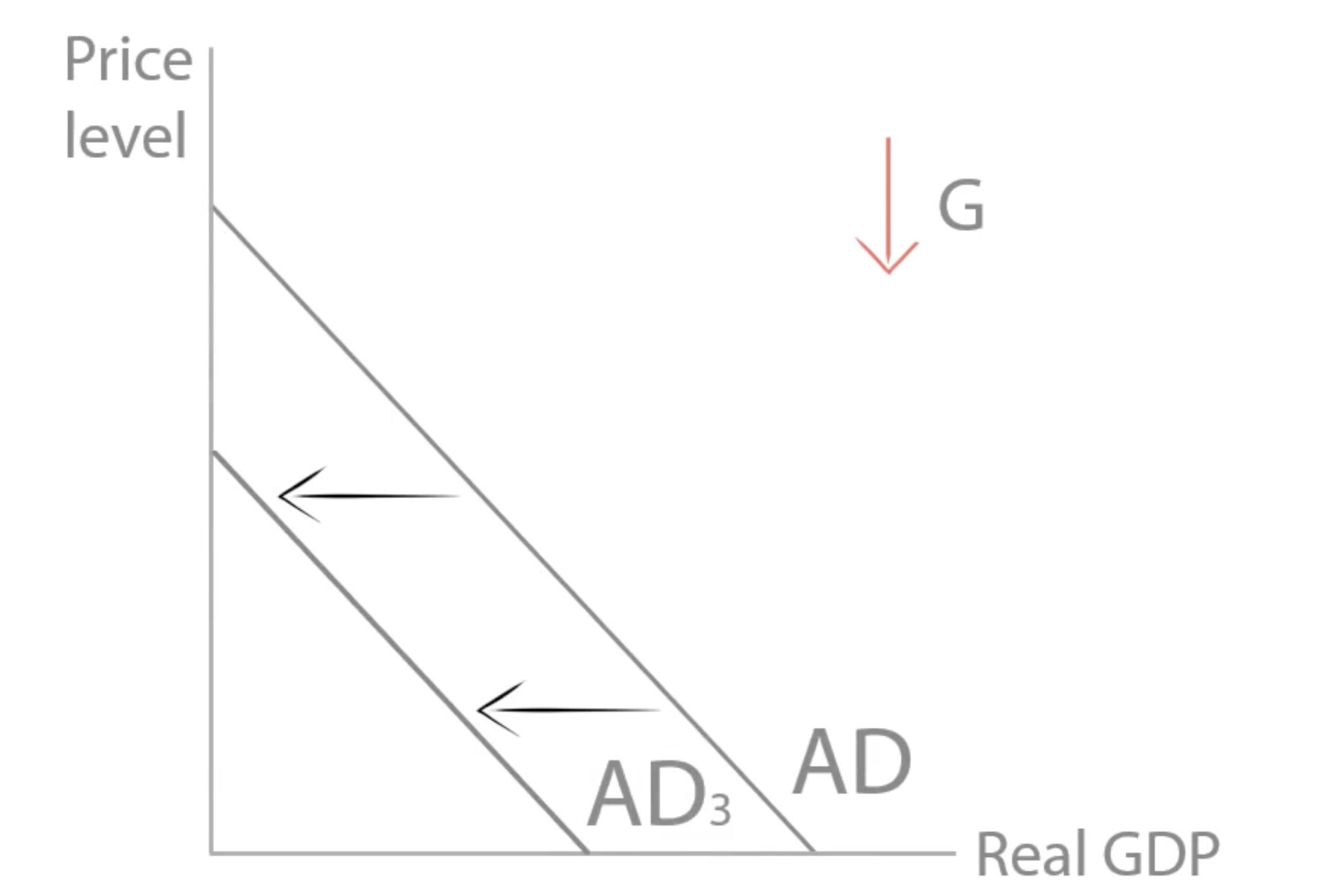
Creation of HS2 spending 81 billion - government spending increase on factors of production - CELL. As gov spending is a component of AD (C+I+G+(X-M)) aggregate demand will increase. Also consumption will increase as builders have more money to spend from extra incomes earned from HS2
opposite occurs aswell
Savings Ratio
% of Saved money as a proportion of disposable income (after tax)