Skeletal Injuries and Diseases
Symptoms
Many fractures are very painful and may prevent you from moving the injured area. Other common symptoms include:
- Swelling and tenderness around the injury
- Bruising
- Deformity - a limb may look “out of place” or a part of the bone may puncture through the skin
\n
MOI & DCAP - BTLS
We are looking at MOI: Mechanism of injury
What caused the injury
- D - Deformity
- C - Contusions
- A - Abrasions
- P - Punctures
- B - Burns
- T - Tenderness
- L - Lacerations
- S - Swelling
\n
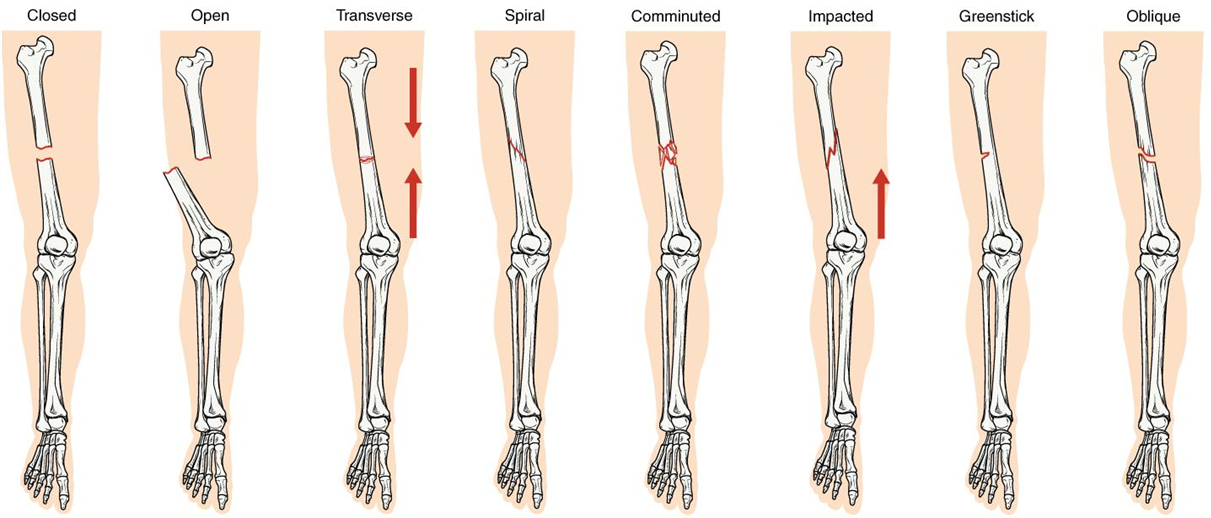
Open/ Closed Fracture
Open - Bone is sticking out of the body open to the atmosphere with no enclosed skin
Closed - Bone is enclosed in the skin and the area is swelled
Treatment
Cast Immobilization
A plaster or fiberglass cast is the most common type of fracture treatment because most broken bones can heal successfully once they have been repositioned and a cast has been applied to keep the broken ends in proper position while they heal.
Functional Cast or Brace
The cast or brace allows limited or “controlled” movement of nearby joints. This treatment is desirable for some, but not all fractures.
Traction
Traction is usually used to align a bone or bones by a gentle, steady pulling action.
External Fixation
In this type of operation. Metal pins or screws are placed into the broken bone above the fracture site. The pins or screws are connected to a metal bar outside the skin. This device is a stabilizing frame that holds the bones in the proper position while they heal.
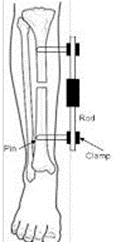 \n In cases where the skin island other soft tissues around the fracture are badly damaged, an external fixator may be applied until surgery can be tolerated.
\n
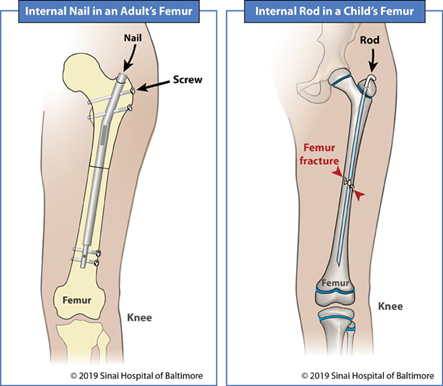
Open Reduction and Internal Fixation
During this operation, the bone fragments are first repositioned (reduced) in their normal alignment and then held together with special screws or by attaching metal plates to the outer surface of the bone. The fragments may also be held together by inserting rods down through the marrow space in the center of the bone.
The Body holds 5-6 LITERS
- The pelvis is the worst because there is a major artery that runs through there (femoral artery)
\n 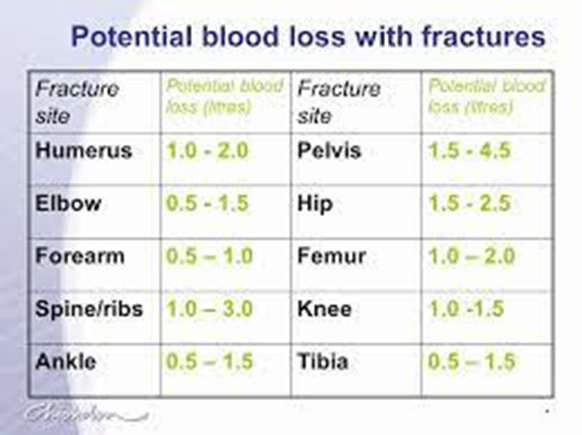
\n
Different Kinds of Facial Fractures
Nasal bones (broken nose)
- Nasal bone fractures are the most common type of facial fracture
- It takes less force to break the nasal bones than other facial bones because they are thin and prominent
- Usually, the nose looks deformed or feels sore to the touch after a fracture. Swelling in the area might make it more difficult to assess how much damage has occurred
- Nosebleeds and bruising around the nose are common symptoms of a nasal fracture
Mandible (lower jaw)
- Fractures of the lower jaw affect the sections of the lower jaw that supports teeth (called the body), the part where the jaw curves upwards into the neck (the angle), or the knob-shaped joint at the top of the jaw bone (the condyle) or the point where the two sides of the lower jaw are joined (the symphysis)
- Fractures of the mandible may be accompanied by broken or loose teeth
\n
Symptoms of Facial Fracture
Symptoms of a fracture to the face may include pain as well as bruising, swelling, or tenderness
Symptoms of a nose fracture Include:
- Purplish patch on the skin caused by leakage of blood from ruptured blood vessels (bruising or ecchymosis)
- Discoloration under the eyes
- Blockage of one or both nostrils or a deviated septum
- Twisted or crooked nose or indented bridge
- Nosebleed
Symptoms of an orbital fracture Include:
- Blurry, decreased or double vision (diplopia)
- Difficulty in moving eyes left, right, up, or down
- Swollen forehead or cheek or swelling under the eyes
- Flatness of the cheeks
- Sunken or bulging eyeballs
- Facial numbness near the injury
- Blood or discoloration in the white part of the eye
\n
Symptoms of upper or lower jaw fractures
- Trouble with chewing, eating or speaking
- Loose, broken or missing teeth
- Teeth not fitting properly together
- Cheek pain when opening the mouth
\n
Bone Diseases
Osteoporosis
- A disease in which the density and quality of bone are reduced
- Osteoclasts resorb bone, osteoblasts lay down new bone
- During menopause, hormones, primarily estrogen, slow down
- Osteoclasts are not as effective - Osteoblasts are less active
- Typically found in females who weigh less than 140lbs at menopause
- Also, sedentary lifestyle, history of rheumatoid arthritis, low calcium and vitamin D consumptions, excessive alcohol consumption, smoking and caffeine intake.
- Bone Density Tests
- Central DNA Scan: dual energy x-ray absorptiometry
- Complications that can occur would be broken bones
- Can live long lives but more at risk for injuries
- Treatment recommendations are often based on an estimate of your risk of breaking a bone in the next 10 year
- Low Risk: modify risk factors
- High Risk: medication
\n
Osteomyelitis
- An infection of the bone, a rare but serious condition
- Infection in one part of the body may spread through the bloodstream into the bone, or an open fracture or surgery may expose the bone to infection
- When the bone becomes infected, the inflamed area forms an abscess that impairs blood flow to the intramedullary area
- Bone death occurs, the periosteum peels away from the ostium and dead bone (sequestrum) forms
- Sometimes osteomyelitis causes no signs and symptoms or the signs and symptoms are hard to distinguish from other problems. This may be especially true for infants, older adults, and people whose immune systems are compromised.
- Sinuses commonly form that allow pus and debris to escape from the bone to the outer skin
- Fever
- Swelling, warmth and redness over the area of the infection
- Pain in the area of the infection
- Fatigue
- Amputations of the affected might be necessary to prevent death from septic shock. Repeated surgical procedures to remove diseased bone (sequestrectomy)
- IV and oral antibiotic therapy for long periods of time
- Sterile wound dressing changes
- Sequestrectomy
Paget’s Disease
This disease can cause affected bones to become fragile and misshapen - Paget’s disease of bone most commonly occurs in the pelvis, skull, spine, and legs
Paget’s Disease of bone interferes with your body’s normal recycling process, in which new bone tissue gradually replaces old bone tissue
Diagnosed by x-rays, bone scan, blood tests
There may be no signs or symptoms but a common complaint is bone pain
- Pain in your bones and joints
- Tingling and weakness in an extremity
- Bone deformities
- Unexplained hearing loss, especially if on one side
Fractures, deformities, osteoarthritis, neurologic problems, heart failure, bone cancer
In most cases, Paget’s disease of bone progresses slowly - the disease can be managed effectively in nearly all people
- Asymptomatic: might not need treatment
- Symptomatic: medications, possibly surgery as a result of:
- Help fractures heal
- Replace joints damaged by severe arthritis
- Realign deformed bones
- Reduce pressure on the nerves
\n \n \n \n \n \n \n \n \n \n \n \n \n \n \n \n \n \n \n \n \n