Engage: Comfort, Rest, & Sleep
Learning Objectives
Describe the functions, physiology, and stages of sleep.
Explain the effect of rest and sleep in maintaining physical and mental health.
Describe the characteristics of common sleep disorders.
Explore nursing interventions that can help promote a client’s rest and sleep.
Explore nursing interventions to promote a client’s emotional and physical comfort.
Apply the nursing process through the use of clinical judgment functions while providing care to clients experiencing alterations in comfort, rest, and sleep.
Functions, Physiology, and Stages of Sleep
The Brain: A Brief Overview
The brain is a complex organ that includes four major regions: the cerebrum, cerebellum, diencephalon, and brainstem. To better understand sleep patterns, it is necessary to become familiar with the areas of the brain that influence sleep.
The cerebral cortex is the outer layer of the cerebrum. It controls the perception of sensory information and processes information to transfer it from short- to long-term memory. The brainstem, which is located at the base of the brain, consists of the midbrain, pons, and medulla oblongata. The midbrain controls many of the motor functions.
The diencephalon controls body temperature and the autonomic nervous system. It is located above the brainstem between the cerebral hemispheres and consists of the thalamus, hypothalamus, and pineal gland. The thalamus’s primary function is to process sensory information and regulate sleep. The hypothalamus acts as the control center for the autonomic motor system. It is responsible for releasing hormones and regulating the body’s temperature. Notably, the suprachiasmatic nucleus located inside the hypothalamus assists in the regulation of the circadian rhythm. The pineal gland produces melatonin, a sleep hormone.
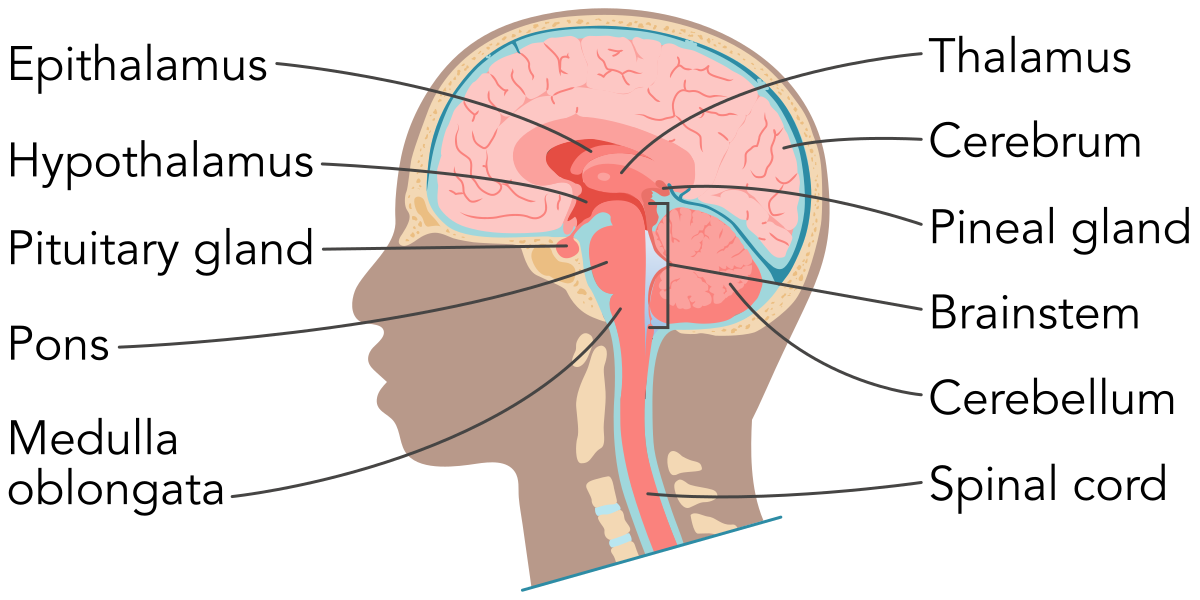
Parts of the brainThe brain is a complex organ that includes four major regions: the cerebrum, cerebellum, brainstem, and diencephalon, which consists of the thalamus, hypothalamus, and pineal gland.
Physiology of Sleep
Two internal biological mechanisms, the circadian rhythm and sleep–wake homeostasis, assist in regulating sleep–wake cycles. The circadian rhythm is an internal process that controls the sleep–wake cycle, reoccurring approximately every 24 hours. The circadian rhythm regulates a person’s biological clock, causing the individual to be sleepy at night and to wake on their own in the morning. Circadian rhythms synchronize with environmental cues such as light and temperature. However, the body can generally maintain circadian rhythms without prompts. Sleep–wake homeostasis assists the body to remember to sleep after a given time. The level of sleep is also controlled by, and will deepen according to, the amount of sleep deprivation that a client experiences. Many other factors can affect the sleep–wake rhythm, such as the lighting in a room (bright lights can disrupt the natural circadian rhythm), medications, caffeine, foods, sleep environment, and stress.
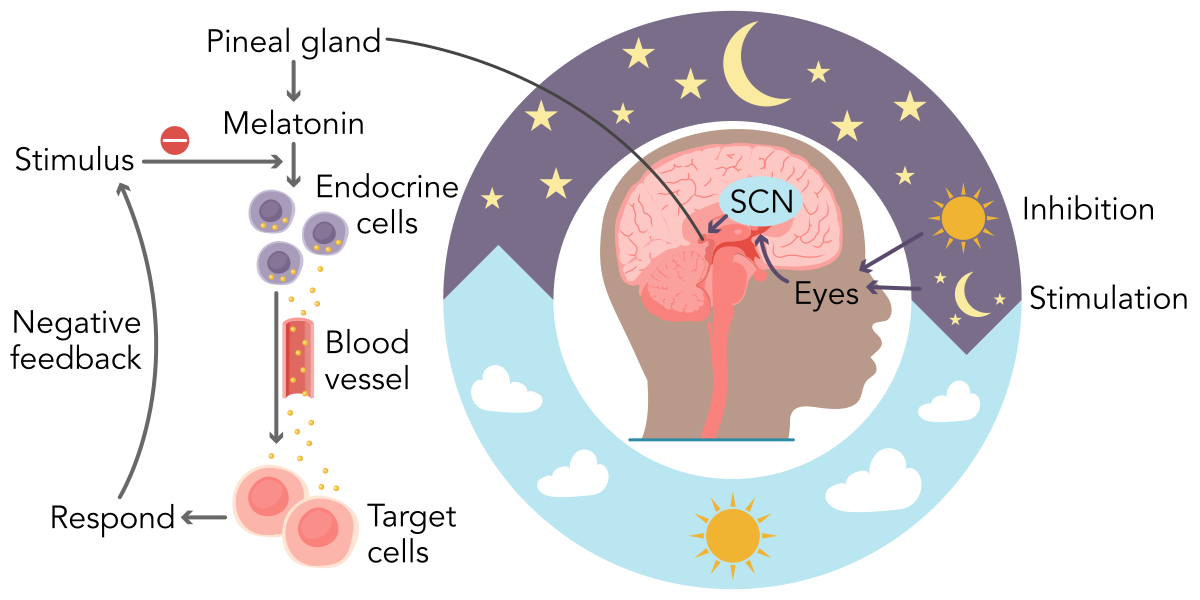
Factors that Impact Circadian Rhythm The circadian rhythm is an internal process that controls the sleep–wake cycle, reoccurring approximately every 24 hours.
As noted earlier, the main structures in the brain that are essential to the process of sleep and sleep regulation are the hypothalamus, suprachiasmatic nucleus (SCN), brainstem, thalamus, and pineal gland. The hypothalamus, which is located deep within the brain, commands a group of nerve cells that affect sleep and arousal. Located within the hypothalamus is the SCN, which controls a client’s behavioral rhythm directly from the eyes through light exposure. Clients with a damaged SCN can experience an erratic sleep cycle since they are not able to regulate their circadian rhythm during light–dark cycles.
The brainstem sends signals to the hypothalamus, which controls the shift between wake and sleep. The brainstem is composed of multiple structures, such as the pons and medulla, that influence rapid eye movement (REM) sleep. Signals are sent to relax muscles and to prevent individuals from physically acting upon their dreams. Also, sleep-promoting cells produce gamma-aminobutyric acid (GABA) within the hypothalamus and brainstem. GABA reduces the activity of the arousal centers.
The thalamus transfers information from the senses to the cerebral cortex, which then processes the data and transfers it from short-term memory to long-term memory. Through most of the stages of sleep, the thalamus’s function is to allow the individual to block out external distractions. However, during REM sleep, the thalamus transmits images, sounds, and sensations, which influence the content of dreams.
The pineal glands are located in the brain’s two hemispheres. These glands manufacture melatonin, a natural substance that helps the body prepare for sleep.
melatonin
Physiological Benefits of Sleep and Rest
Sleep is necessary for developing and maintaining new pathways for learning and memorization. Without adequate sleep, it becomes challenging to concentrate and respond to the various stimuli present in the environment. As a physiological function, sleep encompasses many different processes. The brain and cells (neurons) continue to communicate with each other while a person is sleeping to assist in removing the toxins that build up in the brain while the individual is awake. The maximal physiological benefits of sleep and rest are achieved when the essential internal biological mechanisms, brain patterns, and sleep stages operate smoothly.
Stages of Sleep
While asleep, the body cycles through several stages of sleep. These stages are characterized by either rapid eye movement (REM) or nonrapid eye movement (NREM), with each pattern cycling through approximately four to six times each night. REM is rapid movement of the eyes accompanied by low muscle tone. It is associated with the dream stage of sleep. Brain wave frequencies and amplitudes can be detected using an electroencephalogram (EEG), a measurement of the brain’s electrical activity. Stages of sleep are defined based on a client’s brain wave frequencies and amplitudes, together with eye and body movements and changes in vital signs.
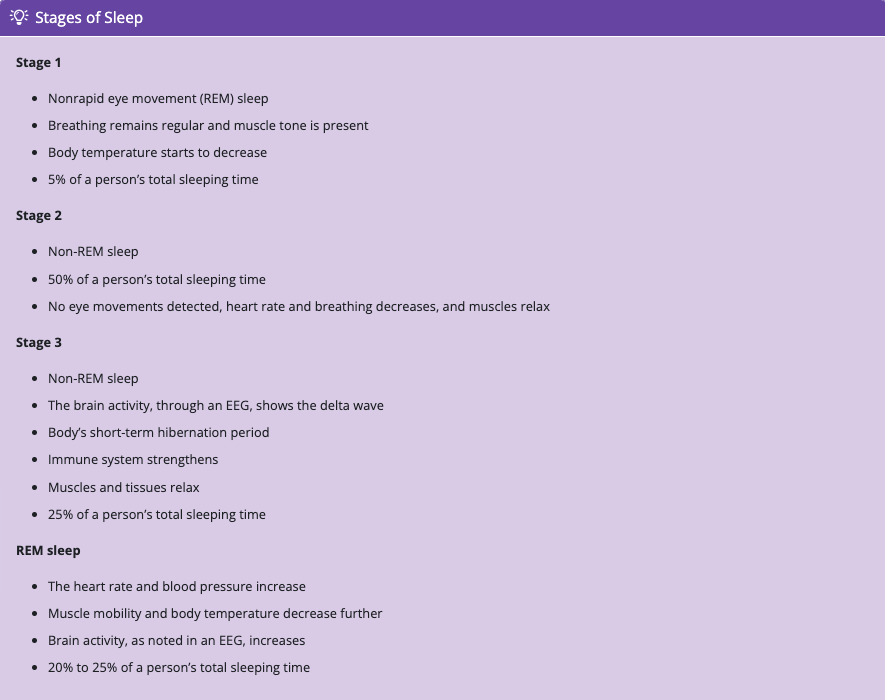
The wake stage (NREM) is the first stage of sleep. This cycle consists predominantly of alpha and beta electrical brain waves. Alpha waves, which have a frequency range of 8 to 12 hertz, show that a client is awake but relaxed with closed eyes. Beta waves, which have a frequency range of 13 to 30 hertz, indicate alertness and engagement. When a person becomes drowsy and closes their eyes, the alpha waves dominate over the beta waves. Breathing is normal, and skeletal muscle tone is present.
Stage 1 (NREM) of the sleep cycle is the lightest stage of sleep. It begins when greater than 50% of the alpha waves are exchanged for low-amplitude, mixed-frequency activity. Stage 1 can last from 1 to 5 minutes and accounts for approximately 5% of the total sleep cycle. During this “slowing down” phase, electrical brain activity and body and eye movements begin to diminish, though clients may still experience muscle twitching. Clients can be easily awakened at this time, but if left alone, they will progress quickly to the next stage. Infants up until 3 months of age will begin to wake from the REM to NREM stages, while adults will begin their wake transition from stage 1.
Stage 2 (NREM) is a deeper sleep. It is characterized by sleep spindles (sluggish spindles that are different in length) or K-complex (brief delta waves) electrical waveforms that trigger the superior temporal gyri, anterior cingulate, insular cortices, and the thalamus. Sleep spindles and K-complexes both assist in the consolidation of memory, and K-complexes maintain sleep. In stage 2, it becomes more challenging for the individual to awaken. Heart rate and body temperature decrease. The first sleep cycle of stage 2 lasts for approximately 25 minutes but become progressively longer with each successive sleep cycle. Stage 2 consumes approximately 50% of a total sleep cycle.
Stage 3 (NREM) is the deepest sleep. It is characterized by delta waves, electrical brain waves that have a slow wave frequency and high-amplitude signal. If a person is awoken in stage 3, they may have mental cloudiness that persists for 30 to 60 minutes. During this stage, the immune system strengthens, and the muscles, tissues, and bones repair and regenerate. Pulse and respirations are at their lowest rate. As clients age, they have fewer stage 3 cycles and more stage 2 cycles. Stage 3 is very deep sleep and lasts up to 40 minutes.
Stage 4 (REM) is the dreaming stage. This stage appears like an awake cycle on an EEG, as it also consists of beta waves. However, the skeletal muscles remain atonic (loss of muscle tone) and do not move (which protects the individual from acting out their dreams). Breathing is irregular and erratic, and heart rate may be elevated. The fourth stage typically begins 90 minutes after falling asleep. The initial cycle lasts 10 minutes, then becomes longer as the night progresses. This stage can last up to 1 hour. As clients age, they have fewer REM cycles.
Rest Versus Sleep
Sleeping is not always an option, and there are benefits to quiet rest. The human body needs rest and sleep to survive. Resting allows the person to close their eyes, relax their mind, and clear their thoughts. Although the individual is still awake, their muscles and organs have a chance to relax. Stress is reduced, mood improves, and mental alertness and clarity are enhanced through rest.
Sleep Patterns
Sleep patterns are different for the infant, adult, and older adult. Sleep patterns begin to change with aging, with some of these changes including lighter sleep, fewer dreams, and frequent waking.
Newborns’ (birth to 28 days) and infants’ (1 month to 1 year) sleep patterns are separated into multiple sessions. Their NREM and REM stages occur every 45 to 60 minutes, and the pattern remains mostly in stage 3. Until 3 months of age, approximately half of the infant’s sleep pattern consists of a REM cycle. As sleep time gradually begins to decrease, at 5 to 6 months of age, the infant is sleeping at night with a daytime nap. After 1 year of age, the infant begins to progress toward an adult pattern of sleep.
Adults (ages 20 to 35 years) spend 2% to 5% of their sleeping time in stage 1, 45% to 55% in stage 2, 25% in stage 3, and 20% to 25% in REM sleep. These sleep cycles are repeated approximately four or five times while the adult is sleeping.
Older adults’ (age 65 years and older) sleep patterns demonstrate a decrease in stage 3 sleep and an increase in stage 2 sleep. They wake up more frequently and take longer to fall asleep. Sleep disturbances can contribute to the development of chronic physical and mental health conditions, memory loss, and decreased quality of life.
The Centers for Disease Control and Prevention recommends the following hours of sleep by age.
Newborns (birth to 3 months): 14 to 17 hours
Infants (4 months to 1 year): 12 to 16 hours
Toddlers (1 to 2 years): 11 to 14 hours
Preschool (3 to 5 years): 10 to 13 hours
School-age children (6 to 12 years): 9 to 12 hours
Adolescents (12 to 18 years): 8 to 10 hours
Adults (18 to 60 years): 7 or more hours
Adults (61 to 64 years): 7 to 9 hours
Adults (65 years or older): 7 to 8 hours
Sleep and Rest
Page 1
Sleep is an essential physiological function that is necessary to support physical and mental health. While sleeping, the body goes through several processes to rebuild, strengthen, retain memory, and improve mood and concentration.
During sleep, the body repairs muscles, tissue, and bones and strengthens the immune system. Sleep helps prevent weight gain by decreasing production of ghrelin (the hunger hormone) and leptin (the decreasing-hunger hormone). Sleep also helps reduce the risk of type 2 diabetes by lessening the release of cortisol (the stress hormone): Increased levels of cortisol make it difficult for insulin to move sugar into cells.
Quality sleep strengthens the body in several ways. Sleep has been connected to improved concentration, mood, memory, and productivity. It also improves reaction time, hand-eye coordination, strength, and power. In fact, drowsy driving has been the cause of many motor vehicle crashes, leading to injury and death.
Sleep
Sleep deprivation occurs when the body’s biological sleep requirements are not met. A client can be totally, partially, selectively, or chronically sleep deprived. Total sleep deprivation is caused by losing a night of sleep or by staying awake. A client can become totally sleep deprived by staying awake for 24 hours or just by staying awake for a lengthy period. Partial sleep deprivation occurs when the client has decreased their sleep hours. If partial sleep deprivation continues so that the body is not meeting its biological sleep requirement, the client can progress into a chronic sleep deprivation state. Selective sleep deprivation purposely strips the client of a cycle of sleep.
Because clients’ sleep cycles can be interrupted multiple times by the complex interactions and procedures that often take place within the hospital setting, careful planning can help unnecessary interruptions of sleep cycles. Other circumstances throughout a client’s lifetime may also cause sleep deprivation—for example, stress, a newborn baby, an illness, medications, aging, sleeping disorders, and an increased workload.
Sleep deprivation has been shown to affect higher-order cognitive processes, impair judgment, decrease response time, and trigger seizure disorders, migraines, and tension headaches. In addition, it places clients at increased risk for accidents, depression, stroke, mood swings, and other sleep disorder conditions such as insomnia. Even losing 1 hour of sleep over multiple nights could have harmful cognitive effects, leading to worsening cognitive effects as sleep deprivation increases. Unfortunately, these cognitive effects may not be visible to the client, resulting in obesity and poorly controlled blood sugars in clients with type 2 diabetes.
The appropriate treatment regimen for sleep deprivation depends on the cause and severity. For example, eliminating caffeine, nicotine, and alcohol use, and developing a plan for exercising daily, can help promote sleep. Use of medications and/or therapy may also be necessary, as determined by a health care provider.
Promoting Sleep
Many factors can affect the sleep cycle, so addressing poor sleep requires a multifaceted approach. Sleep promotion requires education, lifestyle changes, a calm environment, rituals, relaxation, and comfort. Nurses can assist clients by teaching and reinforcing the use of the following nonpharmacological interventions to improve sleep:
Avoid stimulants, such as caffeine, alcohol, and nicotine, at least 4 to 6 hours before bedtime.
Remove any unnecessary light and noise. Substitute calming white noise if necessary.
Establish a bedtime routine, such as taking a warm shower or bath before bedtime.
Keep the room dark, quiet, and at a comfortable, cold temperature.
Only go to bed when tired. If the client feels restless while attempting to sleep, they should go to another room and do a simple activity such as reading or listening to preferred music.
Keep a consistent sleep–wake cycle by going to bed and waking at the same time, which allows the body to fall into a biological rhythm.
Keep naps short.
Engage in a regular exercise routine, but avoid exercise within a few hours of bedtime, and maintain a healthy diet.
Remove all work items and televisions from the bedroom when possible. The bedroom should be associated with sleep and sexual activity only.
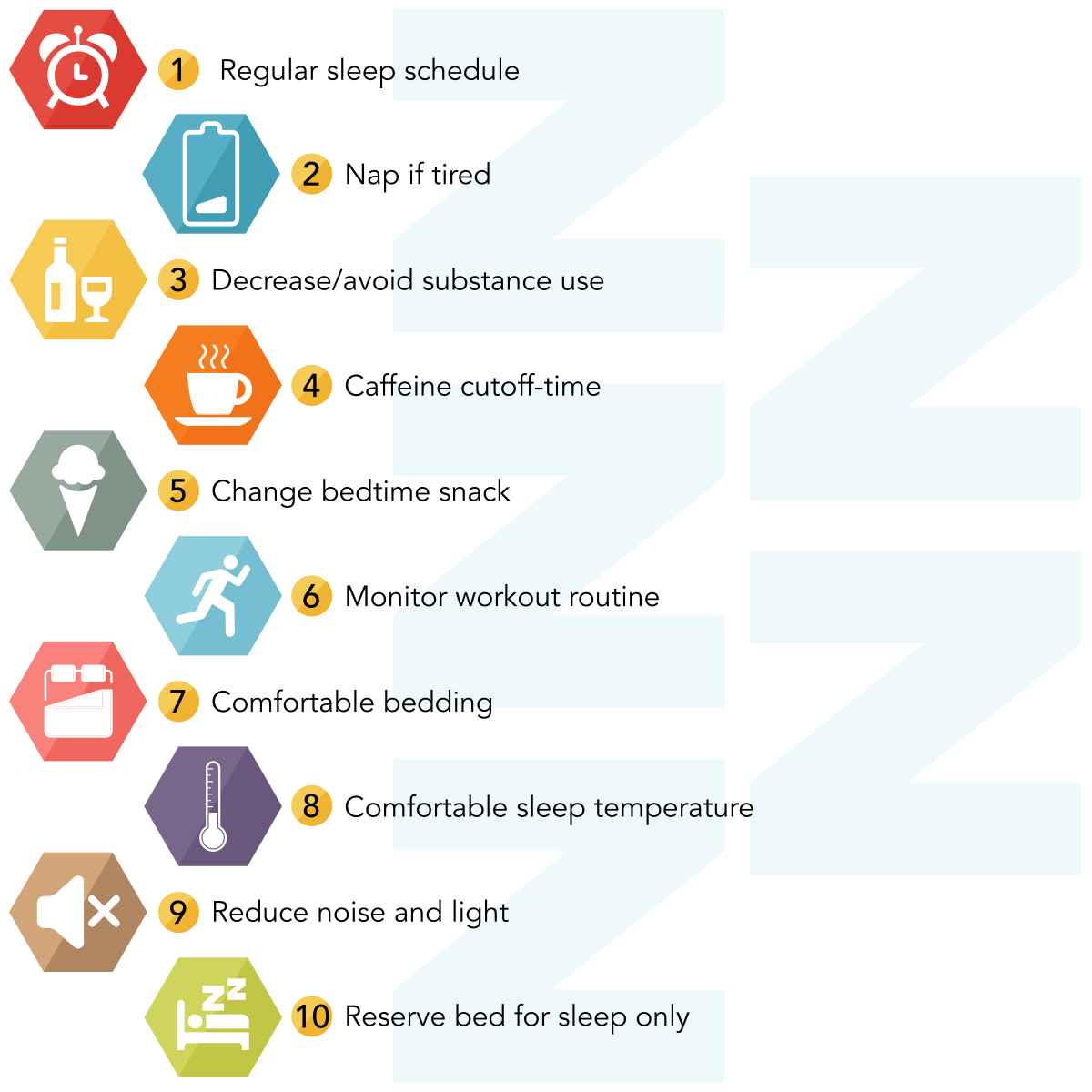
Tips for better sleep
Sleep promotion requires education, lifestyle changes, a calm environment, rituals, relaxation, and comfort.
Sensory Overload
In the hospital setting, clients’ sleep may be interrupted multiple times due to the need for complex interactions and procedures. These clients are vulnerable, experiencing intensified emotions. Such overstimulation of one or more of the body’s senses can quickly lead to sensory overload. Nurses play an integral role in forming a plan of care to assist in minimizing factors that might lead to sensory overload.
Nurses should be especially aware of sensory overload when caring for a client in an acute care setting. Evidence-based data show that this population of clients generally has a lower quality of sleep. Clients may have pain and discomfort, are disturbed frequently, are subject to increased noise levels, and are given pharmacological agents that may influence their sleep cycles. However, with strategic planning and cognizance, nurses can decrease the risk of sensory overload by lowering noise levels, dimming lights at night, providing clients with blindfolds and earplugs when appropriate, and coordinating and organizing care to minimize interruptions.
Contributing Factors
Other factors can also contribute to a restless night’s sleep. For example, the increased use of cell phones is a risk factor for both depression and poor sleep. The use of a cell phone after going to bed is associated with more sleep disturbances, resulting in shorter sleep duration, poor sleep quality, and daytime sleepiness. Sleep deprivation not only leads to tiredness, but may also induce depression, anxiety, and further sleeping difficulties.
Many night-shift workers tend to be sleep deprived and have an increased tendency to binge on unhealthy foods at night. Because of their disrupted circadian rhythm, these workers are subject to excessive daytime sleepiness and fatigue. Employees who do shift work or have rotating night duties have a higher incidence of job dissatisfaction and adverse health issues such as cardiovascular disease, obesity, and diabetes.
Menopause is a common cause of sleep disturbances. The overall prevalence of sleep disorders among females who are menopausal is highest during postmenopause and lowest during premenopause.
Sleep Disorders
Sleep disorders interfere with the quality of sleep. Insomnia, sleep apnea, narcolepsy, restless legs syndrome, hypersomnolence, and night terrors are common sleep disorders that create poor sleep patterns, which in turn cause constant fatigue and increase the risk of health problems, both physical and mental. Sleep disorders affect quality of life and raise safety concerns due to the potential for accidents attributable to lack of sleep.
Characteristics of Common Sleep Disorders
Insomnia is an ongoing inability to sleep despite having the opportunity to sleep. Insomnia can present as difficulty falling asleep or staying asleep, waking up early, or feeling tired when waking. There may or may not be an underlying mental or physical disorder present. Insomnia can affect a client’s physical, emotional, and mental health. The client is tired, has no energy, loses concentration and memory, has mood disturbances, and lacks motivation. Many chronic illnesses have been associated with insomnia, such as heart disease, hypertension, endocrine dysfunction, and arthritis. Treatment options include medications, sleep-promoting techniques and lifestyle changes, and cognitive-behavioral therapy.
Apnea is a condition in which inspiratory airflow ceases for at least 10 seconds. Hypopnea lasts 10 seconds or longer and is associated with a decrease in oxygen saturation (the amount of hemoglobin bound to oxygen in the client’s blood). Sleep apneas are classified as either central or obstructive. Both types result from a reduction of nerve conduction from the brainstem to the upper airway muscles and/or lower thoracic muscles such as the diaphragm.
Central sleep apnea (CSA) is associated with a reduction in the brain’s transmission of signals to the respiratory muscles, resulting in the cessation of breathing. Common causes of CSA are opioid overdose and heart failure.
Obstructive sleep apnea (OSA) is characterized by recurrent episodes of upper airway collapse and obstruction while sleeping, combined with waking from sleep. Snoring is a common symptom of OSA. OSA is diagnosed using polysomnography, a technology most likely to be applied in a sleep lab. Polysomnography documents heart rate, blood pressure, breathing, oxyhemoglobin saturation, brain wave patterns, body movements, and snoring patterns. Clients with OSA may or may not experience a decrease in their oxygen saturation during an apneic event. Some common obstructions noted in these clients include an inactive tongue, enlarged tonsils, and obesity. Clients experience interrupted sleep, resulting in excessive daytime sleepiness, low energy, and lack of motivation. They may still feel tired even if they acquire their recommended hours of sleep.
Continuous positive air pressure (CPAP) is the most widely recommended treatment for OSA. A CPAP unit is worn on the nose or mouth and nose while asleep, and air pressure is delivered to keep the airway open. In addition, lifestyle changes are treatment options for sleep apnea. Sleeping on the back, smoking, alcohol consumption, and obesity can contribute to worsening OSA manifestations. Thus, eliminating these practices and following a healthy weight-loss program may improve OSA.
Narcolepsy is a chronic sleep disorder characterized by sudden sleepiness and sudden periods of sleep. Clients with narcolepsy have difficulty staying awake. They may also experience nocturnal hallucinations, paralysis while asleep, and vivid dreams. Many of these individuals also have cataplexy—a brief loss of voluntary muscle tone triggered by an emotional stimulus such as laughter. Two types of narcolepsy are distinguished: narcolepsy (NT1) with cataplexy and narcolepsy without cataplexy (NT2). Clients diagnosed with NT1 lack hypocretin in their central nervous system. Hypocretin, a hormone responsible for maintaining alertness, is produced in the hypothalamus. It is less clear why narcolepsy without cataplexy (NT2) occurs. Treatment options for both types of narcolepsy include medications, psychological counseling, short naps, and support groups.
Hypersomnia is a disorder of excessive daytime fatigue without improvement after more sleep. This extreme fatigue is not associated with poor nighttime sleep or a disturbed circadian rhythm. Clients with hypersomnia have many difficulties, such as poor memory, depression, a short attention span, and irritability. Although the underlying cause of hypersomnia is often unknown, some cases result from a dysfunctional autonomic nervous system, trauma to the central nervous system, and possibly genetic factors.
Restless legs syndrome (RLS), also called Willis-Ekbom disease, is an uncontrollable urge to move the legs, which is often accompanied by an uncomfortable sensation. The manifestations of this neurologic sensorimotor disorder worsen in the evening and at bedtime. RLS often causes sleep disturbance where clients cannot fall asleep or stay asleep. This is due to symptoms that worsen with inactivity, such as lying down to rest or sleep. RLS can develop at any age but tends to be present more frequently in older adults. RLS’s actual cause is unknown, but it can occur with iron or vitamin deficiencies and other medical conditions such as multiple sclerosis. RLS tends to run in families, so researchers believe it could be an inherited syndrome. Avoiding caffeine, nicotine, and alcohol may help control RLS symptoms.
Night terrors, also called sleep terrors, are a type of parasomnia, a category of sleep disorder that involves unusual behaviors during sleep. Night terrors occur during non-REM sleep, happening most commonly in the first third of a night’s sleep, particularly for children, and usually lasting 10 to 40 minutes. A person awakens from sleep feeling panic and terror and often does not recall what happened. Causes include age, with young children most commonly, often ending by adolescence; genetics; presence of other sleep disorders, particularly obstructive sleep apnea; anxiety, linked to separation anxiety in children and posttraumatic stress disorder in adults; sleep deprivation; and fever.
Night terrors differ from nightmares in that a person awakes from a nightmare recalling scary dreams, which usually happen during REM sleep, most commonly in the second half of the night when REM periods are longer. With night terrors, the person does not remember the dream and may not recall wakening. Night terrors in children often involve sleepwalking. They can occur several times monthly to several times weekly. It is best not to wake a child having a night terror, because attempts to calm them will not be successful and likely upset them. It is best to gently lead the child back to bed. A caregiver can focus on safety measures, such as placing a mattress on the floor, locking doors and windows, or setting up an alarm system to indicate attempts to leave the bedroom.
Three percent of adults experience night terrors, which may be more violent in nature, with piercing screams or leaving bed in an aggressive manner, which can sometimes lead to injury. Usually, home measures can be successful in minimizing sleep terrors. These measures include getting adequate sleep; avoiding triggering substances, such as alcohol and caffeine; treating underlying disorders, such as obstructive sleep apnea; and avoiding sleep disruptions.
Scenario Introduction
A nurse is caring for a 52-year-old client, who states that he has been working overtime to meet the demands of a high-stress job. The client states that he has not been sleeping well, and the client’s partner reports that “the snoring is out of control.” The client has recently gained 10 pounds, now weighs 250 pounds, and started smoking again.
Scene 1
Client: I have been so exhausted all day lately.
Client’s partner: You have seemed a little stressed.
Scene 2
Client: Work has been incredibly stressful. I have not had a free moment to rest.
Client’s partner: Neither have I; your snoring is so loud! I think I will start sleeping in the guest bedroom.
Scene 3
Client: I didn’t realize my snoring was keeping you awake. I know that you need your sleep too. I will see someone about my snoring.
Client’s partner: I think that is a good idea. The way you have been acting, it could be more than just snoring. I am concerned about you.
Scenario Conclusion
The client makes an appointment with the health care provider to address the snoring and all-day exhaustion.
Match each sleep disorder to its description.
Drag the options on the left to the corresponding category on the right (or click the option on the left and then the corresponding category on the right).
Hypersomnia
Excessive daytime fatigue without improvement after more sleep
Obstructive sleep apnea
Caused by recurrent episodes of upper airway collapse
Central sleep apnea
Caused by a reduction in the brain’s transmission of signals to the respiratory muscles
Insomnia
Difficulty falling asleep, staying asleep, or waking up early
Narcolepsy
Characterized by sudden sleepiness and sudden periods of sleep
Well done!
Hypersomnia is characterized by persistent excessive daytime sleepiness despite getting adequate amounts of sleep. The key feature is that additional sleep does not relieve fatigue because the underlying issue is impaired sleep quality or neurological dysregulation, not lack of hours slept.
Obstructive sleep apnea occurs when the upper airway repeatedly collapses during sleep, blocking airflow. This leads to disrupted sleep, oxygen desaturation, and frequent awakenings as the body attempts to reopen the airway.
In central sleep apnea, the brain fails to send consistent signals to the respiratory muscles that control breathing. Breathing temporarily stops because the respiratory drive itself pauses.
Insomnia includes several forms of impaired sleep initiation or maintenance. Individuals may struggle to fall asleep, wake up frequently, or wake up earlier than desired. These disruptions result in nonrestorative sleep and daytime consequences such as fatigue or decreased concentration.
Narcolepsy is a neurological disorder marked by sudden, uncontrollable sleep episodes and intense daytime sleepiness. These sleep attacks can occur at inappropriate or unexpected times due to dysregulation of the brain’s sleep‑wake mechanisms.
Nursing Interventions to Promote Rest and Sleep
Pharmacological Interventions
Classes of pharmacological medications used for sleep therapy include GABA agonists, nonbenzodiazepine hypnotics, melatonin, antidepressants, and antihistamines. GABA agonists or benzodiazepines, such as alprazolam, clonazepam, and lorazepam, can cause drowsiness, relax muscles, lessen anxiety, and cause retrograde amnesia. They should be used cautiously in older adult clients with decreased liver and kidney function. Clients can develop physical dependence on benzodiazepines, so these agents are not recommended for long-term use.
Nonbenzodiazepine hypnotics, such as zolpidem, zaleplon, and eszopiclone (also known as the z-drugs), are the most commonly prescribed sleep medications. These medications can cause adverse effects such as gastric discomfort, hallucinations, and memory loss. Nonbenzodiazepine hypnotics have the potential to be abused since higher doses can induce stimulation and euphoria.
Melatonin may be the first-line medication recommended for those of all ages. It is cost-effective, non-habit forming, and has few adverse effects. However, its effectiveness may be limited.
Although over-the-counter (OTC) medications such as doxylamine succinate and diphenhydramine can help clients sleep, clients should be encouraged to discuss their options with their primary health care provider before resorting to these products. OTC sleep aids can cause daytime drowsiness, dry mouth, visual disturbance, difficulty urinating, and constipation.
When pharmacological therapy is necessary, other assessments are needed, such as a sleep study, to evaluate clients in order to rule out other disorders. Nurses must also ensure their clients’ safety by monitoring for adverse effects of medications and practicing the rights of medication administration.
Nonpharmacological Interventions
Clients can explore many nonpharmacological interventions to improve sleep, including acupuncture, mindfulness, and massage. Massage also assists in the relaxation of muscles, improvement of circulation, and fatigue. Massage also assists in the relaxation of muscles, improvement of circulation, and fatigue. Although the risks of massage therapy are low, side effects such as blood clots, nerve injury, or bone fractures, may occur, particularly with vigorous massage in those at risk for injury, such as older adults. Caution needs to be taken in clients with some skin conditions and open wounds. While clients are in the hospital, nurses can recommend that they practice guided imagery, mindfulness, meditation, and music therapy. Nurses can help clients with complementary alternative therapies (CAT) by teaching them to silently repeat mantras, practice restful breathing, and visualize restful images. Yoga has also been shown to reduce stress, decrease pain, and improve overall health. Educating clients about the benefits of yoga and assisting them with planning to attend group yoga classes within the community, assisted living facility, or long-term care facility may improve clients’ health and sleep quality.
Clients must also be educated on good sleep habits, since sleep medications should not generally be used for an extended period. Implementing good sleep habits may involve lifestyle changes such as following a healthier diet, exercising at a different time, going to sleep earlier, and eliminating caffeine and use of electronic devices before going to bed.
Nurses can assist their clients in selecting the most appropriate sleep-promoting interventions by having clients keep a diary of their sleep habits. This diary can help the nurse identify (assess) the client’s problems and develop a more personalized assessment. After going through the journal (preferably with the client), the nurse can identify and analyze the sleep-related problems. The nurse and client can collaboratively develop a plan of care that is tailored to the client’s lifestyle and living arrangements, which will increase the likelihood that the client will follow the plan. Evaluation of the plan can be done through follow-up calls and scheduled appointments.
All clients require proper rest and sleep to heal and recover. For hospitalized clients, stress, pain, fear, procedures, adverse effects from medications, and the environment in the facility can inhibit restful sleep. The nurse–client plan of care should focus on ensuring the client’s comfort to improve rest and sleep. For example, is the client comfortable with a male versus a female health care provider? Is the client willing to try holistic treatments? Nurses should also respect their clients’ cultural and spiritual beliefs and practices and incorporate them into their care plan whenever feasible. This requires performing a thorough history and assessment. Being attentive to clients’ needs, focusing on their concerns, and evaluating the relationship will help gain clients’ trust and enable nurses to obtain accurate subjective and objective information during these processes. Analyze all information to plan for strategies such as controlling lights, noise levels, visitors’ timing, measurements of vital signs, and procedures to avoid interrupting the client’s sleep. Then develop and implement the necessary plan of care. Finally, continually provide ongoing assessments, support, and education to foster the promotion of a healthy sleep lifestyle.
Nursing Interventions to Promote Comfort
Pain can be caused by a client’s emotional state or actual or potential damage to tissues, whereas comfort is defined as obtaining relief from pain, negativity, and emotional and physical distress. Being comforted allows one to feel accepted, safe, stronger, and valued. Promoting comfort necessitates easing the client’s mental and physical distress through empathy, warmth, compassion, and respect. As a nurse, it is important to encourage clients to promote comfort when faced with difficult decisions and procedures.
Following an assessment, a positive plan of care should be developed. The nurse should listen to the client’s unique concerns and symptoms and address them accordingly and truthfully. Permit clients to make informed choices concerning their care, which makes them feel valued, respected, and heard. During implementation of the plan, the client should be made to feel assured and safe. The nurse can accomplish this goal by answering questions honestly and being present and supportive of the client’s physical and emotional needs. Sometimes it only takes a fluff of a pillow or just being present to listen. Suggest watching television or listening to music to help ease a client's mind, and remember to check on clients often, showing them you are available and ready to meet their needs.
Informing clients decreases their fear of the unknown and stress and prepares them for the next step in their health care journey. Presenting information empathetically and kindly will promote comfort, trust, and confidence in their health care team. Providing empathetic care and continuously evaluating clients’ needs and concerns will prepare them for what may be forthcoming, avoid a negative perspective, and promote comfort.
Therapeutic Hand Massage Video
Video Transcript
Massage therapy is a non-pharmacological intervention.
In several studies, massage therapy has been shown to reduce hand pain from neuropathy, lessen anxiety, improve sleep, increase hand strength, and decrease agitation and aggression in clients with dementia.
These positive responses are due to physiological events such as improvement of circulation, relaxation of muscles, and reduction in fatigue.
Providing full body massages to a client is challenging for several reasons. Numerous tubes and lines can become dislodged during positioning. Nurses may lack the experience or knowledge to provide full body massages. Nurses may not have enough time to perform a full body massage. Clients' levels of comfort may also vary with full body massages.
However, a hand massage is less invasive than a whole body massage, is simple to learn, does not require much of the nurse's time, decreases the chance of dislodging tubes and lines, allows easy access to the hands, and is inexpensive.
There are contraindications to massage for clients who have burns, wounds, or who take anticoagulant medications such as warfarin or heparin.
Clients may also not want therapeutic touch or massage for personal reasons, such as cultural or spiritual beliefs.
A nurse must always use the nursing process to assess and gather data to determine if a client would qualify for a therapeutic hand massage.
Once the nurse and client decide on the use of a therapeutic hand massage, there are a few general tips to follow.
One, be sure the client and nurse are positioned comfortably and are well supported.
Two, the nurse can either face the client or position themselves side-by-side with the client.
Three, support the client's arms, wrists, and hands in a natural position using pillows or folded blankets.
Four, use a moisturizing lotion or cream to reduce skin-to-skin friction during the massage. Be sure the client is not allergic to the lotion. If the client has their own lotion, ask to use it.
Five, place a towel under the client's hand to avoid lotion spillage. Wrap the hand that is not being massaged in a towel.
Six, communicate with the client that they can close their eyes or talk if it provides comfort.
Seven, use gentle, even pressure and maintain a slow, rhythmic pace throughout the procedure.
Now you are ready to begin the massage.
Warm your hands and the lotion first by placing the lotion on your palms and rubbing your hands together.
Gently take hold of one hand and sandwich it between your palms to warm it and introduce your touch.
Then support the client's hand with both of yours, using your fingers underneath for support and leaving your thumbs free to work on the back of the hand.
Next, using small circles with your thumbs, work from the base of the fingers toward the wrist.
Return to the base of the fingers and, using both thumbs, stroke between the tendons on the back of the hand toward the client's wrist.
Use one hand to continue supporting the client's hand with the palm facing down.
Return to the base of each finger or thumb and, with a very gentle squeeze, slide from the base of each finger or thumb to the tip.
Do not pull on the fingers. You should not hear any joints clicking.
Repeat this process on every finger and the thumb of that hand.
Holding each finger and thumb one at a time between your finger and thumb, work from the base of the client's finger to the tip with gentle circular motions.
Sandwich the client's hand between yours again and gently turn it over.
The back of the client's hand should now be resting in the palm of your hand.
Repeat the previous steps to massage the palm of the hand.
Reapply lotion throughout the massage as needed to reduce friction.
Sandwich the hand as before to turn it over again so the client's palm is facing downward on your hand.
Stroke the entire back of the hand as you did at the beginning, using your palm to sweep from the fingertips to the wrist.
Use a gentle stroke as you position the client's hand palm-down on the pillow and fold the towel over it to keep it warm while you massage the other hand.