Genetics of Corn Laboratory Study Guide
Fundatmentals of Genetics and Genetic Inheritance
Definition of Genetics: The scientific study of DNA, genes, and inheritance patterns within biological organisms.
Gene: The fundamental unit of inheritance. Microscopically, a gene is a specific segment or unit of double-stranded DNA.
Genes undergo transcription and translation to eventually synthesize proteins.
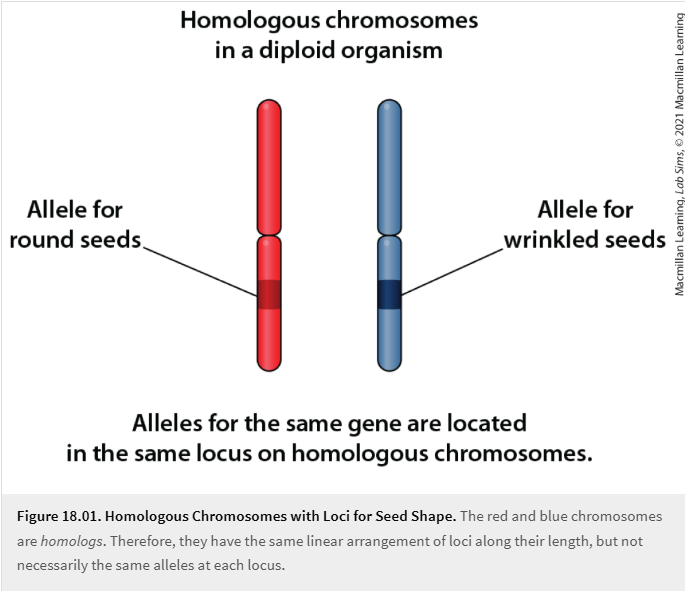
Locus: The specific physical location or position of a gene on a chromosome.
Allele: A form or variant of a gene. While a gene at a particular locus determines a trait (e.g., eye color), alleles represent the different versions of that information.
Example: A mother may have the allele for brown eyes, while a father may have the allele for blue eyes at the same locus on homologous chromosomes.
Diploid (): Refers to an organism or cell that carries two copies of each chromosome.
In humans, somatic (body) cells are diploid, containing one set from the mother and one from the father.
Haploid (): Refers to cells that contain only one set of chromosomes.
In humans, gametes (egg and sperm) are the only haploid cells.
Homologous Chromosomes: A pair of chromosomes (one maternal, one paternal) that possess the same length, shape, centromere location, and gene locations (loci).
While the loci are identical, the specific alleles at those locations can be the same or different.
Genotype: The specific combination of alleles for a gene that a particular individual carries (e.g., , , or ).
Phenotype: The physical manifestation or observable trait resulting from the genotype (e.g., yellow seeds or blue eyes).
Homozygous: A genotype consisting of two identical alleles.
Homozygous Dominant: Two dominant alleles (e.g., ).
Homozygous Recessive: Two recessive alleles (e.g., ).
Heterozygous: A genotype consisting of two different alleles—one dominant and one recessive (e.g., ).
Mendelian Genetics and the Work of Gregor Mendel
Gregor Mendel: Known as the "Father of Genetics," Mendel studied inheritance in pea plants a century before chromosomes were described or microscopes were fully developed. He identifies "heritable units" that we now call genes.
True Breeding: A term describing organisms that are homozygous for the traits being studied. When self-pollinated, they always produce offspring with the same phenotype.
Recessive Traits: These phenotypes are only visible when an individual possesses two copies of the recessive allele (). The presence of a single dominant allele () will mask the recessive trait.
The Three Generations of Inheritance
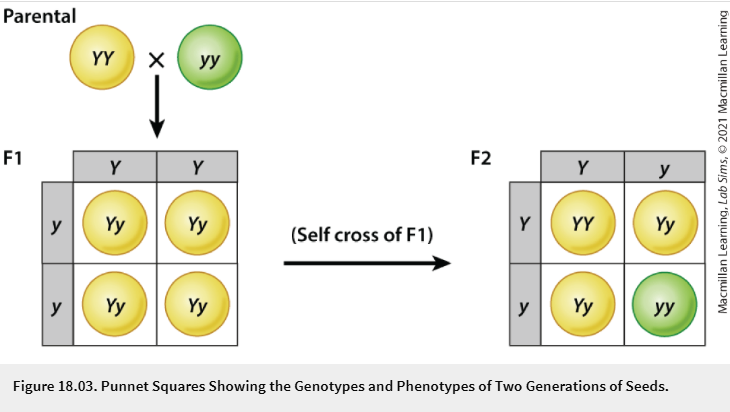
Generation (Parental): The starting point of a cross consisting of "pure" or true-breeding individuals.
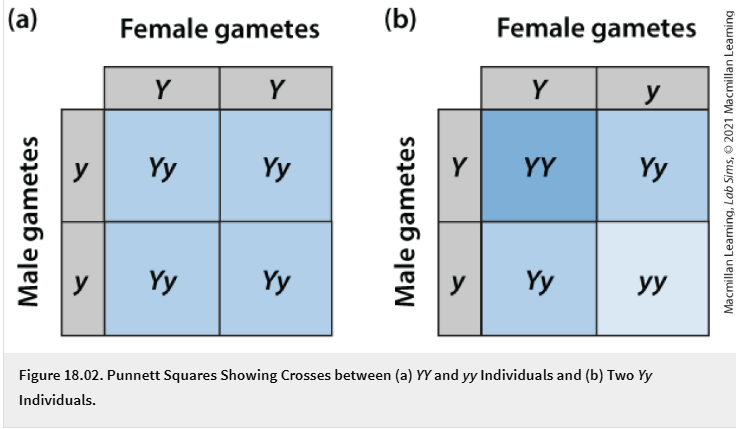
Cross: Homozygous Dominant () Homozygous Recessive ().
Generation (First Filial): The offspring of the generation.
All offspring are hybrids or heterozygotes ().
Phenotypically, 100% of the offspring show the dominant trait.
Generation (Second Filial): Produced by crossing two individuals or through self-pollination.
Genotypic Ratio: ().
Phenotypic Ratio: (3 dominant : 1 recessive).
Every time fertilization occurs in the generation, there is a probability of the dominant phenotype and a probability of the recessive phenotype.
Mendel’s Laws of Inheritance
Mendel’s First Law: Law of Segregation: Each organism possesses two alleles for any given characteristic. These alleles separate (segregate) in equal proportions during the formation of gametes (meiosis), ensuring each gamete carries only one allele.
Mendel’s Second Law: Law of Independent Assortment: Alleles at unlinked loci separate independently of one another during gamete formation. The orientation of one homologous pair on the metaphase plate is independent of the orientation of other pairs.
Monohybrid Cross: A cross between parents that differ in only one trait (e.g., seed color). Results in a phenotypic ratio in the generation.
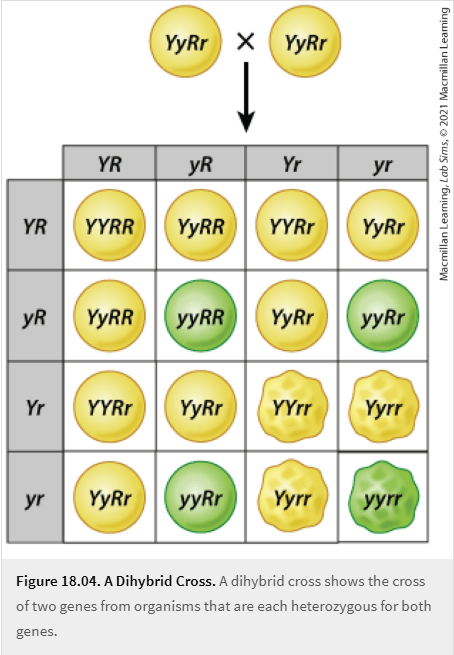
Dihybrid Cross: A cross between parents that differ in two traits (e.g., color and texture).
Requires a 16-box Punnett square.
Results in a phenotypic ratio of in the generation.
9: Dominant for both traits.
3: Dominant for the first trait, recessive for the second.
3: Recessive for the first trait, dominant for the second.
1: Recessive for both traits.
Statistical Analysis: Chi-Square () Test
Dr. Neda explains that scientific data must be tested to see if it supports the hypothesized Mendelian ratios.
Chi-Square () Goodness of Fit Test: A statistical test used to determine if the difference between observed () data and expected () data is due to chance or if the hypothesis should be rejected.
The Formula:
Degrees of Freedom (): Calculated as the number of phenotypic classes () minus one.
The -value (Probability Value):
P < 0.05: The difference between observed and expected results is significant and unlikely due to random chance. The hypothesis is not supported and must be rejected. The data does not follow Mendelian genetics.
P > 0.05: The difference is likely due to random variability. The hypothesis is supported. The data follows Mendelian genetics.
Lab Application: Genetics of Corn
Corn is an effective model genetic system because every kernel on a cob represents a separate offspring resulting from a cross.
Experiment 1: Monohybrid Cross
Subject: Corn Cob #1 ( generation kernels).
Phenotypes Observed: Purple (dominant) and Yellow (recessive).
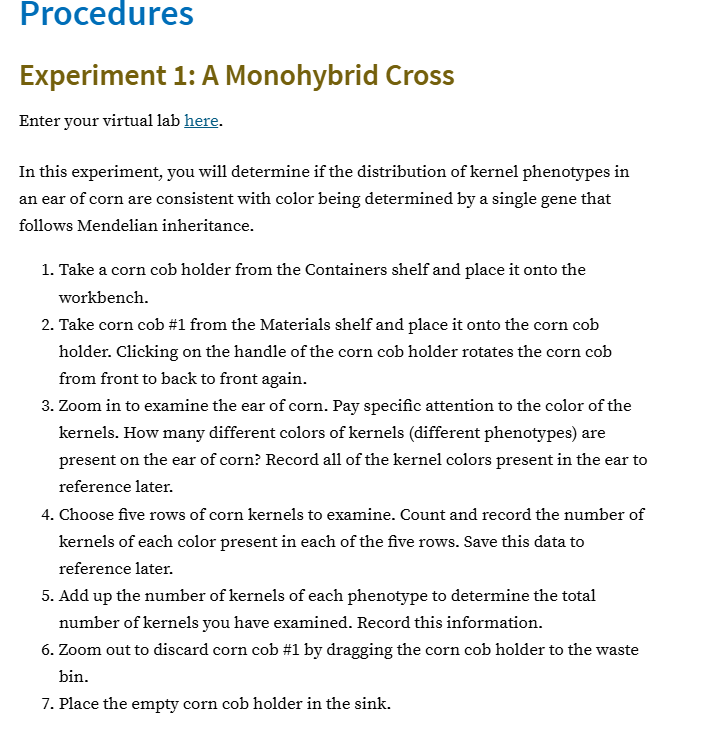
Method: Count 5 rows of kernels. Record totals for each color.
Calculations:
Percent Phenotype:
Verification: If the data follows Mendelian inheritance, results should be near purple and yellow.
Heterozygous Estimate: In an population of 200 kernels, approximately half () are expected to be heterozygous ().
Experiment 2: Dihybrid Cross
Subject: Corn Cob #2 ( generation kernels).
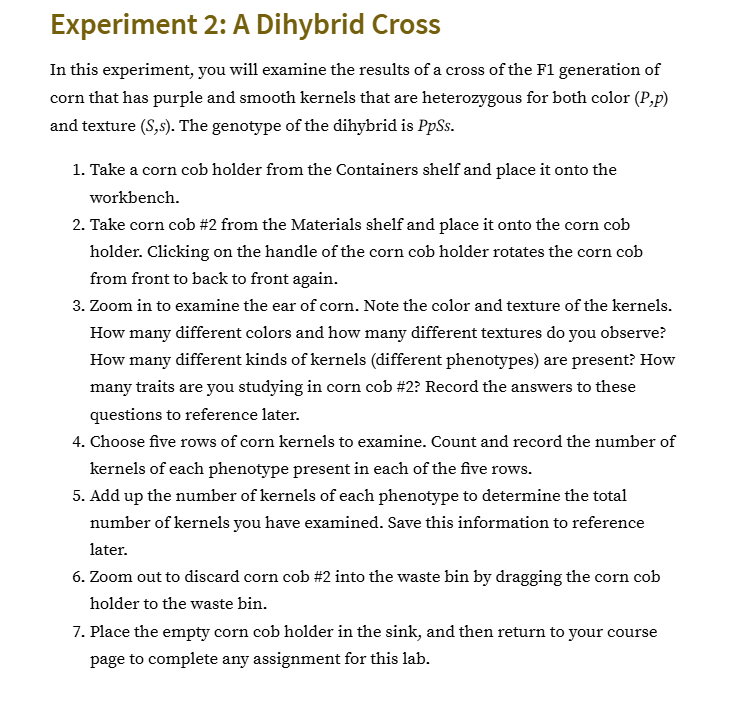
Phenotypes Observed:
Purple and Smooth (Dominant/Dominant)
Purple and Wrinkled (Dominant/Recessive)
Yellow and Smooth (Recessive/Dominant)
Yellow and Wrinkled (Recessive/Recessive)
Ratio Expectation: .
Degrees of Freedom: Since there are 4 phenotypic classes, .
Chi-Square Calculation Steps:
Observe counts for all 4 categories ().
Calculate expected values () using the total kernel count ().
Expected Dominant/Dominant =
Expected Dominant/Recessive =
Expected Recessive/Dominant =
Expected Recessive/Recessive =
Calculate for each.
Square the result: .
Divide by expected: .
Sum the values to find .
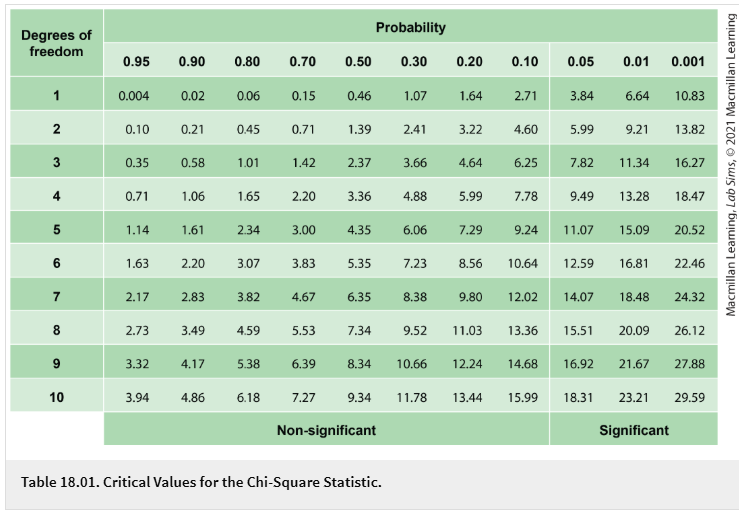
Compare and to the critical value table to find the -value.
Practice Problems and Hypothetical Scenarios
Case Study: Cystic Fibrosis (CF)
Characterized by thick mucus buildup in the lungs and other organs.
Inheritance: Follows Mendelian recessive patterns. Both parents must carry the allele for an offspring to show the disease.
Dog Genetics Exercise
Trait 1 (Hair Length): Long hair () is dominant; Short hair () is recessive.
Scenario: Dog 1 is homozygous dominant (). Offspring include heterozygotes and homozygotes.
Logic: If the offspring have genotypes like and , we can deduce Parent 2's genotype by seeing which alleles remain after accounting for Dog 1's contributions.
Trait 2 (Coat Color): White () is dominant; Colored () is recessive.
Dihybrid Practice: Dog 1 is . To find Parent 2 from a 16-box Punnett square, identify offspring alleles and isolate those not provided by Parent 1.
Albinism Calculation Example
Hypothesis: Albinism is a recessive trait following a ratio.
Sample: 1000 people; 200 display albinism.
Observed (): 800 non-albinism, 200 albinism.
Expected (): non-albinism; albinism.
Analysis: Perform Chi-Square with to determine if the 200/1000 observation statistically fits the Mendelian prediction.
Exp 1: monohybrid cross
corn cob #1
phenotypes - colors: purple and yellow
dominant - purple: 120
recessive - yellow: 40
kernels: 160 in 5 rows
Exp 2: Dihybrid cross
corn cob #2
phenotypes: color & texture
colors: purple and yellow
textures: smooth(sweet) & dent/field
dominant color: purple (P)
dominant texture: smooth/sweet (S)
recessive color: yellow (p)
recessive texture: dent/field (s)
purple & smooth: 90
purple & dent: 30
yellow & sweet: 30
yellow & dent: 10
Total: 160