The Skeletal System
Functions Of The Skeletal System
The skeletal system is composed of bones that provide a framework
Gives shape to the body
Provides places to which muscles can attach to and produce movement
Protects internal organs
Stores minerals
Manufactures blood cells
Bone classification
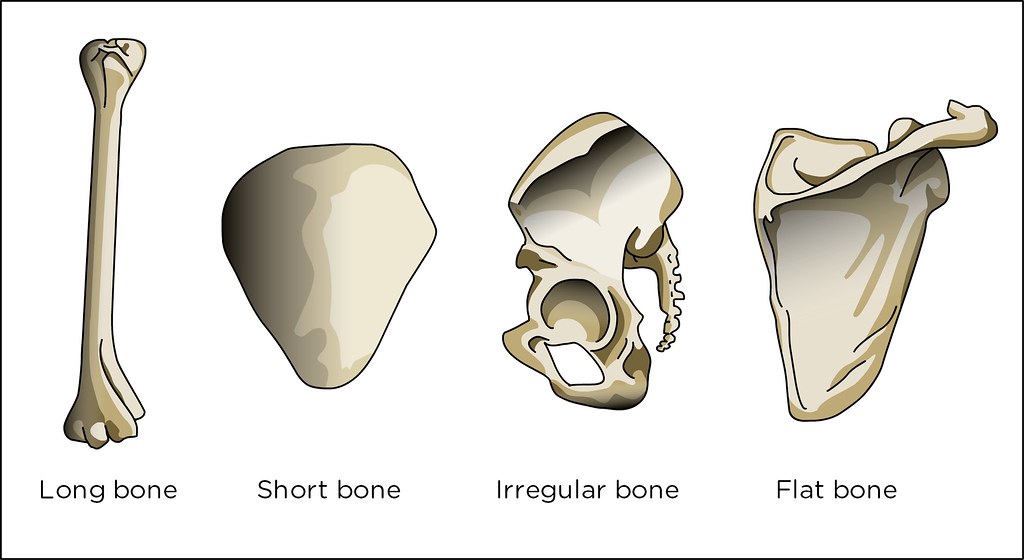
Long Bones: Long bones are longer than they are wide. Some examples would be the humerus, radius, ulna, femur, tibia, fibula, metacarpals, and metatarsals
Short Bones: Short bones are similar in length and width. Examples of short bones are the carpals and tarsals (ankle and wrist bones)
Flat Bones: flat bones have two layers with a space between them. Examples of these bones would be the cranium, ribs, scapula, sternum, and pelvis
Irregular Bones: irregular bones are bones that do not fit into the other bone categories. Examples of these are the vertebrae, facial bones, and patella.
Bone Structure
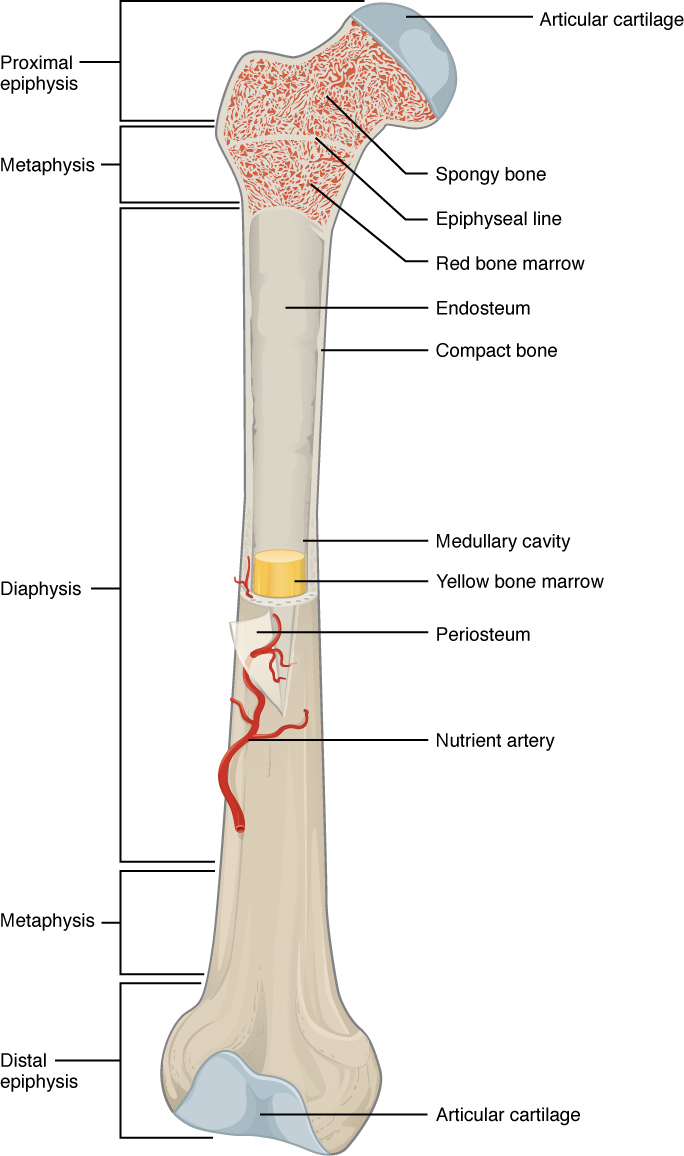
Long bones have the following structure:
Medullary Cavity (Canal): Center cavity containing yellow marrow; covered by a layer called the endosteum.
Diaphysis: Portion that runs between both ends of the bone; also called the “shaft”
Epiphysis: ends of the bone (proximal and distal)
Periosteum: White, fibrous layer that covers the outside of the bone; contains blood, lymph vessels, and nerves. Bone growth, repair and nutrition happen here. Also serves as an attachment point for muscles, tendons, and ligaments.
Red Marrow: Manufactures red blood cells, which carry oxygen, and white blood cells which protect the body from infection.
Cartilage: Elastic connective tissue that covers the ends of the bones and functions as a cushion between bones. Covers the surface of joints and forms the protective parts of the skeleton
The Axial Skeleton
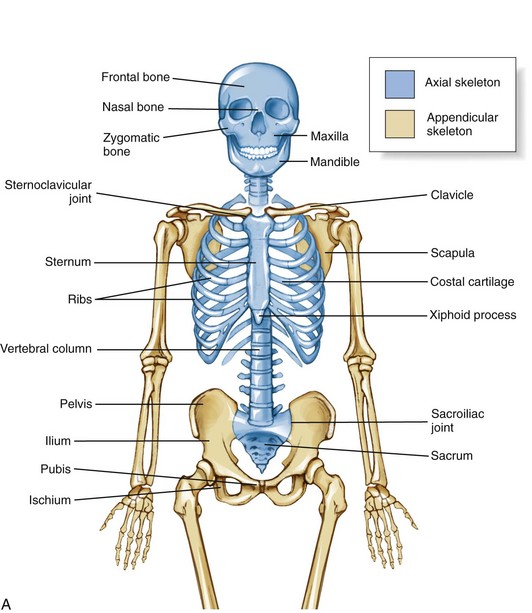
The skeletal system is divided into two major parts. The first part is the axial skeleton.
The axial skeleton consists of the
Skull
Inner ear
Hyoid
Spinal Column
Ribs
Sternum
The bones of the axial skeleton can be divided as follows:
Head: 29 bones (22 in cranium, 3 in each inner ear, and 1 hyoid)
Trunk: 51 bones (26 vertebrae, 24 ribs, and 1 sternum
The Appendicular Skeleton
The skeleton is divided into two major parts, also known as the axial skeleton and the appendicular skeleton.
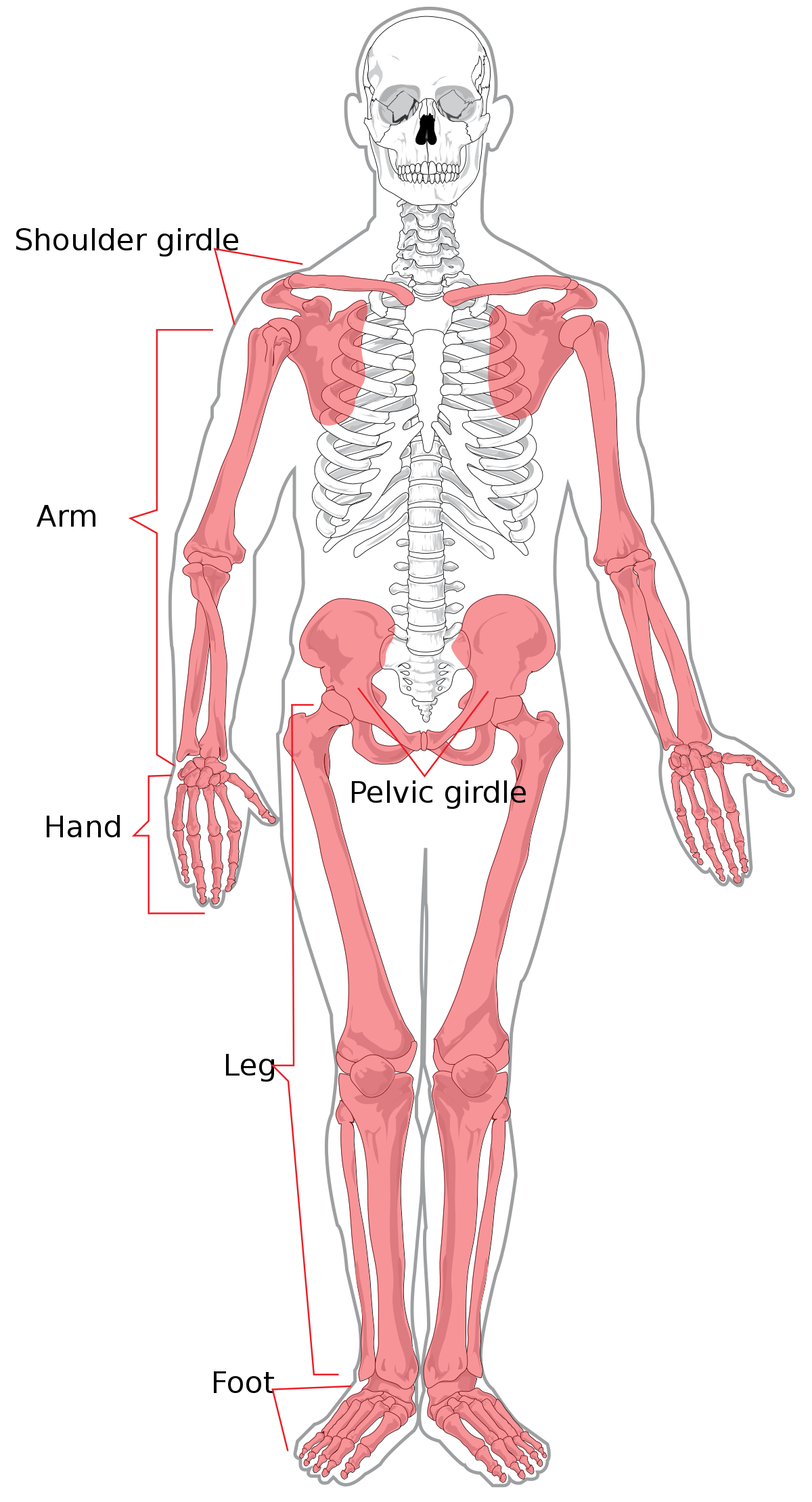
The appendicular skeleton includes bones of the:
Shoulders
Arms
Hands
Pelvis
Legs
Feet
The appendicular skeleton can be divided as follows:
Upper extremities: 64 bones in shoulders, arms, hands, and wrists
Lower extremities: 62 bones in pelvis, legs, ankles, and feet
Upper extremities include:
Shoulder girdle: Two curved clavicles and two triangular scapulae.
Arm: The long bone of the upper arm is the humerus. The two long bones of the forearm are the radius and ulna.
Wrist and hand: Eight bones in the wrist form two rows of bones (carpals). The hands have 5 metacarpals, and the 5 fingers have 14 phalanges.
Lower extremities include:
Pelvic girdle: serves as area of attachment for the leg and protection for lower internal organs. Starts out as three bones (ilium, ischium, and pubis). In adulthood these bones fuse together.
Leg: The long bone of the upper leg (thigh) is the femur. The two long bones of the calf are the fibula and tibia. The patella is the kneecap.
Ankle and foot: Seven bones in the ankle (tarsals). The foot has 5 metatarsals bones. The five toes have 14 phalanges
Joints
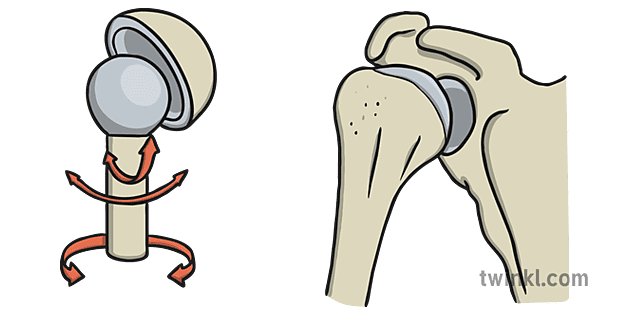
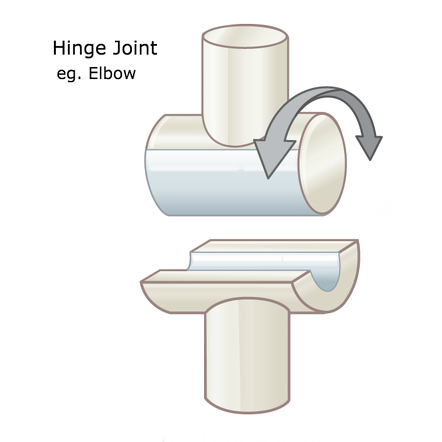
There are several types of joints. The joints that enable a wide range of mobility are ball and socket joints and hinge joints. Examples of ball and socket joints are the shoulder and hip. Examples of hinge joints are the elbow and knee
Major diseases and disorders
Arthritis: A group of diseases involving inflammation of the joints.
Examples include: Rheumatoid Arthritis (synovial membranes thicken), gouty arthritis (uric acid crystals build up in joints), and degenerative joint disease, also known as osteoarthritis (cartilage in the joints soften)
Back pain: Common complaint affecting more than 80% of Americans
Common causes includes intervertebral disks pressing against nerves. Pain that runs down the leg is usually due to pressure on the sciatic nerve.
Carpal Tunnel syndrome: Caused by pressure on a nerve in the wrist as a result of repetitive movements or trauma.
Dislocation: Occurs when excessive force is exerted on a joint causing a bone to slip out of its joint.
Excessive curvatures of the spine can occur in three different directions:
**Scoliosis-**Lateral curvatures
**Lordosis-**Inward curvature of the lumbar area
**Kyphosis-**The rounded bowing of the thoracic area.
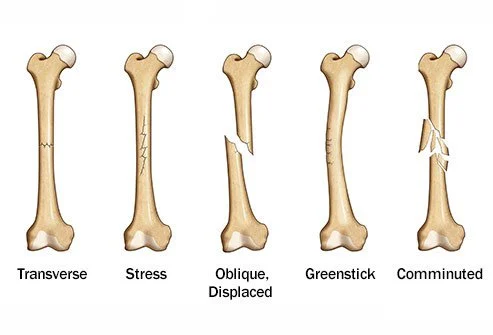
Fractures: (Broken bones) usually occur from some sort of external injury to the body but can also occur do to disease. Fracture may be closed or open. (Simple, Compound, greenstick, comminuted, and spiral)
Osteomyelitis: An infection of the bone
Osteoporosis: weakening of the bones caused by a loss of calcium.
Preventative measures
Get adequate exercise, especially weight bearing activities such as walking
Avoid overextension of joints
Eat properly and take in sufficient calcium and vitamin C
Do stretching exercises especially before participating in other forms of physical activity
Maintain good posture
Position the body correctly when using a computer and other types of equipment
Age-related Changes
Decreased: Height, bone mass, and flexibility
Increased: Joint and cartilage erosion, thinning of the vertebrae, demineralization of bones resulting in their weakening and being more susceptible to fractures