climate change
impacts of climate change on the sea
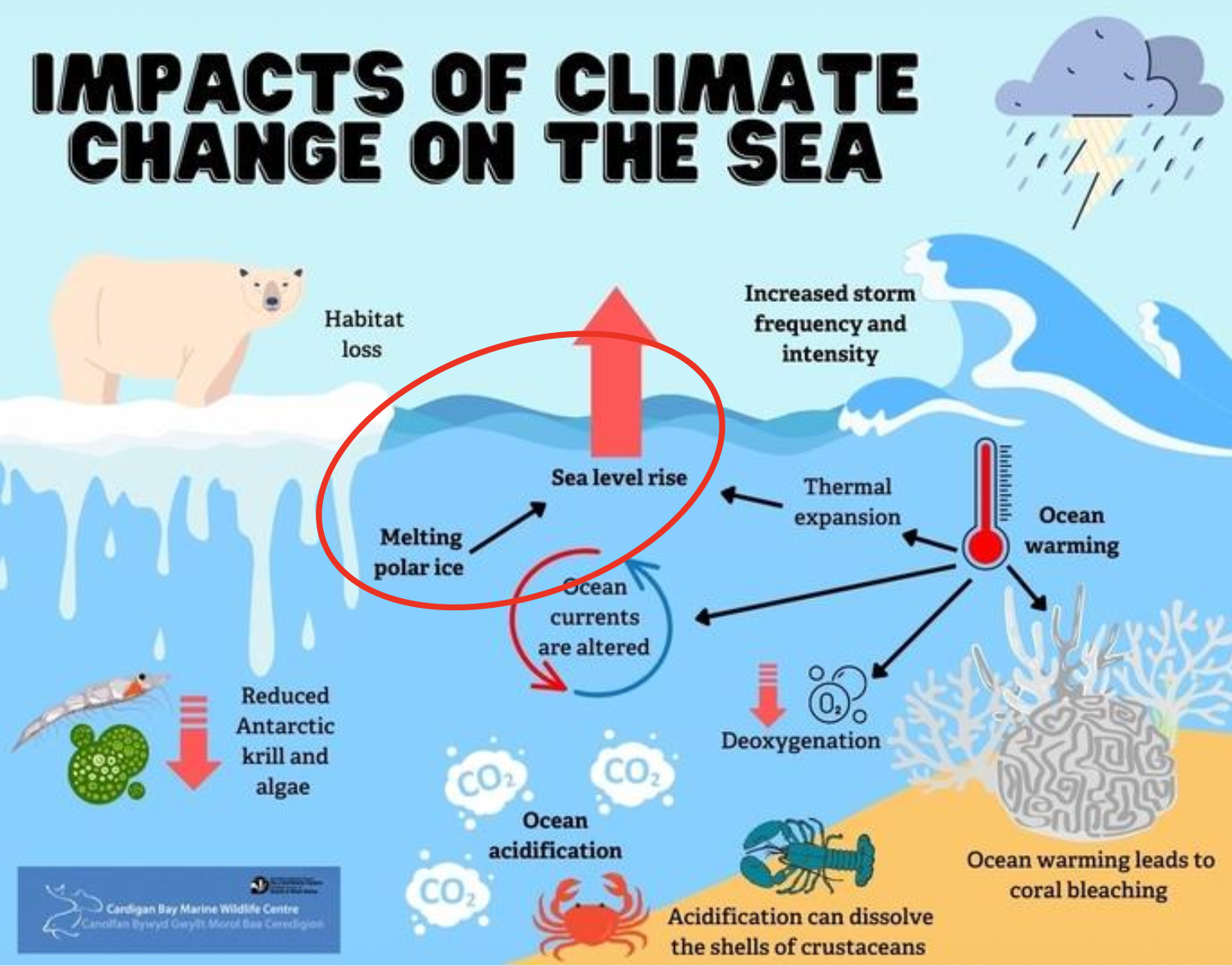
ocean warming
sea level rise (from ice melt and thermal expansion)
changes to currents
acidification
deoxygenation
more frequent and intense storms
habitat loss
why should biologists care?
major distribution shifts
more biological invasions
higher extinction rates
phenology disruption (timing of spawning, migration, blooms)
acidification impacts (especially calcifiers)
low oxygen impacts
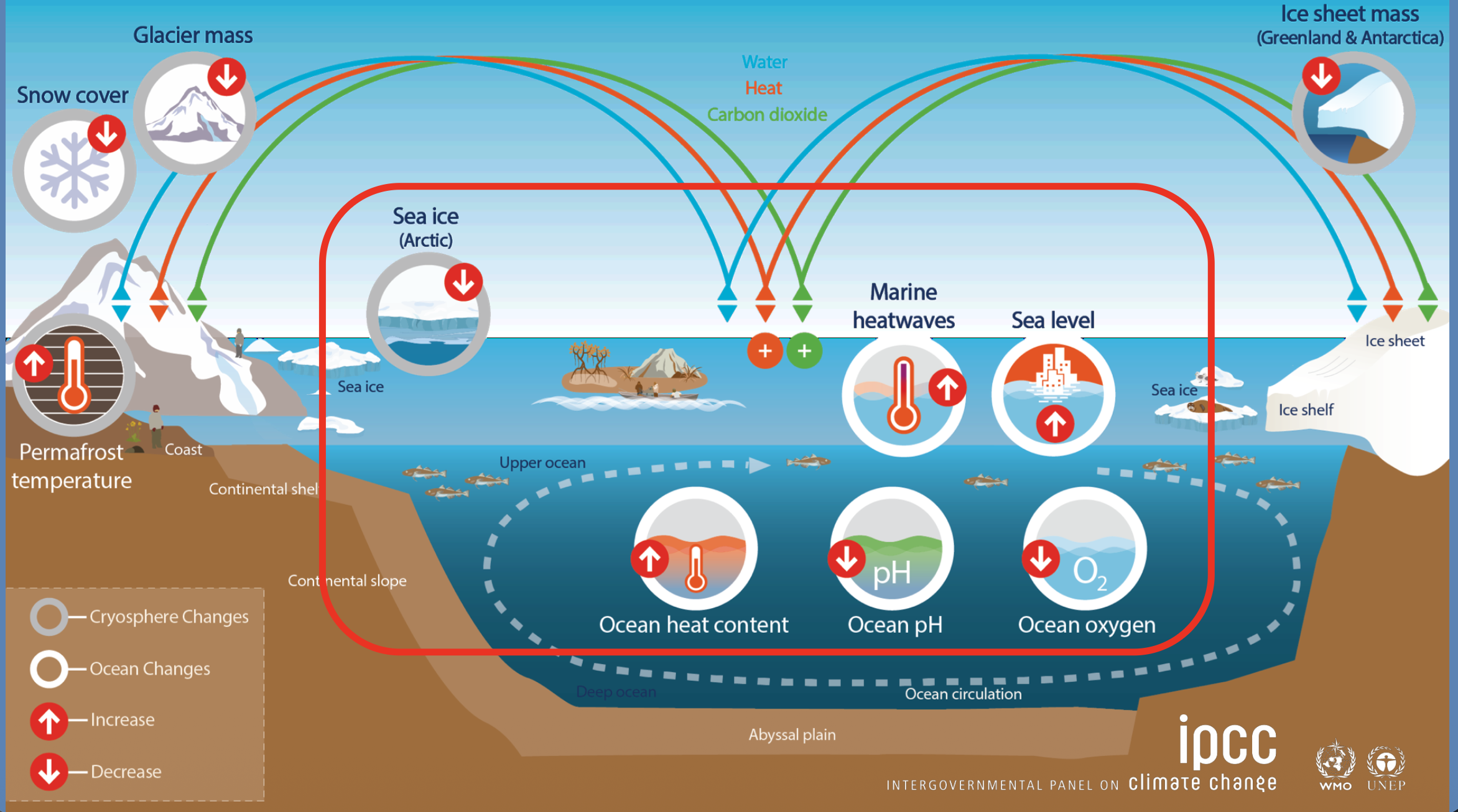
global warming stripes
atmospheric temperatures have been rising dramatically since teh 1970s
ocean temperature rise in all basins since 1901
warming is already happening everywhere
marine heatwaves (MHV)
marine heatwaves are sudden periods of abnormal high sea surface temperature, which may last weeks to months
these cause more biological damage than slow warming
how climate change affects fish
physiological effects:
metabolism increases with temperature
growth efficiency changes
higher risk of disease
changes in recruitment, migration, distribution
fish follow their preferred thermal habitat
larvae and juveniles have different optimal temperatures than adults
food web effects:
changes in prey abundance
changes in predator abundance
phenological mismatch (fish larvae hatch when food isnt available)
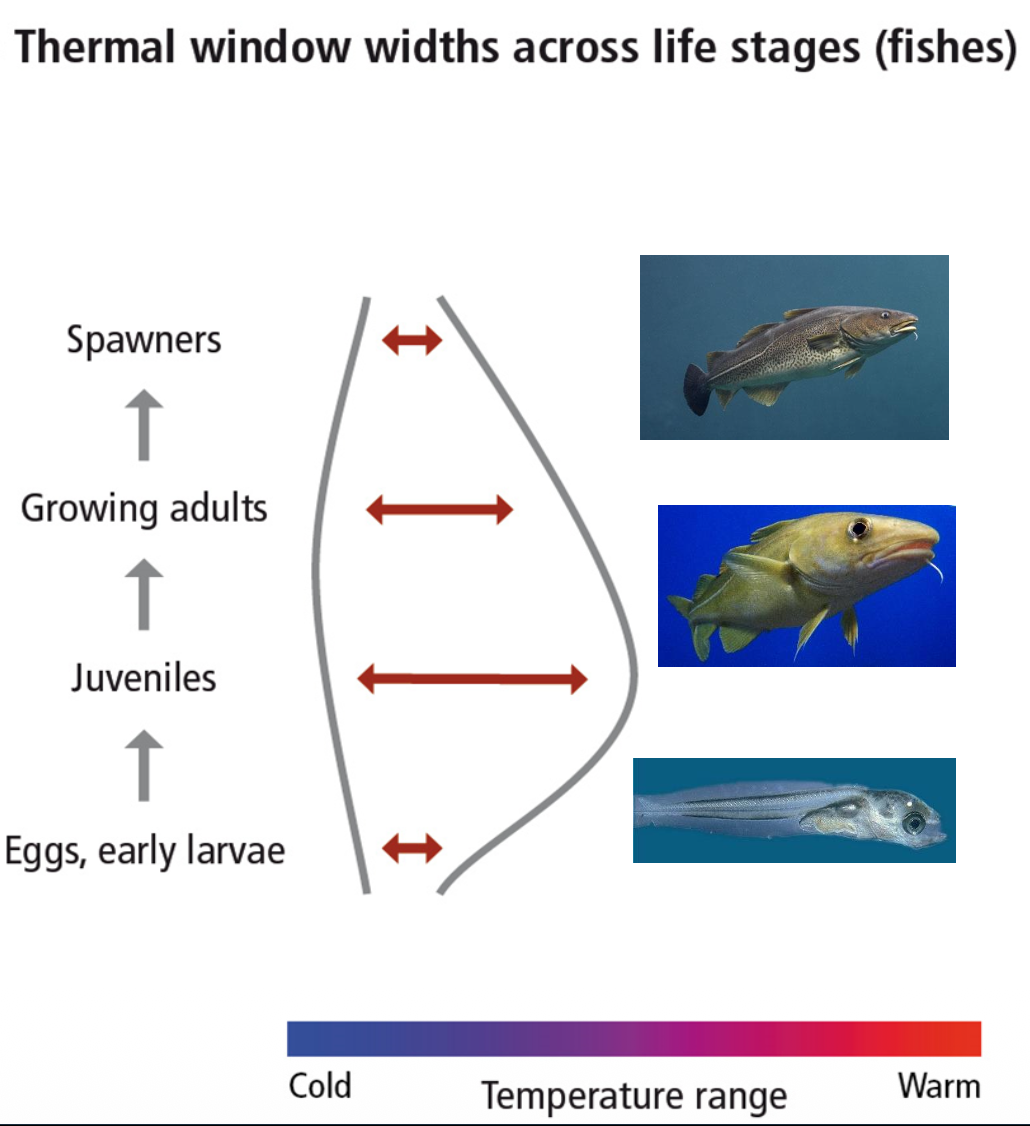
temperature window changes through life
eggs and larvae have the narrowest temperature tolerances
juveniles wider
adults wide
spawners narrow again
this shows why early life stages are the most vulnerable
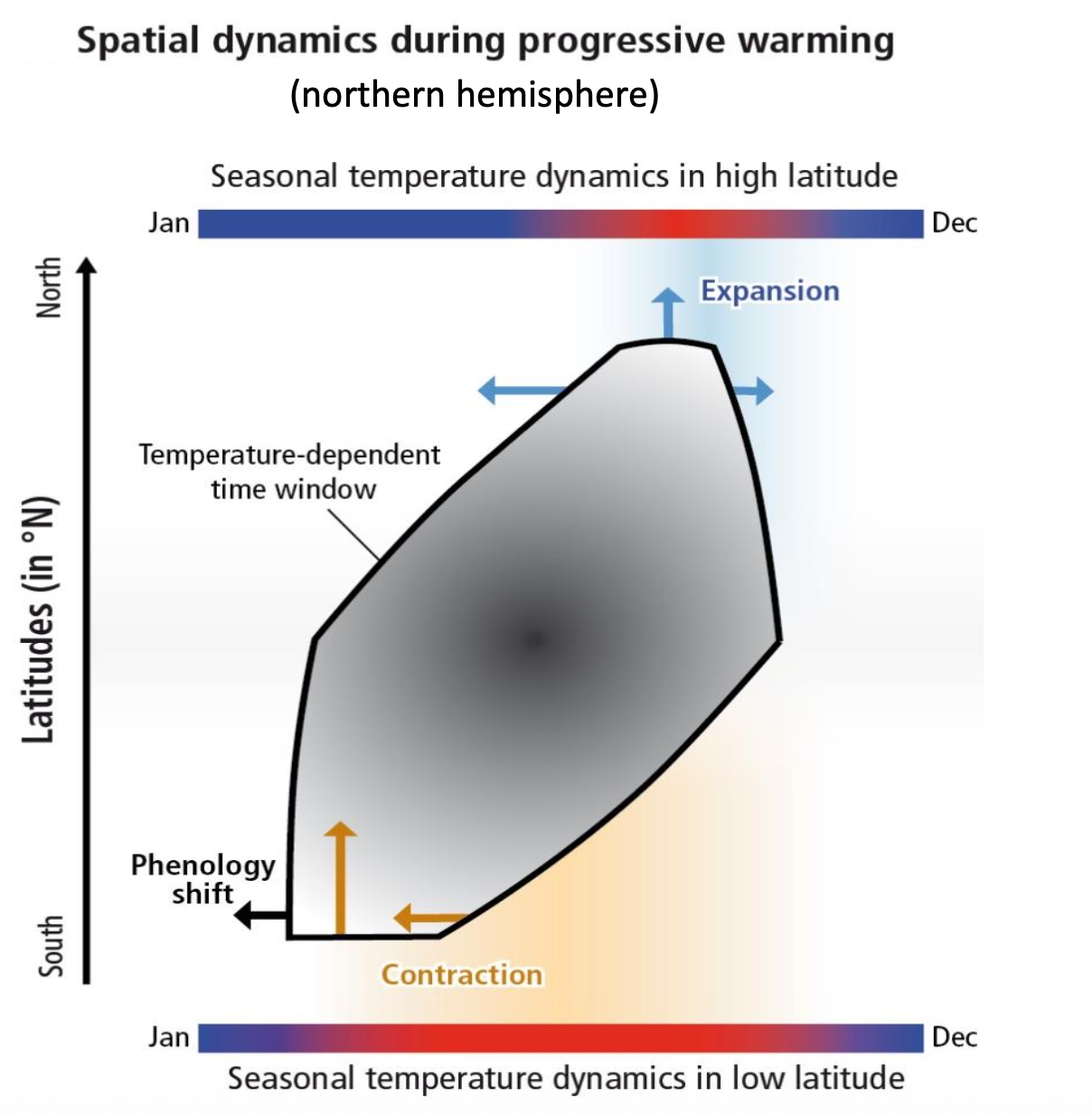
spatial dynamics during progressive warming
poleward expansion at northern range limits
equator ward contraction at southern range limits
phenology shifts in warmer regions (timing changes)
temperature dependent windows narrowing at low latitudes
biomass projections
high latitude regions may temporarily see more biomass, but tropical reginos collapse
under low emissions (1.5˚C-2˚C) → moderate loss globally
under high emissions (3-4˚C) → massive loss in many regions
ecosystem risks by habitat type
warm water corals are at the highest risk
followed by kelp forests, seagrass meadows, rocky shores
warm water corals
they are extremely vulnerable for a few reasons
narrow thermal limit
acidification weakens skeletons
pollution
diseases
overfishing
even rats (predation on seabird eggs → less guano → nutrient decline)
just an increase in 1.5˚C threatens tropical reefs
ocean acidification
CO2 + H2O → carbonic acid → releases H+ → binds carbonate
as pH decreases
less carbonate available for calcification
existing shells dissolve
organisms must spend more energy maintaining structure
particularly affectes:
pteropods (type of free swimming pelagic sea snail)
bivalves
corals
foraminifera
regional and local impacts
climate change is global in cause but local in impact, affecting
coastal floods
storm surges
local fisheries
local ecosystem
arctic ocean
rapid ice loss, meaning smaller area + thinner ice gives a huge reduction in ice volume
acidification hits the arctic first; cold water holds more CO2 → early undersaturation
the effects of wamring in the arctic ocean are felt by:
marine mammals
zooplankton
fish communities
ice algae
seabirds
fisheries
shipping
cod and haddock are expanding northward into arctic water, causing borealisation of the barents sea
threats to arctic species
slow growing
specialist feeders
high vulnerability
competition from boreal species
phenological mismatch
new pathogens
will the arctic biome dissapear?
probably not because the light regime is extremely unique (midnight sun, polar night)
seasonal light cues limit boreal species survival
some physical barriers remain
future projections and models
climate scenarios
SSP1-1.9, SSP1-2.6 → low emissions
SSP2-4.5 → moderate
SSP3-7.0, SSP5-8.5 → high/extreme
the need for downscaling the models; global models are too coarse. instead switch to more regional models
the barents sea and norwegian sea are projected to warm rapidly under all scenarios
winning and losing species in norwegian waters
some stocks will increase (e.g. mackerel), while other decline (e.g. cold water species)
marine heatwaves in norway
increasing with frequency and severity
extreme anomalies (>5˚C or above)
strong ecosystem effects
salmon lice outbreaks worsened by heatwaves
MHV impacts on coral and seagrass
coral bleaching
seagrass die off
loss of habitat complexity
food web collapse
adaptation vs mitigation
adaptation:
adjust to changing climate:
ecosystem based management
changing fish quotas
long term planning
reducing vulnerability
mitigation:
reduce climate change itself:
CO2 reduction
blue carbon habitats (kelp seagrasses)
international climate policy
fisheries adaptation
move toward ecosystem based fisheries management
accept short term quota reduction for long term stability
manage for multiple species and environmental risk
international cooperation needed
ocean based mitigation opportunities
potential CO2 sequestration contributions:
renewable energy
ecosystem restoration
kelp carbon capture
marine spatial planning
the papers - all together (Smale 2019, Sandø 2024, European marine board)
focus
smale 2019 → extreme events (marine heatwaves) and ecosystem collapse
sandø 2024 → long term climate projections for plankton and fish stocks
EMB biodiversity chapter → biodiversity changes + risk assessment
the ocean is warming gradually and suddenly
all the papers mention how climate warming is now universal across all oceans
two types of warming occur:
long term gradual warming
sudden warming spikes - marine heatwaves (MHW)
long term gradual warming
shift species poleward
changes timing of biological events (phenology)
shrinks thermal windows for tropical species
sudden warming spikes - marine heatwaves (MHW)
the smale (2019) paper shows that:
MHVs have increased in frequency, intensity, and duration over the last century
many regions now experience > 50% more MHW days compared to the early 1900s
MHWs destroy foundation species:
corals (bleaching)
kelp forests
seagrass meadows
these foundation species hold ecosystems together, so their collapse affects entire food webs
marine heatwaves as acute disturbances
(smale 2019)
across 685 species-level observations, most taxonomic groups respond negatively to MHWs
the most vulnerable are
corals
seagrass
macroalgae
sessile invertebrates
fish responses may vary: some tropical species expand into temperate areas during MHWs
key finding: MHWs causes sudden ecosystem reconfiguration and range contractions - not slow, predictable changes
biodiversity redistribution and collapse
(EMB biodiversity chapter)
The EMB report focuses on how warming and heatwaves rearrange biodiversity, especially in European seas
main outcomes
polewards and depthward shifts of thousands of species
warm-edge species decline
cold adapted arctic species lose habitat entirely
invasive species increase due to warming
these changes are a major threat to:
ecosystem services
fisheries
habitat structure
food-web stability
climate change redistributes who lives where. some species expand, others collapse
plankton at the centre of everything
(sandø 2024)
this paper used climate models (SSP scenarios) to analyse how primary production and plankton communities will change in northern seas
findings
warming and stratification reduces nutrient mixing, lowering productivity in many areas
phytoplankton composition shifts (diatoms → smaller flagellates)
zooplankton (calanus spp.) declines in some reginos → less food for fish
bottom up control
fish stocks respond to both direct and indirect climate effects
direct physiological effects:
temperature affects metabolism, growth, and survival
thermal windows differ by life stages (echoes your lecture slides)
distribution shifts:
boreal fish expand northward
arctic species retreat or decline
recruitment effects via heatwave:
MHWs cause mass mortality of eggs, larvae, or key habitat forming species
coral/seagrass/kelp loss reduces nursery habitat for many fish
food web restructuring:
changes at the plankton level propagate upward
some fish stocks gain biomass, some lose, depending on shifting productivity
fish populations change in growth, survival, and distribution becaue the whole food web is changing
climate scenarios - what the future looks like
under low warming scenarios:
moderate changes in productivyt
some shifts in fish distribution
arctic retains some cold water habitats
under high warming scenarios:
drastic increases in MHWs
substantail biomass loss in many regions
strong northward movement of species
collapse of coldwater fish populations
food web simplification becomes severe
climate change threatens ecosystem services
both papers (smale 2019 + EMB) emphasize losses to:
fisheries
coastal protection
tourism
carbon sequestration
biodiversity-based cultural value
smale 2019 provides table 1 summarizing impacts on
provisioning services (fish stocks)
regulating services (carbon storage, nutrient cycling)
cultural services (tourism decline)