Lead and Mechanisms
Exposure to lead can lead to:
damage to the brain and nervous system development
slowed growth development
motor development deficits
learning and behavioral issues
hearing and speech deficits
Sources of Lead:
mining
manufacturing of ceramics and glassware
Timing of Critical: effects of lead on development may differ depending on time, length of exposure, and source of exposure
Adverse health effects of Pb in children at leass than 5 µg/dL of blood lead levels can include developmental delays, lower IQ, and increased behavioral problems.
Effects differ between children and adults, with childrenf acing the most severe developmental effects
Lead during preganancy will enter through the blood in the mother, through the placenta and eventually reach the BBB
Lead is a substitute for calcium and zinc, and mimics Ca2+ binding sites and is an NMDA antagonist. Lack of Ca2+ signaling, triggers cytochrome C release and leads to apoptosis
Motor Development: |
|
Verbal Communication: |
|
Learning in School and at Home: |
|
Social Interactions: |
|
Blood Brain Barrier: formed by endothelial cells lining the cerebral microvasculature. The BBB limits the passage of pathogens or toxins capable of disturbing neural function
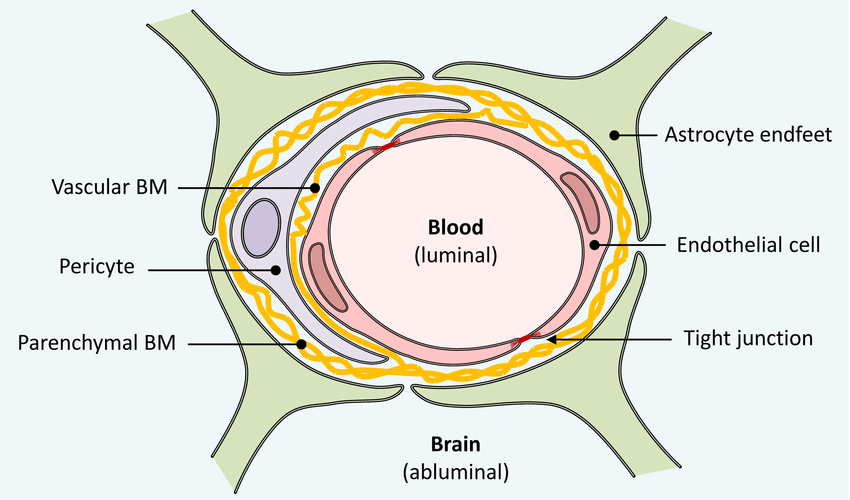
Lead effects on the BBB:
Lead increases the permeability of the BBB by disrupting protein kinase C (PKC) which regulated tight junctions (TJ). Lack of PKC will lead to leaky TJ, allowing diffusion of water in the CNS
Water in CNS leads to Edema and Encaphalopathy
Neuronal injury due to Pb activates microglia and causes oxidative stress
PB also affects calcium release, leading to signaling dysfuntions
Astrocytes and the BBB
Astrocytes support the integrity of the BBB and neurons in the brain.
Astrocytes are targeted bu Pb
They function as mini kidneys of the CNS, regulating the composition of interstitial fluid
Astrocytes take in lead quicker than neurons, but neurons are more sensitive to the lead
Pb Pathway of Destruction:
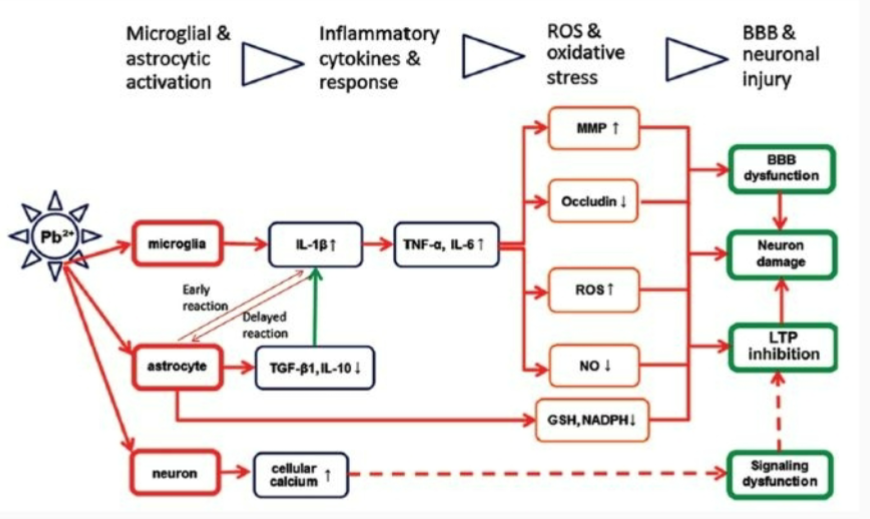
Microglia: targets inflammatory cytokineswhich then lowers TJ function and increases ROS leading yo BBB dysfucntion, neuron damage and LTP inhibition
Astrocyte: targts different cytokines, and follows a similar path as microglia dysfunctions
Neurons: increases cellular calcium and leads to signaling dysfunction , leading to LTP inhibition and neuron damage
Caspases
Initiator Caspases | 8, 9, 10 |
Effector Caspases | 1,2,3,4,5,6,7,11,12,13 |
Caspase 3
Morphological changes
nucleosomal DNA fragmentation
Breakdown of nuclear envelope
formation of apoptotic bodies
Dendritic Spines
speacialized for synaptic transmission and are the location of receptors
Mushrooms have larger PSDs and more receptors, thought to be memory spines
lead decreased the # of mushroom spines
impaired synaptic plasticity
lower expression of NDR kinase, Arc/Arg3.1
increased risk of neurodegenerative diseases