CBT
Definition (#f7aeae)
Important (#edcae9)
Extra (#fffe9d)
Cognitive Therapy:
Emphasis on changing negative thoughts and maladaptive beliefs.
Automatic thoughts: Link between thoughts and feelings. Emotion-filled thoughts that might pop up in the mind.
Theoretical Assumptions:
People’s internal communication is accessible through introspection.
Clients’ beliefs have highly personal meanings.
These meanings can be discovered by the client rather than being taught or interpreted by the therapist.
Theory, Goals and Principles:
Theory:
To understand the nature of an emotional episode, it’s essential to focus on the cognitive content of an individual’s reaction to the upsetting event or stream of thoughts
Goals:
To change the way clients thinks by using their automatic thoughts and begin to introduce the idea of schema restructuring.
Principles:
Automatic Thoughts: Personalized notions that are triggered by particular stimuli that lead to emotional responses.
If thoughts are too negative, it can block us seeing things or doing things that don’t fit what we believe is true.
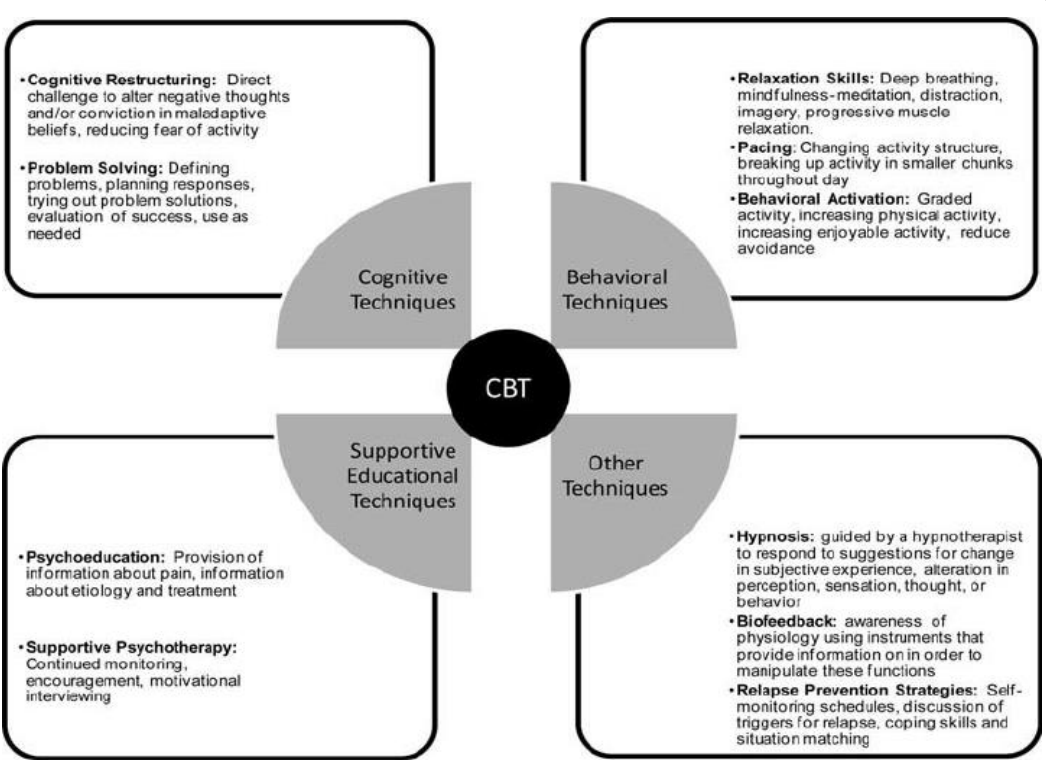
Cognitive Distortions:
Cognitive distortions are negative or irrational thought patterns that can lead to inaccurate perceptions of reality
Ex:
Mind Reading: Assuming you know what others are thinking.
Future Predicting: Appraisal of future events
Catastrophizing: Predicting the worst possible outcome
Labeling: Using global labels to describe yourself or others
Black-White Reasoning: Thinking in all or none terms not shades of gray.
Regret Orientation: Looking back and not living in the moment of the now
Arbitrary Inferences: Drawing conclusions from little or no evidence.
Filtering: Noticing only the things that confirm your ideas
Personalizing: Thinking that everything is your fault or that others are targeting you specifically
Overgeneralizing: Using evidence from a specific context and applying a "rule" to many other contexts
Should/Would/Could: Thinking in terms of morals or shoulds, rather than the actual evidence in the situation
Cognitive Triad (Depression):
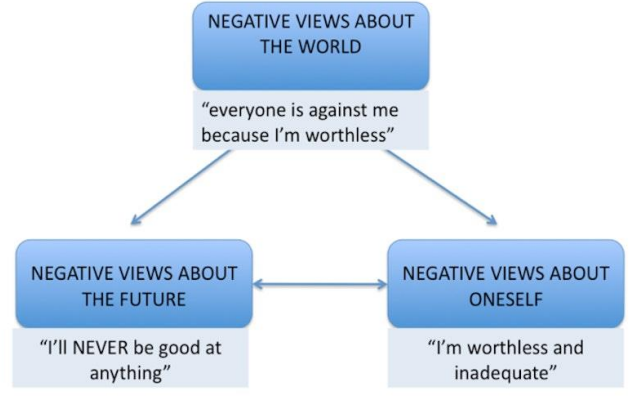
3 negative schemas:
Negative views about the world:
Individual holds negative views about the world and perceives it to be unfair and hostile.
Negative views about oneself:
Individual holds negative views regarding their abilities, worth or personality.
Negative views about the future:
Individuals anticipate failure in the future, characterised by disappointment.
Dialectical Behavioral Therapy:
Mindfulness: Being focused and learning to live in the present.
Regulating emotions: Reduce the intensity of emotional pain.
Distress tolerance: Learn to diffuse distressful or painful situations.
Interpersonal effectiveness: Understand how to set boundaries and express your needs.
Limitations:
Extensive training is required to practice CBT.
Therapist may misuse power by imposing their ideas of what constitutes “rational” thinking on a client.
Therapists must take special care to encourage clients to act rationally within the framework their own value system and cultural context.
The strong confrontational style of Ellis’ REBT may overwhelm some clients.
Some clinicians think CBT interventions overlook the value of exploring a client’s past experiences