LMT COURSE CONTENT
Introduction
Facilitate Understanding and Memorization:
Emphasizes the importance of filtering ideas and highlighting key messages to enhance effective communication during presentations and discussions.
Example: A lawyer’s experience with jurors demonstrates that presenting too many arguments can lead to lower retention rates and distracting the audience.
Key Strategies:
Filter Ideas: Focus exclusively on presenting essential information that contributes to the core message.
Structure Communication: Aim to build the communication around no more than three main points to help the audience remember the information.
Simplify Messages: Use clear, concise language and uncomplicated concepts to improve understanding and retention.
Cognitive Limitations:
Recognize that short-term memory constraints allow individuals to retain only 3-4 key messages at a time.
Historical Reference: Steve Jobs is known for his effective presentation techniques, which included structuring presentations into three distinct acts and concentrating on three key characteristics of each product to maintain audience engagement.
Decision Making
The Decision-Making Process:
Defined as a systematic approach to choosing among alternatives, emphasizing the importance of thoroughness and thoughtfulness in decision-making.
Steps:
Problem Identification: Recognizing discrepancies between current situations and desired outcomes.
Example: A manager needing a new car when hers fails is a clear identification of a problem that requires immediate action.
Decision Criteria: Establishing relevant factors that will inform the decision-making process, ensuring that all angles are considered.
Weight Alternatives: This involves assigning importance to decision criteria based on individual preferences and priorities.
List Alternatives: Identifying potential solutions without initial evaluation, promoting creativity and an open-minded approach to options.
Evaluate Alternatives: Assessing each option against the criteria to highlight strengths, weaknesses, and feasibility.
Choose Best Alternative: Selecting the option that yields the highest score based on established criteria.
Decision Implementation: Executing the chosen decision requires coordination and ensuring buy-in from all affected parties to facilitate smooth execution.
Evaluate Effectiveness: Assessing outcomes post-implementation to confirm whether the initial problem was resolved and understanding the implications of the decision taken.
Common Errors in Decision-Making:
Understanding common errors in decision-making is crucial for improving judgment and outcomes. Here are some prevalent biases and errors:
Overconfidence Bias: Decision-makers often exhibit an inflated belief in their own judgment and capabilities, leading to dangerous risks and oversight of critical information. This bias can prevent taking necessary precautions or fully evaluating potential consequences.
Immediate Gratification Bias: This bias reflects the tendency to favor immediate rewards over long-term benefits, leading to decisions that are less favorable in the long run. It may result in overlooking sustainable solutions in favor of quicker, but less effective, outcomes.
Anchoring Effect: This occurs when individuals rely too heavily on the first piece of information encountered (the 'anchor'). Subsequent judgments and decisions are overly influenced by this initial data, often leading to skewed assessments of options.
Selective Perception Bias: Decision-makers may filter information according to their preferences or beliefs, leading to decisions that are based on incomplete or biased data. This can result in overlooking critical perspectives or facts that are contrary to their preconceived notions.
Confirmation Bias: Similar to selective perception, this cognitive bias entails the tendency to search for, interpret, and remember information that supports one’s existing beliefs while dismissing evidence that contradicts those beliefs, thus skewing the decision-making process.
Framing Effect: The way information is presented can significantly influence decisions. If options are framed positively or negatively, it can lead to different choices being made purely based on how the options are presented, rather than on their actual merits.
Sunk Cost Fallacy: This bias reflects a tendency to continue investing in a decision based on the cumulative prior investment (time, resources, money) rather than evaluating the future benefits. It may result in escalating commitments to failing projects or strategies.
Availability Bias: This refers to the tendency for people to rely on immediate examples that come to mind when evaluating a specific topic, concept, method, or decision. If something is readily retrievable from memory, it's judged as being more likely or significant.
Hindsight Bias: Often called the "knew-it-all-along" effect, this bias leads people to believe, after an event has occurred, that they would have predicted or expected the outcome, despite not having that foresight originally.
IKEA Bias: This cognitive bias occurs when people place a disproportionately high value on products they have partially created themselves, such as furniture from IKEA, simply because they participated in the assembly process.
Bandwagon Effect (Peer Pressure): This is the phenomenon where individuals adopt certain behaviors or opinions because they perceive that others are doing the same, leading to a form of social conformity. It often manifests during trend adoption.
Paradox of Choice: This concept suggests that having too many options can lead to anxiety and dissatisfaction. When faced with numerous decisions, individuals may feel overwhelmed, often leading to difficulty in making a choice or regret about their eventual decision.
Authority Bias: This cognitive bias occurs when individuals attribute greater accuracy to the opinion of an authority figure, regardless of the actual evidence presented. People tend to comply with or trust decisions made by those in positions of power or expertise, which can lead to flawed judgments if the authority's input is biased or incorrect.
Groupthink: This phenomenon arises when a group prioritizes harmony and consensus over critical thinking and individual dissent. Members of a group suppress personal viewpoints and rampantly conform to the prevailing opinion to avoid conflict, often resulting in poor decision-making. Groupthink can stifle innovation and lead to disastrous outcomes, as critical evaluations of alternatives are neglected.
Rational Decision Model:
Summary: Presumes that decision-makers are rational and seek to maximize value in their choices.
Bounded Rationality:
Recognizes that individuals often make satisfactory rather than optimal decisions due to cognitive limitations and influences of organizational culture and internal politics.
The Asch experiment, conducted by Solomon Asch in the 1950s, is a classic study in social psychology that examined the impact of group pressure on individual decision-making and conformity. In this experiment, participants were placed in a group where they were asked to match the length of a line with three comparison lines. The catch was that the majority of the group members were confederates (actors) who had been instructed to give incorrect answers.
Key findings of the Asch experiment include:
Conformity pressure: Many participants conformed to the group's incorrect consensus, even when they clearly knew the right answer, demonstrating the power of group pressure on individual behavior.
Group Cohesiveness: The experiments highlighted how the desire for group cohesion and acceptance can lead individuals to doubt their own perceptions and yield to majority influence, even when it conflict with their own beliefs or judgments.
Variations: Subsequent variations of the experiment showed that factors such as the presence of a dissenting confederate (which reduced conformity) and the size of the majority (conformity increased with larger groups) influenced the level of conformity observed.
The Asch experiment remains a foundational study for understanding the dynamics of group behavior, peer pressure, and the consequences on individual decision-making.
Group cohesiveness —> group conformity —> group think —> no individual thinking, group isolates itself from other sources of information, and illusions of rightness, invulnerability, and unamity
To prevent conformity pressure and groupthink, you can implement several strategies:
Encourage Open Dialogue: Create an environment where team members feel safe to express differing opinions without fear of retribution. Promote an open-door policy for discussing ideas and concerns.
Facilitate Diverse Teams: Assemble teams with diverse backgrounds, skills, and perspectives. This diversity brings different viewpoints to the table, minimizing the risk of groupthink.
Assign a Devil's Advocate: Designate someone in the group to challenge assumptions and present opposing viewpoints during discussions. This ensures that all options are critically examined before making a decision.
Foster a Culture of Critical Thinking: Encourage team members to question ideas and assumptions rather than merely accepting them. Promote training that focuses on critical thinking and decision-making skills.
Limit Group Size: Smaller groups can reduce the pressure to conform. In larger teams, individuals may feel more compelled to agree with the majority.
Diverse Leadership Styles: Employ situational leadership that adapts to the context of the group and empowers individuals to lead discussions.
Promote Individual Accountability: Ensure that each team member feels responsible for contributing to the discussion, which helps to mitigate the risk of defaulting to group consensus.
Controlling, Providing Feedback
Importance of Feedback in Management:
Feedback serves as crucial communication that informs individuals about their behaviors and impacts on others, fostering a growth-oriented environment.
Positive Feedback: Generally accepted easily and serves as motivation to encourage continued or increased performance.
Negative Feedback: Requires a delicate approach, demanding sensitivity and credibility; should be grounded in objective data and objectively presented to prevent defensiveness.
Best Practices for Providing Feedback:
Focus on specific behaviors instead of generalizations.
Keep feedback impersonal and concentrate only on job-related issues to maintain focus.
Align feedback with organizational goals to reinforce priorities.
Deliver feedback in a timely manner to ensure relevance.
Confirm understanding through dialogue to ensure clarity on both ends.
Address only controllable behaviors to promote a sense of agency.
Tailor feedback approaches to suit individual needs and contexts, recognizing diverse responses to feedback.
Leadership: Applying Leadership Styles
Types of Leadership Styles:
Transactional Leaders: Leaders who achieve desired results through effective management of tasks and relationships.
Situational Leadership: Recognizes that the effectiveness of a leadership style is contingent upon situational factors, the readiness of followers, and the organizational context.
this looks at
Leadership Behavior Categories:
Task-Oriented: Focused exclusively on processes, completion of tasks, and organization to drive results.
Employee-Oriented: Emphasizes interpersonal relations, fostering team support and collaboration.
Situational Leadership Model (Hersey and Blanchard):
A framework that recognizes different levels of follower readiness, adjusting leadership styles accordingly:
R1: Directive Approach for Low Readiness
Definition: This approach is employed when followers demonstrate low readiness, characterized by a lack of skills or confidence in completing tasks. The leader provides clear instructions and closely supervises performance.
Key Characteristics:
Task-Oriented: The focus is on task completion and step-by-step guidance.
Clear Communication: Instructions are straightforward, leaving little room for ambiguity.
High Control: The leader maintains a high level of control to ensure that tasks are completed correctly and on time.
R2: Supportive Approach for Moderate Readiness
Definition: When followers possess some skills but still have low confidence, this approach aims to boost their confidence while providing necessary guidance and support.
Key Characteristics:
Interpersonal Focus: Emphasizes building relationships and trust with followers.
Encouragement: Provides positive reinforcement to help boost morale and confidence.
Collaborative Environment: Encourages feedback and open communication to help followers feel supported.
R3: Participative Approach for Moderate-to-High Readiness
Definition: For followers who are competent but may still need some direction, this approach involves the leader in collaboration with the team to make decisions.
Key Characteristics:
Involvement in Decision-Making: Followers are encouraged to participate in discussions that affect their work, fostering a sense of ownership.
Shared Responsibility: The leader delegates decision-making authority to the team members, promoting collective problem-solving.
Feedback-Oriented: This style advocates for ongoing feedback, with an emphasis on learning through collaboration.
R4: Delegative Approach for High Readiness
Definition: This approach is used when followers display high readiness, characterized by both competence and confidence. Leaders delegate tasks and allow followers to take ownership and responsibility.
Key Characteristics:
Autonomy: Followers are granted significant independence in how they achieve their tasks.
Empowerment: Encouragement for followers to make their own decisions and own their processes, aligning with their expertise.
Minimal Supervision: Leaders provide support only when requested or needed, allowing for self-direction and innovation.
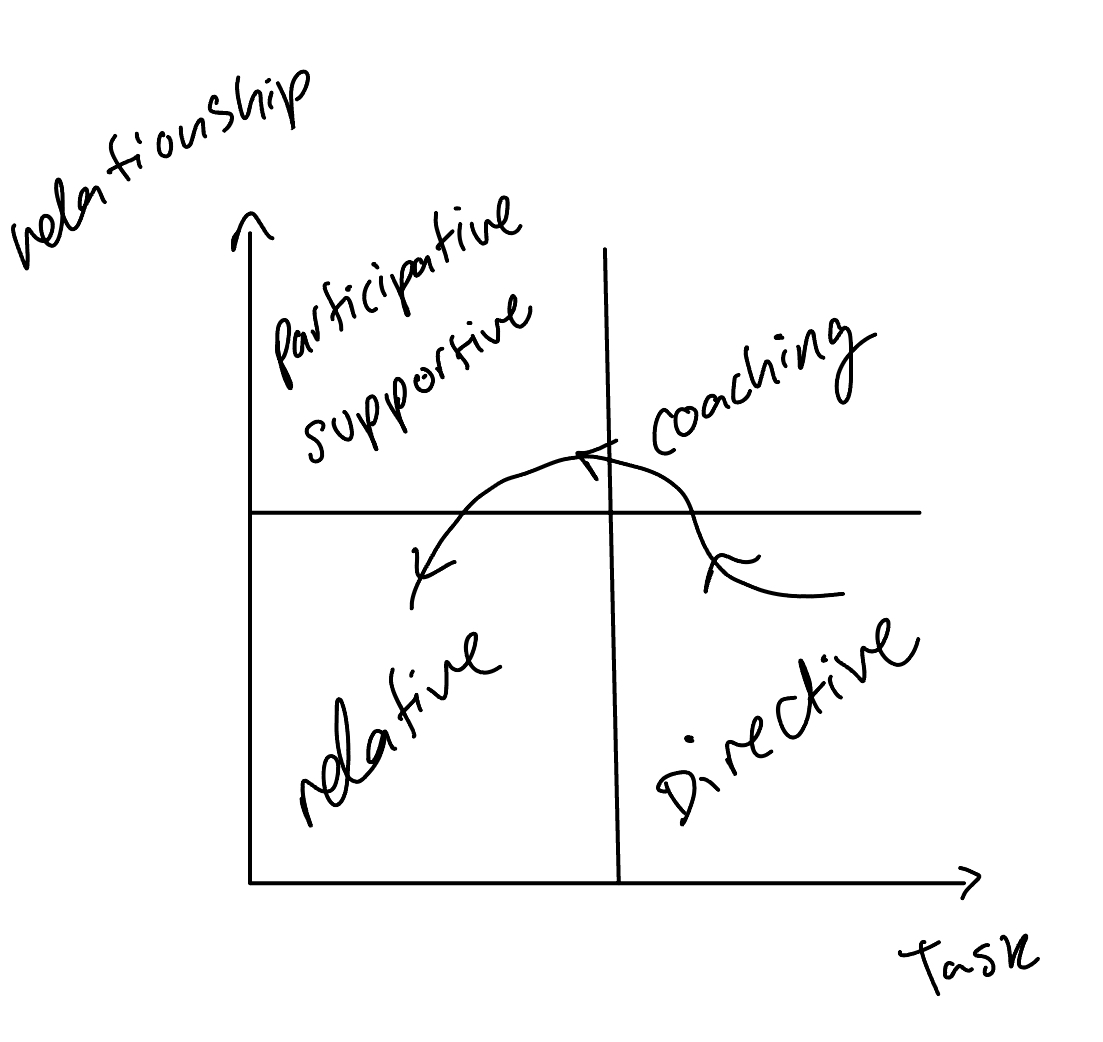
dependent on the readiness of the employee to take on the circumstance/task
competence (skills/ability) & confidence (willingness) = readiness level of the employee
adapt leadership style to the situation (including the employee)
Politicking in Organizations
Politicking: Politics relates to who gets what, when, and how. Politicking involves actions taken to influence, or attempt to influence, the distribution of advantages and disadvantages within an organization. Unlike goal setting and delegation, politicking isn't typically covered in business management courses. This may be due to its prescriptive nature or the underground nature of politics.
test: assspcoation with the ideas of machiavelli
psychopathy: thrill seeking/impulsive, lack of empathy
narcissism: inlfated effo / sense of self
sadism: finding satisfaction in infliction of pain
you don’t want these people around you
they are correlated
who what when and how you
Understanding Organizational Politics:
Recognized as essential for navigating conflict and resource allocations in environments filled with diverse interests and agendas.
Political Diagnostic Analysis:
Engage in a thorough assessment of organizational culture to understand behavior norms and the impact they have on decision-making processes.
Evaluate power dynamics among stakeholders to ascertain influence levels and alignments.
Analyze personal power relative to others, understanding how power shapes political interactions.
Guidelines for Political Action:
Frame actions to align with organizational goals to ensure atmosphere of collaboration.
Engage in impression management to project a positive public image and facilitate acceptance of ideas.
Build and utilize social networks for gained leverage within the organization.
Seek mentorship from influential peers to promote personal and professional growth.
Support your boss to enhance your personal influence and career trajectory.
Five Forms of Power: (French & Raven)
Formal Power: Relates to the power that stems from a person's position within the organization (e.g., legitimate power).
Legitimate Power: Power derived from an official position or role within the organization.
Reward Power: The ability to give rewards to others, such as promotions, bonuses, or praise, to influence behavior.
Coercive Power: Power based on the ability to punish or control someone, leading to compliance through fear of negative consequences.
Informal Power: Relates to power that arises from personal relationships and social networks (e.g., referent power).
Expert Power: Influence that comes from having specialized knowledge, skills, or expertise that others recognize and value.
Referent Power: Power stemming from personal traits or relationships, where others are drawn to the individual due to their charisma or likeability.
Factors facoring politicking
Ambiguous Hierarchies: Unclear power structures can lead individuals to navigate relationships and assert influence more forcefully.
Limited Resources: Scarcity of resources (e.g., budget, personnel) triggers competition, prompting employees to engage in politicking to secure advantages.
Organizational Culture: A culture that rewards individuals for self-promotion or aggressiveness incentivizes politicking as a means to advance.
High-Stakes Environments: In high-pressure situations where outcomes have significant repercussions, employees may resort to politicking to protect their interests.
Lack of Transparency: When decision-making processes are opaque, individuals may engage in politicking to influence outcomes behind the scenes.
Personal Ambition: Employees motivated by personal gain may actively seek to manipulate situations or relationships to climb the corporate ladder.
Inconsistent Leadership: Leaders who exhibit favoritism or are inconsistent in their decision-making create an environment ripe for politicking as followers mimic these behaviors to gain favor.
Decentralisation: mini kingdoms and leadership all over company structure
Company Cultures: Fundamentals of Organizational Culture
Defining Organizational Culture:
It is a comprehensive system of shared values and beliefs that shapes employee behaviors, influencing their interpretations and interactions within an organization.
Cultures vary, with some dominating while others may feature various subcultures that cater to departmental needs or functions.
Functions of Culture:
Provides identity, stability, and organizational boundaries, guiding behavior and expectations among employees.
Examples of Surface Manifestations:
Surface manifestations include stories, rituals, symbols, and specialized language that reinforce and communicate cultural values and expectations among members.
Creation and Maintenance of Culture:
Organizational culture is established and perpetuated through critical incidents, leadership modeling, and socialization processes that cultivate shared meanings and practices.
Understanding Organizational Politics:
Politicking involves actions taken to influence the distribution of advantages and disadvantages within an organization.
It is essential for navigating conflict and resource allocation in environments filled with diverse interests and agendas.
Key Behaviors of Political Players:
Networking: Building social connections and alliances to gain leverage and influence.
Manipulation: Using deceit or underhanded tactics to achieve personal goals.
Impression Management: Controlling how others perceive them to create a favorable public image.
Influence Peddling: Leveraging relationships or status to sway decisions in their favor.
Information Control: Selectively sharing information to shape perceptions and foster dependency.
Coalition Building: Forming alliances with others to consolidate power and push agendas.
Conflict Exploitation: Taking advantage of disagreements among colleagues to advance their own interests.
Recognizing these behaviors can help individuals navigate complex organizational dynamics more effectively.
SaveMore Case
company needs to be tranparent
explain previous general manager (Wally Schultz) was demoted for no profit
too brutal/fast a change for employees of GMs (from supportive to directive leadership style)
coaching or training Mr. Raymond
Managing Change
Importance of Transformational Leadership:
Essential for guiding organizations through significant changes, motivating and inspiring members to adapt and embrace new directions.
Major Change Phases:
Lewin's Model: Outlines three phases of change: Unfreezing (preparing the organization for change), Changing (implementing change initiatives), and Refreezing (solidifying the changes into the organization's culture).
Unfreezing: destroy status quo and shake things up
Changing: change things up
Refreezing
8 Steps for Successful Change Implementation (Kotter) - father of psychological behavior analysis:
Create Awareness: Establish a sense of urgency around the need for change.
Form a Guiding Coalition: Build a coalition of influential stakeholders to lead the change.
Develop a Shared Vision and Plan: Articulate a clear vision to guide the change initiative.
Communicate the Vision Widely: Ensure consistent messaging to inspire and engage the organization.
Empower Others: Eliminate obstacles to encourage and enable change at all levels.
Generate Short-term Wins: Identify immediate benefits to maintain momentum and build confidence.
Consolidate Gains: Use short-term successes to drive larger changes and address any lingering resistance.
Make Changes Permanent: Integrate new practices into the organizational culture by reinforcing their value and institutionalizing changes.
Overcoming Resistance to Change:
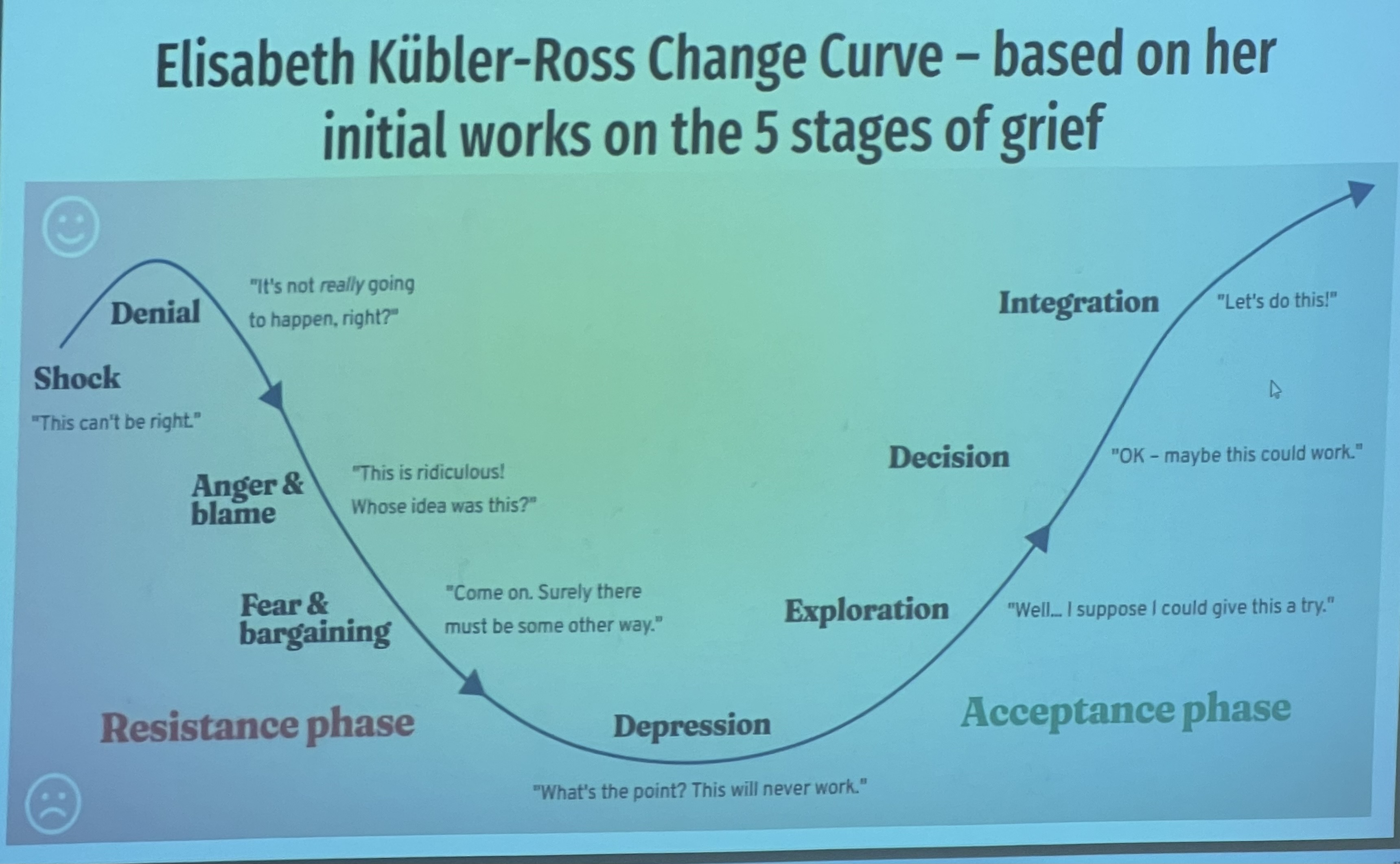
Understand reasons for resistance, including fear of the unknown and selective perception, and implement tailored strategies such as education, participation, facilitation, negotiation, and, when necessary, coercion, to foster cooperation.
6 Strategies to Overcome Resistance to Change:
Education: Provide information to help employees understand the reasons behind the change and how it will benefit them.
Participation: Involve employees in the change process by soliciting their input and feedback, which can increase buy-in and reduce resistance.
Facilitation: Offer support and resources to assist employees in transitioning, addressing their concerns and needs throughout the process.
Negotiation: Engage in discussions with resistant employees to negotiate terms that may alleviate their concerns and enhance cooperation.
Coercion: As a last resort, utilize authority to enforce changes if necessary, but this approach can lead to resentment and should be handled with care.
Tailored Strategies: Understand individual reasons for resistance and tailor approaches accordingly to effectively address specific concerns.
these 6 strategies through the stages of grief: Elixabeth Kruger-moss
Negotiation
Overview of Negotiation:
Defined as a process of bargaining that leads to mutually agreeable terms or conditions.
Types:
Distributive Negotiation: Characterized as a zero-sum approach where one party's gain is another's loss.
Integrative Negotiation: Focused on finding win-win solutions that benefit all parties involved.
Effective Negotiation Guidelines:
Understand the other party’s situation and needs to create a collaborative environment.
Develop a clear and coherent negotiation strategy to guide discussions.
Establish rapport and open negotiations with positive overtures to foster goodwill.
Stay focused on issues rather than personal conflicts throughout the negotiation process.
Maintain a rational and goal-oriented approach to ensure objectives are met.
Don’t take initial offers seriously; instead, aim for outcomes based on fair adjustments and concessions.
Explore win-win solutions to enhance collaboration and mutual satisfaction.
Rely on objective criteria to facilitate fair and informed decisions throughout the negotiation.
Behavioral Checklist for Negotiation Skills:
Target
Where can you go? —> mandate
anitcipate points for agreement
Who, What, How
Who: Identify the major participants involved in the negotiation. Understand their roles, interests, and any potential biases or viewpoints they may have that could influence the negotiation process.
relationship
mandate (perimeter of what you can agree on) - when you negotiate for someone
stakeholders (people affected by the negotiation)
What: Clearly outline the goals, desired outcomes, and the issues at hand within the negotiation. This includes recognizing items that are non-negotiable and areas where flexibility is possible to achieve mutual ground.
motivations
solutions at the table
creative part
solutions away from the tale (leverage)
justification criteria
Zone of Possible Agreement (ZOPA):
Defined as the range in which two or more parties can find common ground during a negotiation. It identifies the overlap between the minimum limits of each party’s expectations, effectively mapping where compromises can be made.
Importance of ZOPA: Understanding the ZOPA is crucial as it guides negotiators in aiming for mutually beneficial solutions, helping to avoid unnecessary conflict and ensuring discussions remain productive.
Calculating ZOPA: Involves recognizing both the highest price a buyer is willing to pay and the lowest price a seller is willing to accept to establish a feasible range for negotiation.
BATNA: Best Alternative to a Negotiated Agreement; it is the most advantageous course of action a party can take if the current negotiations fail. Understanding one's BATNA helps negotiators to make informed decisions and to know when to walk away from an unfavorable deal.
reveal when other party reveals their BATNA
When you feel the negotiation is going nowhere
How: Formulate a negotiation strategy that encompasses communication approaches, engagement tactics, and methods to address conflicts. Consider various negotiation styles (distributive vs. integrative) that may best suit the situation and the parties engaged.
communication
what kind of information do you want to give/get from the other person and what to keep to yourself
logistics
process
protocol, ceremonies, crescend, deprescendo
Preparation Matrix
Understand Objectives: Clearly define what you intend to accomplish from the negotiation.
Research Context: Collect relevant information regarding the negotiation context including past interactions and potential effects on parties involved.
Identify Key Stakeholders: Create a list of individuals or groups impacted by the negotiation, taking note of their interests and stakes.
Develop a Plan: Outline your negotiation strategy, incorporating timelines, necessary resources, and specific actionable steps.
Risk Assessment: Identify potential challenges and obstacles and devise contingency plans to effectively handle these situations.
Gather Resources: Assemble materials, tools, or personnel needed to bolster your negotiation efforts.
Practice and Rehearse: Engage in simulations or practice scenarios to enhance confidence and to address any issues that could arise in actual negotiations.
Stay Open to Feedback: Be ready to adjust your strategies during the negotiation based on real-time feedback and situational developments.
Knowing Oneself
Understanding Personality:
Defined as a stable set of psychological characteristics that differentiate individuals from one another, influenced by both genetic and environmental factors.
Personality Theories:
Idiographic Approach: Focuses on the unique traits of individuals and personal experiences.
Nomothetic Approach: Aims to generalize traits across individuals utilizing psychometric methods to assess personality.
The Five-Factor Model (OCEAN):
Domains include:
Openness to Experience: Creativity, curiosity, and willingness to explore new ideas.
Conscientiousness: Organization, dependability, and a strong sense of duty.
Extroversion: Sociability, assertiveness, and a tendency to seek stimulation in the company of others.
Agreeableness: Compassion, cooperativeness, and concern for social harmony.
Emotional Stability (Neuroticism): Reflects resilience, emotional control, and adaptability in stressful situations.
Importance in Management:
Understanding personality traits can guide managers in predicting behavior, enhancing communication styles, improving team dynamics, and selecting the right individuals for specific roles and tasks within the organization.