The Endocrine System
works in conjuction with the nervous system to maintain homeostasis (body balance)
able to access every cell in the body and have prolonged effects
are ductless and secrete their horomones directly into the blood
horomones: specialized chemical messengers that are active in low concentrations
→ may be effected by stress, excersize, emotions, gender, and age
classifications
where they contact: target (a spefic site) vs. non target (many cells)
work in sequence: tropic hormones cause the release of other horomones, and non-tropic horomones have a direct result on the effector (muscle/gland/organ)
lipid/sterioid: goes through membrane or amino acid/protein/water soluble: need channel/carrier protein in the membrane
Hormone regulation
antagonistic hormones: hormones that work against eachother→ example blood sugar (insulin vs. glucagon
positive feedback: reinforcement increases further results→ example oxytocin
negative feedback: non tropic inhibits tropic hormone production→ example metabolism
the glands of the endocrine system:
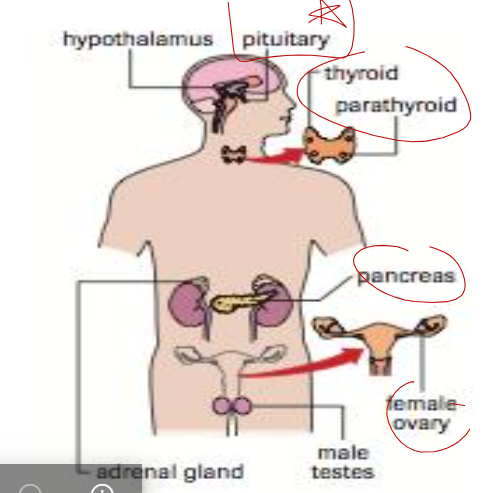
the pituitary gland
considered the master gland
located in the brain below the hypothalamus
hypothalamus:
located in the brain
the physical link between the nervous and endocrine system
produces oxytocin and ADH which are then stored in the posterior pituitary
stimulates the pituitary via releasing hormones (RH)- example GnRh
hypothalamus → gondatropin releasing horomone → pituitary → gondatropin
horomones produced in the hypothalamus:
andiuretic horomone: made in the hypothalamus, and is released when osmoreceptors shrink (dehydration)
directly affects water balance
makes nephrons more permeable to water, allowing water to be absorbed back into the body
hyposecretion of this horomone: diabetes insepedus
thyroid stimulating horomone (TSH): stimulates the thyroid gland to release its horomones
adrenocorticotropic horomone (ACTH): stimulates the adrenal cortex to release its horomones
human growth horomone (hGH): stimulates the growth of bones and muscles and organs by increasing the uptake of amino acids, the metabolism of fat, and the rate of cell division
hyposecretion: dwarfism
hypersecretion: gigantism, acromegaly
prolactin: causes milk production
oxytocin: causes uterine contractions
follical stimulating horomone (FSH): stimulates gametogenisis
lutenizing horomone (LH): stimulates ovulation and testosterone production
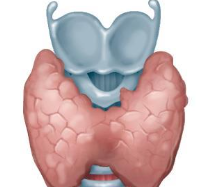
the thyroid gland
located in the neck (below the larynx)
controled by TSH which is secreted by the pituitary which in turn was stimulated by TRH from the hypothalamus
affected by levels of iodine in the body
thyroxin (t4): thyroids MVP
regulates metabolic rate by speeding up the rate of cell respiration and utilization of glucose and oxygen
increases the uptake of carbohydrates from the small intestine
hyposecretion: cretinism, goitree
hypersecretion: graves disease