Birds, Mammals, Circulation
Almost 200 million years ago, the first birds appeared
Birds are tiny dinosaurs
There are a lot of clues that birds are reptiles
scales
same amniotic egg (birds are oviparous)
Unlike reptiles, after the egg hatches, birds often do bi-parental care
mom and dad are bringing food to the nest to help out
over 90% of bird species are monogamous
many birds form pair bonds
Another thing that sets them apart is adaptations for flight
they have feathers
feathers came from reptile scales (both are homologous)
air is not only pushing from below, but pulling from above
lift is aided by wing shape
air that is passing the wing on the top side has farther to travel than the air that is passing beneath (decreasing air pressure above, greater air pressure below)
feathers are made of strands interlocked with hooklets
feathers good for insulation
Birds are light
lost their teeth
bones are mostly hollow
reduced some of their internal organs (no urinary bladder, only 1 ovary)
however sternum is not light
it has a keel (flat plate that sticks out)
acts as an attachment point for flight muscles
Birds are very mobile, so they rely on their long range senses
good vision
vast majority of birds are diurnal (active during the day time)
Archaeopteryx
complete transitional fossil
early birds with feathers
fossil shows imprints of teeth and tail bone (modern birds don’t have this anymore, but reptiles do)
Mammals first appeared 200 million years ago (age of dinosaurs)
some of the early mammals co existed with early dinosaurs
while the dinosaurs reigned, the mammals were a small group
the ones that did exist were tiny creatures like mice
mammals didn’t get to diversify until around 65 million years ago after the dinosaurs went extinct
Mammal traits
endothermic (like the avian reptiles, they control body temperature by generating heat)
mammals have hair to keep the heat insulated
hair is made of keratin (same protein found in reptile scales and bird feathers)
many are nocturnal
good olfaction (good sense of smell)
good sense of smell (except for primates)
3 middle ear ossicles (tiny bones that are hooked to the inside of the ear drum)
they’re there to amplify sound
other tetrapods only have 1
4 chambered hearts inherited (better for oxygen delivery)
to inhale, contract diaphragm muscle and it lowers, decreasing air pressure in the thoracic cavity
diaphragm relaxed: curves up, pressure up, air out
teeth are heterodont (different tooth shapes)
flat incisors
canine teeth
pre molars and molars
reptiles, amphibians and fish are homodont
good maternal care
3 types of reproduction
monotremes (egg laying mammals) = oviparous
amniotic eggs
ex: platypus, spiny anteater
marsupials = short gestation in uterus, newborn climbs to pouch to finish development
ex: opossum, koala, kangaroo
placental = placenta in uterus filled with blood to exchange nutrients from moms blood to fetal blood
connected by umbilical cord
Orders of placental mammals
rodentia (biggest) = mice, rats, beavers, capybara, squirrels, porcupines, hamsters, gerbils
chiroptera = bats
primate = monkeys, prosimians (lemurs, etc), apes
carnivora = wolves, coyotes, foxes, lions, tigers, bobcats (cats and dogs), bears, raccoons, weasels (otters, minks, ferrets), mongoose, seals, sea lions, walrus
cetartiodactyl = whales, dolphins, even toed hoofed mammals (cows, sheep, camel, deer, hippos, girraffes)
lagomorpha = rabbits, hares, pika
perissodactyl = hoofed mammals with odd number of toes (horses, zebras, rhino, tapir)
proboscidea = elephants (long trunks)
eulipotyphla = hedgehogs, moles, shrews
xenarthra = anteaters, armadillo, sloths (weirdly arched backs)
learn 5 orders for exam, 3 examples each
Mammalian circulation
bottom ventricles are strong
2 atrioventricular valves + 2 semilunar valves
4 valves = one way doors
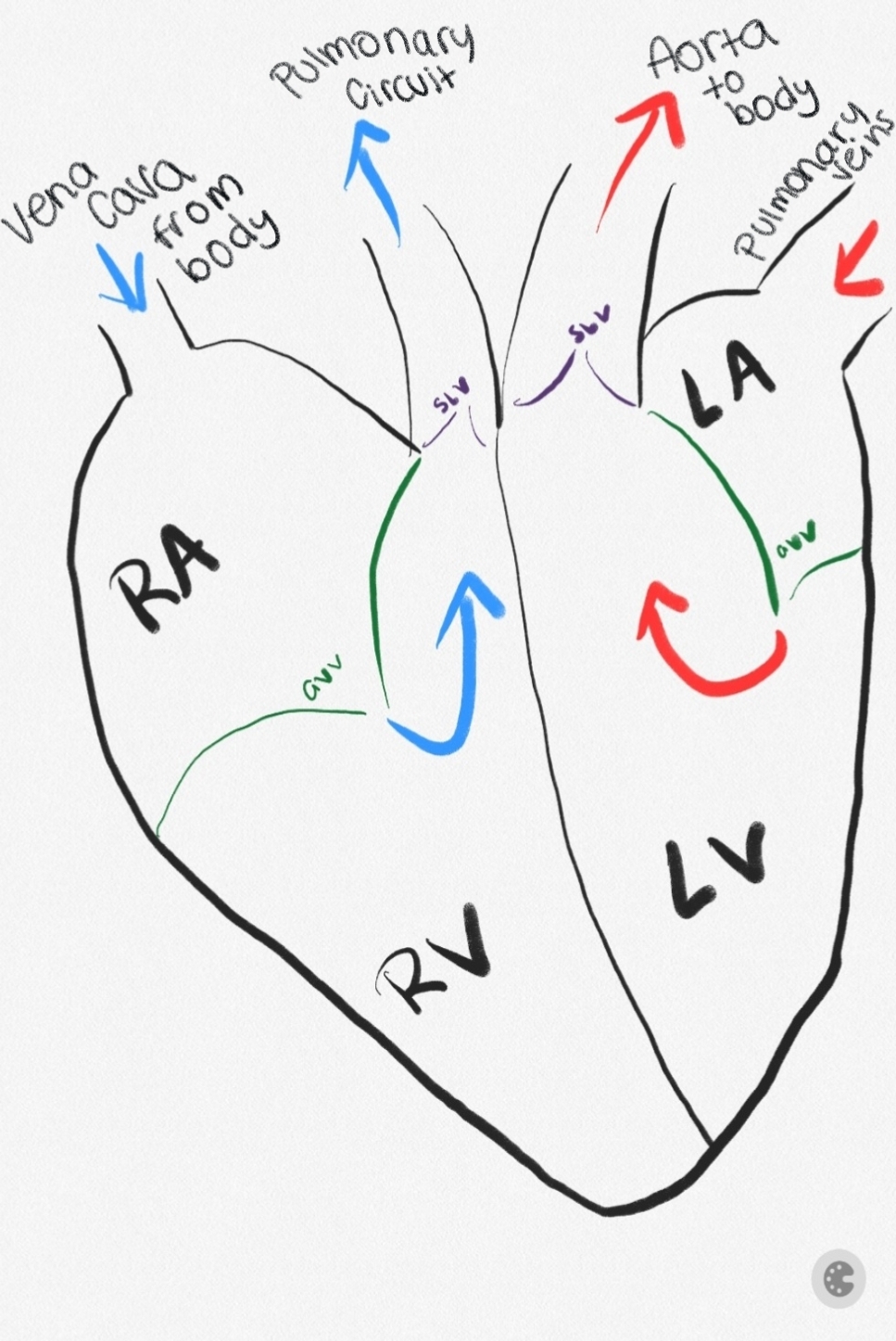
Aorta = big powerful artery, first artery of systemic circuit, a lot of blood coming past here
Vena cava = leads to right atrium
Pulmonary arteries = on the way to lungs
Pulmonary veins = carry oxygenated blood from lungs to left atrium
When listening with a stethoscope, first half of bump is the closing of atrioventricular, second half is closing of semilunar
If they don’t close right = heart murmur
Each time the ventricles contract and relax, that is 1 heart cycle
Heart cycle = systole (ventricles contracting, blood is leaving the heart) and diastole (ventricles relaxing, blood is entering)
as blood leaves the ventricle, it enters the vessels (more than 50,000 miles of blood vessels)
5 types of blood vessels
enters arteries first (carry the blood away from the heart), each one branches into…
arterioles are small arteries that branches into lots of…
capillaries (smallest vessels) go everywhere, walls are porous (where atoms and even cells can enter and leave the blood), they converge into…
pores allow blood to give food monomers to cells
as cells produce waste, they travel to the excretory system
venules (small veins) converge into larger…
true veins (carry the blood back to the heart)
Region in the wall of the right atrium called…
sinoatrial node = controls rhythm of contraction (can contract like a muscle and send electricity like a nerve) aka pace maker
controlled all things that get you excited
Artery blood is high pressure
Pressure and speed drop when blood reaches capillaries due to them being small individually, however the total cross section of capillaries is larger
Venous blood is low pressure, but one way valves in the veins keep the blood going toward the heart
skeletal muscles help squeeze venous blood along