Climate, Microclimate, and Climate Change
Weather is the combo of
temp
humidity
precipitation
wind
cloudiness
specific place and time
Climate
long-term average
Solar radiation and its design implication
Surface temperature
reflects the difference between income and outgoing radiation
Hot surfaces like the Sun - gives off shortwave (solar) radiation
the hotter the surface, the shorter the radiation wave is
Cooler objects like Earth’s surface - emit long wave (terrestrial) radiation
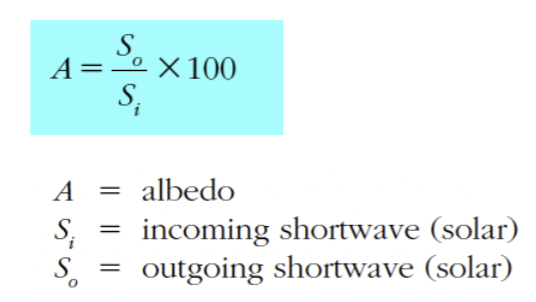
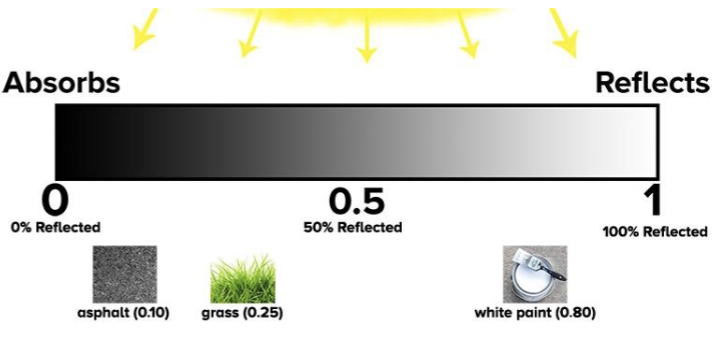
Albedo - is a function of surface reflectivity
expressed as a proportion (0-1)
more reflectance = cooler surface/less heat absorbed
less reflectance = hotter surface/more heat absorbed
HIGH ALBEDO IS BETTER FOR COOLING
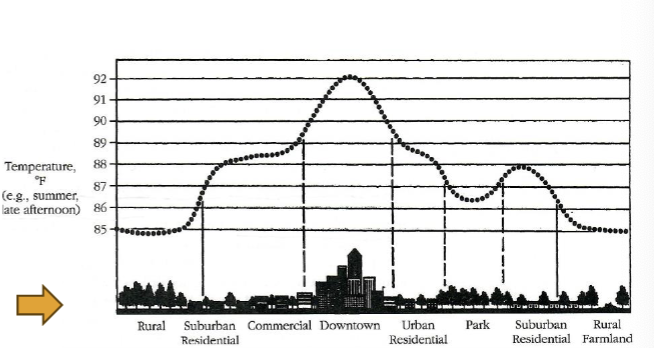
Cities get hotter than surrounding rural areas because
low-albedo surfaces trapping heat (asphalt)
lack of vegetation (higher albedo > dark manmade surface)
Microclimate
(Air) Temperature
On the perimeter of the city, the urban heat island decline sharply where the urban landscape quickly changes to the rural.
Wind inside a city
highest velocities are reached on the windward brow and across the roof of the tallest building
Strong flow of air - deflected down the building face
Calm zone develops in the space between the buildings
Accelerated flow is associated with the canyon between large buildings
Air Quality profile
pollution levels vary sharply from one sector of urban to another
Large particulates tend to be concentrated close to their sources
Summary
air temperature and relative humidity are hard to be modified through LS design
wind and radiation are easier to be modified through LS design
Deciduous woody plants
provides shade in summer and allows solar radiation through in winter
has minimal effect on wind, but we don’t want the cold wind during winter when the leaves fall off
Coniferous woody plants
year-round shade, benefit in summer but detriment in winter
substantial effect on the wind
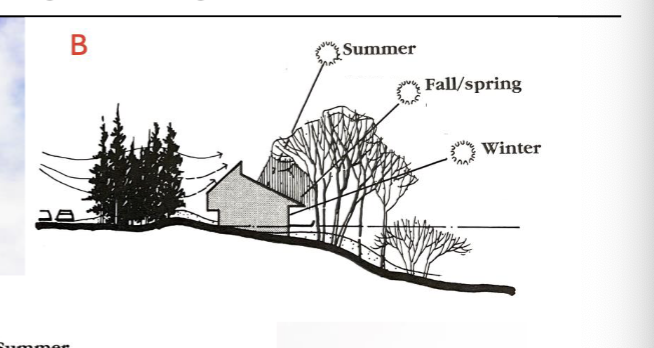
summer sun doesn’t hit the roof
winter trees protect the house
Introduction to Climate Change
in the past earth has been very warm
the climate increases today, quicker than ever
direct impact (temperature)
heatwaves, wildfires, ice sheet melting, sea level rise
precipitation will also increase
because the water holding capacity of air will increase
Indirect impact
extreme precipitation, tropical cyclones, flood, drought