6.2.1(d) artificial cloning in animals
spec points
how artificial clones in animals can be produced by artificial embryo twinning or by enucleation and somatic cell nuclear transfer (SCNT) (ii) the arguments for and against artificial cloning in animals
To include an evaluation of the uses of animal cloning (examples including in agriculture and medicine, and issues of longevity of cloned animals). HSW9, HSW10, HSW12
natural cloning in animals
Common in invertebrates – starfish, sponges, flatworms, hydra. Sections break off + develop into new organisms.
Vertebrates - less common.
Monozygotic identical twins
Some reptiles/amphibians can do sexual + asexual reproduction when no males are present.
artificial cloning in animals
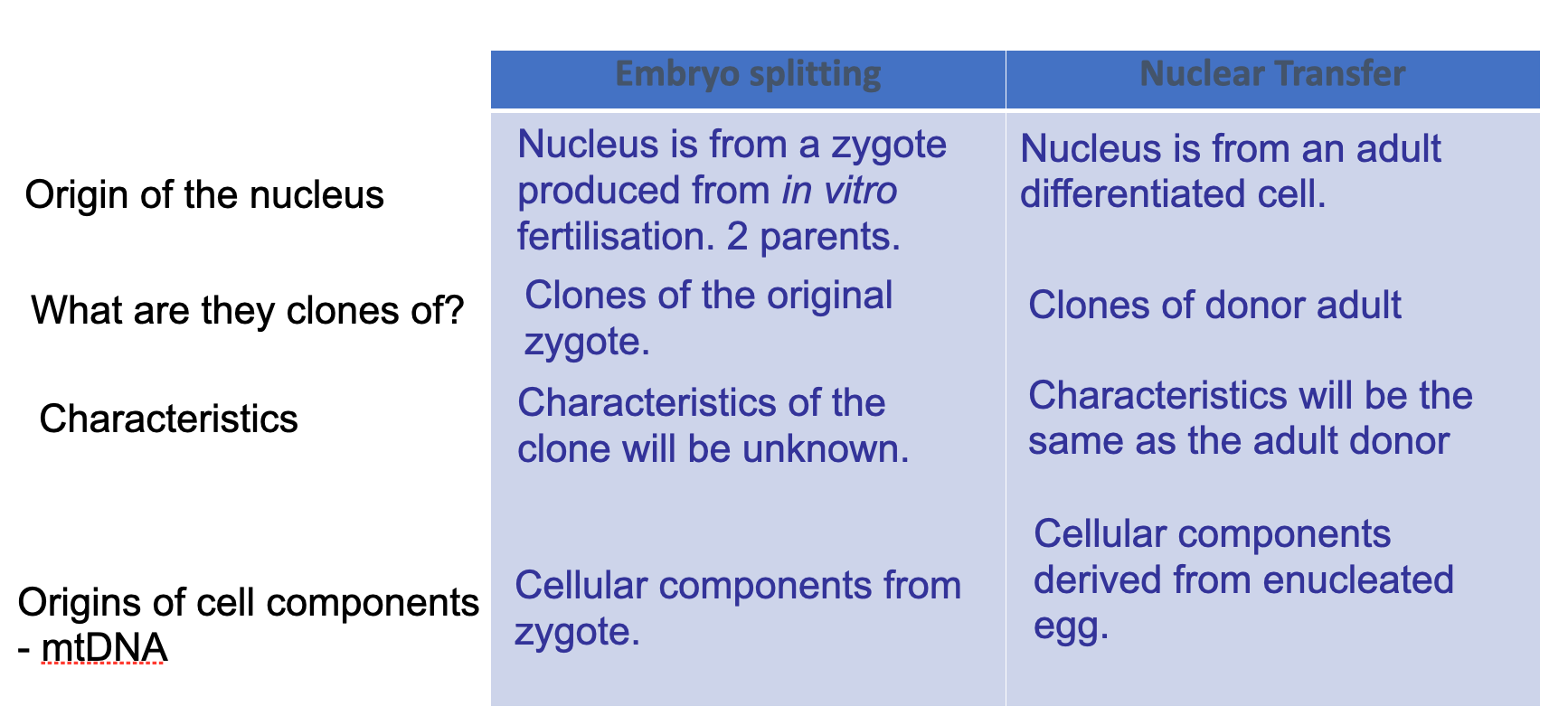
In animals only embryonic cells are capable of producing new individuals because they are totipotent. Totipotent cells are capable of differentiating into any specialised cell. This is because they are capable of switching on any of the genes present on the genome. There are two methods of artificial cloning to produce whole animals (reproductive cloning):-
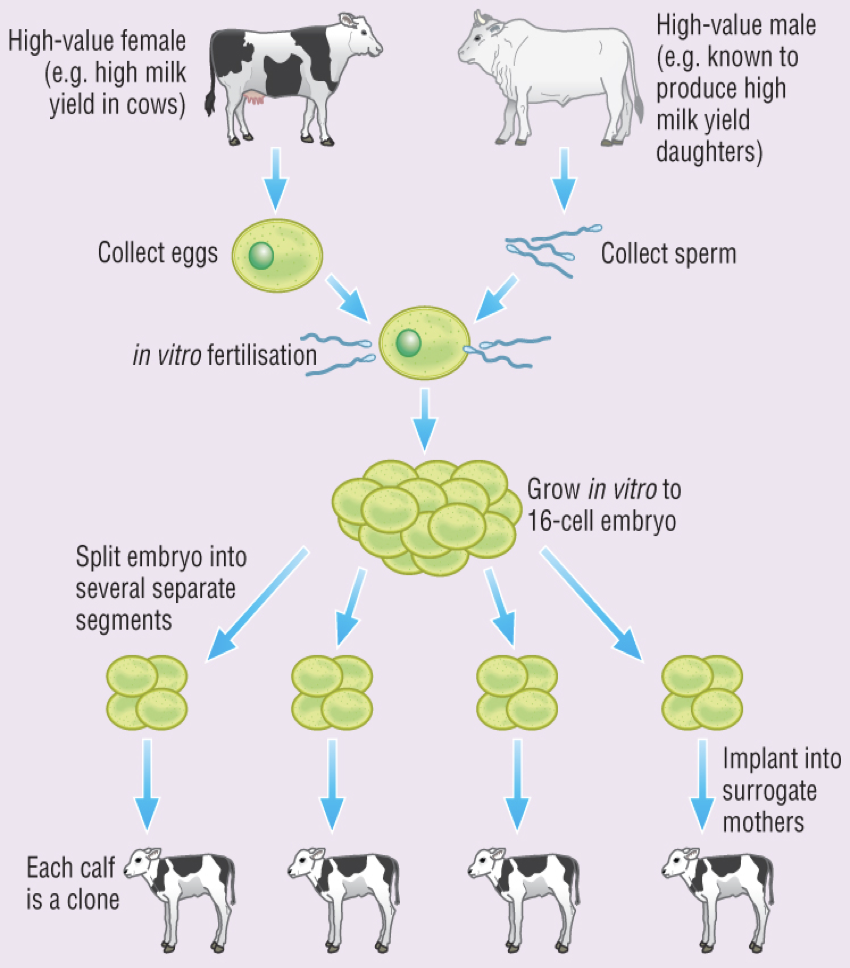
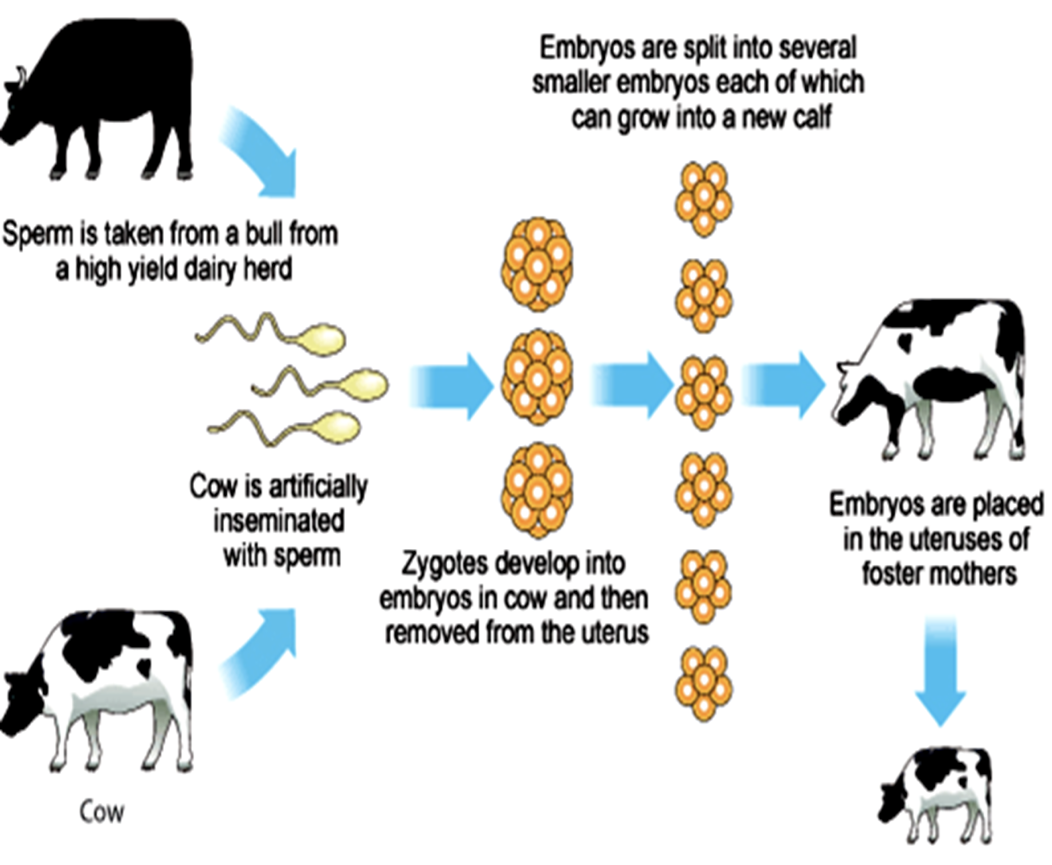
Splitting Embryos – Artificial Twinning. Produces ‘artificial identical twins’. Each new offspring is genetically identical and is a clone.
Somatic cell nuclear transfer (SCNT). Nucleus of a body cell is inserted into an enucleated egg cell.
Methods above are currently being used to produce high quality live stock and in the development of genetically engineered animals for pharming (animals that produce medicinal products in their milk).
splitting embryos
This produces new genetically identical individuals from an embryo, which could be described as artificial identical twinning.
Cells from a developing embryo are separated and each one can produce new individuals that are clones of each other. New individuals are identical to each other and any other individuals produced from the same embryo but different to parent. Embryo originally formed by the fusion of two gametes.
This technique has been used to clone sheep, rabbits, and toads. In 2000, the first primate, a rhesus monkey called Tetra, was cloned in this way.
cloning by the splitting of embryos
Somatic Cell Nuclear Transfer (SCNT) Adult cell cloning
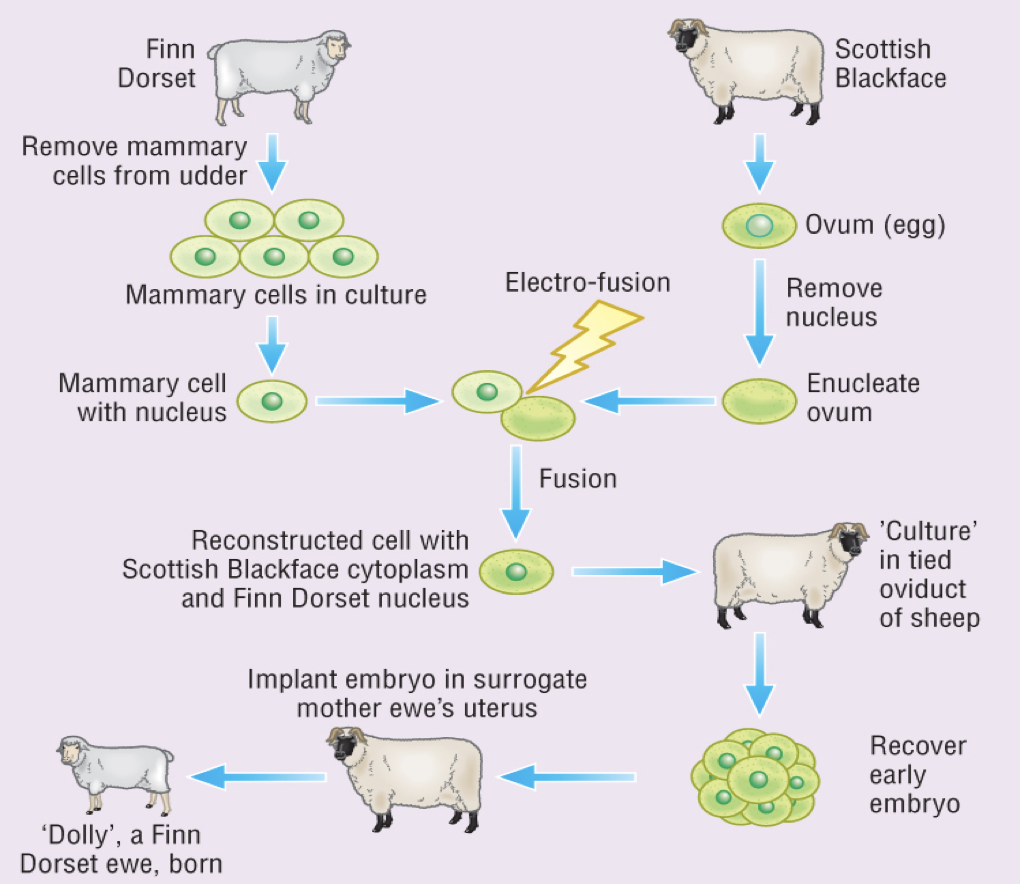
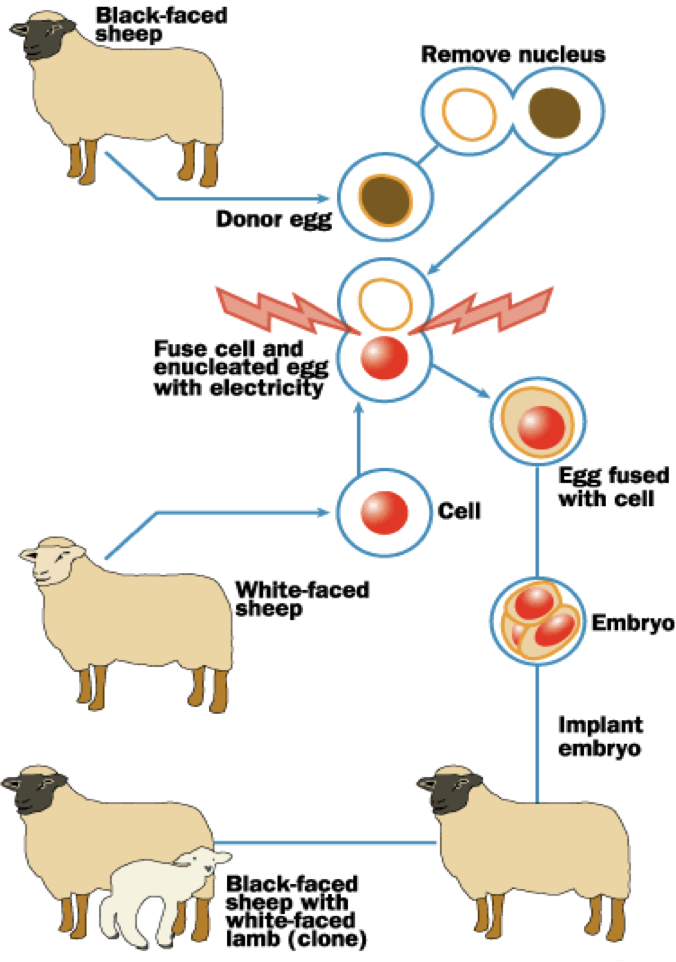
A Somatic (body) differentiated cell is taken from an adult (one with desirable features) and its nucleus is removed and placed in an enucleated egg cell (one that has had its nucleus removed using electro-fusion). The egg goes through the normal stages of development using the genetic information from the inserted nucleus.
Offspring that develop will be identical to each other and to the animal that donated the somatic cell nucleus.
Dolly was the first cloned animal produced in this way in 1996 from a cell from a mammary gland of a 6-year-old sheep. The nucleus was placed into the egg of a second sheep then inserted into the uterus of a third sheep. Dolly was the only success out of 277 attempts. Now done on mice, cows, horses, cats, dogs.
Cloning by the nuclear transfer method; the making of Dolly
Dolly was put down at 6 years old in 2005 suffering from a form of lung cancer linked to premature ageing.
embryo splitting v nuclear transfer
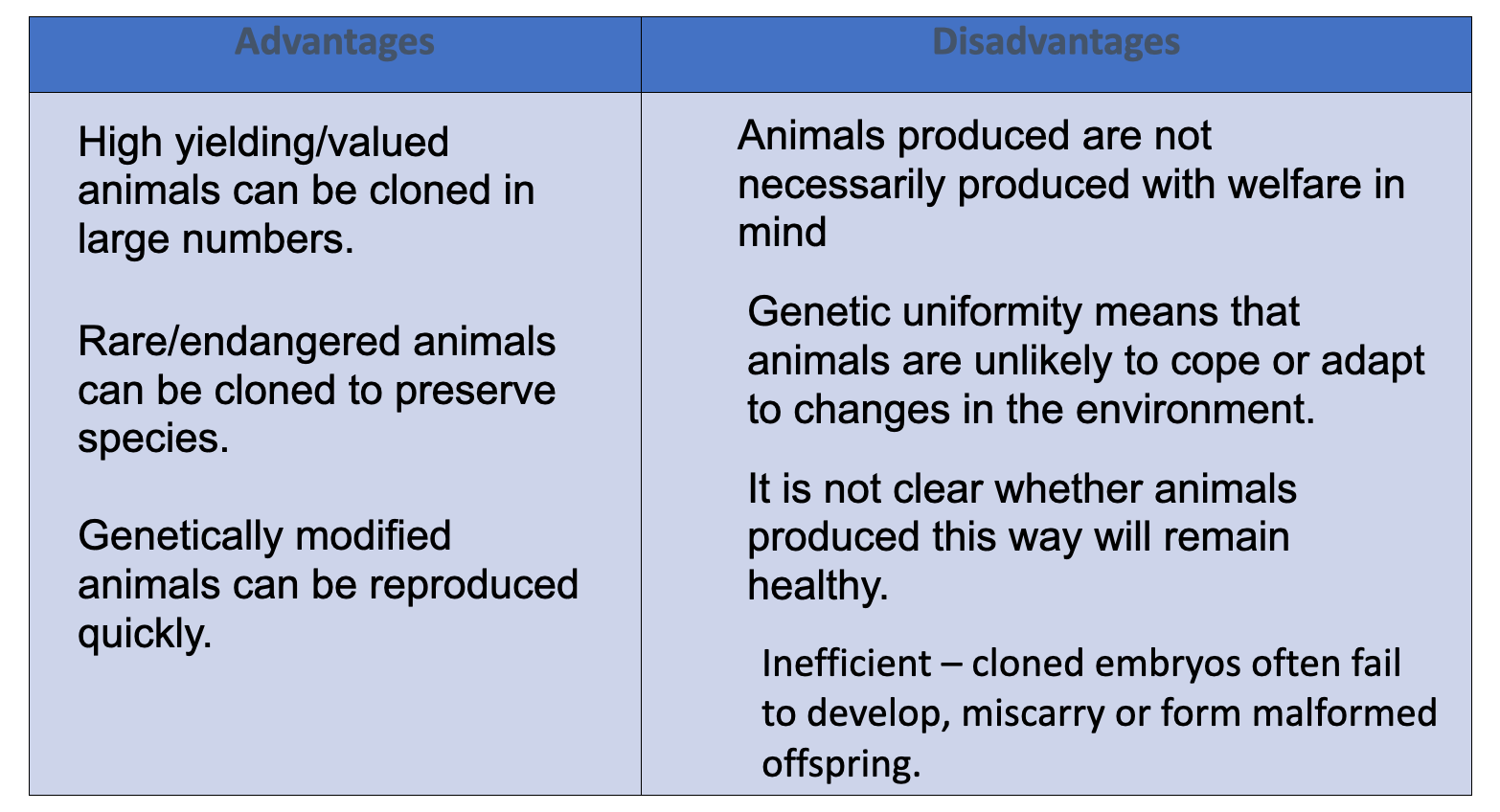
disadvantages of reproductive cloning
The first cloned mammal, Dolly the sheep, died prematurely due to lung disease. This raised concerns about the health and life expectancy of cloned animals.
It is thought that some cloned mammals have shorter telomeres than other animals of the same age. Telomeres are pieces of non-coding DNA that prevent the chromosome from degrading. They shorten as cells divide and are therefore considered a measure of ageing in cells.
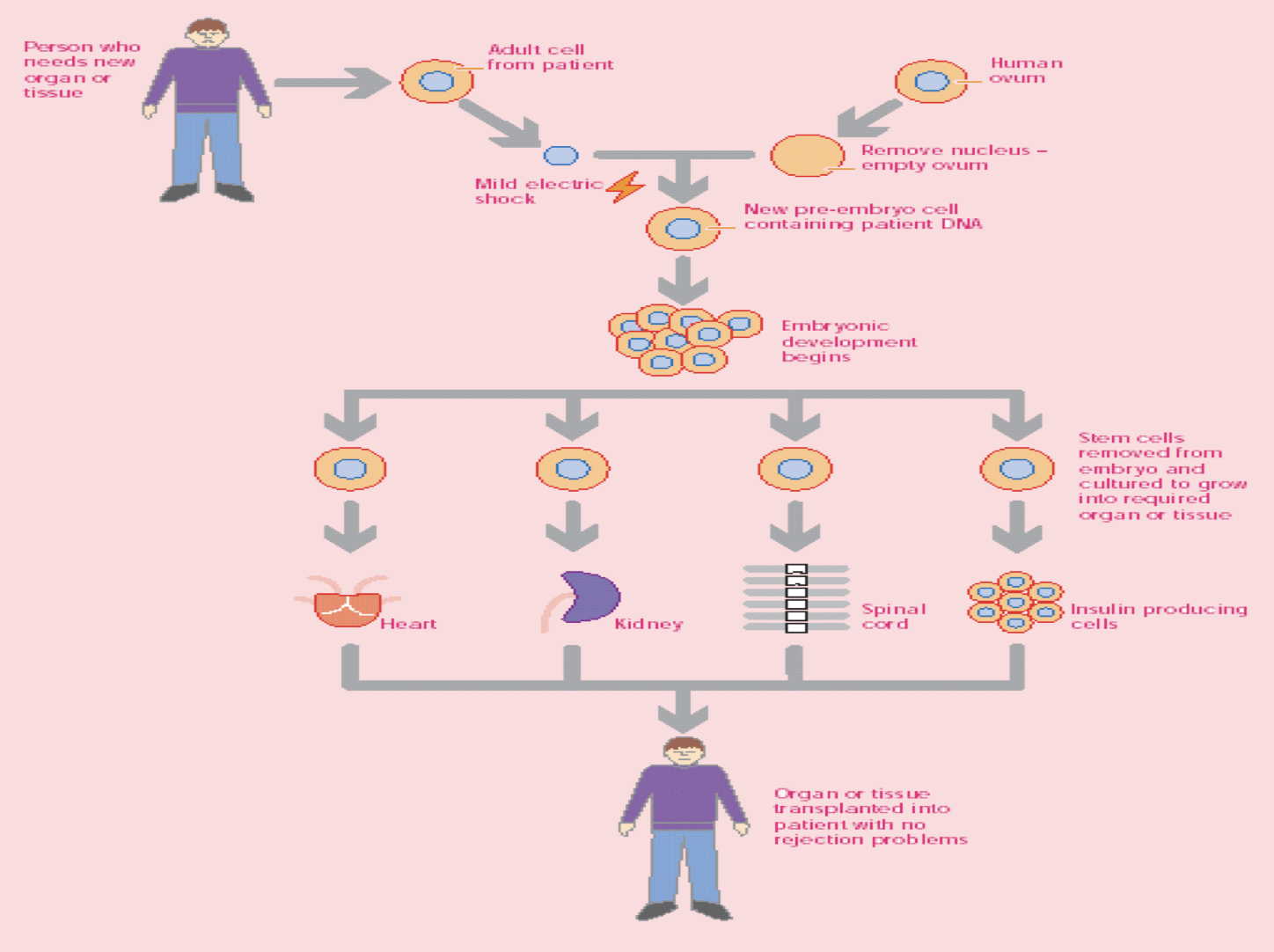
therapeutic cloning
uses of cloned cells
One of the most significant potential developments in cloning is the possibility of using cloned cells to generate cells, tissues and organs to replace those damaged by disease or accidents. For example:
Sickle cell anaemia
Leukaemia
Alzheimer’s disease
Parkinson’s disease
Repair to nerves/spinal cord
Diabetes
a third way - pluripotent cells
Researchers in Kyoto (Japan) and Wisconsin and California (USA) - 2008 reported that they successfully reprogrammed human skin cells to become pluripotent.
They identified the regulator genes involved in this process and the cells produced are referred to as induced pluripotent cells (iPS).
If these types of cells can be successfully produced then the potential is huge and the technique could replace the more controversial nuclear transfer method.