exam study
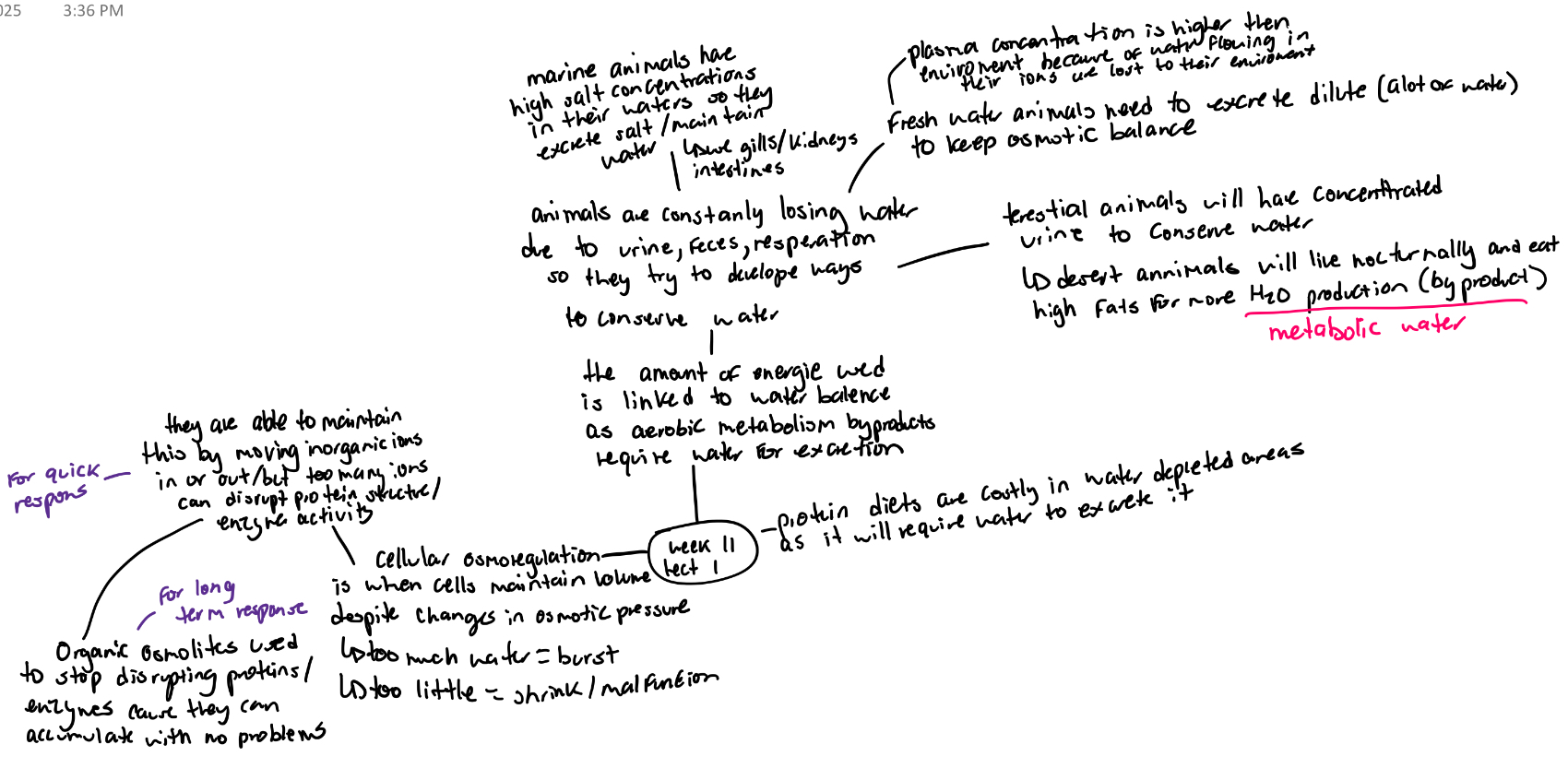
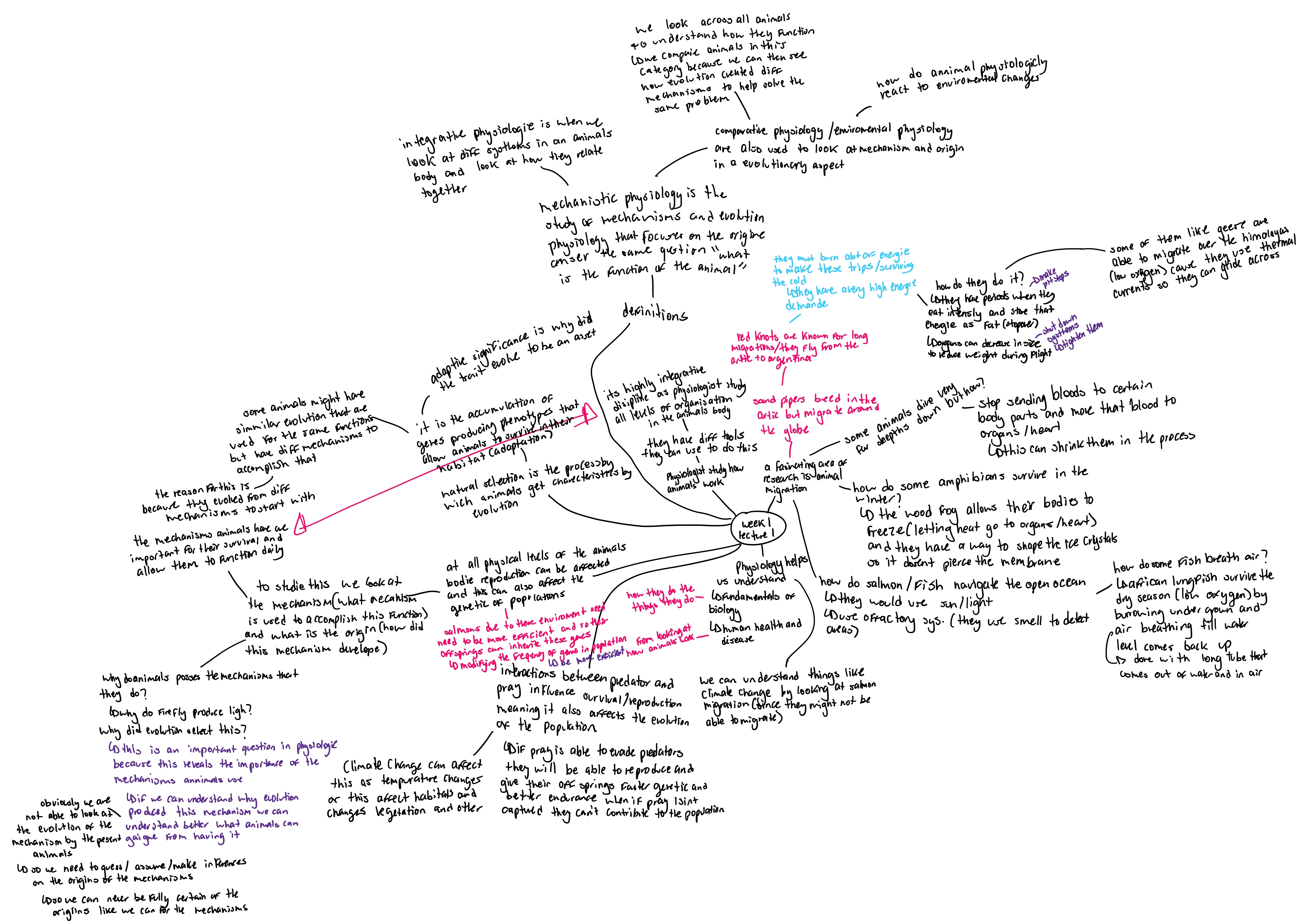
Week 1
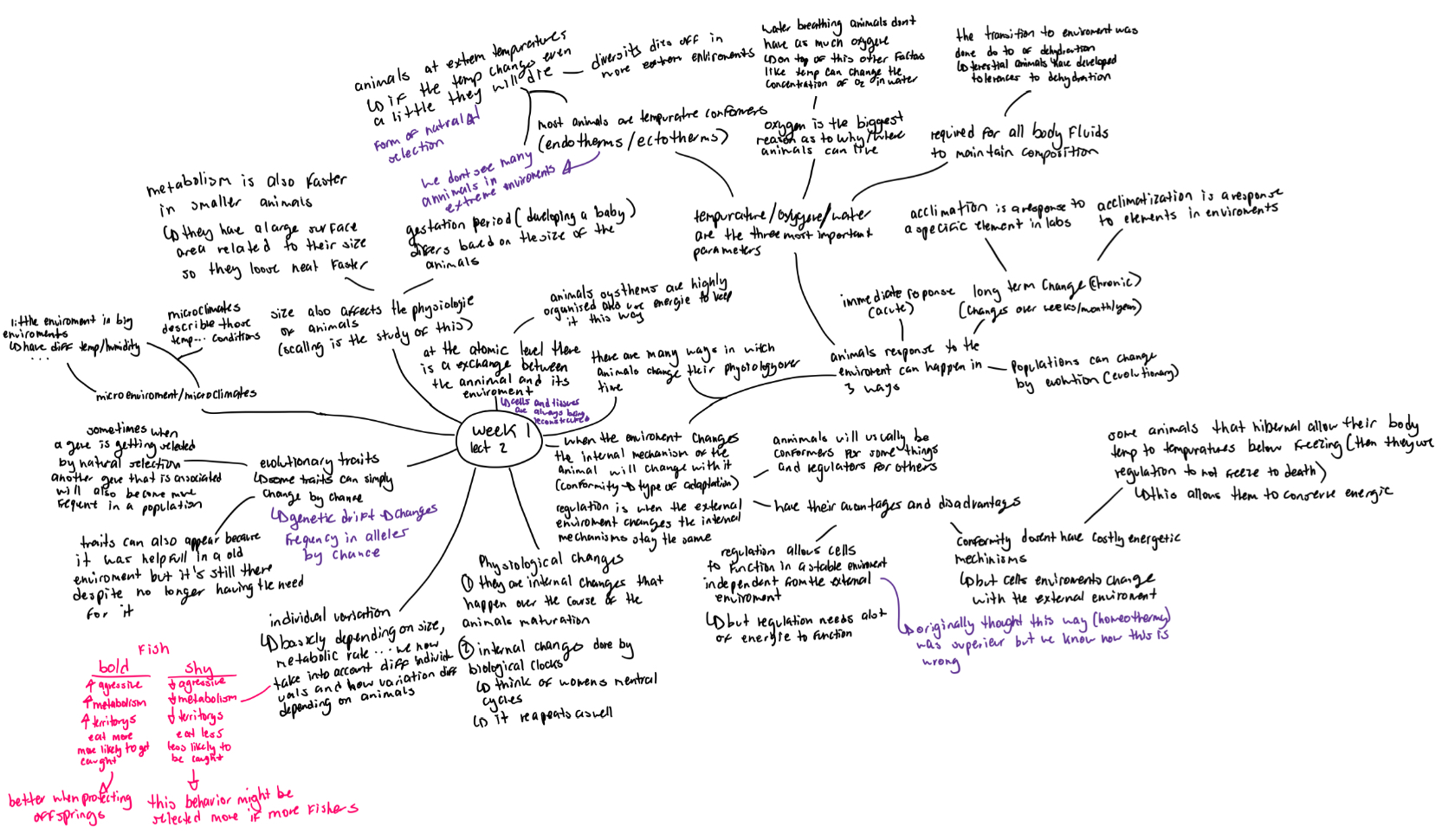
Week 2
Week 3
Week 4
Week 5
Week 6
week 7/8
There are 3 very important paramaters that animals need to be able to live that is temperature, oxygen and water
Another very important aspect is the availability of oxygene. this is important as this can determine where animals are able to live.
the availability of oxygen can also determine how animals adapt and evolve to different enviroments
Before getting into o2 and gasses it is important to remeber that homeotherms have a 10x-15x higher metabolic rates then polkilotherms so homeotherms are more efficient in the transport of respitory gasses
Properties of gasses
there are simmilarityes and diff based on diffusion of sulutes or gasses
simmilarities
they diffuse from high concentration reagions to low concentration reagions
“the rate of diffusion of solutes is directly proportional to the difference in concentration between regions
meaning that the bigger the concentration difference the faster the diffusion
differences
concentration is not an appropriate measure
because gasses can exist in multiple forms(dissolved,bound to carbon,converted to bicarbonate, CO2 in blood circulation)
this contributes to there overall concentration (amout) but not the rate of diffusion
so we use patial pressure and not concentration for gasses
Partial pressure is the amount of gas in the atmosphere times the atmospheric pressure
Partial pressure of…
oxygen - 20.95%
Nitrogen - 78.08%
Carbon dioxide - 0.04%
the reason why this is important is because using partial pressures we can see how much gas will diffuse across the surface (lung)
gas diffusion is essential for respiration and how O2 and CO2 move between lungs and blood
At high altitudes total atmospheric pressure decreases this reduced O2 affects diffusion and gas exchange (why climbers use supplemental oxygen)
important since we need a difference partial pressures of lungs and oxygen if there is a decrease in this less oxygen will diffuse leading to possible loss of oxygen (hypoxia)
The rate of diffusion is determined by the thickness of the surface and b y the krogh diffusion coefficent
the value of krogh depends on the type of gas/ the tempurature/ what material is the surface and can it easily diffuse through
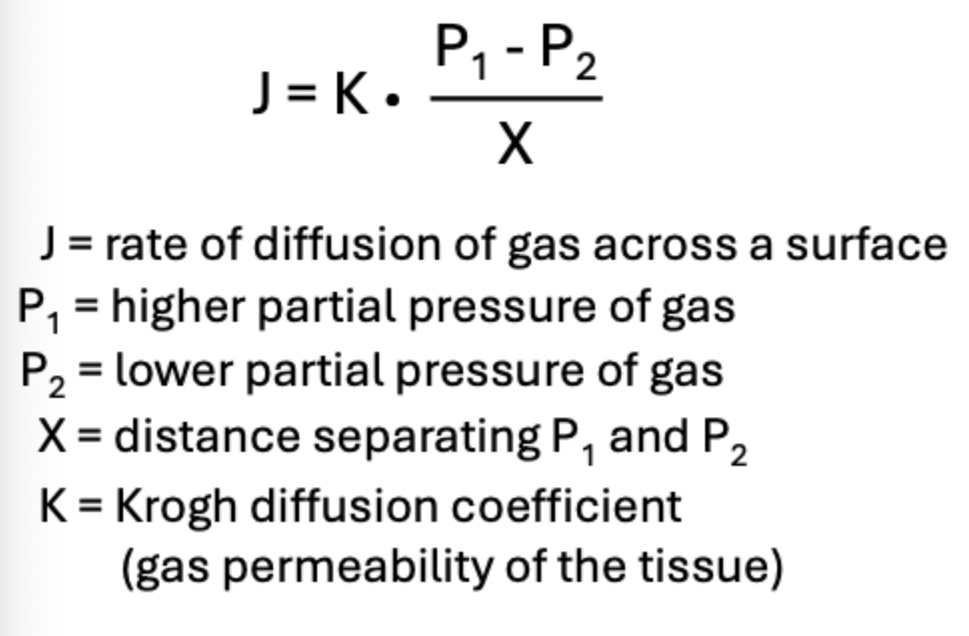
The smaller the x the faster the diffusion
the smaller the distance between higher and lower partial pressure of gas means a faster diffusion
Oxygen cascade is when oxygen moves step by step from the air around us to the mitochrondria and inside our cells
small diffusion distance makes diffusion fast and efficient
basicly all the surfaces they need to pass through are very thin allow it to diffuse quikly
birds and mammals have the thinist gas exchange membranes
gas and liquids
Oxygen molecules are constantly moving between the air and the water — some dissolve, and some leave the water to re-enter the air.
Eventually, an equilibrium is reached where the rate of oxygen entering the water = the rate leaving it.
its important to note that the absorption coefficents ( how long it take to become equal) of O2 and CO2 are very different
o2 is lower then co2
this explains why most fish will breath air outside the water but will segrete co2 in the water
*important to note that the solubilities of gasses in aquesous solutions will decrease if tempurature increase and also decrease with more salt
Gasses diffuse more rapidly in air
water is more dense and therefore it takes more work to move to use for respitory purposes
this also means there is less o2 in water then air (20x less)
Physiology of Breathing
tunas are extreme examples of specialisation for efficient gas exchange
they have large gil surface area
thin diffusion membranes
they use specialsed connective tissue for structural support to prevbent collpase under harsh water (pressure/water flow)
Tuna use what is called RAM ventilation
they swim with there mouth open to push water across the gills
meaning they must constantly swim or they will suffer from suffocation (this is called obligate ram ventilators)
this remouves the need for active pumping
Tuna also provides continous, unidirctional flow over gils to maximise gas exchange
this means that there is a continous steady flow across the gills surface at all times (no reversal direction)
unidirectional means the water always flows in one single direction from mouth across the gills to keep water fresh and oxygen rish
there are two importent movements of gas in this situation
convection is the moving of alot (bulk) of gas or liquid
diffusion is the other important movement
The gas exchange membrane is where o2 and co2 diffuse
external respiration/ breathing is the movement between the enviroment (air/water) and blood
ventilaton is how it flows so is it tidal(can move back and fourth) or is it unidirectional (one way)
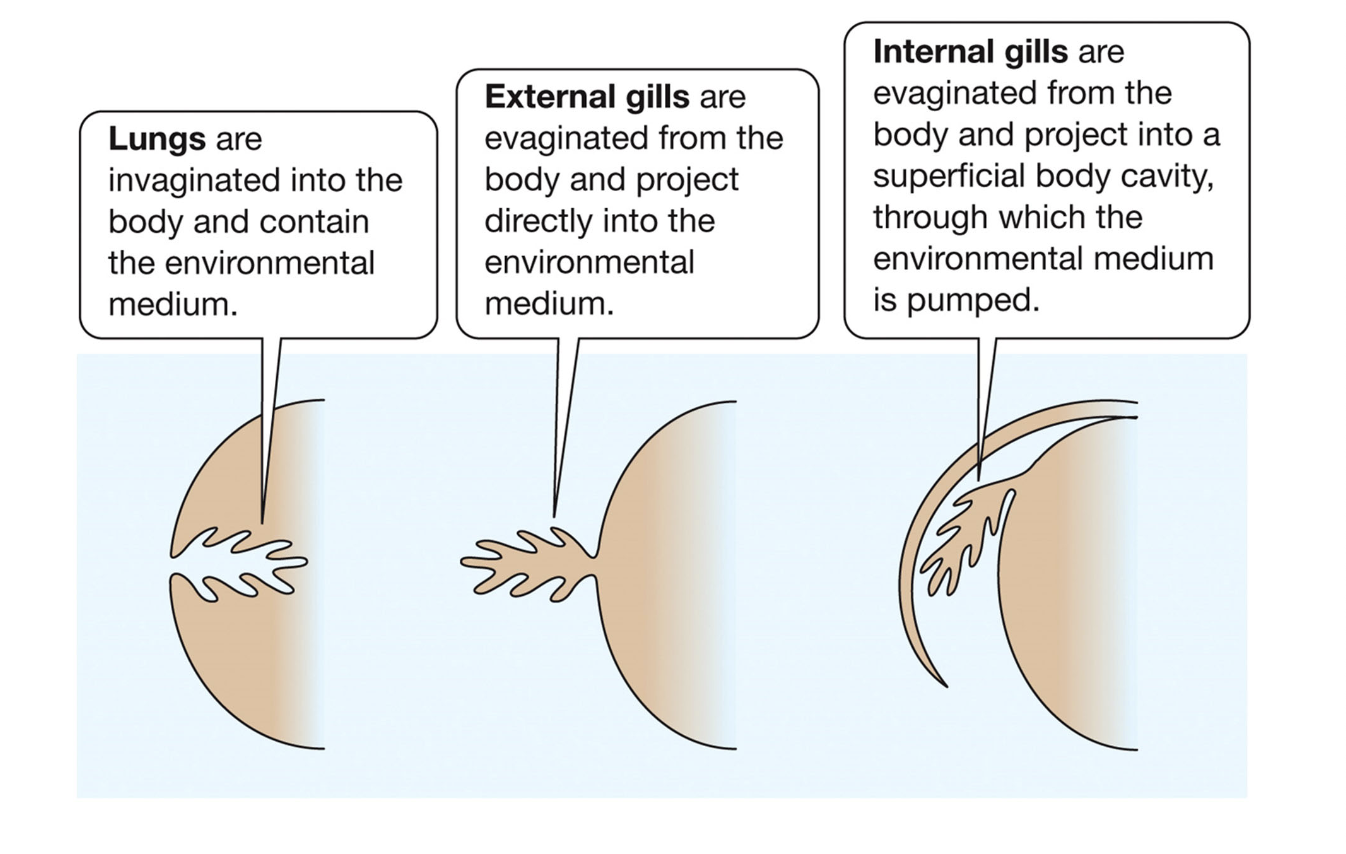
There are three types of basic breathing structures
Branchial (gils) - used for aquatic respiration
evaginated outside the body
Pulmanary (lung) - air breathing
envaginated into body
bimodal (uses both) - supplementry or primary
Internal gils
they have gills outside the body but have a surperficial body cavity to protect it
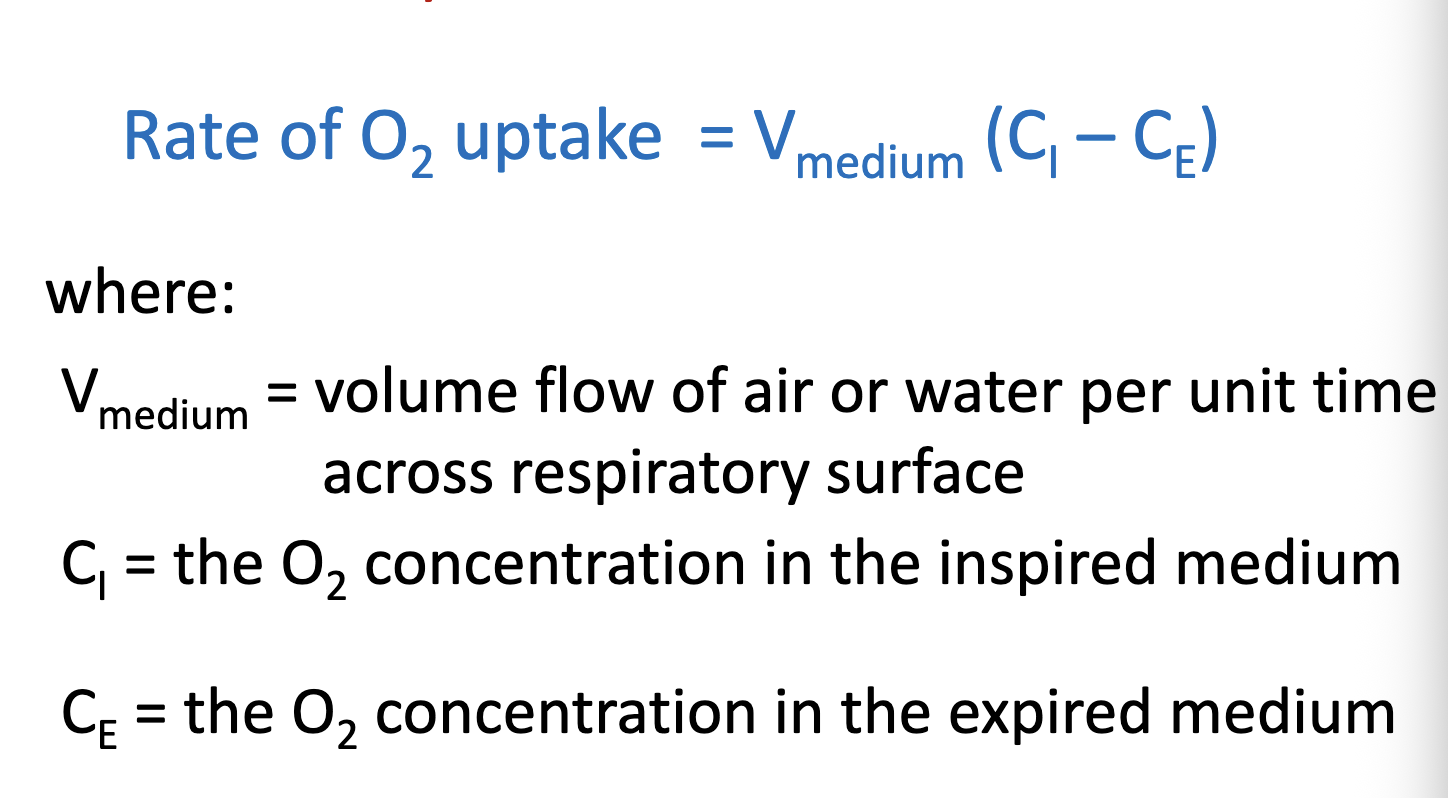
oxygen extraction efficiency is the o2 remouved from the air or water
basicly we want to see how effective organs are at extracting o2 from there environment
we can calculate how effective respiration is by looking at the partial pressure of o2 in the blood
higher po2 in arteries (away from heart) means more effective gas exchange
Oxygen cascade describes the partial pressure gradually decreasing as oxygen moves from the outside enviroment to the mitochondria to be used for energy production
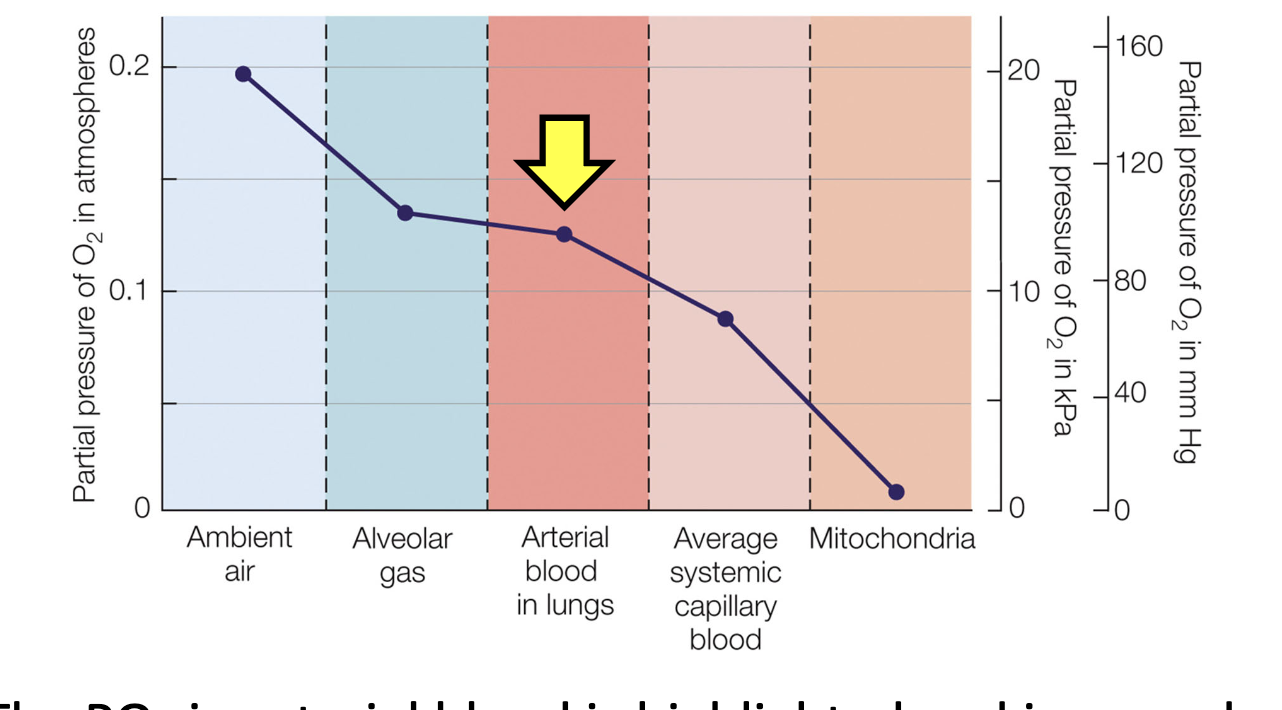
The flow systhem between respitory systhem and blood flow determine how efficient the respitory organ is
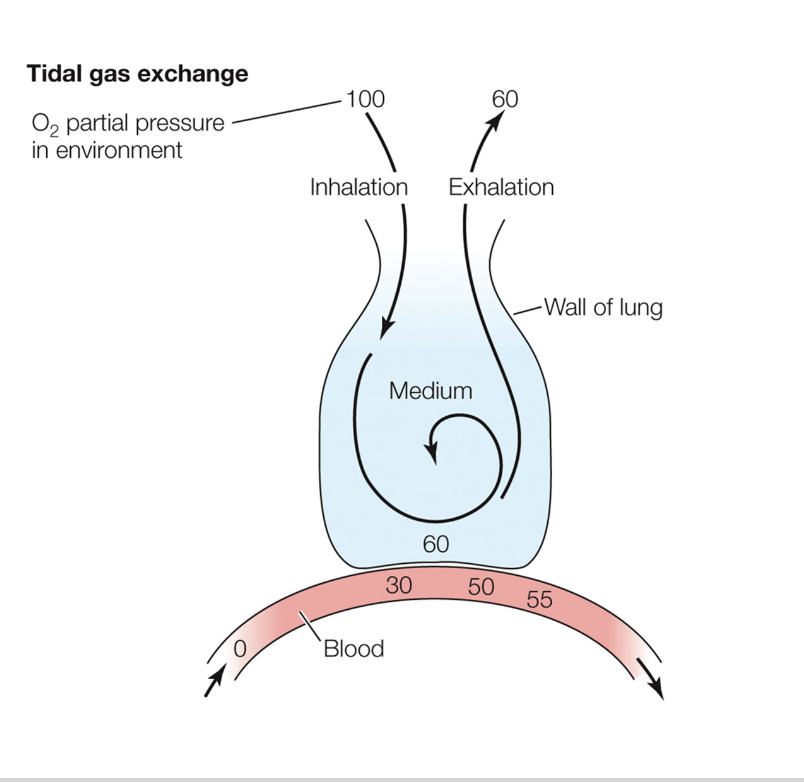
Tidal ventilation
found in mammals
air moves in and out the same pathway ‘
for example in humains we use trachea,bronchi,bronchioles to inhale and exhale
because we use the same tubes some old air stays behind so your never fully refreshed
this results in a lower o2 gradient and less efficient exchange
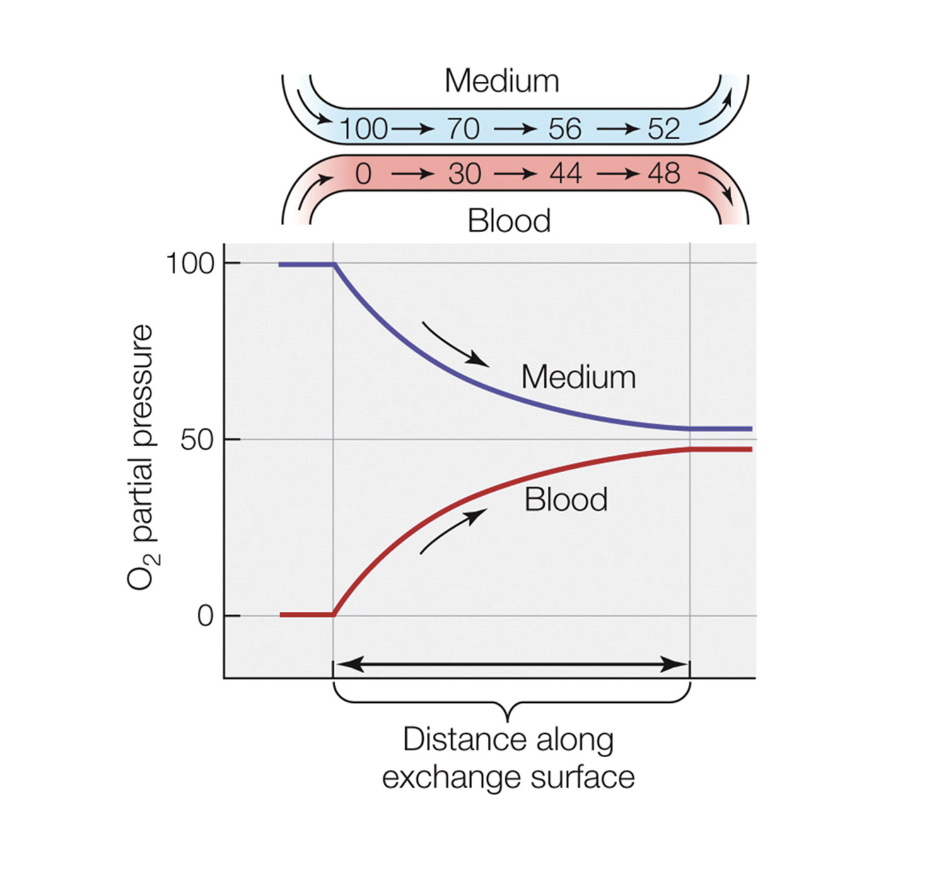
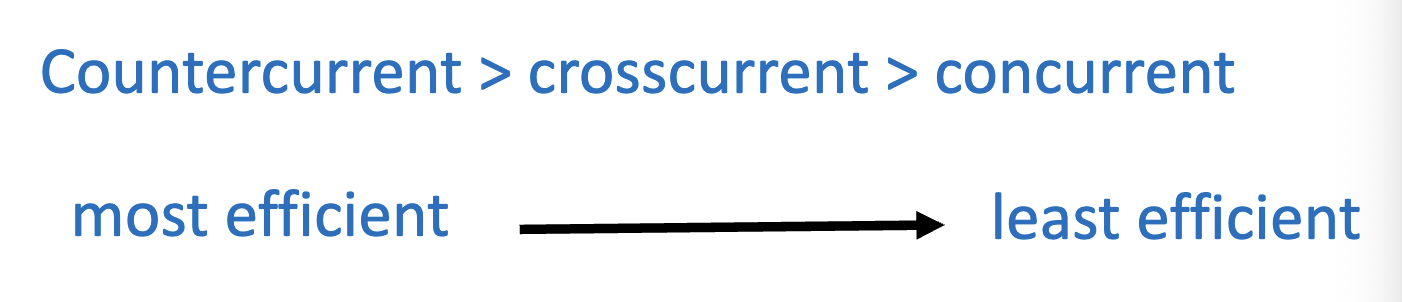
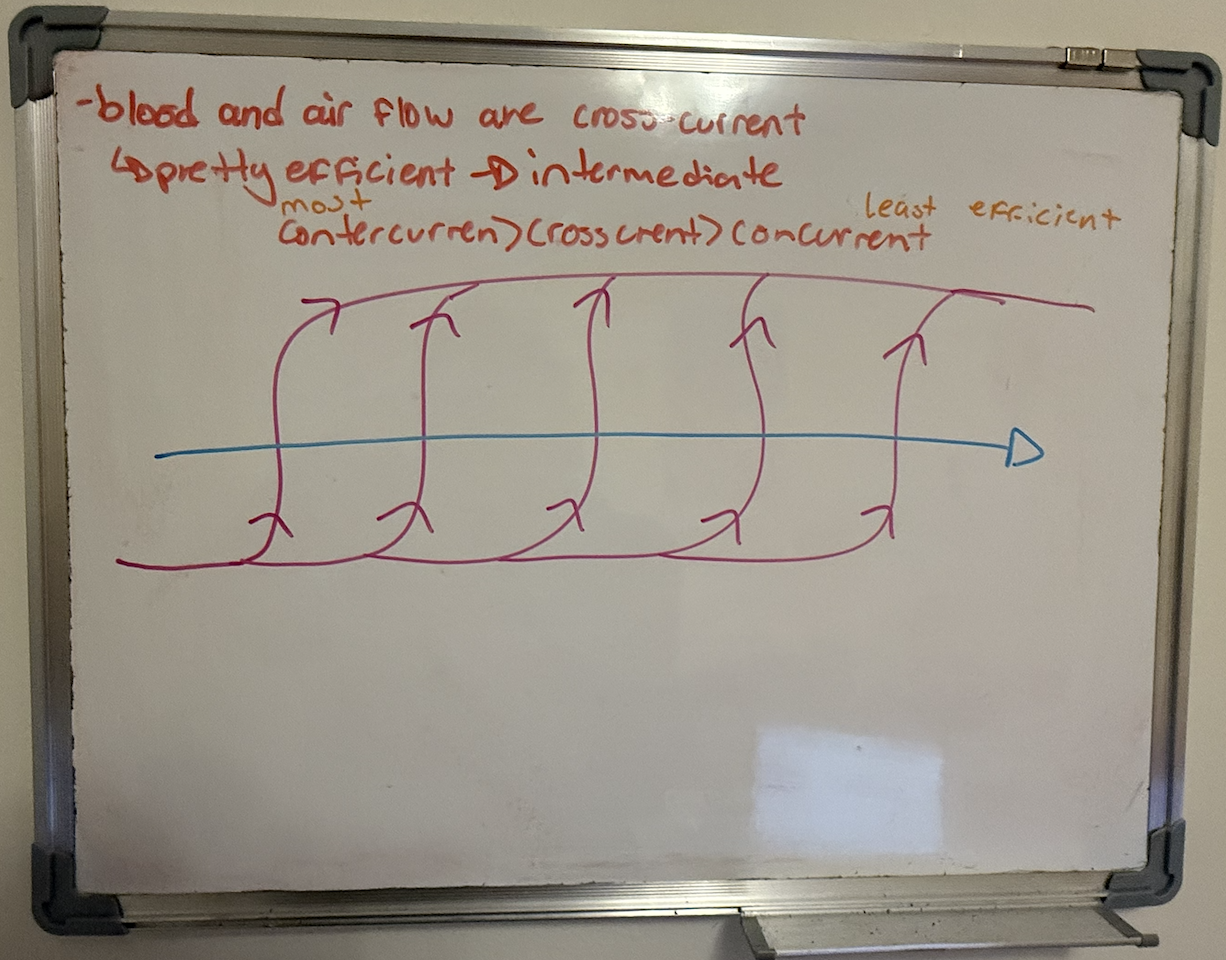
concurrent
done in the same direction
for example water enters at a high o2 concentration and the blood heading to gils have a low o2 so they diffuse but as they move along the gradient is being loss so no more o2 can difuse into the blood
therefore partial pressure in the blood can either be equal or lower then oxygen pressure of the enviroment
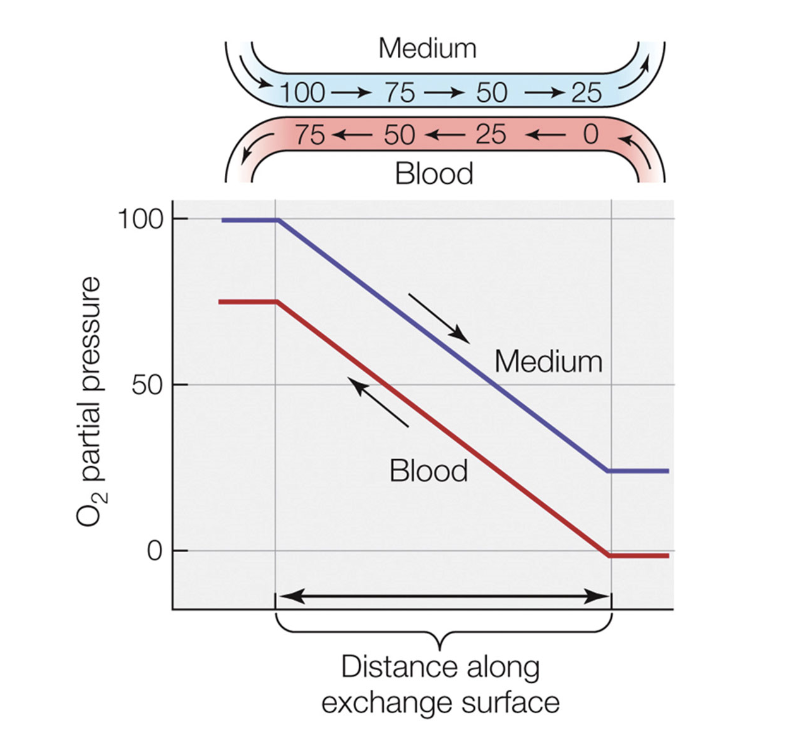
countercurrent
blood and water flow in opposite directions
this maintains the gradient and is the most efficient way to exchange oxygen
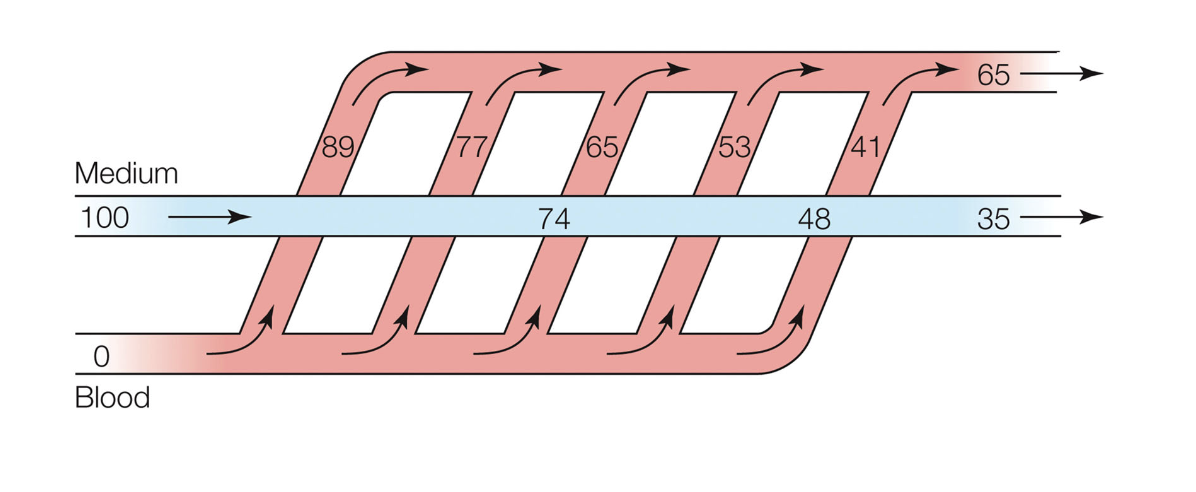
crosscurent
it an intermediate form
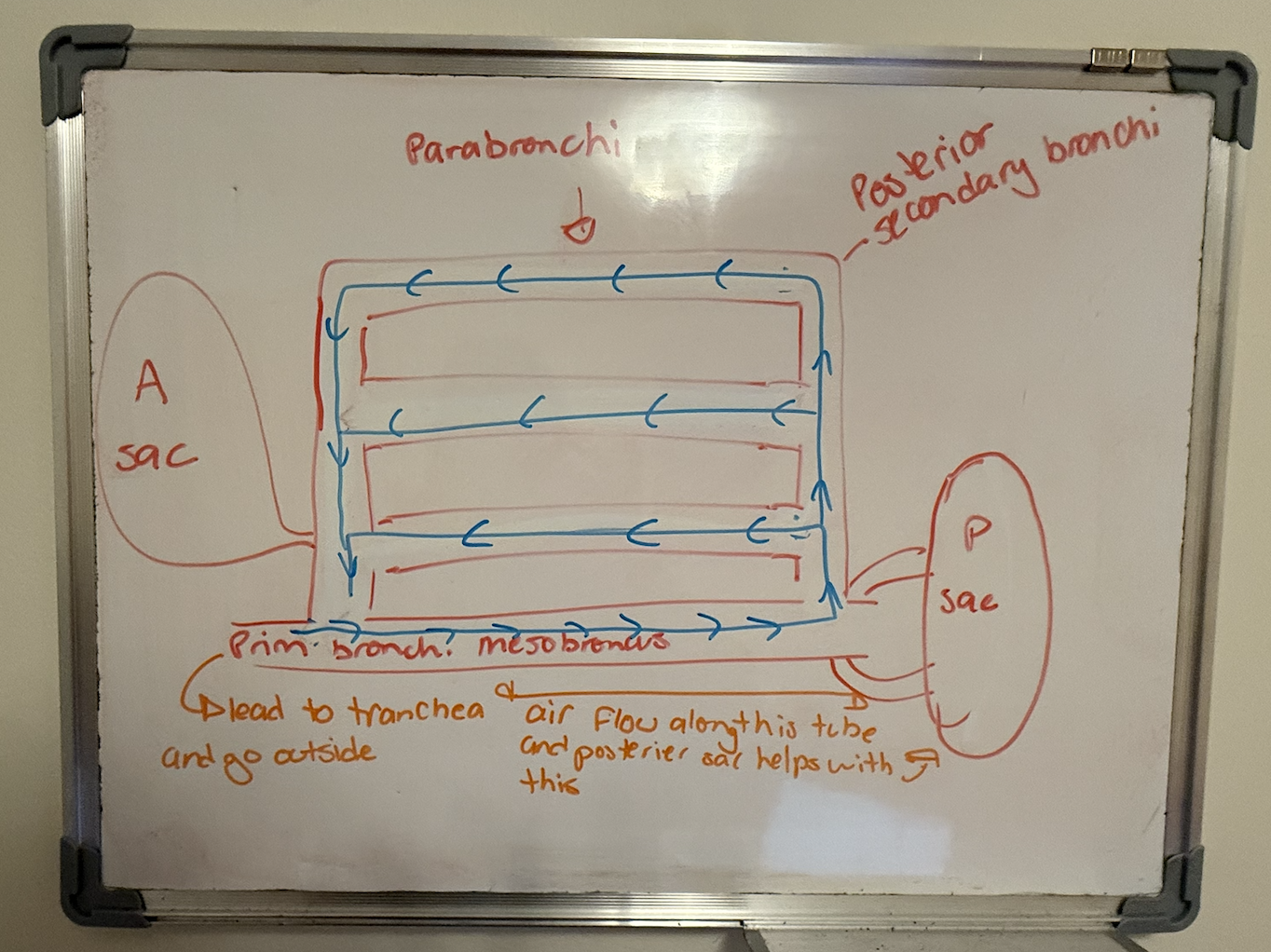
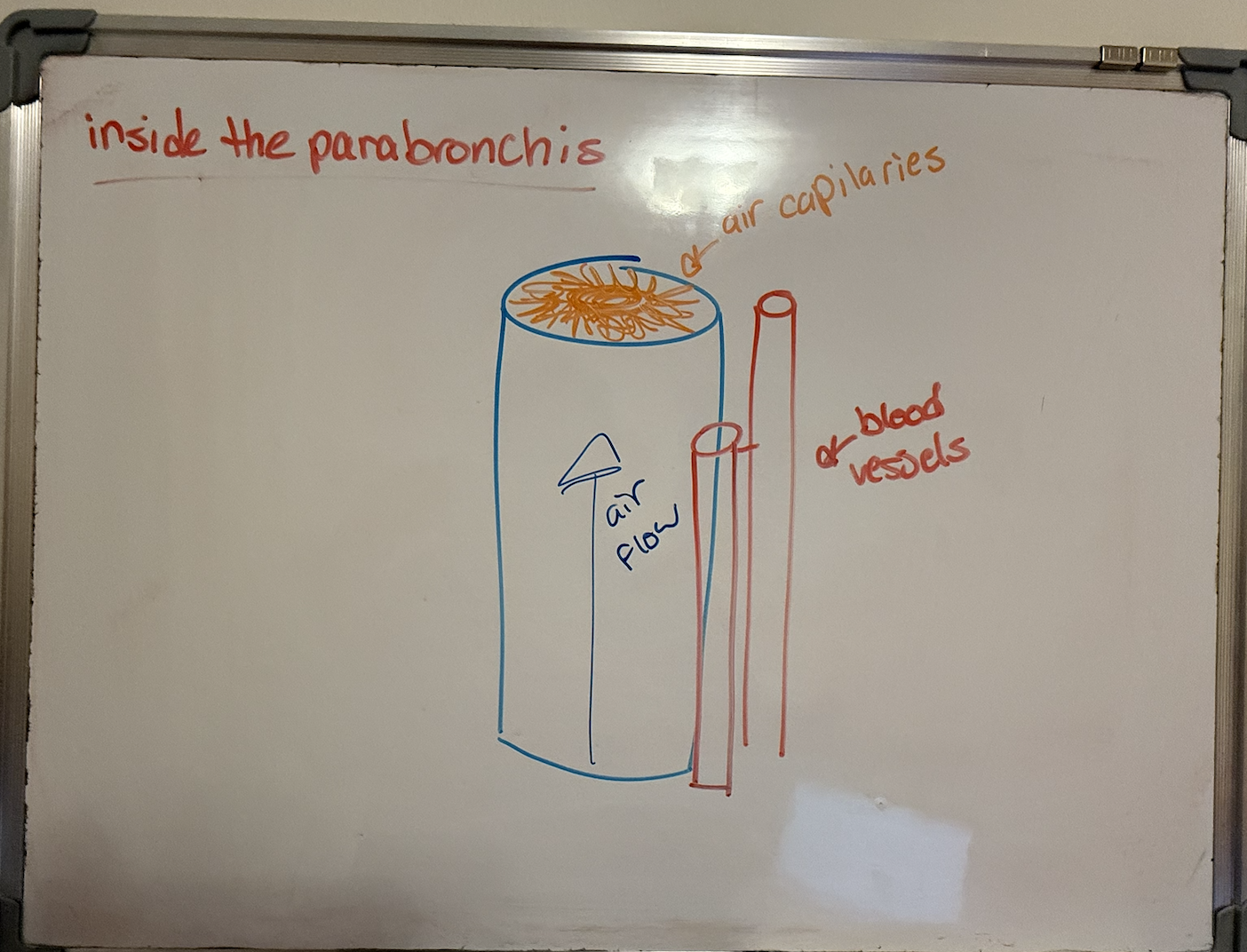
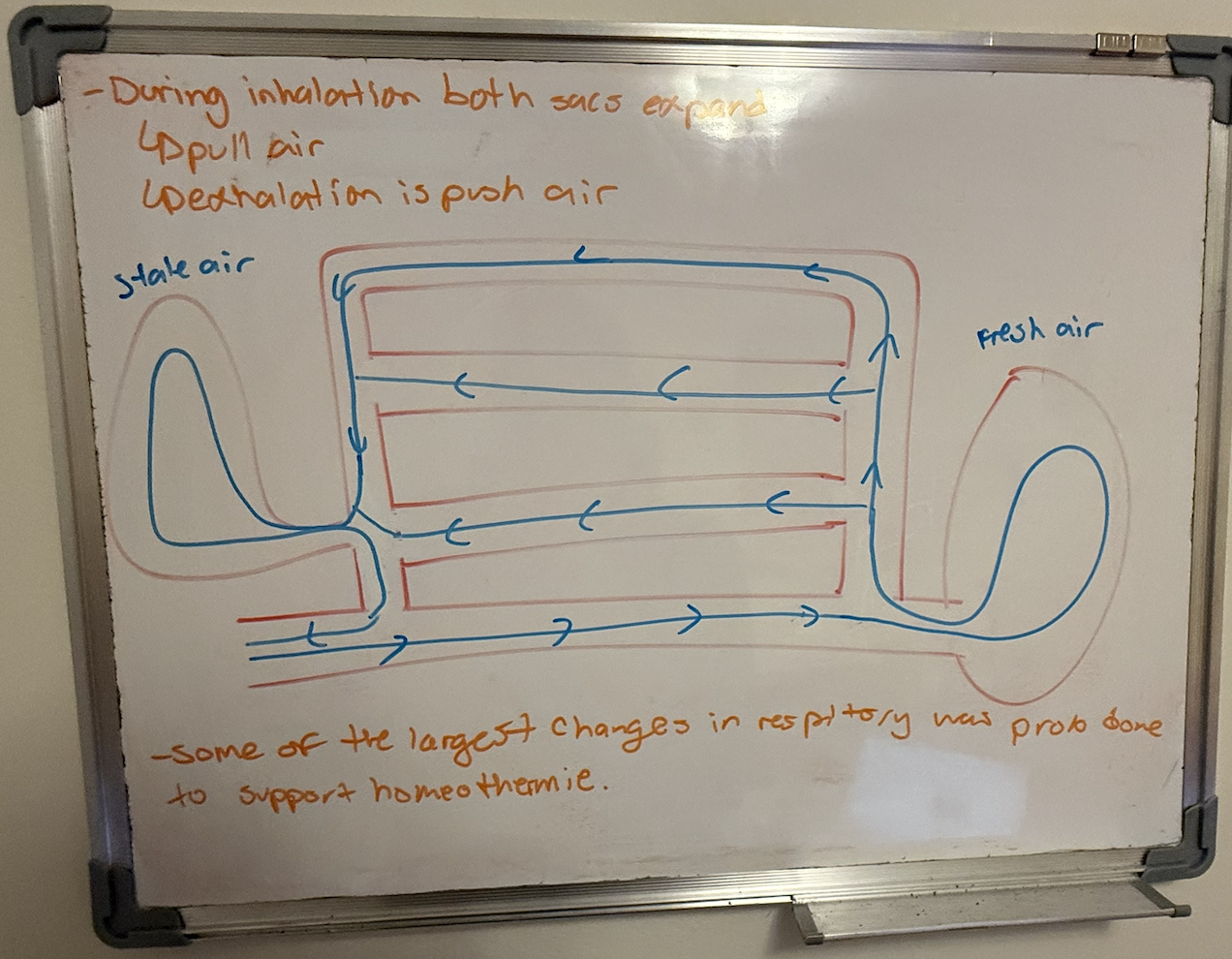
found mostly in birds
Comparative physiology vertebrate breathing
comparing animals from diff groups can show us how breathing has evolved
we do this by comparing the total surface are of the gas exchange organs
we found that birdsand mammals have the biggest increase evolution of increased surface
this was most likeley done to support the high metabolic rates
The importance of.a thin membrane /skin is high since the thinner the skin the fatser the diffusion
the importance of the skin is highest in lungless salamanders because it does 100% of the gas exchange
mammals have skin that are more resistent to water loss but that also minimizes the importance of the skin in gas exchange
in fish they combine the buccal pressure pump and opercular pump to create an almost unidirectional flow of water
they use countercurrent for gas exchange
many fish also use ram ventilation when active
a decrease in o2 in the environment or blood and excersise will increase ventalation tot he fish
Lungs in humains have 23 levels or airway branching
at the end of the branches there are alveolar ducts and sacs and the walls of the structures are called alveoli
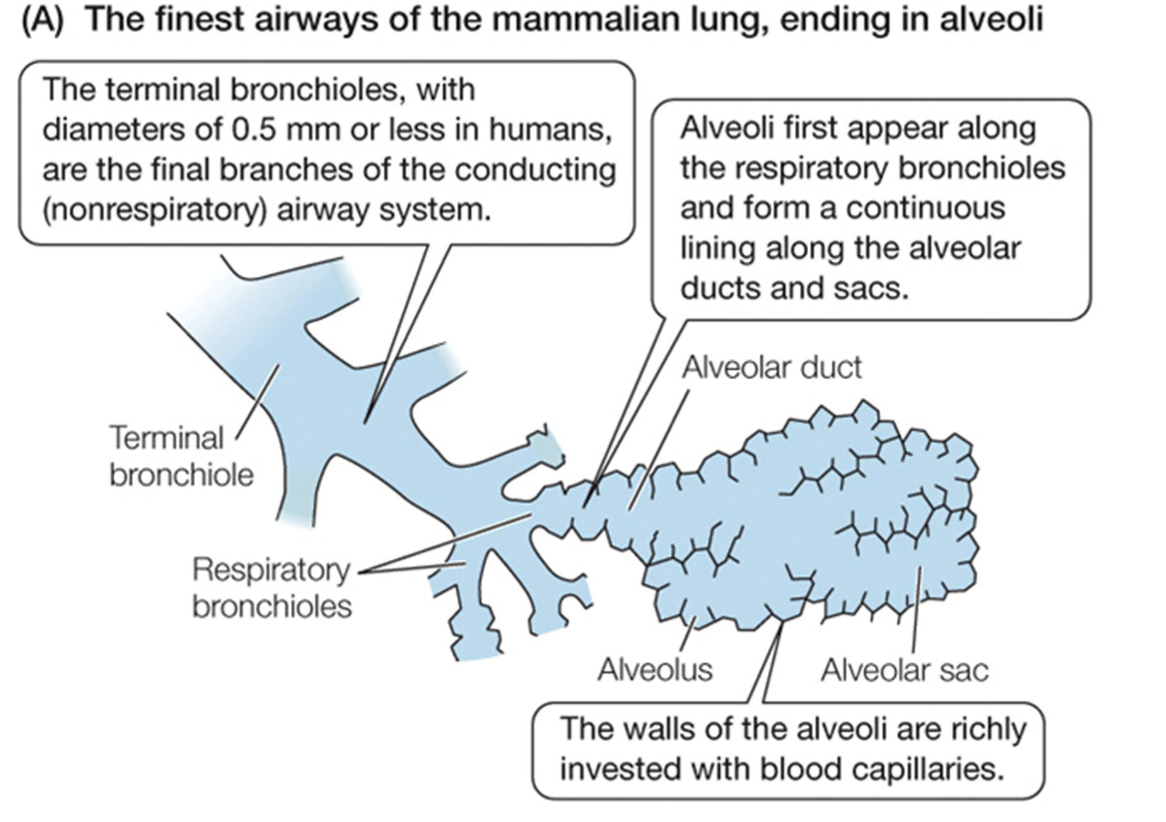
there are almost 500 million alveoli and they make up the vast surface of area of the lung and are the main site for gas exchange
blood and air are seperated by 2 thin layer of epithelia (pulmonary and capillary)
some part of the lungs only move ait and dont acc participate in the diffusion (conducting airways)
the air inside the conducting airways is called anatomical dead space
Energetics of aerobic activity
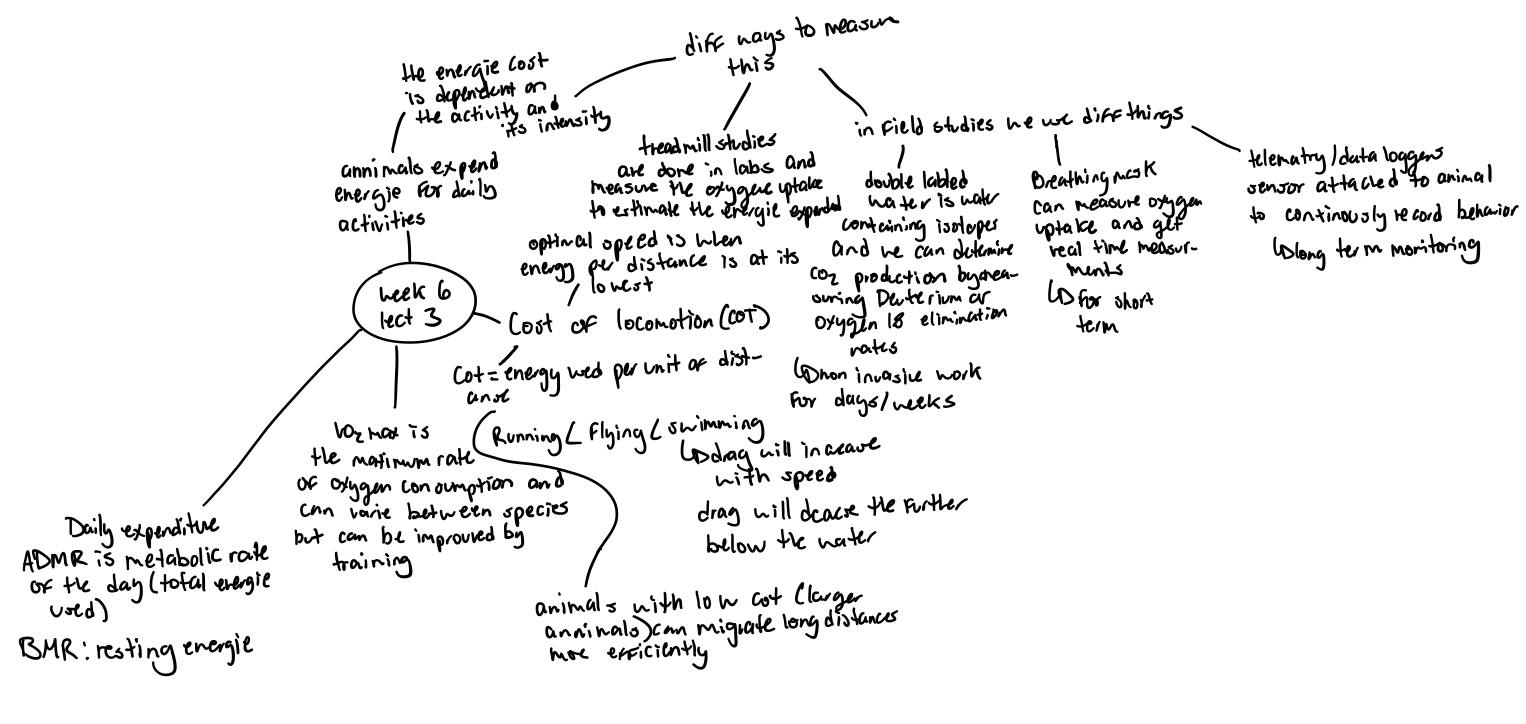
cost of trransportantion is the energi used to move a certain distance
Swimming is the least costly in terms of cost of transport
and underwater swimming is more efficient then surface swimming
they are buoyant so it dosent require much muscle effort (streamlined)
underwater swimming is also more efficient because there is less drag
flying and running require more energie because of resistance and gravity
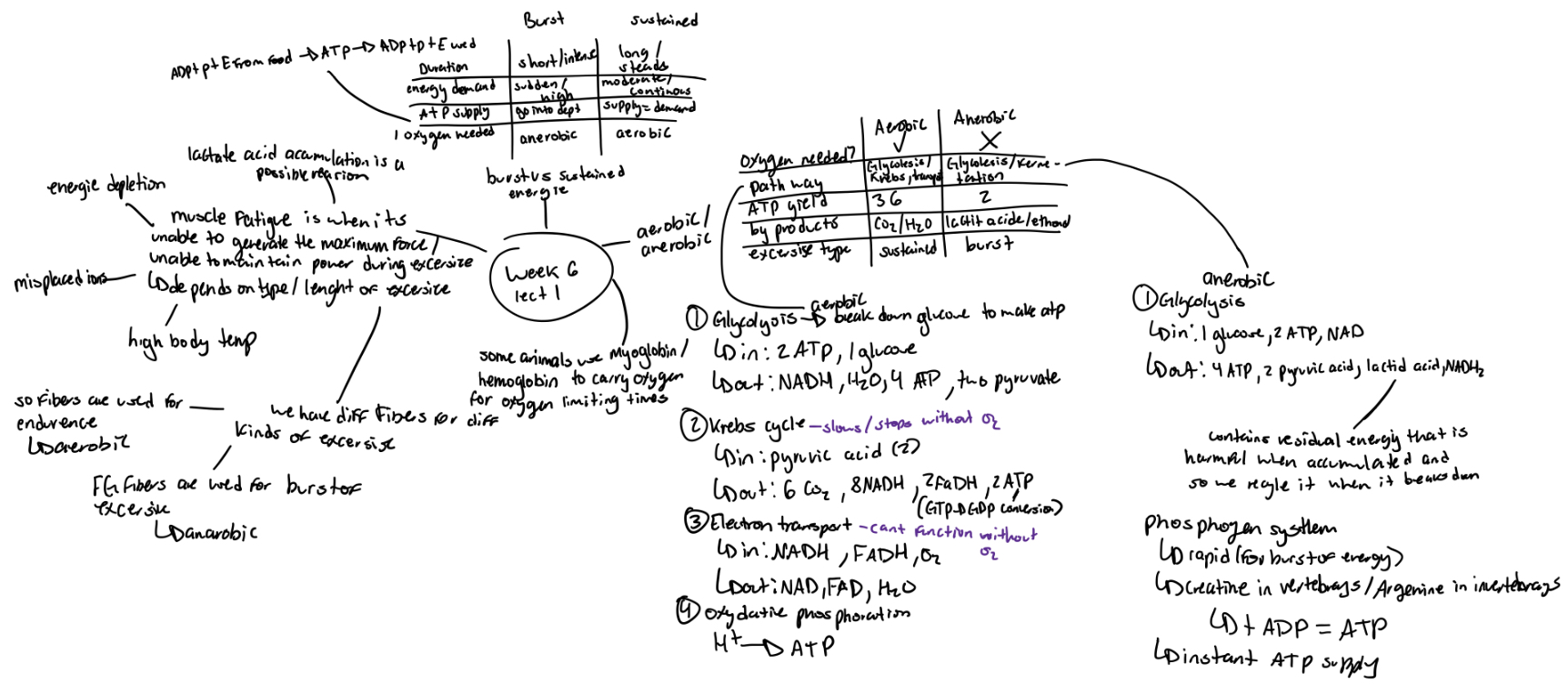
The Vo2 max is the peak of ATP production
it will decline with age
Animlal with a higher vo2 max can travel distances much faster vo2 can also show the performance of a sys in the body like the heart mitochondria,lung
systems can also evolve to match the needs of the animal
however the strenuousness of an activity is dependent on how much your vo2 threshold is
35% for 8-10hours
75% for 1-2hours
example : vo2 is like a car the hogher the horse power the faster you can travel with the same amount of fuel
When organs are all at there peak performance its called symmorphosis
aerobic scope
is the difference between how much oxygen an animal uses at max activity (so vo2 max) and how much oxygen it uses at rest
how much more oxygen can we use when active

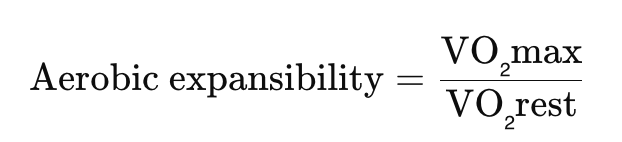
aerobic expansibility
the ratio between vo2 max and resting oxygen consumption
how much greater is the max rate then the resting rate
each organ sys. contributes to the aerobic capacity
Comparing mammals and others
we compair mammals to other animals of simmilar size and body weight
it was found that mammals have a higher vo2 max then ectoterms (so lizards fish…)
but ectotherms can multiply there metabolic rate when active although they have a greater expansibility
the reason why mammals are higher is cause they have a constant body temp, and higher metabolic rate
mammals are also able to generate ATP faster because of the faster metabolism
they can cover the same distance in a shorter time
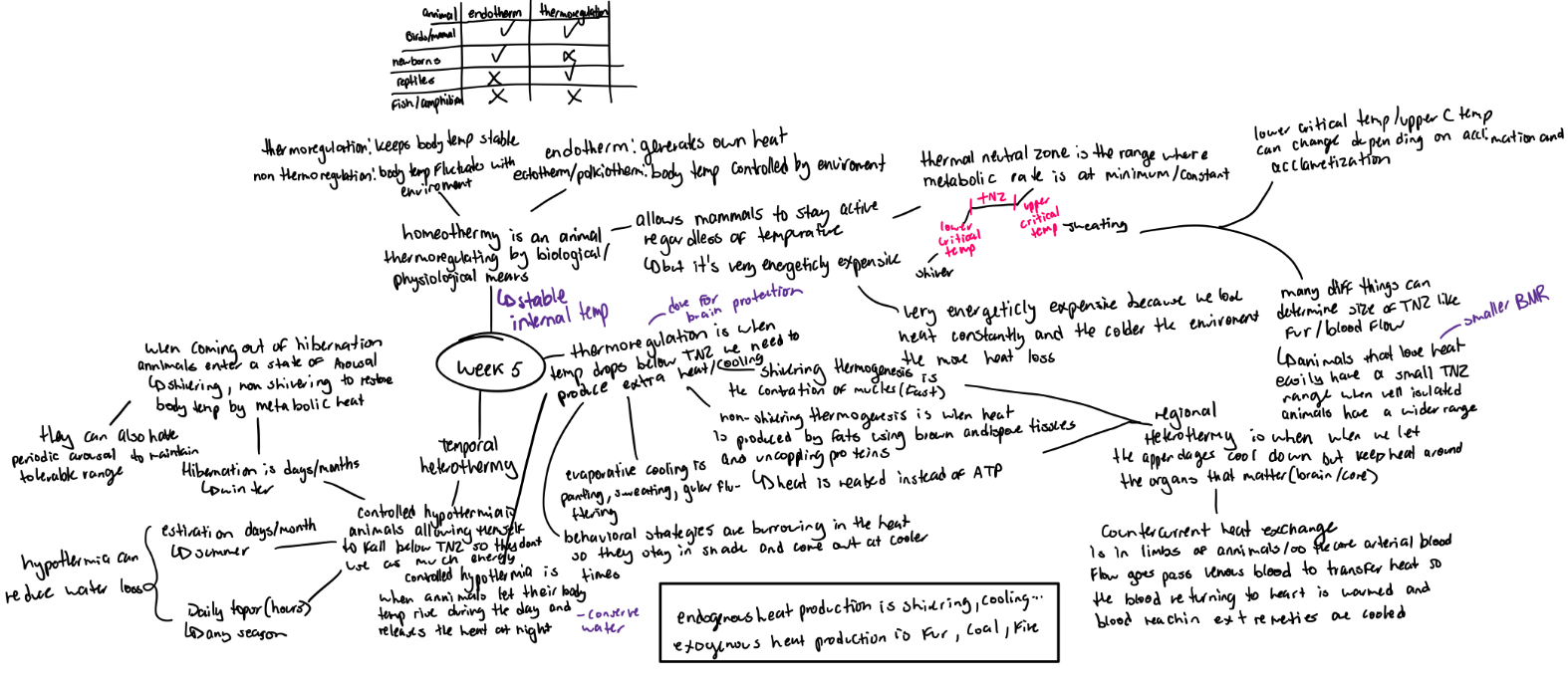
Warm blooded animals have a higher baseline/metabolic rate even at rest to keep the internal temp stable
but they have tight limits because they already operate at a metabolic max they cant multiply their metabolic rate
cold blooded animals have a very lowmetabolisim since they dont need to keep warm
this means they can multiply there metabolic rate when neede(during burst of activity)
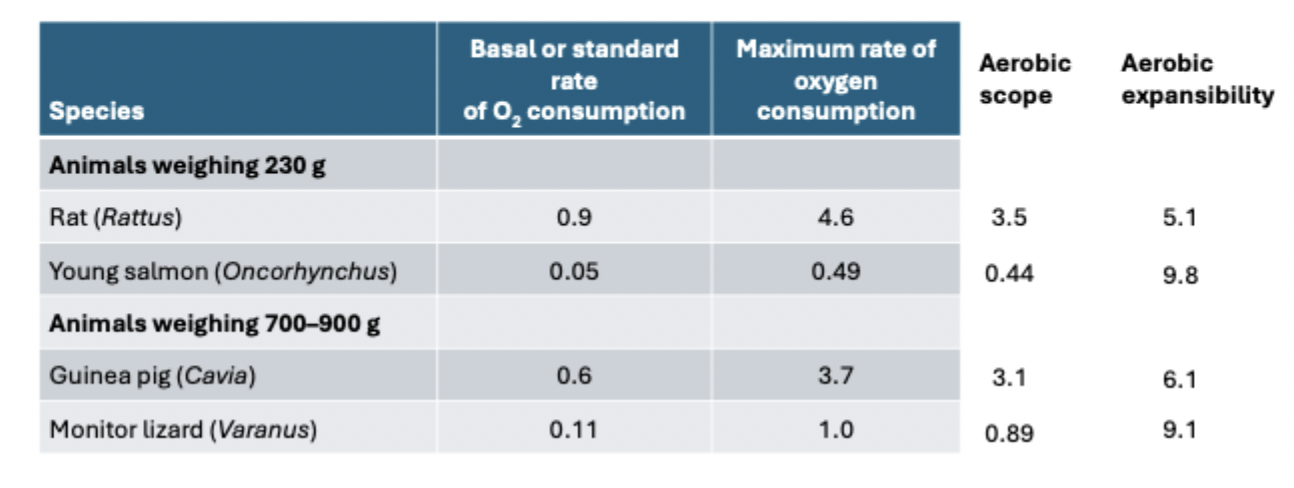
Vo2 max can differ amoung species
for mammals and bird the max aerobic metabolic rate when exercising is 10x more then resting
The standard metabolic rate (resting metabolic rate) of cold bloded animals are measured at specific temps since they rely on enviroment temp
so they only use 10-25% as much oxygen as mammals of the same size
The resting rate of mammals (basal metabolic rate) is equal to the vo2 max of cold blooded animals
Normally bigger animals use more total oxygen but smaller ones acc use more per gram of bodyweight
because animals lose heat faster
cells also work faster
Every species has a diff vo2 max and how much of that vo2 max your using determines how hard/how long you can go for
If you work close to your VO₂max → very intense, short-lasting activity
If you work far below VO₂max → less intense, long-lasting endurance activity
vo2 max can also vaie do to genetics ,training ,age
endurence training can also increase
vo2 max
mitochondrial enzyme activity
capilary density
hemoglobin levels
the reason why this works is because endurence is a controlled stress response
animals will also breed for high endurance meaning aerobic activity is heritable
ADMR
the average energy a living organisim expends in a day
ADMR is 10x-12x higher in warm blooded animal cause it take alot more energy to keep the body at a stable tempurature
remeber to make the distinction that ADMR is higher then BMR (basal metabolic rate) since BMR is rest and ADMR includes all activity
also note that raising / nursing offsprings also takes alot of energy so anaimals ADMR will rise
Week 9/10
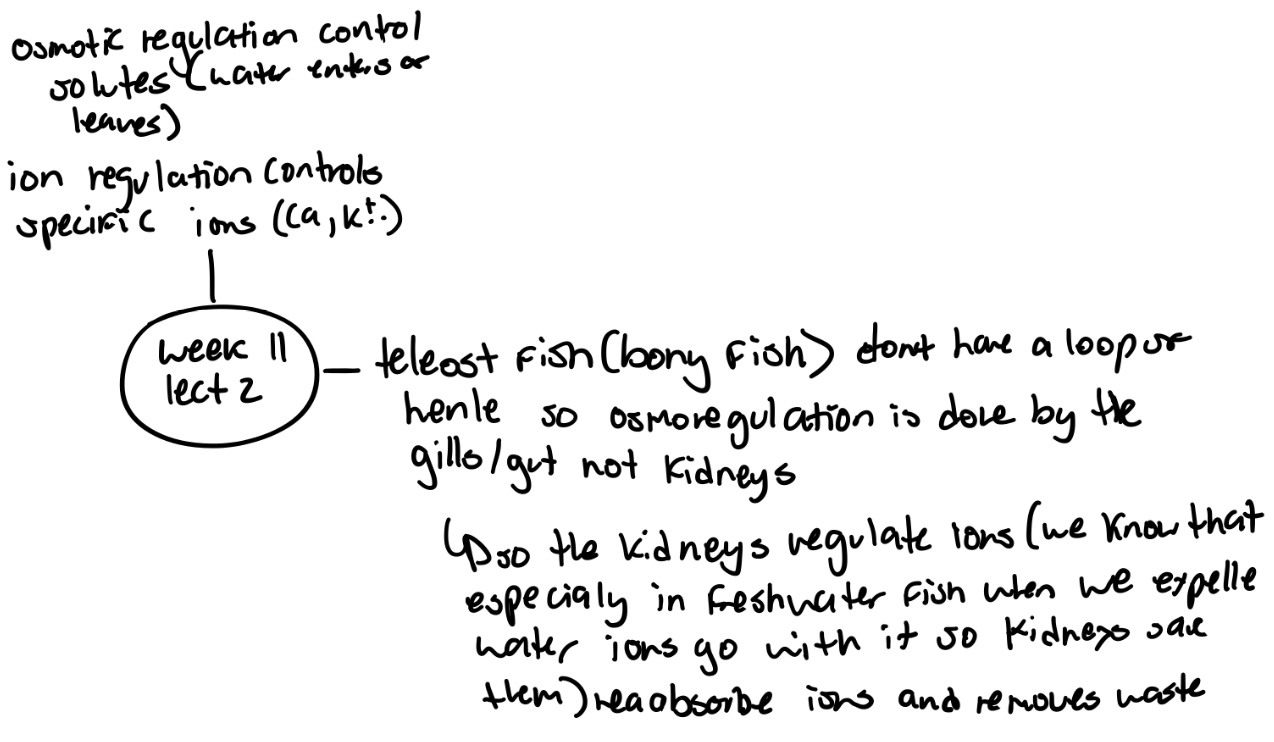
Week 11