W6 L13: GI tract pt2
Motility & regulation in the GI tract
Mouth
- Mechanical digestion * mastication * food→ bolus
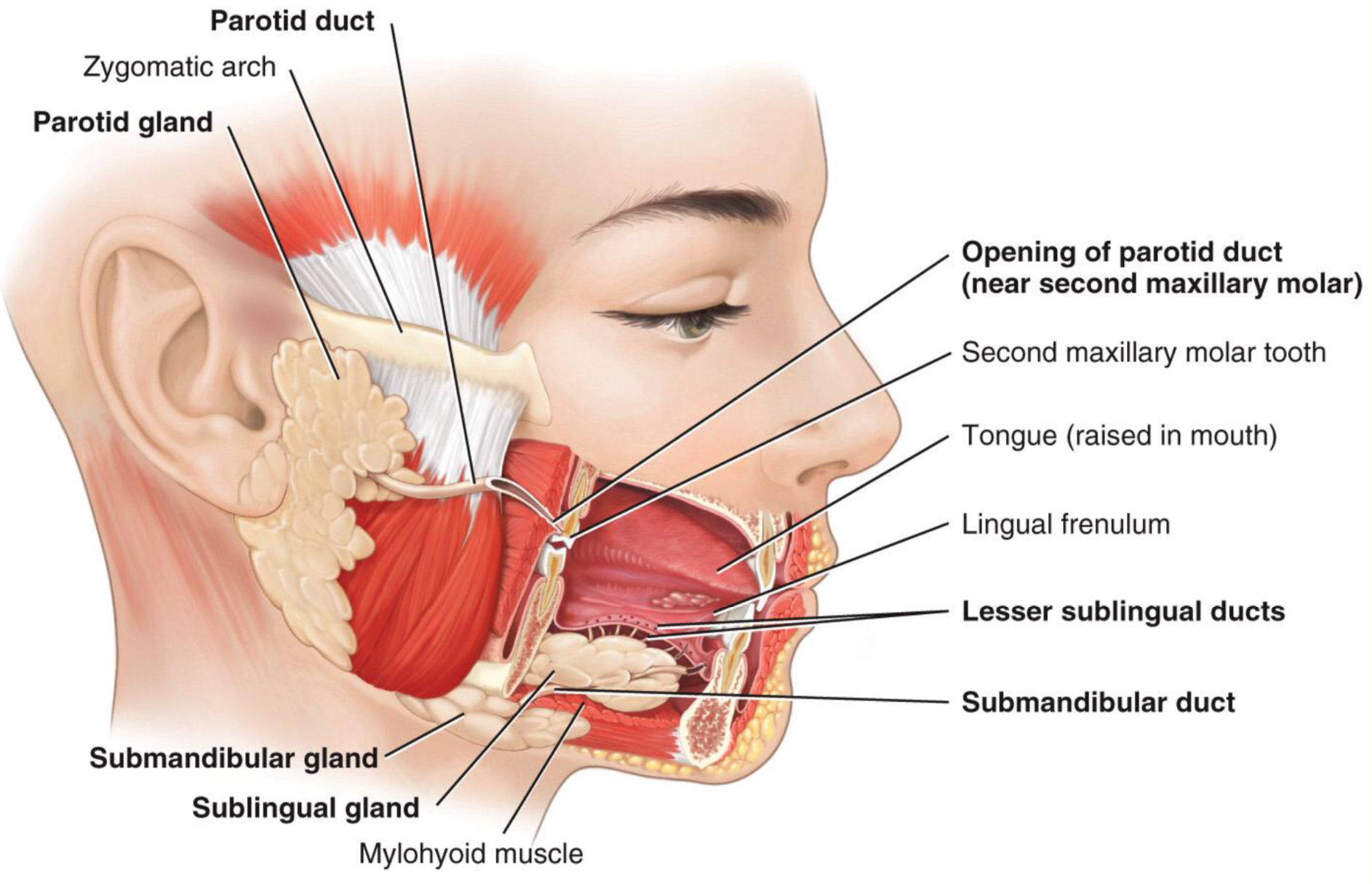
- Salivary glands * dissolves food * amylase - digestion of starch
- Swallowing * extrinsic tongue muscles * intrinsic tongue muscles
\
Pharynx
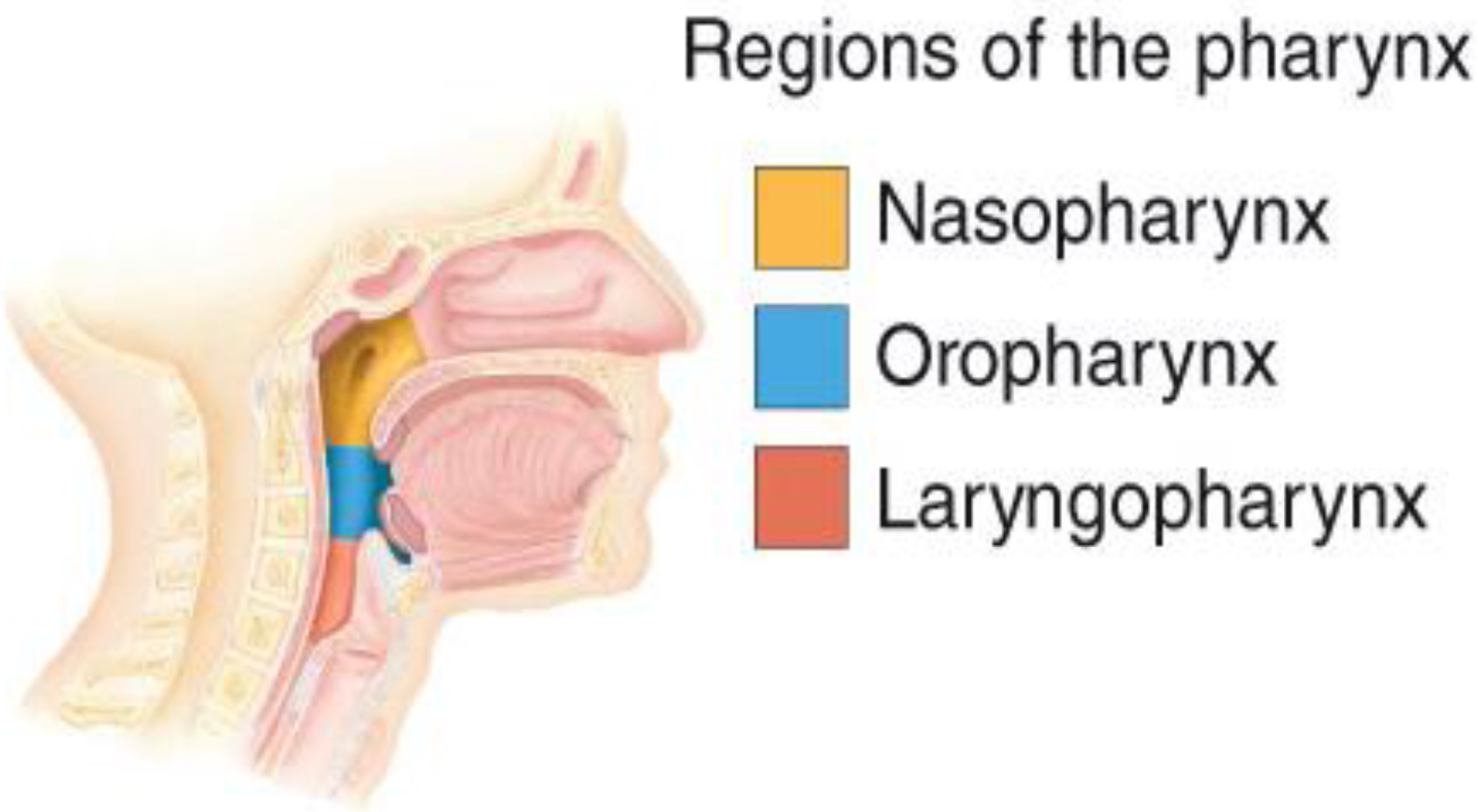
- Funnel shaped tube
- Skeletal muscle line by mucous membrane
- 3 parts: * Nasopharynx - respiration function * Oropharynx - respiratory & digestive * Laryngopharynx - respiratory & digestive
- Swallowed food * Mouth → orophsrynx & laryngopharynx
\
\
Oesophagus
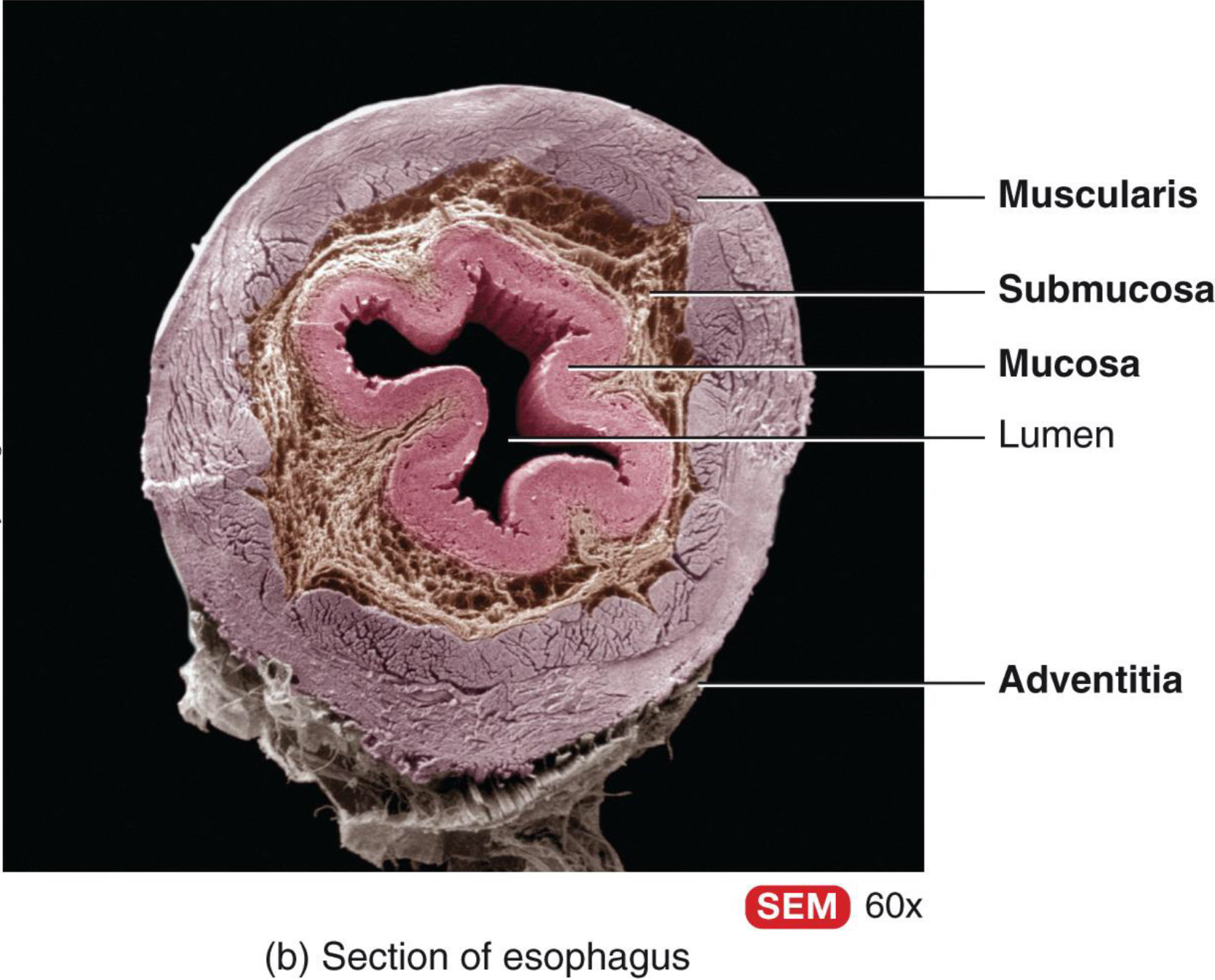
- Collapsible muscular tube
- 25cm length
\
\
Deglutition (swallowing)
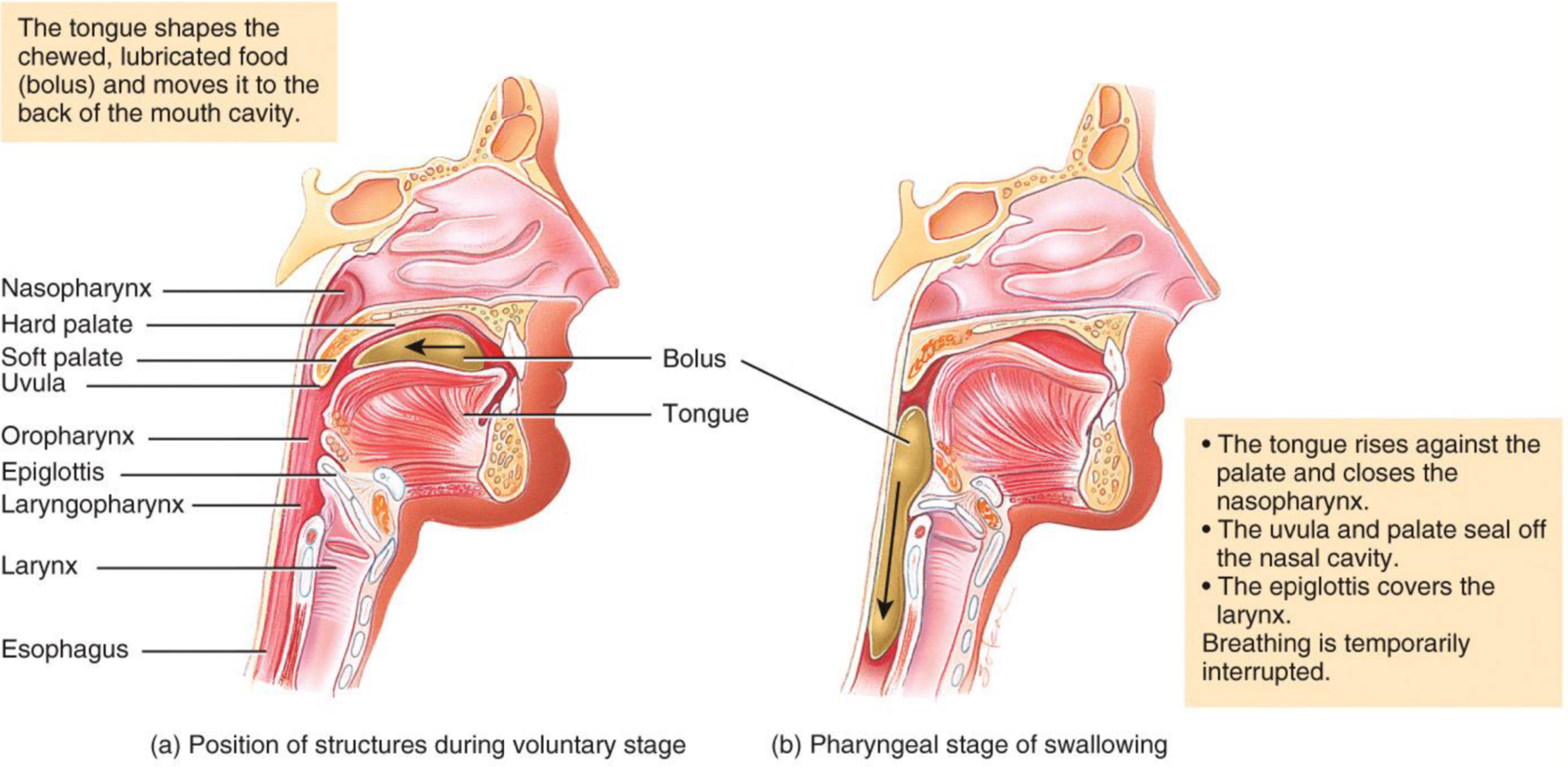
- Movement of food from mouth to stomach * via pharynx & oesophagus
- 3 stages of swallowing * voluntary - into oropharynx * pharyngeal - into oesophagus * oesophageal - into stomach
- Involuntary stage * Medulla oblongata * lower pons of brainstem
\
- Upper oesophageal sphincter
- Peristalsis
- Lower oesophageal sphincter - as food comes down it pushes in to the stomach
- Circular muscles contract which pushes it forward, and longitudinal muscles relax to allow the food to move forward
- Then circular muscles relax and longitudinal muscles contract to open up the region and allow the bolus of food to push forward
- Alternating circular and longitudinal muscle contraction to move the food down the oesophagus
\
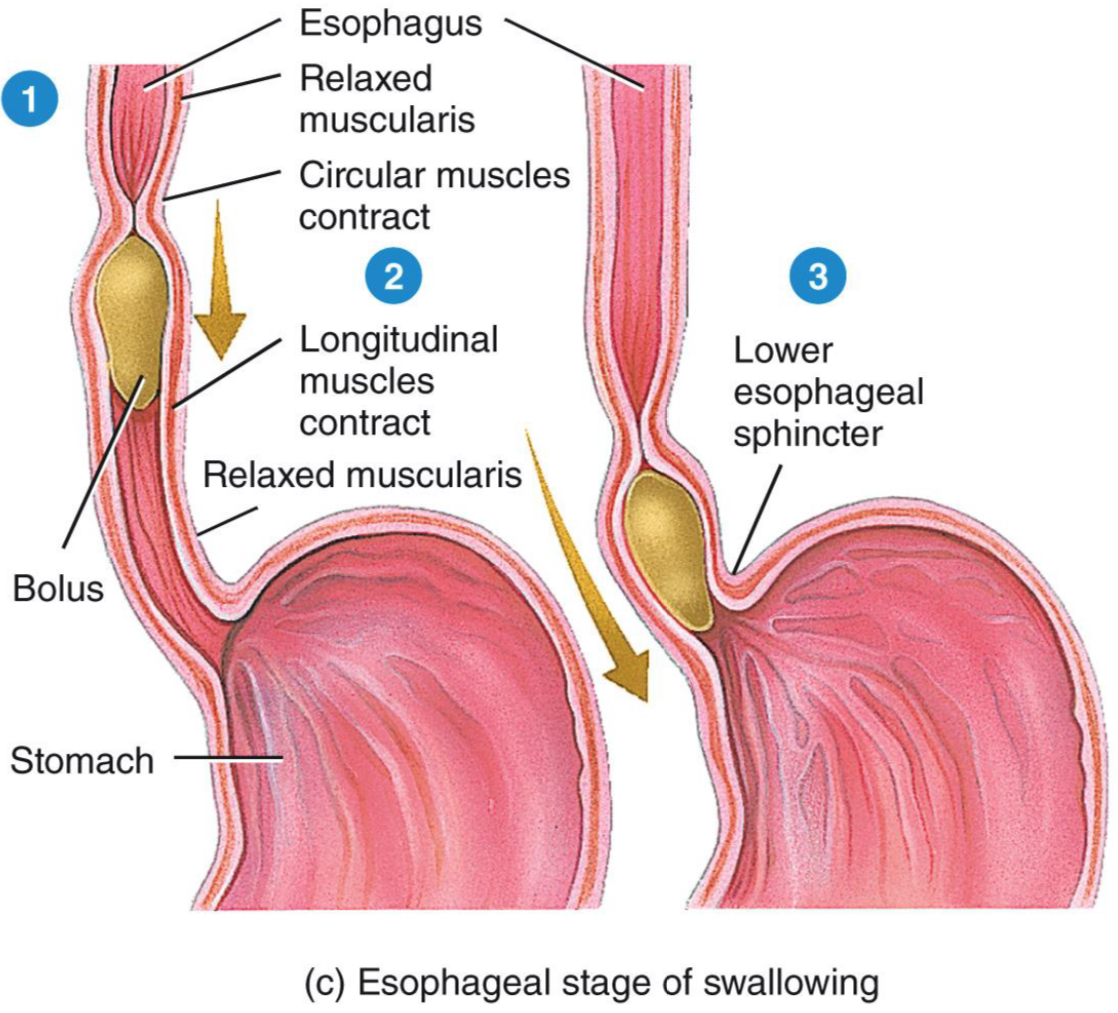
Summary of deglutition
- Movement of food is: * Mouth to pharynx to oesophagus to stomach
Nervous system
- CNS * brain & spinal chord
- Peripheral Nervous System (PNS) * nerves & ganglia outside the CNS * connect the CNS to limbs & organs * Somatic nervous system - voluntary muscular * ANS * largely unconscious * smooth muscle & glands
\
ANS
- Sympathetic * “fight or flight”
- Parasympathetic * “rest & digest”
- Enteric nervous system * GI tract
\
Neural regulation of GI tract
Extrinsic
- part of the ANS
Intrinsic
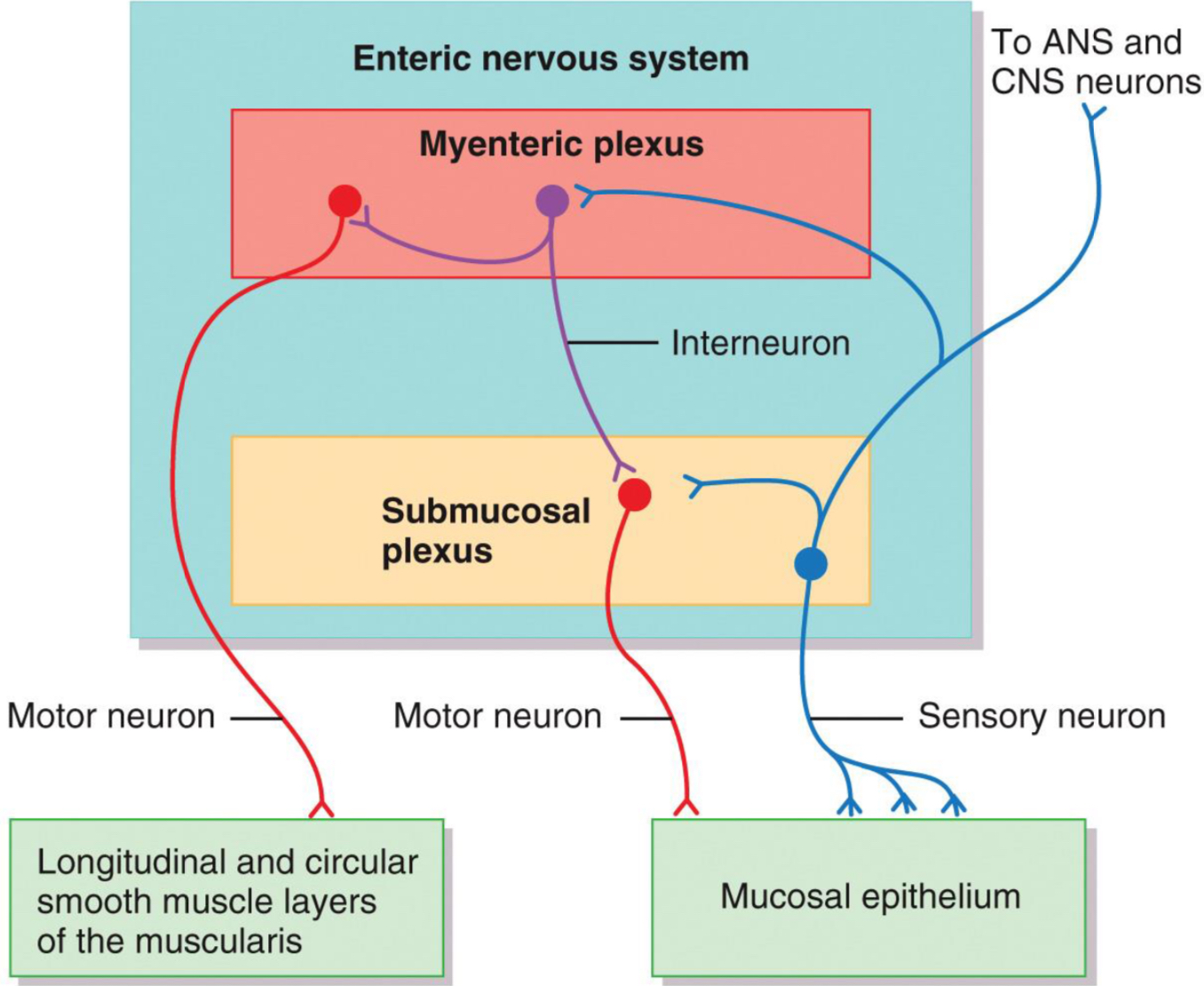
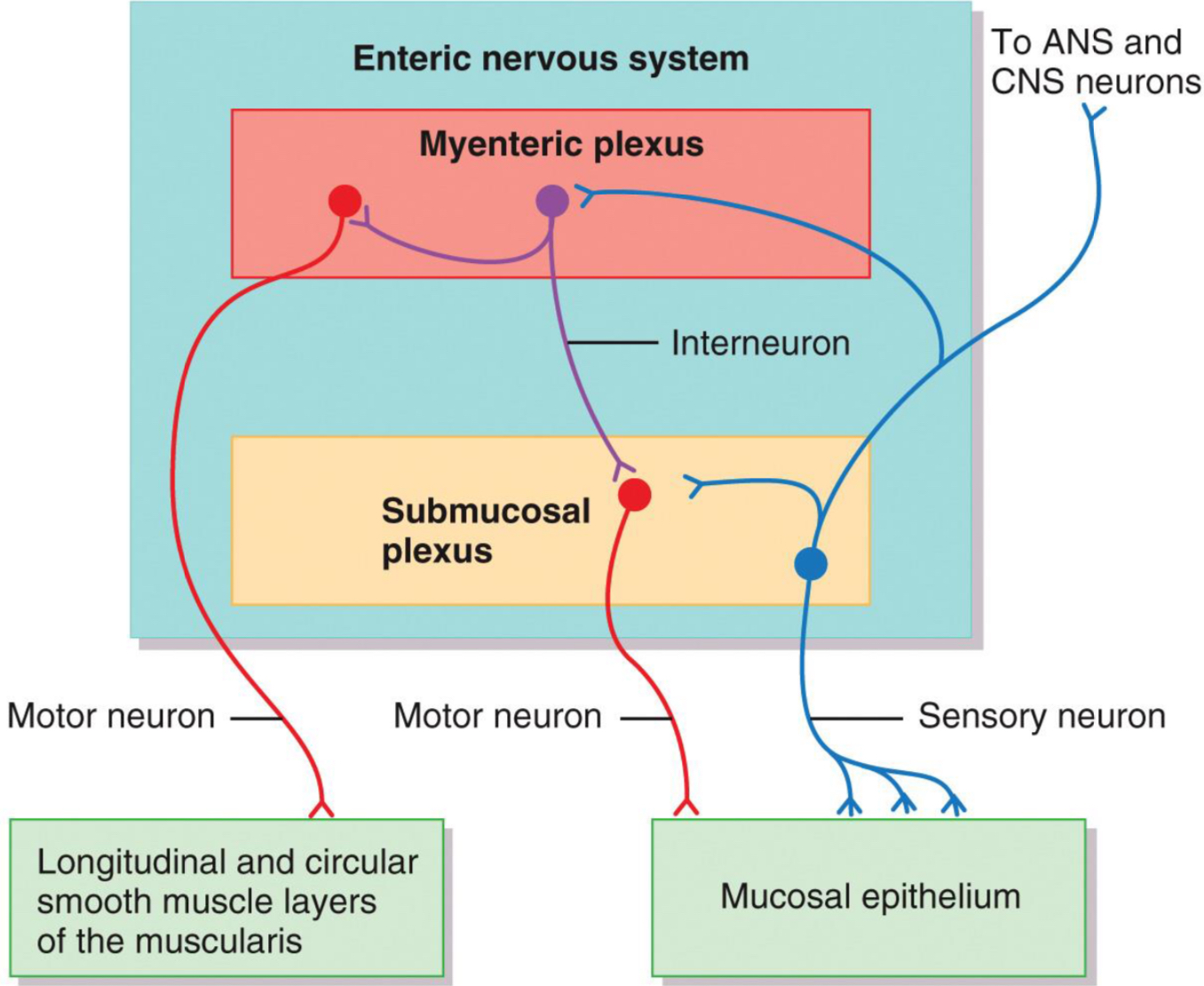
- Enteric nervous system (ENS)
- 100 mill neurons from oesophagus to anus
- arranged into 2 plexuses: * myenteric plexus → * located b/w longitudinal & circular smooth muscle layer of muscularis * regulates GI tract motility * concerned with big movements * submucosal plexus → * located in submucosa * regulates GI secretion * concerned with very smaller movements
\
- Neurons of ENS can function independently
- Regulated by neurons of ANS
- Parasympathetic fibres of vagus nerves & pelvic splanchnic nerves * ↑ GI tract secretion & mobility * ↑ activity of ENS neurons
- Sympathetic fibres * from thoratic & upper lumbar regions of spinal chord * ↓ GI tract secretion & motility - don’t need secretion during fight or flight so shuts them down * inhibit ENS neurons
\ Enteric nervous system
\
\
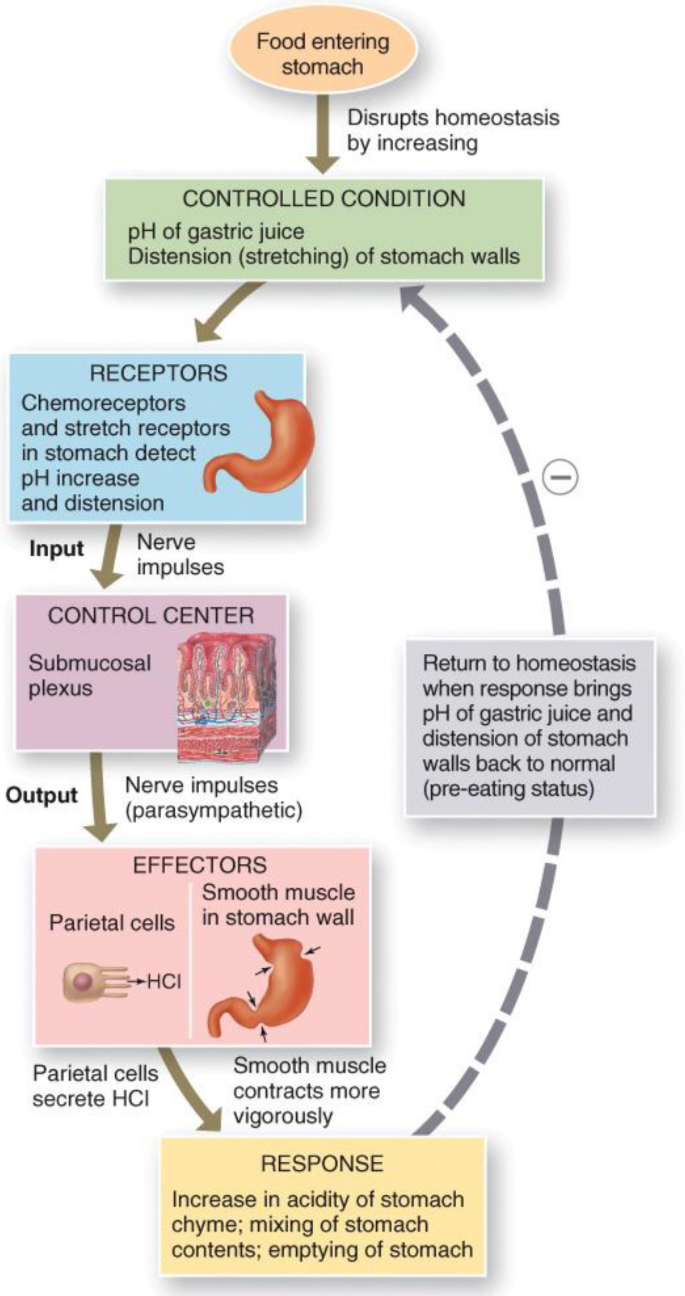
Gastric phase of digestion: neural regulation
Food enters stomach
- Stretch receptors stim. by gastric distension (expand)
- Chemoreceptors activated if pH ↑ w/protein
- Nerve impulses to submucosal plexus (secretions) when receptors are activated
- casues a -ve feedback loop
\
Gastric phase of digestion: neural regulation
\
Stage 1:
- Food enters stomach
- pH ↑ → activates chemoreceptors
- Stomach walls are stretched → activates stretch receptors
\ Stage 2:
- Nerve impulses sent to submucosal plexus
- Parasympathetic neurons activated
- OUTPUT: stomach * parietal cells - generate HCl * smooth muscle
\ Stage 3:
- Parietal cells secrete HCl
- Smooth muscle contracts
\ Stage 4:
- ↑ acidity of stomach chyme
- Stomach contents are mixed
- Stomach empties
\ Stage 5:
- -ve feedback loop - turn off chemo and stretch receptors
- pH ↓
- Stomach returns to pre-eating state
\
Gastric phase of digestion: hormonal regulation
Gastrin
- Released from G cells of gastric glands into bloodstream
- In response to: * distension of stomach by chyme * partially digested proteins in chyme * high pH of chyme due to presence of food in stomach * caffeine in gastric chyme * acetylcholine released from parasympathetic neurons
- Stim. gastric glands: * secrete large amts of gastric juice * strengthens contractions of lower oesophageal sphincter * prevents reflux of acid chyme into oesophagus * ↑ motility of stomach * relaxes pyloric sphincter to promote gastric emptying
\
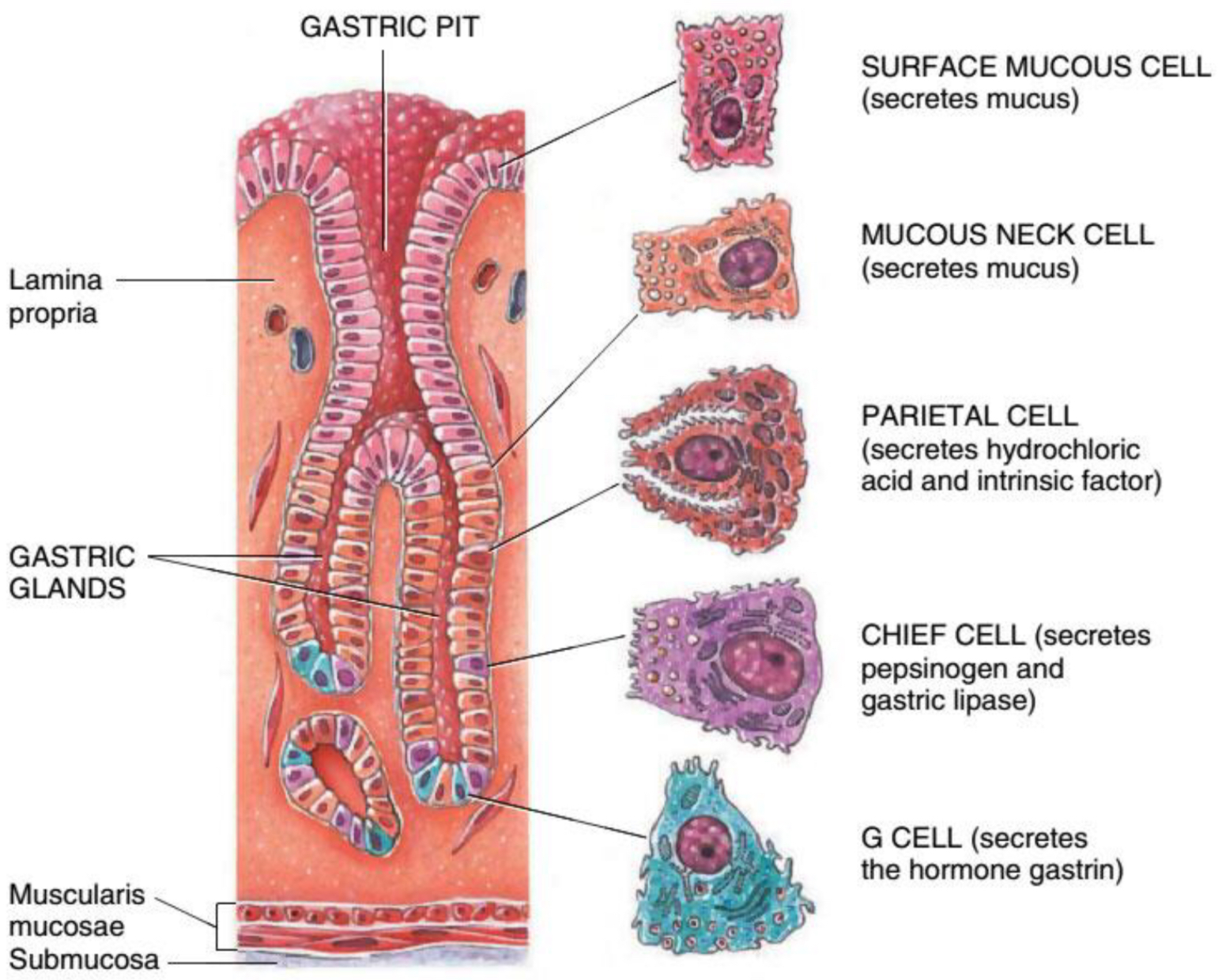
- -ve feedback loop
- Gastrin secretion is: * inhibited when pH of gastric juice drops below 2 * stim. when pH rises
- Ensures optimal low pH for * function of pepsin * killing microbes * denaturing proteins in stomach
\
Gastric juice
- HCl → kills bacteria & denatures protein
- Pesin → start protein digestion
- Intrinsic factor → absorption of vit B₁₂
- Gastric lipase → digestion of triglycerides
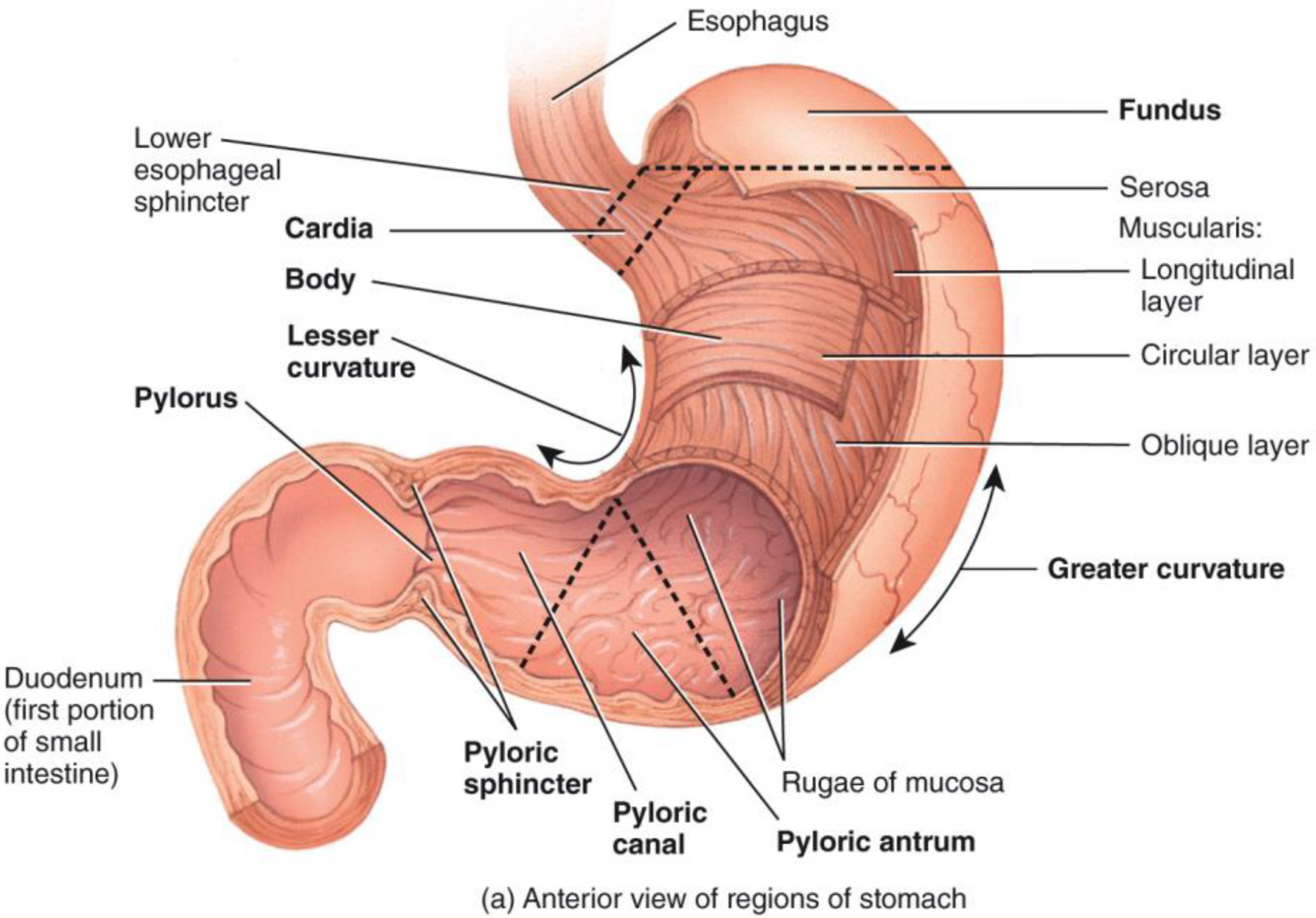
Smooth muscle contractions
- Initiated in interstitial cells of Cajal (pacemaker)
- Generate spontaneous electrical slow waves
- Spread to smooth muscles cells via gap junctions
- Depolarisation initiates cells via gap junctions
- Depolarisation initiates Ca²⁺ entry & contraction
- Phasic contractions are the basis for peristalsis & segmentation
\
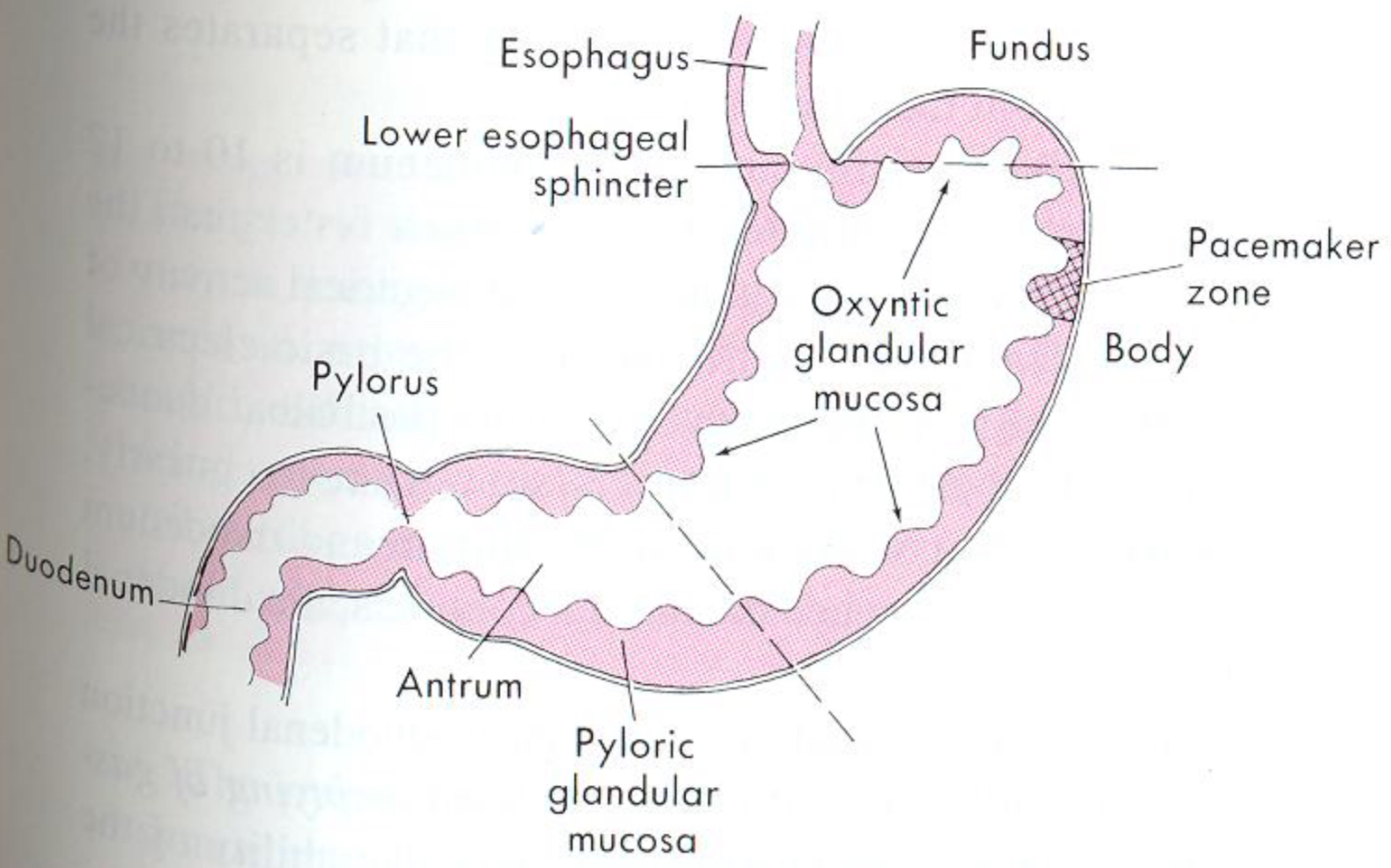
Stomach - peristalsis
- Peristaltic waves * Every 15-25 sec * begin in body of stomach into antrum
- Slow waves differ b/w regions * Stomach ~ 3 per min * Duodenum ~ 11-12 per min * Illeum ~ 8-9 per min * Colon ~ 3-4 per min
\
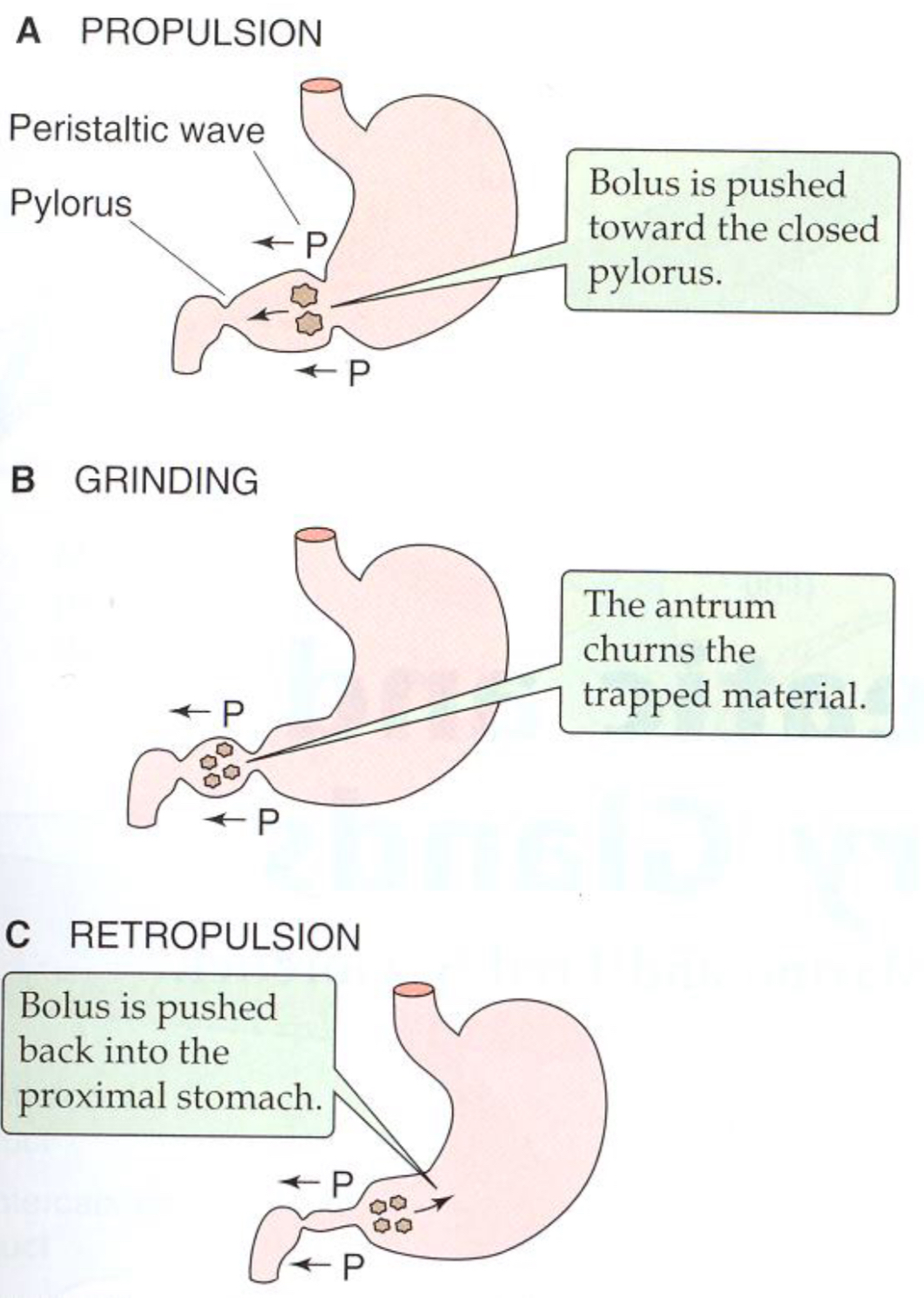
Movement through the stomach
- Propulsion * peristaltic wave moves through gastric contents from body to antrum
- Retropulsion * if food particles too large to fit through pyloric sphincter * forced back into body of stomach
- Gastric emptying * chyme passes through pyloric sphincter * 3mL chyme at a time
\
Summary:
- Neural regulation * stretch receptors * chemoreceptors * ↑ muscle activity & HCl secretion
- Hormonal regulation * Gastrin * ↑ muscle activity & gastric juice secretion
- Slow waves generate phasic contraction * peristalsis
\ \ \ \ \ \ \ \ \ \ \ \ \ \