Chapter 17 - Taste
5 primary tastes:
Sour - H+ release from acids
Sweet - sugars and artificial sweeteners
Bitter - Variety of foods such as caffeine
Umami - amino acids present in food such as glutamate (meaty & savory)
Salty - Na+ in food
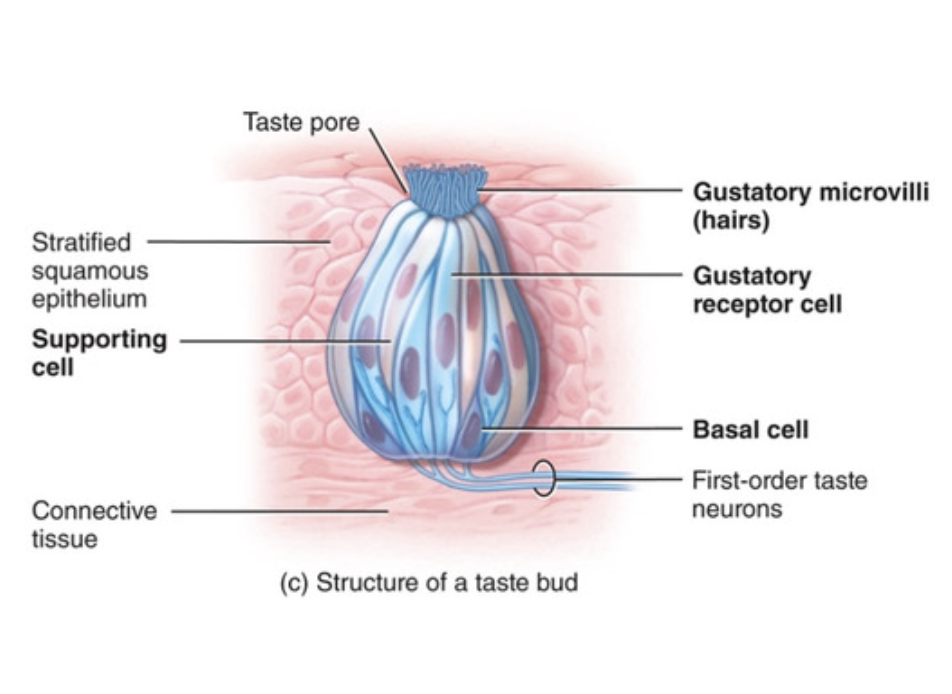
Taste buds - oval bodies contain receptors for the sensation of taste
Each taste bud contains 3 kinds of epithelial cells:
supporting cells
gustatory receptor cells
basal stem cells
Functions of taste bud cell:
supporting cells - surround GRC (gustatory receptor cells) in each taste bud
GRC - contain gustatory microvilli that project from each GRC to the external surface through the opening in the taste bud called the taste pore
basal cells - found at the periphery near the connective tissue layer
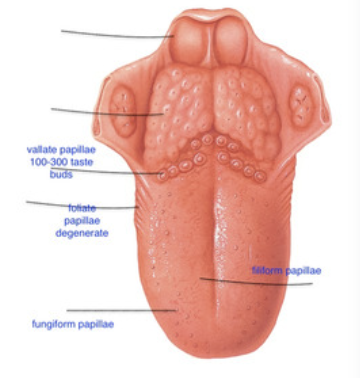
Where are the taste buds found? - on elevations on the tongue called papillae
What is the purpose of papillae? - increase surface area and provide a rough texture to the upper surface of the tongue
3 types of taste buds:
vallate papillae - back of the tongue inverted V shape row
fungiform papillae - mushroom shaped elevations scattered over entire surface
filiform papillae - tactile receptors but no taste buds to increase friction between the tongue and food
What is the transduction of gustation?
chemicals that stimulate GRC = tastants
tastants dissolves in saliva and makes contact with the GRC microvilli which are the sites of taste transduction
sensory neurons synapse with GRC
the receptor potential arises differently for different tastants
different tastes arise from activation of different combinations of GRC’s and how the brain interprets the combination
Transduction varies by tastant:
Salty
Na+ entry into the Na+ channels of the gustatory receptor cell
Depolarization
Neurotransmitter release
1st order neurons
Sour
H+ entry into the H+ channels of the gustatory receptor cell
Depolarization
Neurotransmitter release
1st order neurons
Sweet, bitter, umami
Bind to receptor proteins (does not enter)
G protein activation
IP3 acts 2nd messenger
Depolarization
Neurotransmitter release
1st order neurons
Gustatory Pathway
3 cranial nerves contain axons that innervate the taste buds
facial nerve (VII)
glossopharyngeal nerve (IX)
vagus nerve (X)
Nerve impulses travel from taste buds to cranial nerves to gustatory nucleus in the medulla oblongata
From the medulla, some axons project to the limbic system and hypothalamus, others to the thalamus. Taste signals projecting from the thalamus to the gustatory cortex of the cerebrum give rise to conscious perception of taste and discrimination of taste sensations