✨BIO EXAM 5 Free form notes✨
Date 11/11/24 - MOODLE ACTIVITY DUE NEXT MONDAY (on evolution)
●Evolution both patten and process
●Darwin drew from the study of FOSSILS, remains or traces of organisms from the past
●Many fossils are found in sedimentary rock, which appears in layers called strata
●Darwin had a consuming interest in nature throughout his life.
studied med, didn’t like it and switched to theology
After graduation, he took a position as naturalist on a five-year, worldwide voyage on the HMS Beagle
●Decent with mods. by natural selection explains 3 broad observations
the unity of life
the diversity of life
the ways organisms are suited to life in their environments
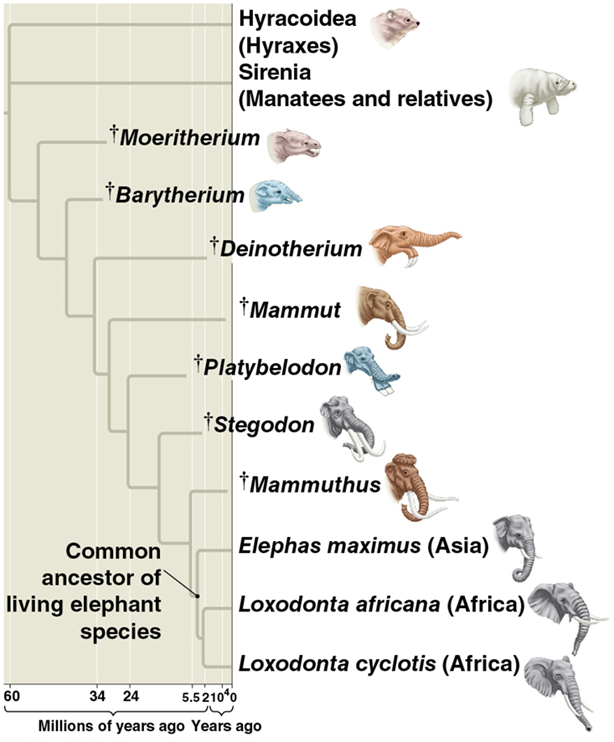
●Darwin used descent with modification to describe his view of life EX pic:
Date 11/13/2024 Chapter 22
● Humans mod. species through artificial selection, breeding only individuals with desired traits
● Darwin drew 2 inferences from two observations
Observation1; members of a pop. often vary in their inherited traits
Observation2; all species can produce more offspring than the environment can support, and many of these offspring fail to survive and reproduce
Inference1; individuals w/ inherited traits that increase survival and reproduction in an environmental tend to produce more offspring than other individuals
inference2; The unequal ability of individuals to survive and reproduce will lead to the accumulation of favorable traits in the population over generations
●Individuals do not evolve; it’s the pop. that evolves over time
●Nat. select can only increase or decrease heritable traits that are variable in a population
THE EVO. OF MDR
●the bacterium staphylococcus aureus often on skin or nasal passages of about1 in3 peeps
-When it becomes staph infection + MDR you die.
●in 1943 penicillin first widely used antibiotic
●Methicillin works by inhibiting an enzyme used by bacteria to make cell walls
●MRSA bacteria are able to use a diff. enzyme that’s not affected by methicillin
●Resistance increases in the presence of methicillin BC MRSA strains are more likely to survive and reproduce than nonresistant
●MDR strains have evolved through the exchange of resistant genes b/t individuals
=
●Comparative embryology reveals anatomical homologies not visible in adults
Date: 11/15/2024
●Understanding continental drift and modern species distribution helps predicts when and where different groups evolved
●In science a theory accounts for many observation and data and attempts to explain and integrate a great variety of phenomena
●Darwin’s theory of evolution by natural selection integrates diverse areas of bio. study and stimulates many new research questions
●ongoing research adds to our understanding of evolution
● Natural selection acts on individuals, but only populations evolve
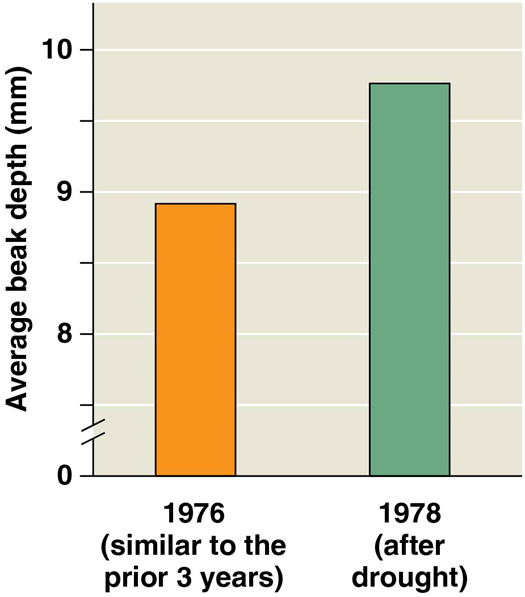
Ex. medium ground finches
consider the graph of beak size. What observations do you have?
What event might have impacted beak depth?
Why do you think it might of occurred
●MICROEVOLUTION
Change in allele frequencies in a pop. over gens. (evolution at smallest scale)
3 mechanisms cause allele freq. to change
(nat. select., Genetic drift, Genetic flow)
●1st req. fro evolution by nat. select = Genetic variation
● Monogenic trait- phenotypic diff. determined by one gene
●Polygenic trait- Phenotypic differences determined my two or more genes
●Genetic variations are produced rapidly in organisms with SHORT GENERATION TIMES
●New alleles arise by mutations
-changes in the nucleotide sequence if DNA
●Examples of causes of mutations'
-Replication errors
-Exposure to certain types of radiation
-Exposure to certain types of chemicals
●Even a point mutation can have significant impact on phenotype
-Point mutation= change in one
●Most mutations that alter phenotype are at least slightly harmful
●Recessive harmful mutations can be hidden from selection in heterozygous individuals
●Not all mutations are harmful
-Neutral variation
+Variation w/ no selective advantage or disadvantage
●only mutations in cell lines that create gametes are passes to offspring
● LARGE CHROMOSOMEAL ALTERATIONS are usually harmful
-rearrangements
-deletion
-duplication
●Duplication of small segments of DNA including genes
-key potential source of genetic variation
●If dupllicated genes persists pver generations
-mutations can acumulate and new functions may arise
●Mutation rate
-low in eucariotes/plants
-av. aprx. 1 in 100,000
●Prokaryotes have lower rates •(1 in 105-108)
●•Most genetic variation in sexually reproducing organisms results from recombination of alleles
DATE: 11/18/24
Medical mission trip to Honduras - hurricane hit the hospital -hospital okay and peeps, but yikes. — also Dr Krepps had said you may get to do stiches, injection, tooth removal,


●Allele frquency
-for diploid = total # of alleles at a locus = total # of individuals
●BY convention if there are two alleles at a locus p and q are used to rep. their frequencies
●the frequency of all alleles in a pop. will add up to one
•The frequency of genotypes can be calculated
–CRCR = p × p = p2 = 0.8 × 0.8 = 0.64
–CRCW = pq + qp = 2pq = 2 × 0.8 × 0.2 = 0.32
–CWCW = q × q = q2 = 0.2 × 0.2 = 0.04
•The frequency of genotypes can be confirmed using a Punnett square
● Hardy-Weinberg Equilibrium p²+2pq + q² = 1 Think of like a putnent square
● A pop. can be in equilibrium for some genes but not others
●This can be used to determine if you’ll pass on genetic problems to your kids
YOU WILL HAVE TO KNOW THIS MATH PARA TUS EXAMEN *SOB*
DATE 11/20/24
Natural selection is based on differential success in survival and reproduction
Natural selection can cause adaptive evolution a process where traits that enhance survival
GET NATURAL SELECTION, GENETIC DRIFT, AND GENE FLOW FROM PWER POIN!
genetic drift is more sig. in sm. pop. - is random -can lead to loss of gen variation - can be harmful and cause alleles to become fixed
DATE 11/22/24
Ch. 24
●Species = laten for kind or appearance
●Comparisons of physiology biochemistry and DNA sequences generally confirm that morphological distinct species are discrete groups
●Biological spieces concept
must be able to mate
produce viable and fertile offspring
should not produce viable fertile offspring with members of other groups
●Formation of new species hinges on reproductive compatibility
●Prezygotic barriers = block fertilization from occurring by
–Impeding different species from attempting to mate
–Preventing the successful completion of mating
–Hindering fertilization if mating is successful
●Postzygotic Barriers =prevent hybrid zygotes from developing into viable, fertile adults through
–Reduced hybrid viability
–Reduced hybrid fertility
—Hybrid breakdown
Date 12/2/24
●Final will be like a reg. exam.
●ch25 will be on the Moodle activity
●The evolutionary Hx (hypothesis) of group of organisms are showed by phylogenic tree
●A phylogenetic tree reps a hypothesis about evolutionary relationships
●Sister taxa = two things that share a common ancestor that’s not shared by another group
●tree branches can be rotated around a branch point
●Basal taxon= lineage that diverges form the others early in the Hx but remains unbranched
●APPLYING PHYLOGENIES
-can be used for crops
-genetic engineering
●Systematists use data in the morphology genes and biochem of —
● in some cases morphological differences can be reall diferent, but the DNA stuff is real simallaer. Thing those twims that look sups diff (Like the black and white ones)
●Complexity of characters being compared can help distinguis b/t homology and analogy
●
●
●
●
●
●
●
●
●
●
●
●
●
●
●
●
●
●
●
●
●
●
●
●
●
●
●
●