Fertilization & Lactation
Fertilization
Approx. 150-600 million sperm deposited per ejaculation
Approx. 50-100 sperm reach the end of the fallopian tube (approx. 5 mins after copulation)
Cilia & fallopian tube propel oocyte (egg) toward the uterus
Fimbria sweep the oocyte into the fallopian tube where fertilization of the oocyte occurs
Viability of gamete:
Egg: 12-24 hours
Sperm: 2 days
Window of opportunity:
3 days: 2 days before ovulation & 1 day after ovulation
Capacitation
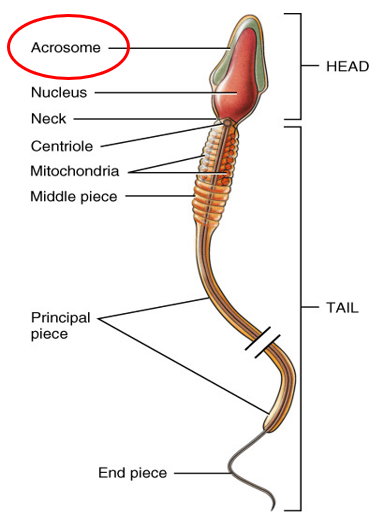
Definition: removal or modification of the protective protein coat from the sperm cell membrane of the acrosome; within the female reproductive tract
Result: sperm’s tail begins to beat more vigorously
Penetration
Zona Pellucida: the outer membrane surrounding the egg
contains sperm-ZP3 glycoprotein
Sperm-ZP3 binding initiates acrosomal reaction (↑ Ca+ )
Sperm releases hydrolyzing enzymes to dissolve the zona pellucida
Sperm’s head penetrates the zona pellucida
Fusion of Sperm and Oocyte
After sperm penetrates the oocyte’s membrane:
Sperm and oocyte membranes fuse
↑ Ca in sperm → exocytotic release of acrosomal contents into oocyte
Oocyte undergoes a cortical reaction after sperm - oocyte penetration
Oocyte increases Ca and triggers oocyte’s 2nd meiotic division
Cortical Reaction
Definition: causes the release of granules by the cortical vesicle within the oocyte leading to:
Completion of the second meiotic division of the oocyte
Formation of the female pronucleus from the nucleus of the mature oocyte
Granules contain enzymes that cause the zona pellucida to harden, thus preventing polyspermy
Polyspermy: egg fertilization by more than one sperm → resulting in embryo death d/t abnormal chromosome numbers
Completion of Fertilization
The nucleus of the sperm transforms into the male pronucleus
Male and female pronuclei fuse → forms zygote with 46 chromosomes (23 from each parent)
Lactation
Lactation: the secretion and ejection of milk
Controlled by both hormonal and physical stimulation
Milk: an emulsion of fats in an aqueous solution containing lactose, proteins, and electrolytes
Differs from colostrum:
Colostrum: thin, yellowish, milk-like substance produced during the first 4 days after birth
Contains very few fats and less lactose compared than milk
Hormonal Control of Lactation
Prolactin: responsible for milk production and secretion
Produced and secreted by the anterior pituitary gland
Initiation of milk production depends on a decrease in estrogen and progesterone levels occurring after birth (aka parturition)
Dopamine inhibits the release of prolactin
Mechanism of Prolactin Release
Suckling is the most powerful stimulus for prolactin release
Nerve impulses generated by nipple stimulation travel from the breast → spinal cord → hypothalamus
Causes inhibition of dopaminergic neurons in hypothalamus to decrease dopamine release
Decreased dopamine → removal of inhibition in prolactin release
Dopamine is aka prolactin-inhibitory hormone
Role of Oxytocin in Lactation
Suckling stimulation also causes hypothalamus to produce and release oxytocin
Oxytocin then Moves to the posterior pituitary and into systemic circulation
Oxytocin enhances milk ejection
causes myoepithelial cell contraction → initiates milk ejection
Breast-feeding could suppress the production of gonadotropin-releasing hormone (GnRH) and decrease FSH and LH production