Ch 29: Birds
Lesson 1: Introduction
Birds are used as animal models in studies of neurobiology, behavior, endocrinology, nutrition, microbiology, and embryology. Most birds used in research are domesticated fowl specifically bred for research and for which husbandry standards and diets are available.
While birds bred for research are not regulated under the Animal Welfare Act, they are covered species under PHS Policy. Guidelines for the care of birds are found in both the Guide and the Ag Guide.
Lesson 2: Taxonomy
Birds belong to the taxonomic class Aves, which is a large and diverse group.
Most birds used in research belong to three orders within this class:
Galliformes includes chickens, turkeys, quail, (which are commonly known as poultry).
Columbiformes includes pigeons and doves.
Passeriformes includes crows, sparrows, and finches, and are commonly known as passerines.
The White Carneau pigeon (Columba livia, Figure 29.1) has been an animal model in learning and memory research since the early days of psychological studies. These birds continue to contribute to these studies, and are also used in research on atherosclerosis. Zebrafinches (Taeniopygia guttata) are valuable models in the understanding of the complexities of learning, memory, and language development through studies of bird song communications. Domestic chickens (Gallus gallus domesticus) have robust immune systems; the yolk of their eggs is commonly used in antibody production, such as in the development of flu vaccines. Chickens and their eggs are also available specific pathogen-free, so can be used for infectious disease and high containment research.
Lesson 3: Anatomy and Physiology
The bodies of birds are well adapted for flying. Their forelimbs have evolved as wings, with fused bones that provide strength and lightness, and support flight feathers. Many bones of adult birds are hollow and actually act as part of the avian respiratory system. That being said, an injury such as a broken femur can lead to a bird experiencing respiratory distress. The lightness of their bones makes them fragile; birds must be handled carefully to avoid injuring them.
Many male galliformes have a spur, which is a nail not associated with a toe. The spur is located on the lower leg and points toward the tail. The spur is used for fighting among males, but it may also be used either in defense or aggression against people. Roosters have particularly sharp spurs and can be dangerously aggressive. For safety reasons, spurs are often removed in young roosters or trimmed in adults.
Bird Digestive Tract
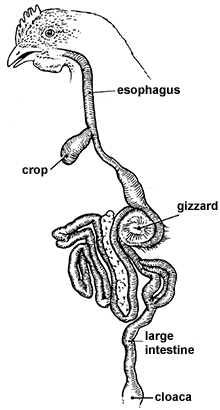
The digestive tract of birds has several unique features (Figure 29.2). Some species have a crop, which is an expandable pouch of the esophagus. The crop serves as temporary storage for food prior to digestion. In addition, some columbiform birds produce a secretion, called crop milk, to feed their young after hatching. Crop milk has no relation to mammalian milk; it is made by both males and females. It contains mainly proteins, fats, other nutrients, and antibodies (for immune protection of the hatchling). Another unique feature of the bird’s digestive system is the gizzard, a specialized stomach that is used in place of teeth for grinding up food.
Instead of separate reproductive and excretory openings, birds have a cloaca. A cloaca is a single cavity into which the intestinal tract, urinary tract, and reproductive tracts all empty. In the female bird, the cloaca is used to lay the eggs, as well as to pass excretory wastes. In male birds, the cloaca is used to pass sperm to the female, and to pass excretory waste.
Birds do not excrete the same type of urine and feces as mammals. Their droppings include urinary waste that is thick and white in color. Their droppings also contain a greenish-brown material, which are feces. Birds typically release their droppings while perched.
Biological Values of Chicken
Table 29.1 has normal biological values for the chicken. Values for many parameters vary among bird species, but many features apply to birds in general. The body temperature of birds is higher than most mammals. They have no sweat glands, and therefore cannot regulate their body temperature by perspiring. Thermoregulation in birds is mainly achieved through respiration (panting) for cooling and shivering to increase heat production.
Feathers provide insulation, which is important for maintaining proper body temperature in a range of environmental conditions. At cold temperatures, the feathers can be raised (fluffed) to hold more warm air against the body. In warm conditions, featherless tracts of skin can be exposed for cooling. Birds preen their feathers to waterproof them using an oily substance produced by the uropygial (preen) gland, which is located on the back at the base of the tail. Waterproofing is important for maintaining body temperature, especially under wet conditions. Most birds molt their feathers and grow new replacements once a year. Conditions, such as stress or changes in lighting or nutrition, can induce a molt.
Birds have a high heart rate, which increases significantly during flight.
Birds lack a diaphragm and so must expand their ribcage to inhale. An obstruction of this movement may cause birds to suffocate. Restraint methods for birds must therefore not impede their chest movement.
Body weight | Adult male: 2.2–4.5 kg |
Normal body temperature | 40.6–43 °C |
Heart rate (beats per minute) | 230-460 |
Respiration rate (breaths per minute) | 15-30 |
Life span (years) | 5-8 |
Daily consumption | Feed: 110–250 g per bird |
Sexual maturity (weeks) | Male:22-24 |
Egg incubation period | 20-22 d |
Egg laying frequency | 1 egg usually laid every 25-26 hours |
Lesson 4: Sexing and Reproduction
Sexual Characteristics
Males and females of a species may differ significantly in size, feather conformation, and color pattern, making it easy to differentiate between the sexes. These differences are referred to as sexual dimorphism (Figure 29.3). There are many species that do not exhibit these outward differences, however; unfortunately, there are no general guidelines to help identify the sex in these types of birds. Some species develop breeding season sex indicators, such as color changes (especially in males), changes in cloaca, and development of a featherless brood patch on the breast area (mostly in females, but also in males of some species). In other species, sex can be determined only at necropsy or, if the research protocol permits, through surgical inspection of the gonads.
Fertilization
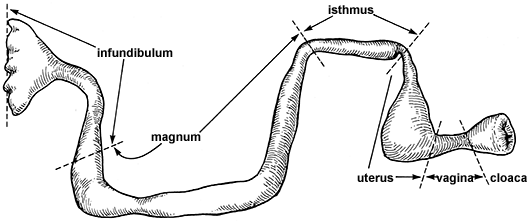
The male bird has two testes in the abdominal cavity, near the kidneys; there are no accessory sex glands. In most female birds, only the left ovary and oviduct are functional; the right one exists only in rudimentary form. For most birds, copulation involves a “cloacal kiss” where the male perches on the female’s back and twists his tail beneath her to deposit sperm in her cloaca. The egg travels from the ovary through a tube called the oviduct, where it is fertilized, surrounded by a layer of albumen (the egg white), and finally is enveloped in a hard shell before passing to the outside, blunt end first, through the cloaca (Figure 29.4).
In some research programs, eggs are collected and held before incubation for investigative assay or for later artificial batch incubation. Eggs that have been naturally incubated by the females for a few days may have higher incubator hatchability. Eggs collected for these purposes should be freshly laid and not washed. Cracked eggs should be culled. If embryo development has already begun, interrupting incubation may kill or damage the embryo. These eggs should not be held, but should continue to be incubated. In some species, eggs to be incubated later can be held for 7 to 14 days at 11 °C to 17 °C and 70% relative humidity.
Lesson 5: Behavior
Many birds are easily excited. They will respond to sudden noise or movements with strong vocalizations and other physical reactions. A calm presence and gentle but firm restraint helps to reduce excitement.
Birds maintained in groups develop a classic “pecking order,” or hierarchy, in which the more dominant animals restrict the movements, feeding, and socialization of the subordinate ones. Birds that show any sign of feed deprivation or physical trauma, especially during breeding attempts, should be separated from the group immediately and isolated in individual cages.
Claws and spurs, which are used both defensively and offensively, may require regular trimming with nail clippers. For chickens, removing the tip of the upper beak sometimes helps to control the cannibalism or severe fighting that may occur in flocks. This procedure must be done carefully so that it does not interfere with normal eating or drinking.
A bird’s flight can be controlled by pinioning, which is the surgical removal of the distal tip of the wing. The wing tip contains the third and fourth metacarpal bones, which are necessary for flight. Only one wing should be pinioned; some birds can learn to fly if both wings are symmetrically pinioned. The procedure is best performed on chicks. Temporary, nonsurgical flight control can be achieved by clipping the first ten primary flight feathers of one wing. As these feathers are replaced by newly grown feathers, the birds regain their ability to fly.
Lesson 6: Handling and Restraint
Because the anatomy, physiology, and behavior of birds is so different from that of more commonly used laboratory animals, the handling of birds requires special skills. Those who work with birds must recognize their fragile nature and learn to modify their handling techniques accordingly. Unintentional injury or even death can occur when birds are handled by anyone who is not familiar with their anatomical and physiological characteristics. As mentioned earlier in this chapter, restriction of the movement of the rib cage during restraint can suffocate a bird. Some birds can also overheat when restrained, due to heat generated by the muscular exertion to escape. They are unable to dissipate the heat trapped by the enclosure of their body in restraint.
Because birds are easily alarmed or frightened, any sudden movement or loud noise may upset an entire flock. Frightened birds attempting to flee can be injured by flying into walls or, in the case of poultry, stampeding and trampling other birds. Researchers and facility personnel should move slowly around birds. Cage manipulations should be done slowly and deliberately. Dimming room lights 15 to 30 minutes before a planned activity helps quiet the birds. A successful capture on the first attempt is the least stressful for the bird.
The various methods of restraint used with different species of birds are described in the following sections. However, release methods for all species are the same. Place the animal on the floor of the pen and withdraw your hands. Smaller birds in flight cages should be released with unobstructed clearance in case they take flight immediately. Birds can also be released from a height equal to or slightly below perch level in the cage and allowed to take flight. Do not toss the bird into the air, as it may be unprepared or unable to fly.
Galliformes
Poultry are generally easy to handle and, except for quail, are not as fragile as other bird species. These birds are usually docile, but they can peck, scratch, or inflict puncture wounds.
When capturing a chicken, the bird’s wings must be restrained. Place both hands over the back of the bird to hold the wings down over the body. If the bird bolts forward or attempts to fly, quickly move your hands forward to capture the bird. Once the bird is immobilized, grasp the wings in one hand and hold them behind the bird while restraining the legs between the fingers of the other hand (Figure 29.5). Unrestrained chickens will kick, and may injure the handler or escape.
Chickens exhibit the tonic immobility response when held upside down. This response causes the chicken to go limp, making it easy to handle. However, it has been determined that this is a fear response associated with corticosteroid release, and as such chickens should always be carried upright. They will remain calmer if you place the animal under one arm and maintain gentle pressure on the wing. Some chickens may require leg restraint when using this technique.1
Another common restraint method is to place the bird on the table on its back or side and use tape with non-traumatic adhesive to tie the legs together. A chicken will usually lie quietly if a cloth is draped over its head; this technique is a very good way to help calm all types of birds.
Although turkeys are considerably stronger than chickens, they are relatively easy to handle. Small turkeys may be handled in the same way as chickens. Turkeys can also be held and transported short distances by using one hand to encircle the base of both wings over the back while holding the legs and supporting the body with the other hand. The head may be restrained by gently placing two fingers of the hand holding the wings around the bird’s neck. In larger birds, it may not be possible or practical for one person to restrain the head and body. In these cases, the head may be covered with a cloth. Caution should be exercised with large toms (male turkeys) because they can inflict injuries to handlers with their powerful wings.
Columbiformes and Passeriformes
Columbiformes, (such as pigeons and doves), and passerines (such as crows, canaries, sparrows, and finches) are smaller and swifter than poultry and more difficult to capture safely. Nets can be used to capture these species, but manual methods are preferred for birds in smaller cages. If nets are used, the bird should be removed from the net quickly to prevent injury.
Large pigeons may be carried the same way as a chicken. Smaller birds can be restrained by holding the head between your thumb and forefinger while supporting the neck and back with the palm of the same hand. When holding the wings against the bird’s body, avoid encircling the thorax completely, as this can compromise respiration and result in hypoxia and hyperthermia.
Lesson 7: Identification Methods
Leg bands are the usual method of identifying individual birds. The band may be color coded, have alphanumeric codes, or both. Bands for larger birds may also include radio frequency identification chips. Bands should be sized and placed with awareness of the growth potential of the bird; bands should be checked as part of regularly scheduled animal health exams. Other means of identification include wing tags for larger birds.
Lesson 8: Husbandry and Diet
Housing
Housing for laboratory birds should provide a suitable physical and psychological environment. Cages should be large enough to permit normal physical activity and social interaction. Feed and water should be located away from perches to prevent fecal contamination. Perches of varying diameters can partially mimic the natural habitats of the bird and may provide exercise for the birds’ feet. The housing system should prevent the laboratory birds from coming in contact with wild birds.
The Guide recommends an ambient air temperature of 16 °C to 27 °C (61 °F to 81 °F) for poultry, with a relative humidity of 30% to 70%. Temperature, humidity, ventilation, and air filtration must be carefully controlled in indoor enclosures. Because birds are susceptible to temperature stress, ventilation is very important. As the environmental temperature rises, ventilation should be increased.2
The floors of indoor cages are generally covered with litter of sand, gravel, or shavings, depending on the species and on sanitation requirements. A low Plexiglas™ frame can be placed around the cage perimeter to help contain the litter. Poultry, such as chickens, turkeys, and quail, can be housed particularly well in this manner. Soiled bedding must be replaced frequently and regularly.
Housing Requirements
Feed, nesting boxes, perches, and water should be provided according to the needs of the species and the limits of the housing system. The commercial poultry industry has developed many types of easily sanitized automatic feeding and watering devices. Of particular value to research is a suspended automatic watering system that is placed at a level that allows the birds to drink comfortably. These systems, commonly referred to as “nipple drinkers,” are designed to prevent birds from contaminating the water reservoir by perching or stepping in it. Guidelines are available for proper height adjustment according to the bird’s height. The height of the drinkers provided to younger birds must be raised as the birds grow.3
Housing Considerations
The length of exposure and type of light is important in bird reproduction. Special wide-spectrum florescent lights or white incandescent lamps should be used in bird housing facilities, as they more closely resemble natural light than do normal cool white fluorescent lamps.
Housing design should permit the flexibility needed to accommodate different groups of birds. Housing mixed species and multiple age groups together can result in fighting, cannibalism, or the spread of disease. Visual barriers, such as solid cage sides, can reduce conflict between groups. As with almost any animal, overcrowding birds in cages or pens also stresses the animals and can result in disease.
Very young birds require an external heat source to prevent chilling and hypothermia. Special heated cages called “brooders” are used to house young birds until they grow their feathers.
Nutrition
The nutritional requirements of chickens are well known, and commercial feed preparations are usually adequate.4 The nutritional requirements of non-domestic avian species are largely unknown. Dietary requirements of seed-eating pigeons and doves are not as well understood as those of poultry. Several types of commercial pigeon diets are available. Specific seed mixtures can also be fed.
Passeriforme Diet
The order Passeriformes contains more than 4,800 species. Accordingly, there is a wide variation in nutritional requirements within this group. Only seed-eating passerines are discussed in this text, since they are the most common type used in biomedical research. Examples of seed eaters include sparrows, finches, and canaries. Usually a mixture of small seeds is fed; the most important seeds in the mix are canary grass seed and millet. Other components of the diet vary according to the species, and may include vegetables, fruits, grasses, cooked egg yolk, vitamin supplements, breads, and live insects. These items are freshly prepared and fed separately.5
Diet Components
Grit is a necessary component of all bird diets, and should be made available ad libitum. Since birds have no teeth to break open seeds and grind their feed, birds use grit for this purpose. Ingested grit remains in the gizzard, which is a muscular organ of the intestinal tract (Figure 29.2). Agitation of the grit and seed mixture in the gizzard helps the birds grind up the seeds in preparation for digestion.
Grit is available in various sizes and compositions, including ground oyster shells and granite. Oyster shells may be contaminated with various bacteria, and should be sterilized by dry heat or autoclaving before use. Small birds use finer grit than larger birds. If personnel are uncertain which type of grit a species requires, several varieties can be offered to determine the birds’ preference.
Cuttlebone should be available for passerines to allow for proper beak maintenance. These birds scrape their beak on the cuttlebone, which wears down their beaks and gives them a source of calcium and grit. They also benefit from exercising their jaws.
Water
Water requirements vary not only with species, but with the ambient temperature, humidity, and the salt and moisture content of the feed. Some species also need a supply of water for bathing. Aquatic birds like ducks are prone to soiling their water, so the maintenance of potable water presents challenges in husbandry and disease control.
Lesson 9: Nondomestic Species
To use nondomestic (wild) birds in research, thorough knowledge of the animals’ natural habitat, behavior, and diet is essential. The procurement, transport, possession, and treatment of wild birds and their eggs are governed by state and federal regulations. Investigators and other involved parties should contact the local state conservation agency (Natural Resources, Fish and Game, Parks and Wildlife) and the US Fish and Wildlife Service for the latest information on a species in question.
Wild birds may have difficulty adapting to laboratory housing. Close observation during captivity is important. The behavioral characteristics and natural habitat of the species should be considered. Specific habitat features should be incorporated into the housing accommodations as part of the enrichment program, such as hiding places, water baths, or substrates such as sand.
A quiet environment away from noisy laboratory species, such as swine and dogs, is essential for wild birds. Bird cages should be equipped with numerous perches placed at heights appropriate for the species, in locations that prevent the birds from soiling their feed and water. Birds should be shielded from visual disturbances, such as the movement of personnel or equipment, during the acclimation period. A bird cage can be shielded by partially covering it with a cloth.
Placing feed and water in several locations of varying height in the cage helps the birds locate these items. Observing the birds for several days can help determine the birds’ preferred locations for feed and water. Multiple feed and water sources also reduce the possibility of dominant or aggressive birds preventing others from eating or drinking. For some species, feed scattered on the floor may encourage eating until the birds lose their fear of the feed container and learn to accept feed from a dish.
Lesson 10: Environmental Enrichment
A wide range of bird species are worked with in biomedical research. As such, environmental enrichment can range from simply playing background music or hanging toys in the cage, to promoting normal behaviors and social groupings. Birds respond well to visual cues and stimulation, and promoting behaviors such as foraging and nesting has been shown to be particularly beneficial for their well-being. Environments that limit the expression of these behaviors may be a source of frustration and result in feather pecking and other negative stereotypic behaviors, including cannibalism. The best enrichment for galliformes is social housing followed by providing perches and a substrate material for foraging. Enrichment measures should be introduced gradually to let the birds get used to them.2,3,4
Lesson 11: Signs of Pain, Distress, or Illness
Nonspecific signs of pain or distress or illness in birds include crouched posture, a drooped head and neck, dull eyes, ruffled feathers, nonresponsive attitude, and isolation from other birds in the cage. Birds that are ill may also be easier to capture and restrain.
Lesson 12: Euthanasia
Acceptable euthanasia techniques include overdosing with barbiturate administered by intravenous injection, inhalant anesthesia gases, or carbon dioxide. Other techniques, such as cervical dislocation, decapitation, maceration, or use of other gases, require special training and are dependent on the size of the animal. These methods may only be used under specific circumstances, and require IACUC approval. Thoracic compression has historically been commonly used for field studies, but is listed as unacceptable in the current AVMA Guidelines.1,4 The handling precautions noted earlier in this chapter, such as careful movements, quiet environments, and dimmed lights, are equally important in euthanasia procedures. As with other laboratory animal species, death must be verified. Your institution’s SOPs may require an additional procedure to be performed for this verification. Carcass disposal should be according to the facility’s guidelines.