Unit 2: Sick Humans
DNA Notes
DNA- Deoxyribonucleic Acid
The phosphate and the sugars that connect are called covalent bonds, and they are very strong
One of the major building blocks of life
Found in the Nucleus of a cell
Makes up the genetic information of all living things
Contains Carbon, Hydrogen, Oxygen, Nitrogen, and Phosphorus (CHONP)
Nucleic Acids are found in all cells that store, transmit, and express genetic information
Nucleotides are building blocks (monomers) of nucleic acids, specifically in DNA and RNA, that store and transmit genetic information.
Nucleic acid structure:
Nitogenous Base pairs:
Purines: Pure As Gold Vs.
A- Adenine Paris with
G- Guanine Paris with
Pyrimidines: Cut The Pie
T- Thymine
C- Cytosine
Double Helix- Twisted ladder
DNA strands coil into chromosomes
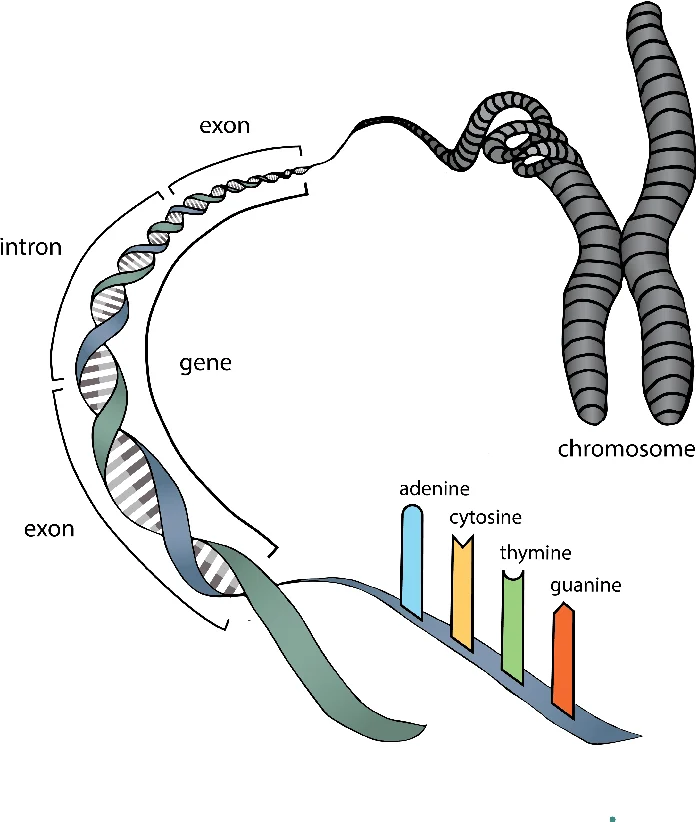
Genes- Segments of DNA that encode for a protein to be made.
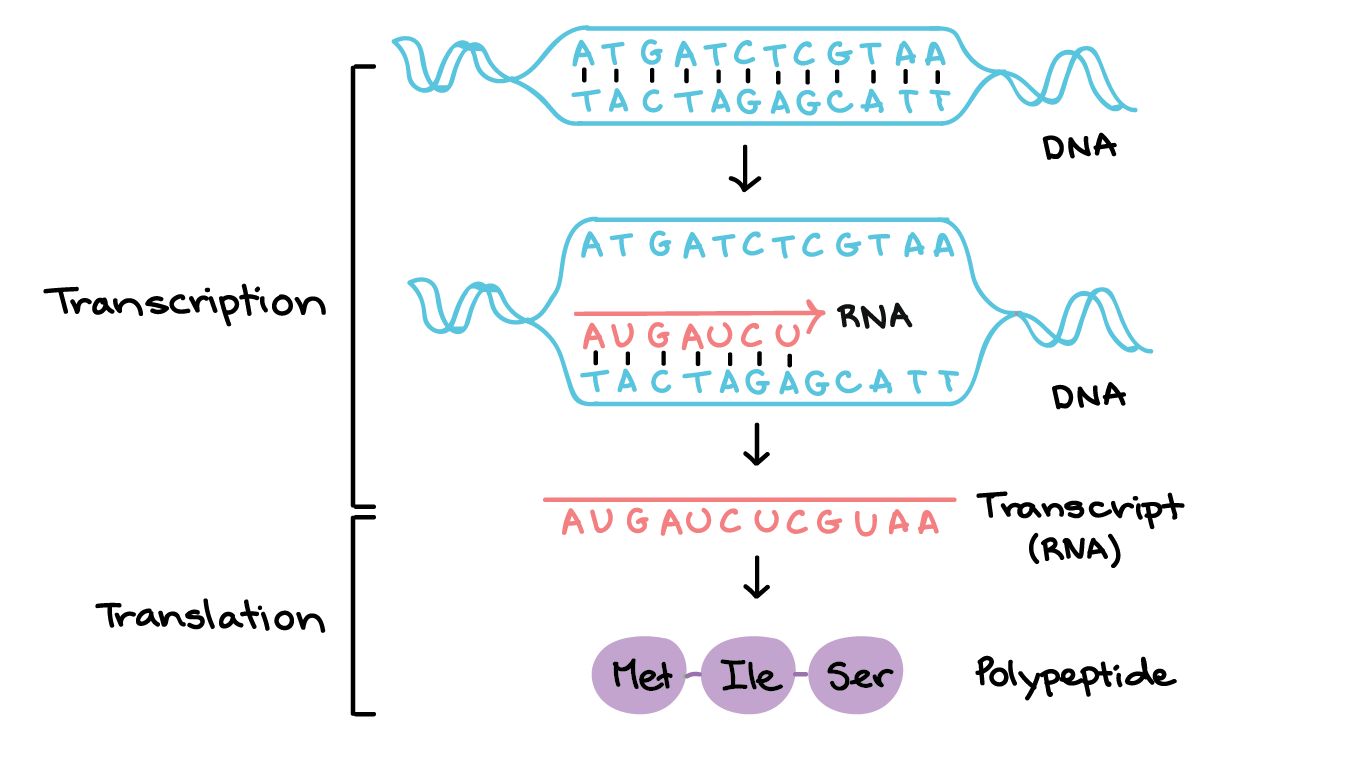
DNA gets copied into RNA (Ribonucleic Acid), which then codes for a protein.
3 base pairs code for 1 protein part or amino acid
Chromosomes- DNA coils into a tight package
Humans have 46 chromosomes or 23 pairs
Half from mom
Half from dad

DNA Molecule Reading
Genes are the blueprint for proteins. They help determine traits such as hair and eye color.
If nucleotides in DNA do
DNA ensures that each new cell inherits the specific genetic information needed to carry out its specialized function within the organism.
DNA regulates cell specialization and coordinates the different levels of biological organization.
If nucleotides in DNA do not follow the specific pairing rules, DNA replication can lead to mutations with harmful consequences.
DNA helps organize the development of living things. It also helps pass down genetic information.
The role of DNA in our bodies is to give us traits. DNA contains information needed for growth, development, and function.
If there were mistakes in copying DNA, harmful cells may replicate, which can lead to death or very serious illness.
DNA ensures that each new cell carries on the genetic information. This process is called “cell specialization” which leads to the information of tissues, organs, and ultimately complex systems.
DNA/Genes
Molecules that contain our genetic information.
Contains the information to build all proteins and their specific functions.
DNA and genes are macromolcules.
Proteins
Large biological molecules that make up your traits and characteristics (ex. eye color)
The code to make proteins is in DNA
Organelles
Small structures that carry out specific functions inside a cell.
Cells
Individual cells do not carry out every life function
They are specialized, or specialized to perform particular functions
Ex. Red blood cells are small, round, and flat. This shape allows them to move easily through small blood vessels
Ex. Nerve cells are long and branched to help deliver messages.
Tissues
A group of similar cells that share the same structure and function
Ex. Muscle tissue, nervous tissue, and epithelial tissue
Organs
Different types of tissues work together to perform a specific job.
Ex. Heart, lung, and stomach.
Organ Systems
Groups of related organs that work together to perform a specific job
Ex. Digestive, nervous, and circulatory systems
Plant Examples
Organelle- Chloroplast
Cell- Epidermal
Tissue- Guard cells
Openings to allow carbon dioxide in and oxygen out of the leaf
Organ- Leaf
Organ system- roots
Organism- plants
Protein Synthesis Notes
Genes- Segments of DNA that contain the information for a protein
Transcription- The process where RNA is written from the DNA strand
A special base pair is used for RNA: Uracil
RNA Polyermerace takes the loose nucleotides (nucleic acids) and matches them to the DNA strand
DNA is transcribed to:
Protect the original DNA
Move around just the information to make the protein
Translation- The change of mRNA to proteins in the ribosome
Proteins are made in the ribosomes and, after formation, are folded into their final shape
Three RNA bases are used to code for one amino acid
tRNA is used to transfer amino acids and connect them to make proteins
Codons are specific 3-base pair combinations that code for all amino acids and are used to stop and start translation

DNA REPLICATION, TRANSCRIPTION, AND TRANSLATION

DNA Mutations- Point mutations
A genetic mutation changes one nucleotide
Causes of mutations:
Errors in DNA replication
Environmental factors: Radioactive substances, x-rays, UV light, and some chemicals.
Infections from virus and bacteria
Point mutations- Two basic types of point mutations
Substitution: 1 nucleotide is traded in for another
Frameshift: 1 nucleotide is deleted or inserted. We shift it to one place. If you shift it to the right, you will have added a nucleotide. If shifted to the left, you will remove a nucleotide.
Chromosomal mutations- Genetic mutation that changes a chromosome
Effects of Mutations
Silent mutation: No change in amino acid sequence (change no one would notice)
Missense mutations: Change in one amino acid
Nonsense mutations: Premature stop codon(everything stops-no more protein)
Frameshift mutations: Alter the reading frame of the genetic code (where the codons fall)
DNA Mutation Practice:
Type of Mutation | Phrase | Description/Effect |
Original | The fat cat ate the rat | Normal, unmutated phrase- “wild type”. |
Silent | The fat kat ate the rat | Word change but meaning unchanged (synonymous). |
Missense | The fat bat ate the rat | Change in one amino acid, word change, but the meaning is changed. |
Nonsense | The fat cat | Early “stop”- sentence ends prematurely (truncated). |
Frameshift (insertion/ Right shift) | The efa tca tat ath era t | An extra nucleotide shifts the reading frame downstream, meaning altered. |
Frameshift (deletion/ Left shift) | the atc ata tet her at | Missing letters remove a nucleotide sentence loses sense. |