Government intervention in the market
Why does the government intervene in a market?
Market price is considred too high (rent)
Market price is considered too low (clothes)
Quantity supplied is considered too high (plastic)
Quantity supplied is considered too low (schools)
There are 3 types of market intervention including:
Market-based interventions → prices floors/ceilings (price intervention), taxes and subsidies (quantity intervention)
Regulations → laws
Provision of merit goods (goods with a positive externality)→ public schools, hospitals, etc.
Price intervention
Price Floor (Market price is consiered too low)
sets a minimum price that the good can be sold at
above equilbrium which is deemed socially undesirable
price floor, a change in the price of the good itself→ demand contracts, supply expands. Result: the market does not clear.
Demand does not equal supply, excess in supply, e.g, unemployment too much supply, not enough demand

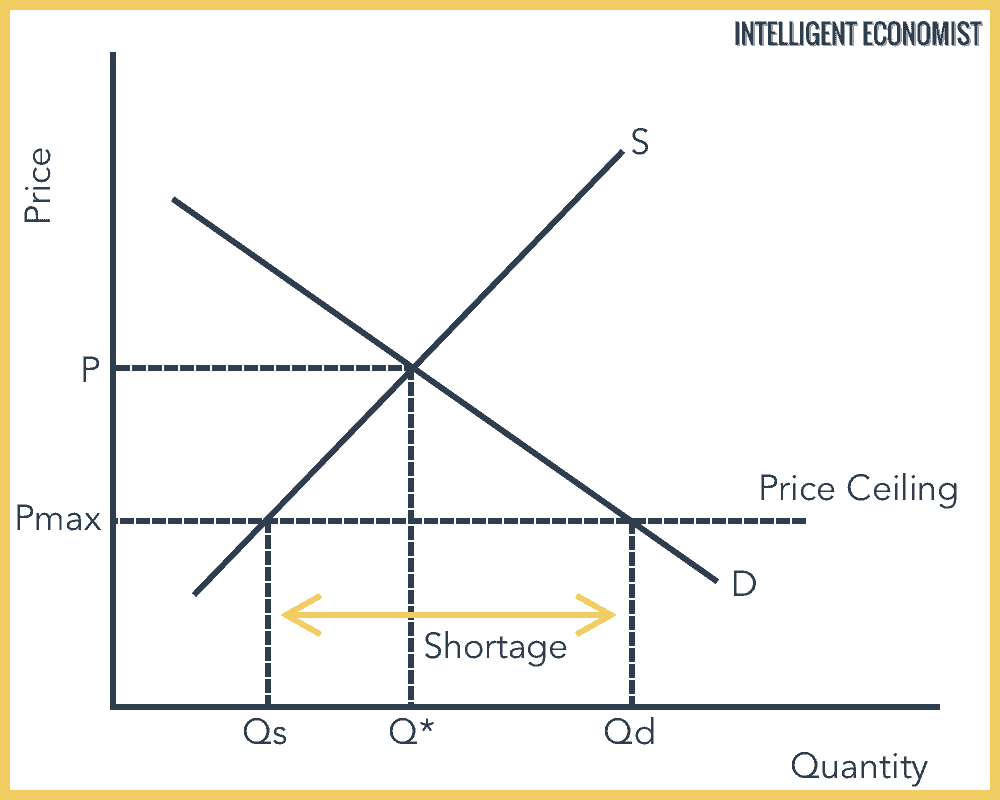
Price Ceiling (Market price is considered too high)
the maximum price (ceiling) is imposed by the government
imposed below equilibrium becausre the market price it too high to be socially desirable
supply contracts and demand expands
disequilibrium, market has not cleared
excess in demand, e.g., rent control, homeless→ caused by too high rent
Quantity intervention
too high:
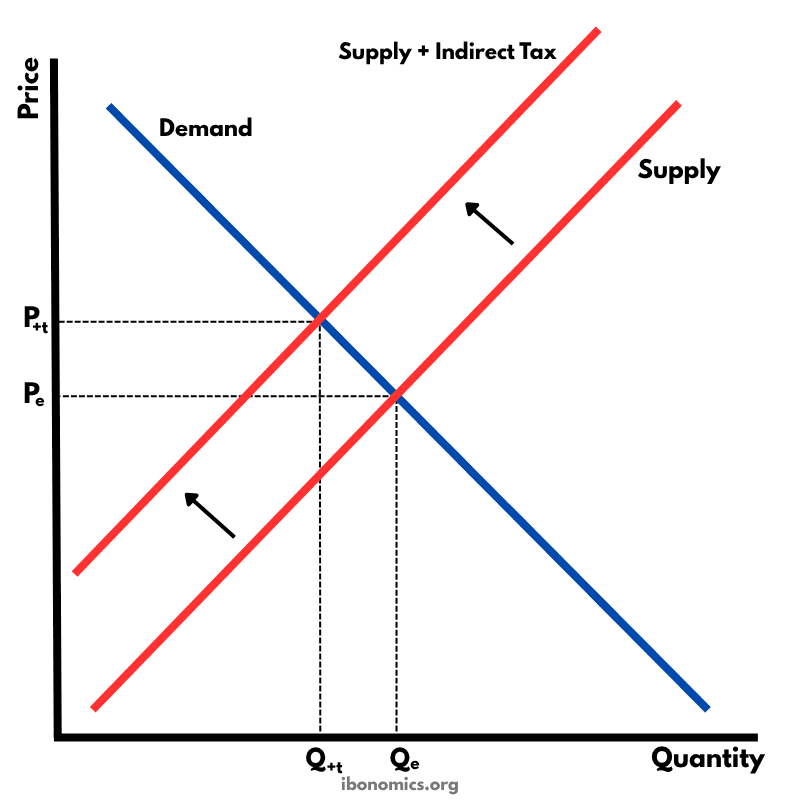
Taxes:
market quantity is consered too high, so the government intervenes with the aim to reduce quantity, supplied or demanded
Taxes are a disincentive to produce, decreasing the quantity supplied.
How does it work?
Taxes imposed on producing goods cause an increased price → this results in a decreased quantity and a new market equilbrium, overall reducing the quantity
too low:
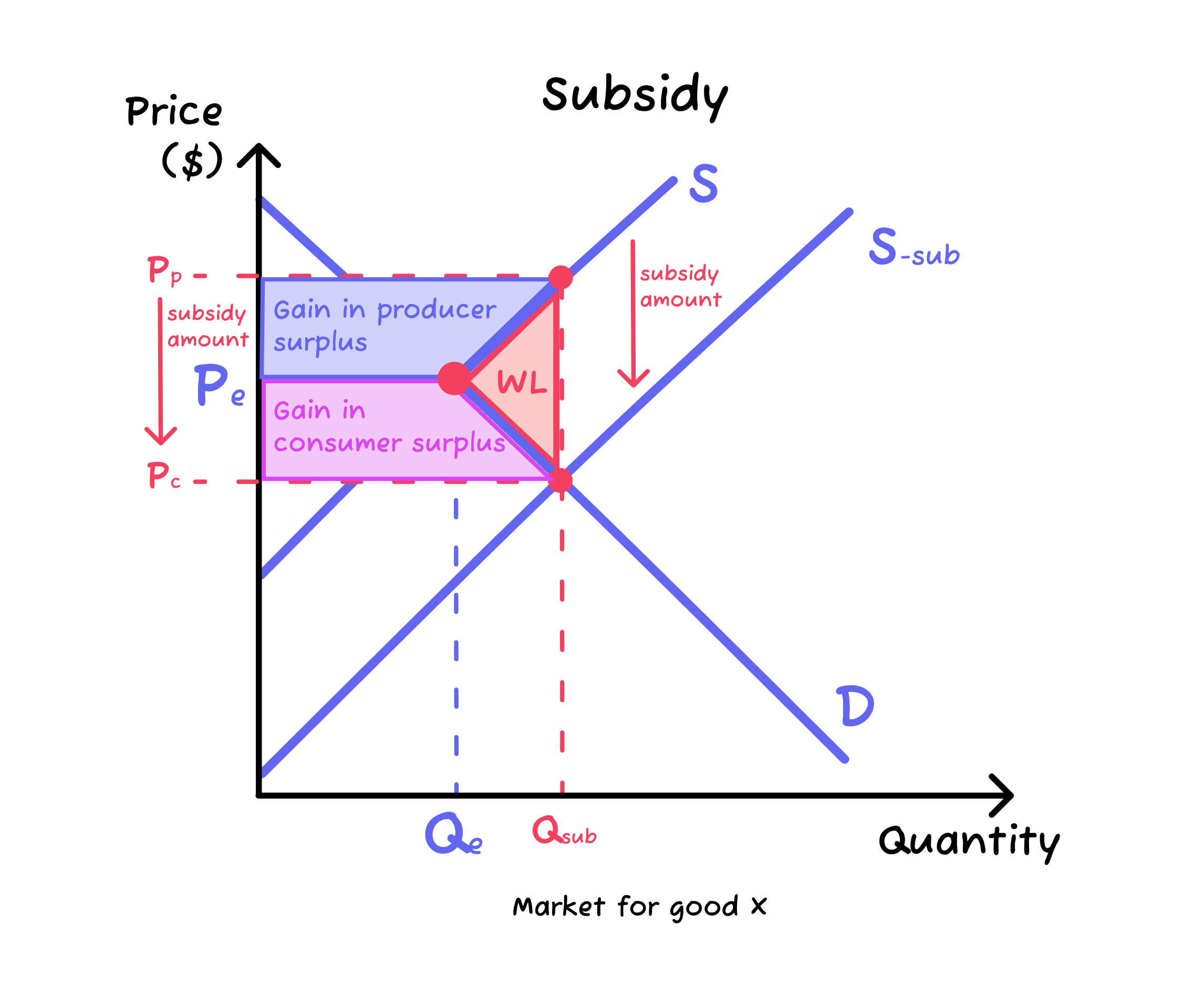
Subsidies: cash payment per unit of production to producers
→ the supply curve represents the individual cost of production for firms (thier private cost, hence private cost curve)
Market Failure:
What is a public good? A good that is both non-excludable and non-rival, meaning that once provided, it is difficult to prevent people from using it, regardless of whether they pay for it.
For example: the defence force, the police force, a lighthouse, flood levee, etc.
(Private good: excludable, rival)
Market failure, when the private cost curve fails to account for the cost or benefit of a good and instead only it’s utility or benefit, results in socially undesirable outcomes in which supply is over/under produced and prices are too high/low, meaning that it is therefore undesireable.
S: an over supply of demerit goods (Negative externality) or an undersupply of merit goods
D:price is too high (products with positive externalities) or price is too low (products with negative externalities.
Government intervention is then used to address these issues.