Skeletal Muscle Tissue
skeletal muscle tissue (myology) slideshow
types of muscle tissue
one of the 4 primary types
- skeletal → striated → voluntary
- 40% of weight
- cardiac (involuntary)
- smooth (involuntary, nonstriated)
musculus = little mouse
made up of many tissue types
more than 700 skeletal muscles
word roots: sarco and myo
function of skeletal muscles
- skeletal movement
- posture and body position
- support of soft tissues
- joint stabilization
- guarding of entrances and exits
- maintenance of body temperature
- protection
- facial expression
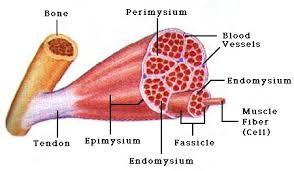
epi-, peri- and endomysium
- are interwoven
- continuous with tendon, and eventually the periosteum
- function
- protection
- blood supply
- innervation
- epimysium
- on top of the muscle
- perimysium
- around a bundle of myofibers
- endomysium
- surrounds each myofiber
nerve and blood supply
- skeletal muscles are rich in nerves and blood vessels
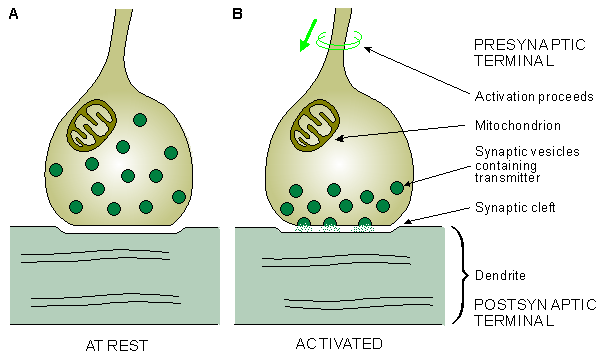
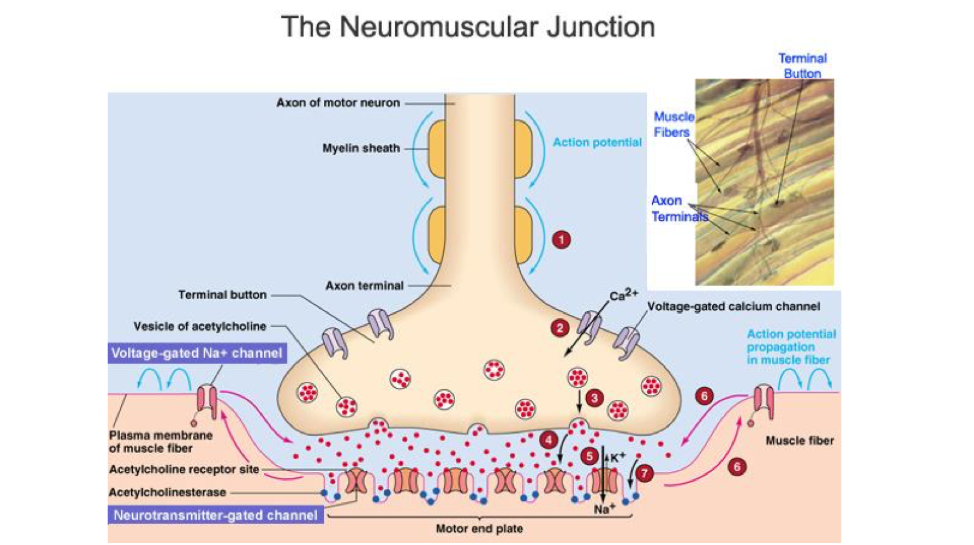
- chemical communication at neuromuscular junction
- synaptic terminal of axon meets motor end plant of muscle cell
- coiled capillaries are able to adapt to changes in length of muscle fiber
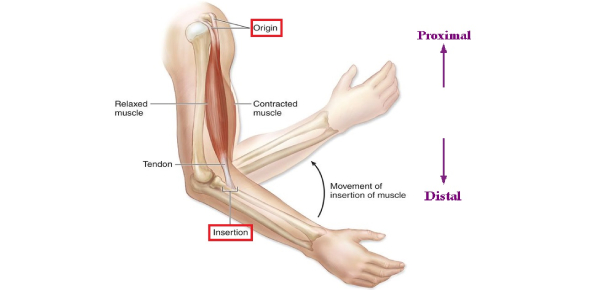
origin and insertion
- origin
- the part that stays still
- usually proximal
- insertion
- the part that moves
- usually distal
microanatomy of skeletal muscle fibers
- vocab
- skeletal muscle cell = fiber or myofiber
- sarcolemma
- sacroplasm
- sacroplasmic reticulum
- myofibril
- myofilaments
- t-tubules
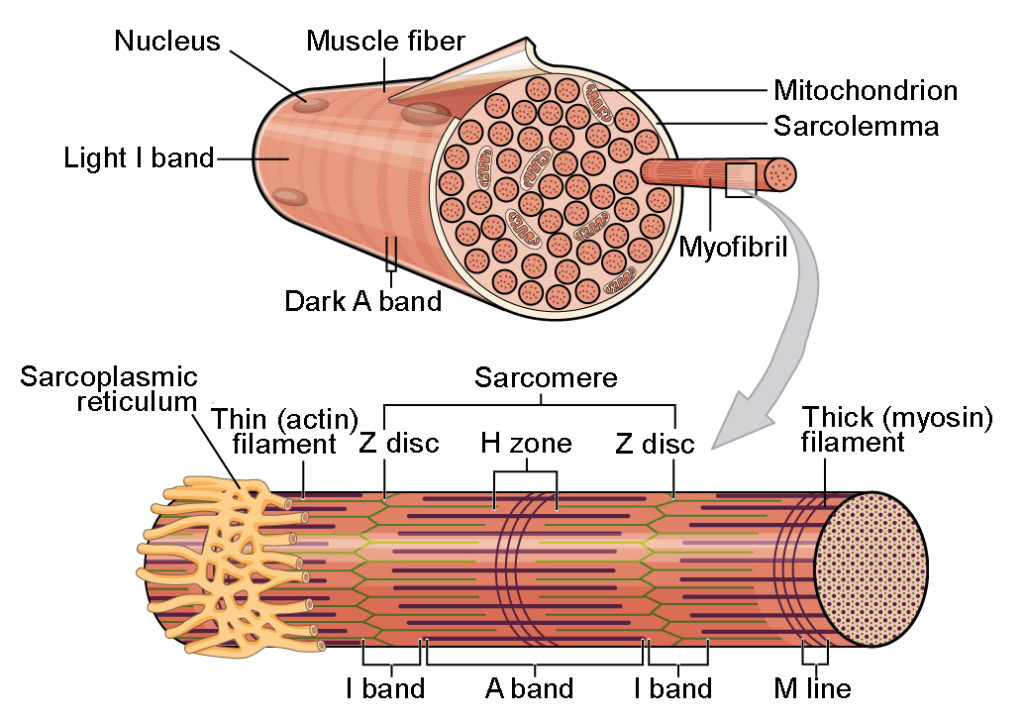
sacromere = thin and thick filaments
- thin and thick filaments are organized in repeating functional units
- each myofibril has linear arrangement of up to 10,000 sarcimeres
- banded appearance (striation) due to arrangement of thick and thin filaments
- interaction of thick and thin filaments responsible for contraction
motor unit
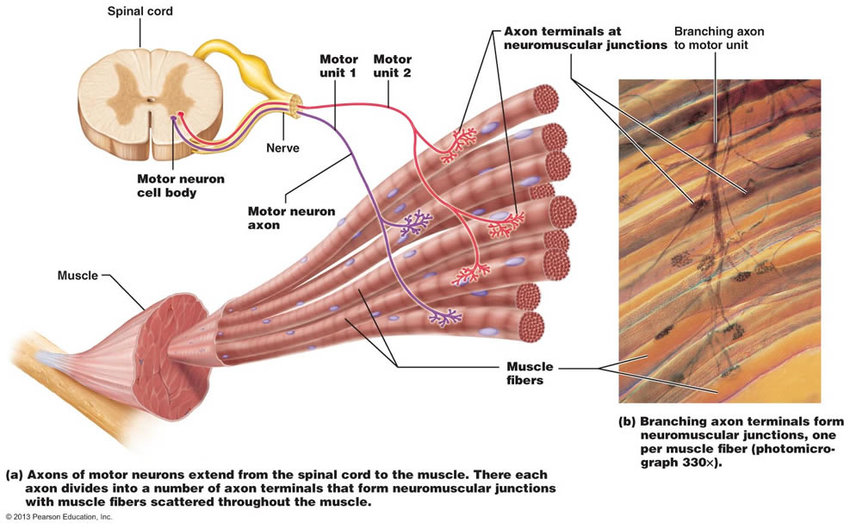
- all muscle fibers that are controlled bu a single motor neuron (axon)
- the lower the ration of muscle fibers to neurons, the more precise the movement can be
- ratio is from 1:1 to 1:2000
- acetylcholine is the neurotransmitter at the motor plate end
- contraction of a motor unit is “all or nothing”
muscle control
- muscle tone
- resting tension of skeletal muscles
- recruitment or multiple motor unit summation for greater force
- some directional control depending on which motor units are stimulated
muscle hypertrophy vs atrophy
- hypertrophy due to anaerobic exercise
- atrophy if supply of myofilaments exceeds demand. muscle fibers become smaller and weaker
- eventual death of muscle fibers is irreversible!
three types of skeletal muscle fibers
- slow (or red)
- fast glycolitic fibers
- fast oxidative fibers
- most skeletal muscles contain a mixture of fiber types
- one motor unit only contains one fiber type
slow fibers
- slow but continuous contraction for extended periods
- smaller diameter
- contain myoglobin
- more capillaries
- more mitochondria
- do not fatigue as fast due to aerobic production of ATP
fast glycolitic fibers
- fast contraction after nervous stimulation
- large diameter
- larger glycogen reserve
- fewer mitochondria
- densely packed myofibrils
- fatigue fast
fast oxidative fibers
have attributes between slow and fast
muscle terminology
- flexor → extensor
- origin → insertion
- agonist → antagonist
- agonist is the prime mover
- syngerist
naming of the skeletal muscles
- orientation of fibers
- size and shape
- location
- action
- origin and/or insertion
- specific features
use muscle name to help identify its location, appearance and function
grouping of muscles according to primary action
- agonist → prime mover
- synergists → assistant mover