The BLUES
Blues can mean—
Flexible inflected sound
A harmonic pattern
A poetic form
A people’s spirit
A sad feeling
Earthy funky type of music
Triumph through hard times
Doesn’t have to be sad, but often is about coming through hard times
Geographic development
The south along the Mississippi river and the Mississippi Delta area – Louisiana (New Orleans), Mississippi, Arkansas, Tennessee
(Mississippi Delta Area)
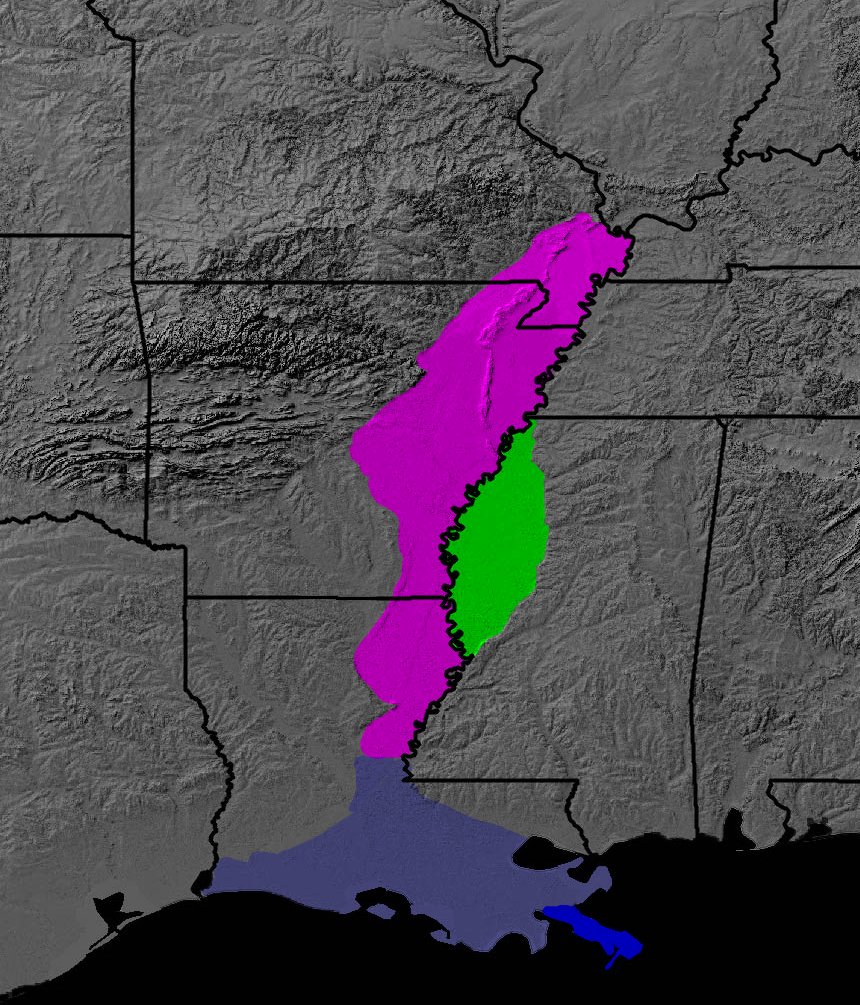
Blues Roots/Musical Influences
Blend harmonies with African vocal style
African Influences on the Blues
African singing style – expressive, rough vocal tones
Freely moving vocals – voice floats free above strict rhythmic accompaniment
Inflected vocal style (like talking drums)
Syncopations, rhythmic vitality
Call-response – especially in group work songs (Leader sings a “call” – an opening phrase of music, and group sings a following “response” phrase
Western European Influences
Religious Music/Church Hymns – four-part harmony with melody on top
Harmonies – regular harmonic progression, blend harmonies with African vocal style
Short equal verses
Regular four-beat patterns
American Roots
Blues began to crystallize in 1890’s from many elements
Group work songs of laborers in Mississippi Delta region – steady underlying rhythm, often in call-response format
Solo field holler – solo voice, free rhythm, with slow inflected style
Street vendor cries of uptown blacks in New Orleans – used expressive variations in pitch and vocal quality
Inflected vocal styles of field holler and street vendor – rises and falls – leads to blue note in blues music
Spirituals/religious music – blended European church music and African vocal style
Blue note
Bending and flatting the pitch
Adds feeling and expression
Evolves from solo field holler and street vendor cries (roots in African inflected vocal style)
The Blues developed into an American popular song style in the 1920’s
Starts off as vocals only
Added instruments later
Early Instruments
Guitar and banjo
Also used the harmonica – called the blues harp
In urban areas – voice was often accompanied by small combos (small combination of instrument) – piano, cornet/trumpet (the cornet was a trumpet-like brass instruments used in military bands)
Musical Techniques and Characteristics
Blue note – in voice and instruments
String bending – pull on the strings and “bend” them to get blue notes on the guitar
Bottleneck slide – use broken necks of bottles around little finger to slide on the strings
Classic Blues Poetic Form - Lyrics
Song unfolds in a series of three-line stanzas in which the first two lines are the same (AAB form)
Line 1 (A) – statement (call)
Line 2 (A) – repeat line one (with same melody)
Line 3 (B) – complete statement/give response – different text from first two lines with different melody
Lines A and B often rhyme, but not always
Stanza 1 –
I was with you, baby, when you did not have a dime (A)
I was with you, baby, when you did not have a dime (A)
Now since you got plenty of money, you have throwed your good gal down (B)
Stanza 2 –
Once ain't for always, two ain't for twice (A)
Once ain't for always, two ain't for twice (A)
When you get a good gal, you'd better treat 'em nice (B)
Classic Blues Harmonic Pattern – The 12-Bar Blues
The 12-Bar Blues is the main harmonic structure of the blues
It is three basic chords—built on 1st, 4th, and 5th degrees of the major scale – shown by the Roman numerals I, IV, and V
The three chords correspond with the three lines of each stanza of lyrics
It is called a 12-bar blues because it take 12 bars of musical time
12-bar blues pattern (basic harmonic template)
I (home pitch) (4 bars of time) – 1st line of lyrics (A) – statement/call
IV – I (4 bars of time) – 2nd line of lyrics (repeat of 1st line statement) (A)
V – I (4 bars of time) – 3rd line of lyrics – response/complete the statement (B)
Always come back to home pitch at the end of each 4 – bar phrase
I was with you, baby, when you did not have a dime (I/Home)
I was with you, baby, when you did not have a dime (IV-I)
Now since you got plenty of money You have throwed your good gal down (V-I)Stanza 2
Once ain't for always, two ain't for twice (I)
Once ain't for always, two ain't for twice (IV-I)
When you get a good gal You'd better treat 'em nice (V-I)
Stanza 3
When you were lonesome, I tried to treat you kind (I)
When you were lonesome, I tried to treat you kind (IV-I)
But since you've got money It done changed your mind (V-I)
Stanza 4
I'm goin' to leave, baby, I ain't gonna say goodbye (I)
I'm goin' to leave, baby, I ain't gonna say goodbye (IV-I)
But I'll write you And tell you the reason why (V-I)
Stanza 5
Days are lonesome, nights are long (I)
Days are lonesome, nights are so long (IV-I)
I'm a good old gal But I just been treated wrong (V-I)
Classic Blues Style – Female Singers
Primarily female singer backed by a band/combo
Powerful and gut vocal styles
Early female blues singers were inspiration for later female rock singers and soul singers
Bessie Smith (1894-1937)
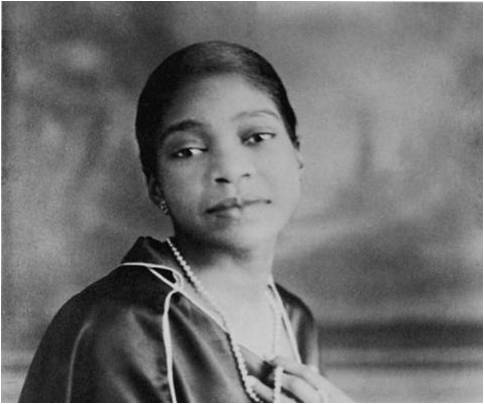
An early blues recording artist in the classic blues style
Known as The Empress of the Blues
Was able to cross over to white audiences
Biggest earning black entertainer of her era
Western/European Influences on
Blues
• Church hymns – four-part harmony with
melody on top
• Harmonic progression
• Short equal verses
• Four-beat pattern