Business Management L2
Operations Management
Operations management is about organizing and overseeing business activities to run as efficiently as possible. Its main goal is to turn materials and labor into goods or services in a way that maximizes profit for the organization.
To make sure the right results are achieved, an organization must track and measure different parts of the production process. It should also compare current performance to past data (benchmarking) to see where improvements can be made.
Goals: Maximize profit through efficient output and measuring transformation processes against historical data.
Historical Evolution Operations Management
Origins:
Industrial Revolution beginning in the 1770s, progressing from craft production to mass production.
This refers to the shift from handmade, custom work (craft and artisan) to mass production. The invention of the steam engine made it possible to power machines, leading to faster and more consistent production. This change also allowed managers to observe work, analyze how tasks were done, and make improvements to increase efficiency.
Mass Production Principles
Mass Production – A system in which low skilled workers use
specialized machinery to produce high volumes of standardized goods.
Key Elements:
Division of Labor: Breaking operations into small, manageable tasks.
Standardization: Eliminating custom requirements to optimize assembly time.
Impact of Assembly Lines
Significance: Assembly lines enabled the production of high volumes of standardized products and were critical to industrial productivity increases.
Benefits:
Affordability of products, employment of unskilled workers, and improved living standards in industrial towns.
Core Functions of Operations Management
Ongoing Activities: Producing repetitive and long-term outputs such as products and services.
Objectives: Ensure smooth, cost-effective operations while meeting quality standards.
Importance of Operations Management
Central Role: Viewed as the engine room of business; impacts every aspect of operations, with other departments supporting sales and operations. There are only two lines functions within an organization, sales and operations every other function supports these two-line
functions including, finance, marketing, and IT.
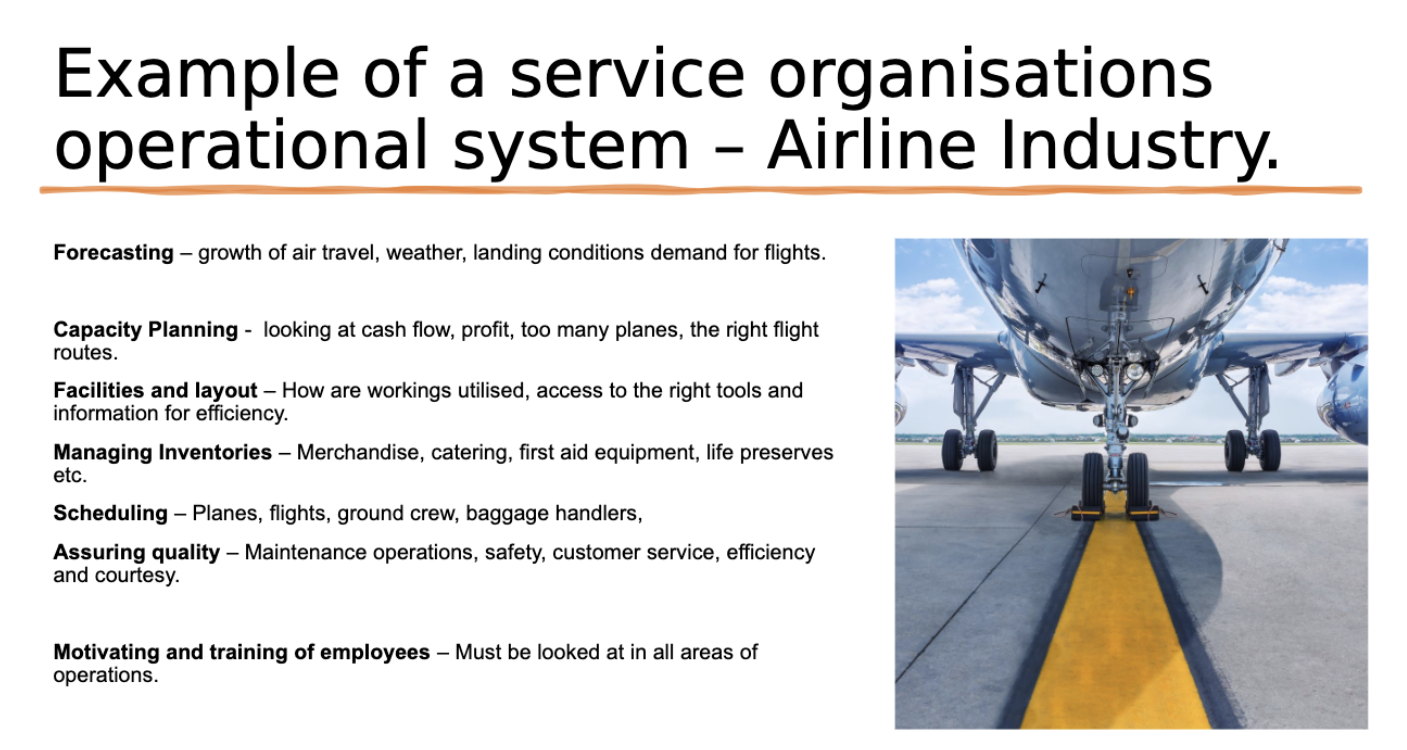
Operational Activities in Airlines
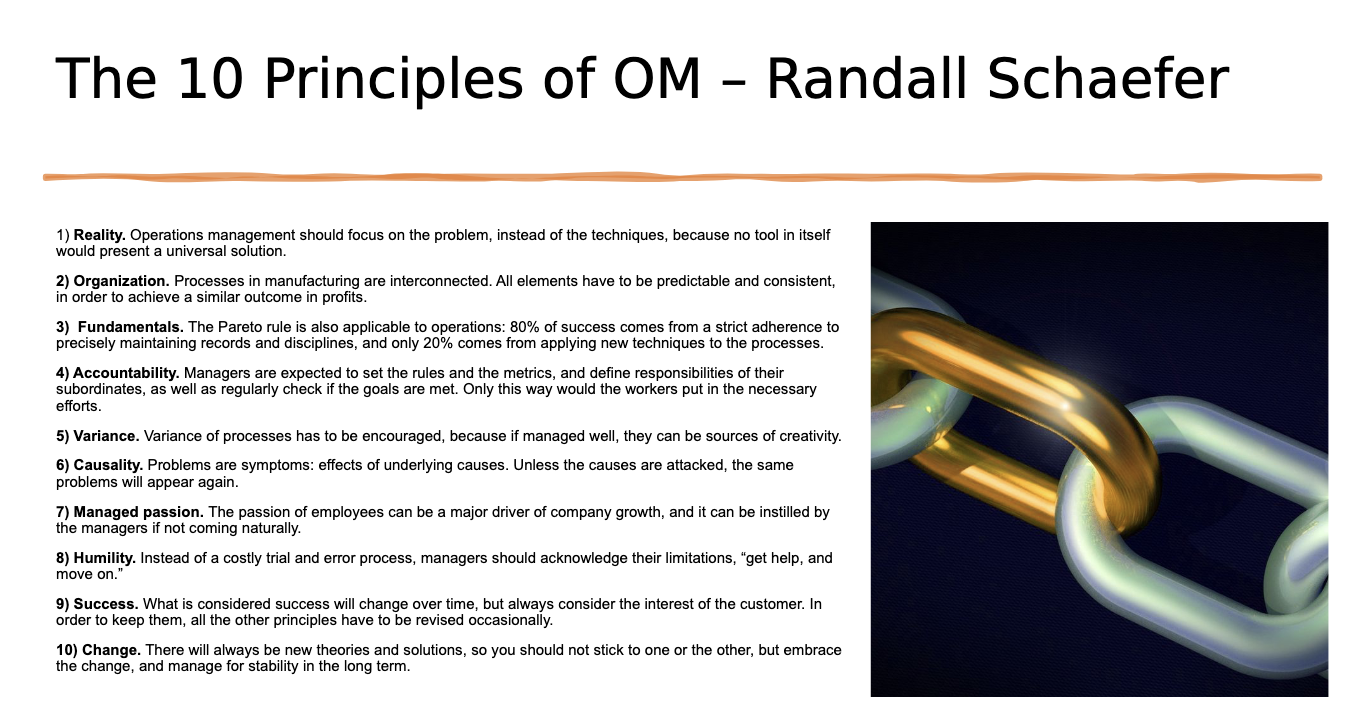
The 10 Principles of Operations Management (Randall Schaefer)
Tools and Methodologies in Operations Management
Kaizen Philosophy
Originated from the Toyota Production System, emphasizing continuous improvements through small, manageable changes.
With small and simple changes, your company can easily increase its productivity and will be able to provide customers with better service as well.
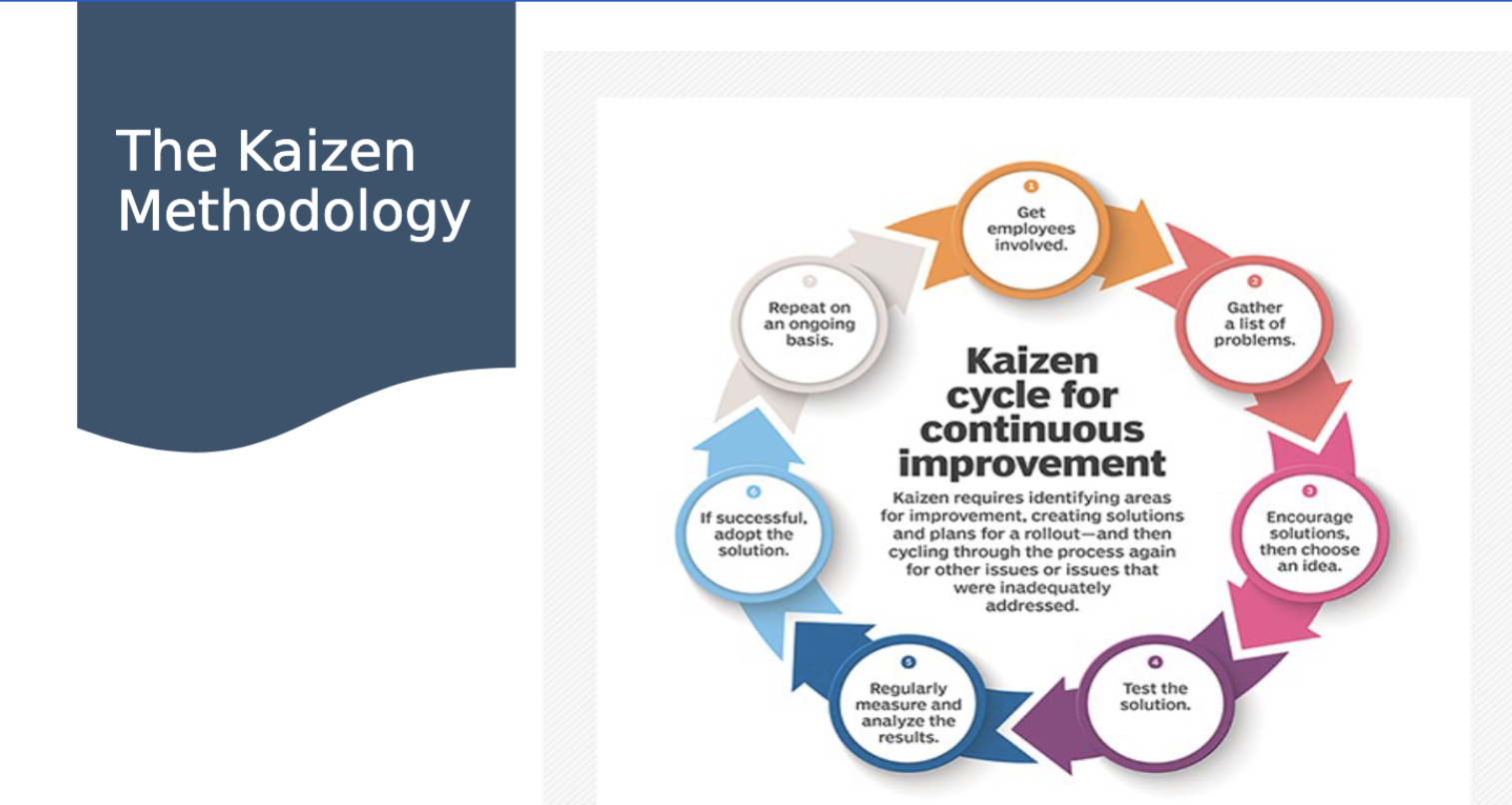
Kaizen Cycle:
Identify problems, develop solutions, implement, and review.
The Kaizen Methodology
Japanese Business Philosophy
Kaizen is a Japanese business philosophy that focuses on gradually improving productivity and making a work environment more efficient.
Kaizen supports change from any employee at any time.
Kaizen translates to change for the better or continuous improvement.
Kaizen's small changes can involve quality control, just-in- time delivery, standardized work, the use of efficient equipment, and the elimination of waste.
The Kaizen methodology underscores that small changes now can have big future impacts.
Lean Methodology
Lean manufacturing is a management approach focused on reducing waste and improving efficiency in production. It comes from the Toyota Production System (TPS) and aims to deliver more value using fewer resources.
Key ideas include:
Just-in-Time (JIT): Making or delivering items only when needed, to cut down on storage and costs.
Kaizen: A focus on continuous improvement in processes, products, and employee skills.
The main goal is to provide high value to customers while using less waste and fewer resources.
Modern Approaches
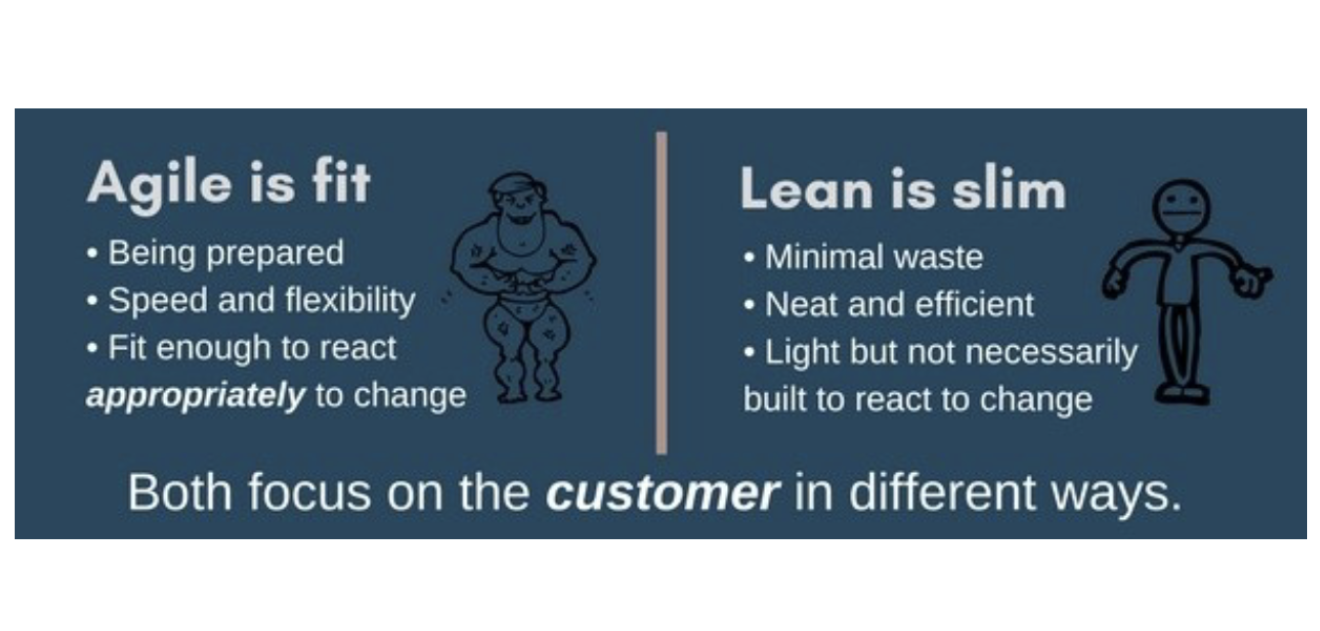
Lean production, introduced by Womack et al. (1990), comes from the successful Toyota Production System. It aims to eliminate all types of waste in production and focuses on being efficient by doing more with less. This minimalist approach helps improve daily operations and overall business performance.
A good example is Amazon, which uses lean principles to streamline operations and stay focused on delivering value to customers.
Agile Manufacturing
Agile manufacturing, focuses on a company's ability to quickly adapt to changing market demands. It allows businesses to switch goals and products based on customer needs.
This flexible approach has become more practical and widespread thanks to advanced technology, which makes fast changes and customization easier.
Benefits: Aligns with consumer desires for speed and customization in delivery.
Agile Working and Manufacturing
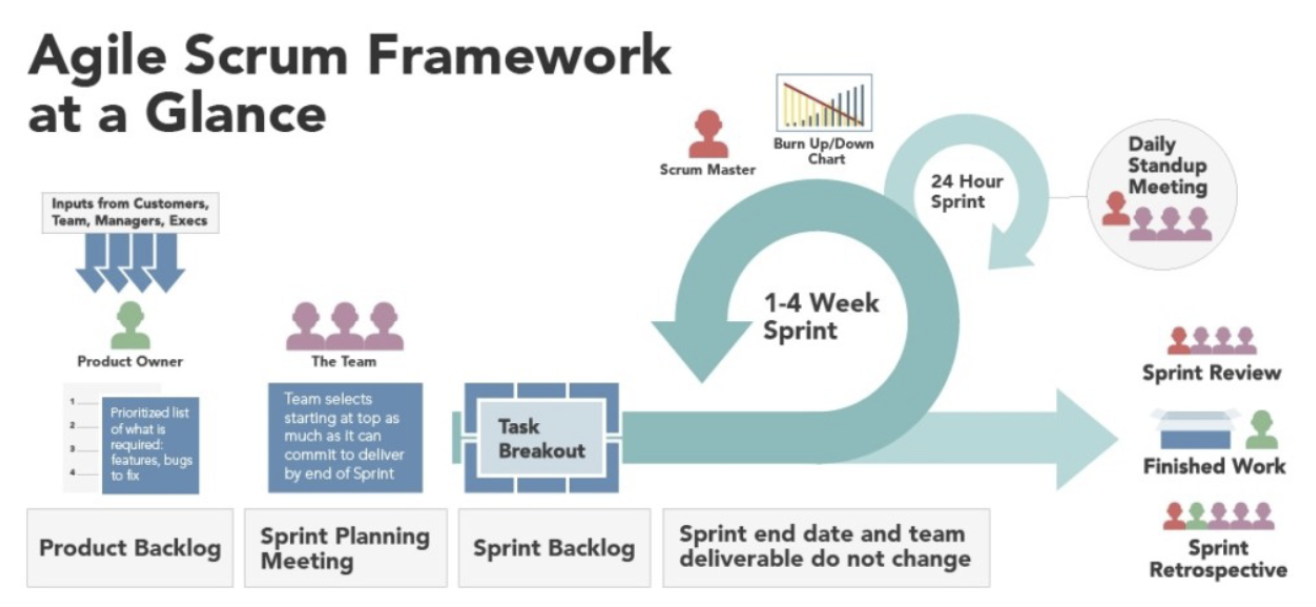
Agile methodology is a project management approach that splits work into short, repeatable phases called sprints.
After each sprint, the team reviews what went well or needs improvement and makes changes for the next sprint. This iterative process helps teams stay flexible and improve continuously.
Why is Agile Manufacturing Effective?
Agile manufacturing is effective because it recognizes the challenges of today’s marketplace and turns them into competitive advantages. It addresses key consumer behaviors:
Instant gratification: Consumers expect fast delivery and are willing to pay for quick service, like overnight shipping.
Choice: Consumers prefer products tailored to their exact preferences, without compromising.
Unpredictability: Consumer interests change rapidly, and agile manufacturing allows companies to adapt quickly to these shifts.
By being flexible and responsive, agile manufacturing helps businesses meet these evolving demands.
Kanban
Kanban is a Japanese term that means "visual signal." In a kanban system, each work item is represented by a card on a board.
The purpose of using cards on the board is to provide a visual representation of work, allowing team members to easily track the progress of tasks as they move through different stages of the workflow. This helps improve organization and visibility of tasks within a team.
Core principles of the Kanban methodology
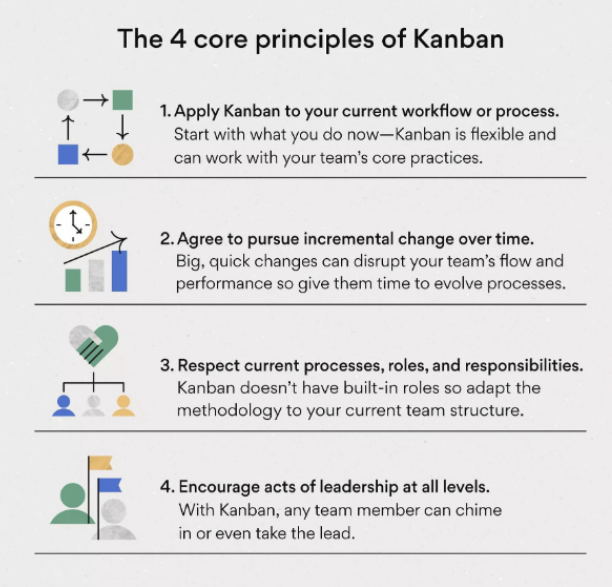
The Kanban methodology is based on core principles and practices to improve workflow and efficiency. These principles include:
Initiate with the existing workflow: Start by working with the current process and make small, continuous improvements over time.
Limit the existing tasks (WIP - Work In Progress): Teams should recognize their limits and avoid taking on too many tasks at once, as it can slow down progress and waste time.
Respect existing roles and responsibilities: The team should maintain respect for current roles and job responsibilities while working within the Kanban framework.
Encourage leadership at all levels: Leadership and decision-making should be encouraged at all levels within the team, empowering everyone to contribute to improvements.
These principles help teams stay organized, avoid overwhelm, and make gradual, effective improvements.
Scrum Methodology
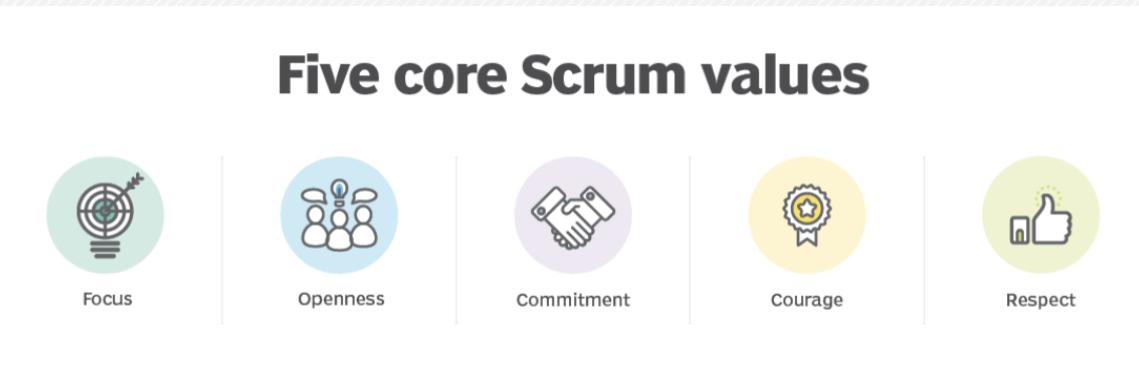
Scrum is a project management framework that helps teams self-organize and work together towards a common goal. It includes a set of meetings, roles, and tools to ensure efficient project delivery.
Similar to a sports team preparing for a match, Scrum encourages teams to self-manage, learn from their experiences, and adapt to changes throughout the project. This approach helps teams stay focused and continuously improve their performance.
Agile vs Scrum
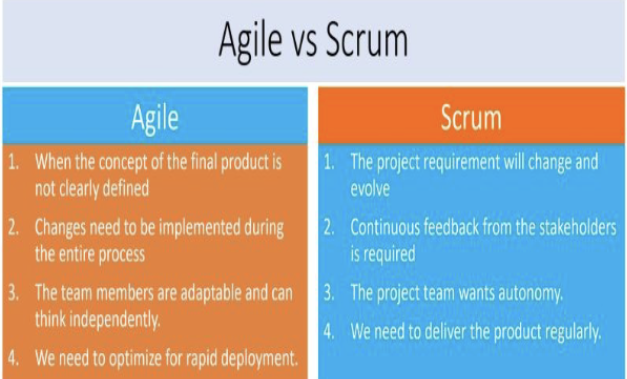
Agile is an approach to software development that focuses on continuous iteration of development and testing, with regular feedback. It emphasizes flexibility and collaboration across cross-functional teams.
Scrum, on the other hand, is a specific Agile process that focuses on delivering business value in the shortest time possible through sprints.
Here are the key differences:
Agile delivers software regularly for feedback, while Scrum delivers it at the end of each sprint.
Agile requires strong leadership, whereas Scrum fosters a self-organizing, cross-functional team.
In Agile, collaboration happens through ongoing interactions between team members, while in Scrum, collaboration is structured around daily standup meetings.
Agile emphasizes simplicity in design and execution, whereas Scrum allows for more innovative and experimental designs.
In essence, Scrum is a more specific framework within the broader Agile methodology.
Six Sigma
Six Sigma is a method used to measure and improve process quality, with the goal of achieving near-perfect results. It focuses on reducing errors in the production process, aiming to improve the final product across any applicable area.
This data-driven approach relies on management strategies to enhance process flow and end results.
The philosophy behind Six Sigma is simple: work smarter, not harder. It emphasizes making decisions based on data, improving process capability, and reducing or eliminating mistakes. As a result, the sigma rating (a measure of process quality) improves.