Cell Bio Exam 2
Metabolism:The sum of all reactions in a cell
Metabolites:A substance made or used when the body breaks down food, drugs or chemicals, or its own tissue
Anabolic pathways:synthesize cellular components, A lot are dehydration synthesis. Creating polymers from starch, glycogen, amino acids,and nucleotides. It is Endergonic.
Catabolic pathways:breakdown of cellular constituents, Often hydrolysis reaction of glucose and protein. It is exergonic
Chemotrophic energy metabolism:the reactions and pathways by which cells
catabolize nutrients and conserve the released energy in the form of ATP
Oxidation:is the removal of electrons
Reduction:the addition of electrons, is an endergonic process
Glucose :Six-carbon sugar that is the main energy source for most of the cells in the body
Obligate aerobes:have an absolute requirement for oxygen
Obligate anaerobes:cannot use oxygen as an electron acceptor; oxygen is toxic to these organisms
Facultative organisms:can function under aerobic or anaerobic conditions
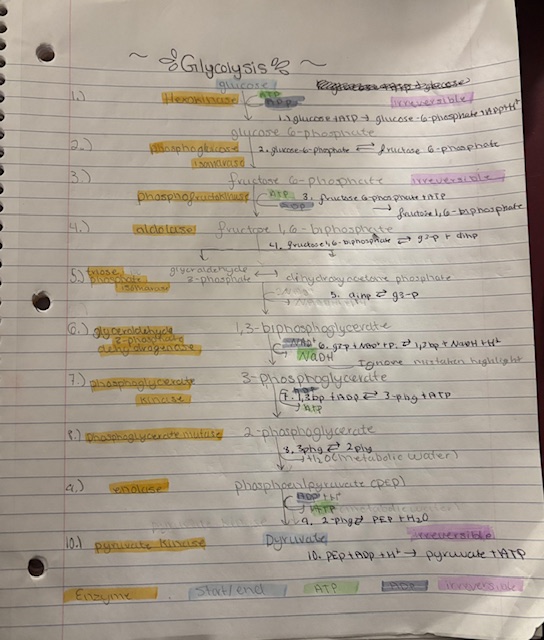
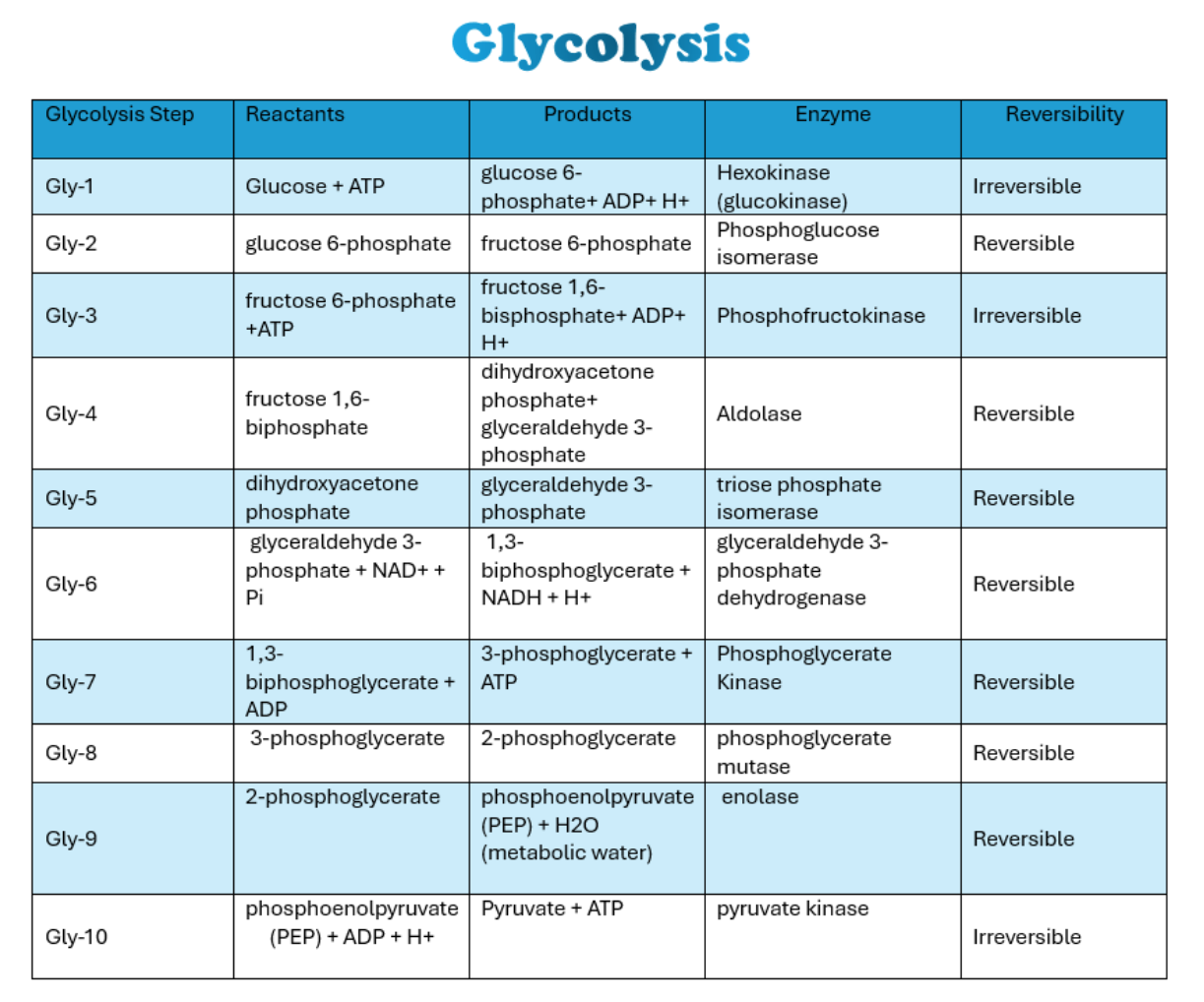
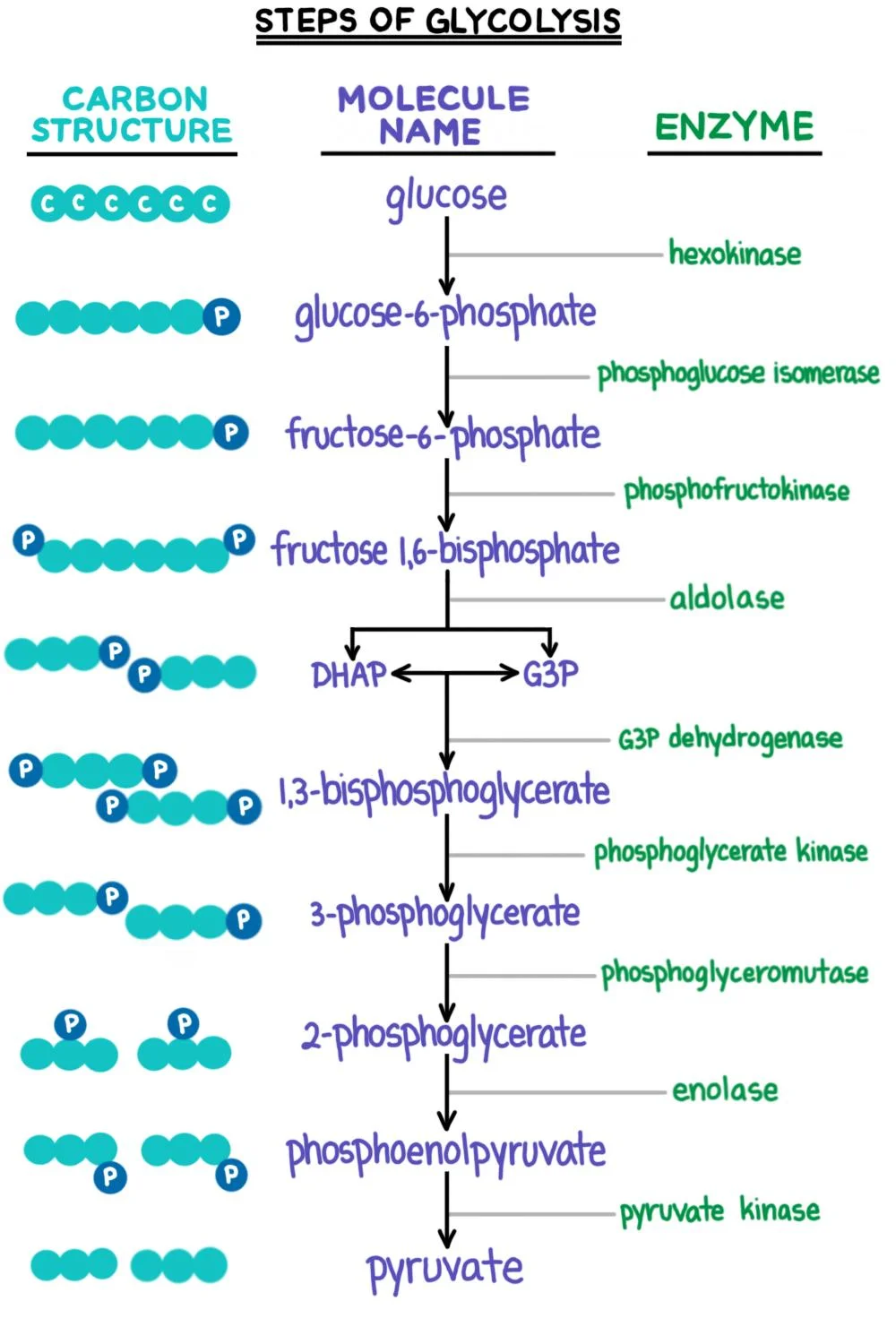
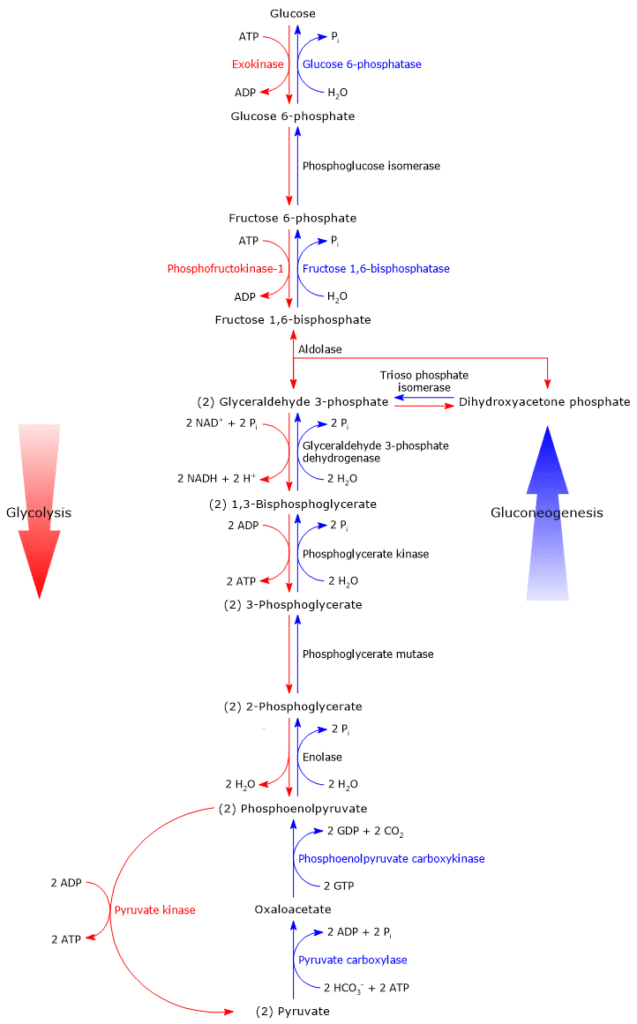
Glycolysis (or the glycolytic pathway):is a ten-step reaction sequence that converts one glucose molecule into two molecules of pyruvate
Gly-1
Reactants: Glucose + ATP
Product(s): glucose 6-phosphate+ATP+H+
Enzyme: Group Hexokinase in mammalian liver cells it is glucokinase
It is Irreversible
Gly-2
Reactants: glucose 6-phosphate
Product(s):fructose 6-phosphate
Enzyme: phosphoglucose isomerase
It is reversible
Gly-3
Reactants: fructose 6-phosphate+ATP
Product(s): fructose 1,6-bisphosphate+ADP+H+
Enzyme: phosphofructokinase
It is irreversible
Gly-4
Reactants: fructose 1,6-biphosphate
Product(s):dihydroxyacetone phosphate+ glyceraldehyde 3-phosphate
Enzyme: aldolase
It is reversible
Gly-5
Reactants: dihydroxyacetone phosphate
Product(s): glyceraldehyde 3-phosphate
Enzyme: triose phosphate isomerase
It is reversible
Gly-6
Reactants: glyceraldehyde 3-phosphate + NAD+ + Pi
Product(s): 1,3-biphosphoglycerate + NADH + H+
Enzyme: glyceraldehyde 3-phosphate dehydrogenase
It is reversible
Gly-7
Reactants: 1,3-biphosphoglycerate + ADP
Product(s): 3-phosphoglycerate + ATP
Enzyme: Phosphoglycerate Kinase
It is reversible
Gly-8
Reactants: 3-phosphoglycerate
Product(s): 2-phosphoglycerate
Enzyme: phosphoglycerate mutase
It is reversible
Gly-9
Reactants: 2-phosphoglycerate
Product(s): phosphoenolpyruvate (PEP) + H2O (metabolic water)
Enzyme: enolase
It is reversible
Gly-10
Reactants: phosphoenolpyruvate (PEP) + ADP + H+
Product(s): Pyruvate + ATP
Enzyme: pyruvate kinase
It is irreversible
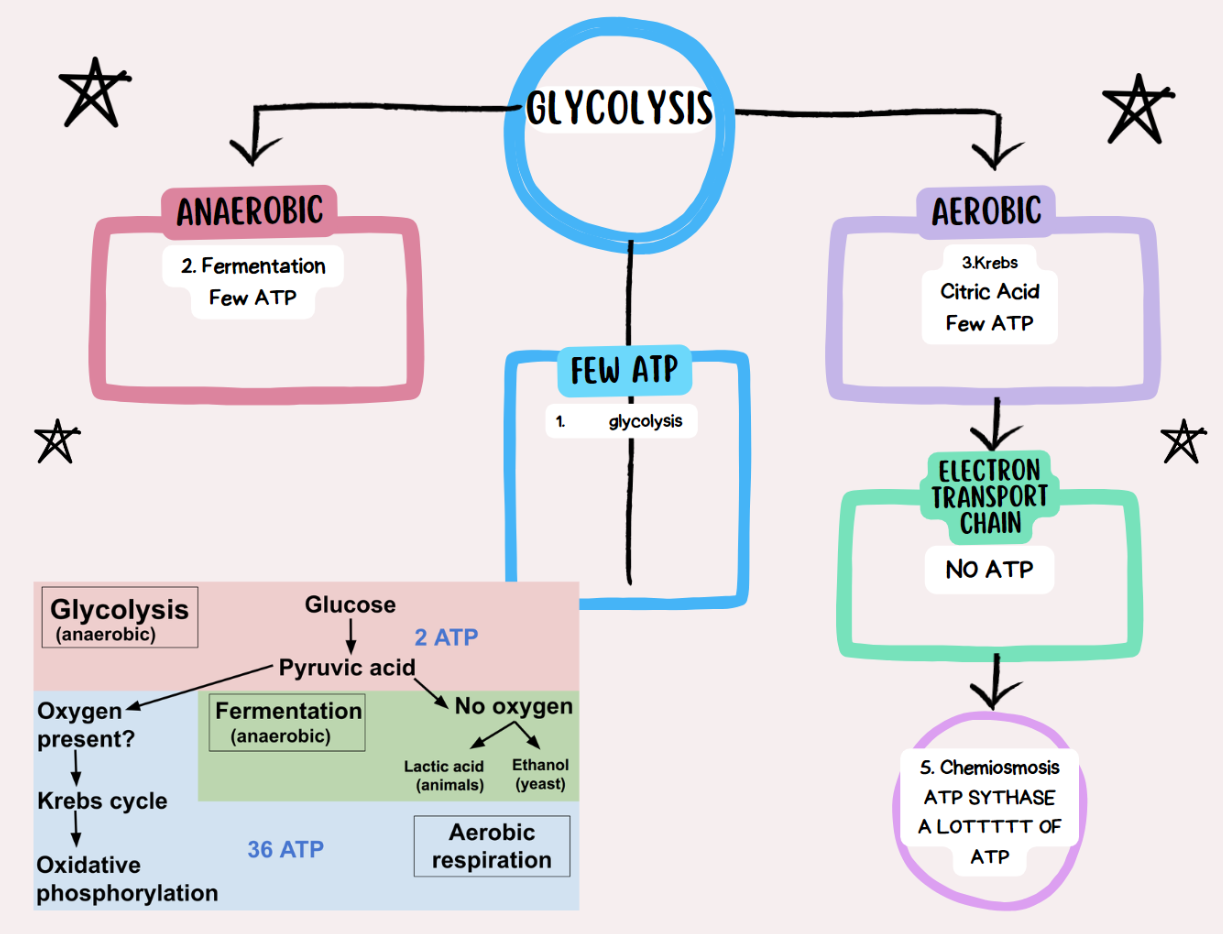
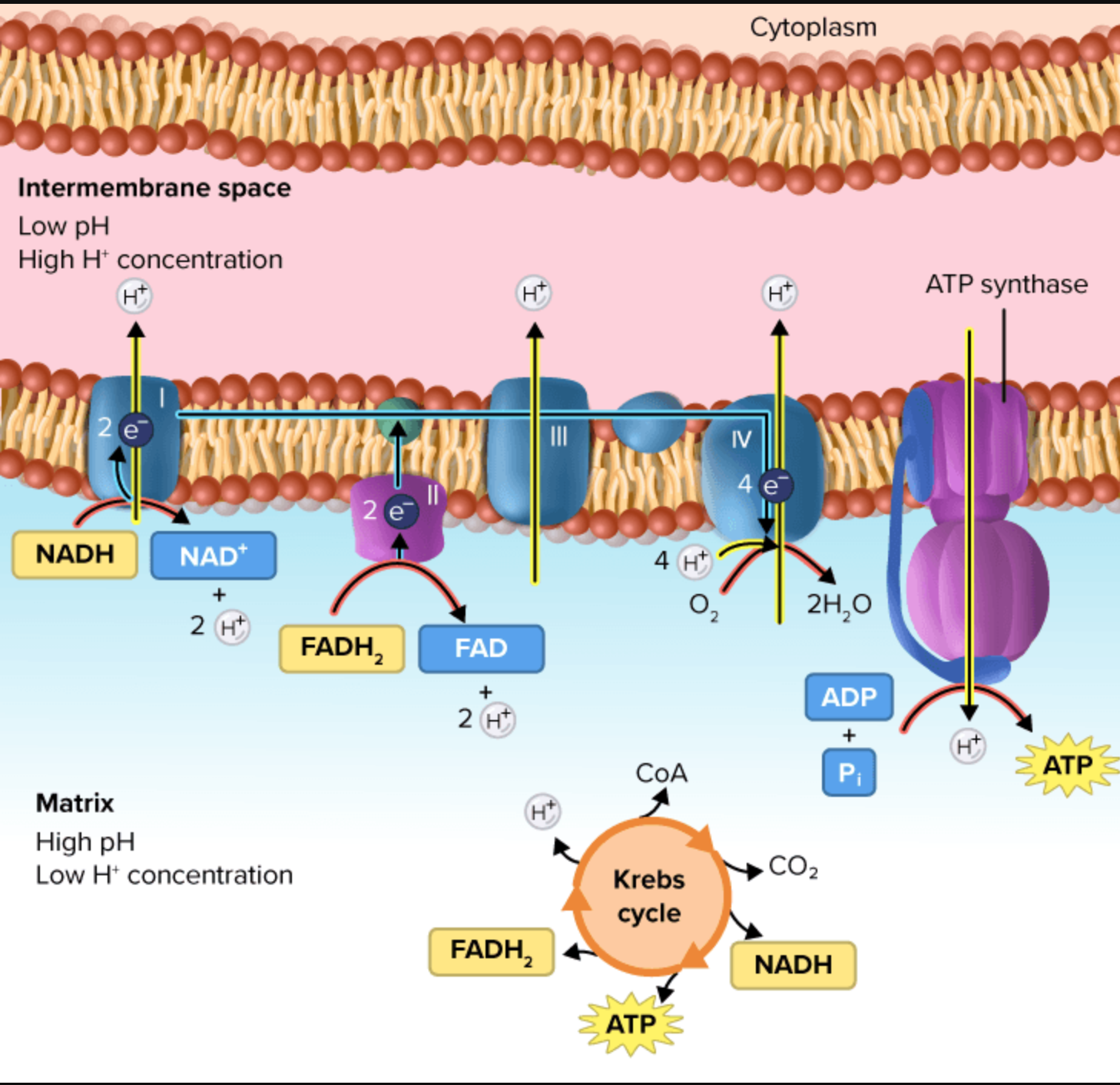
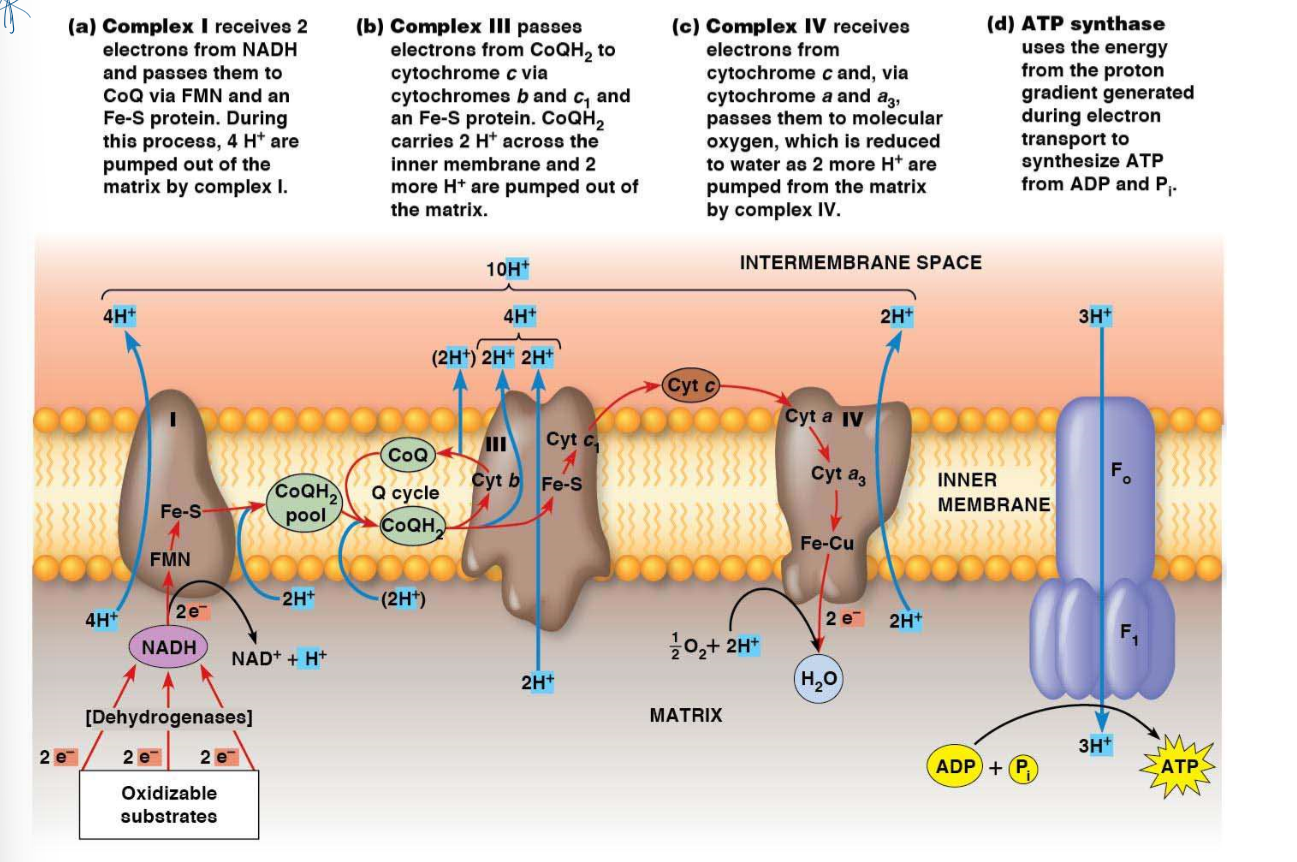
Oxidative phosphorylation: is made up of the electron transport chain and chemosomsis
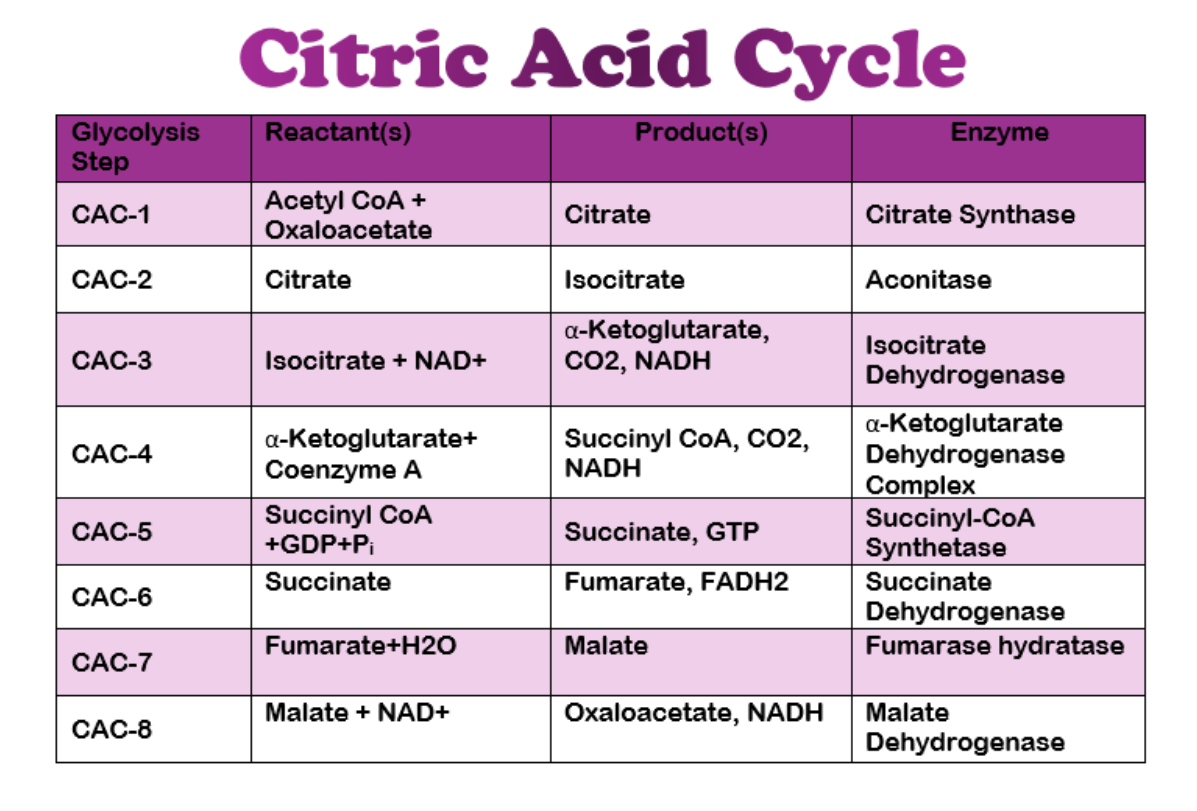
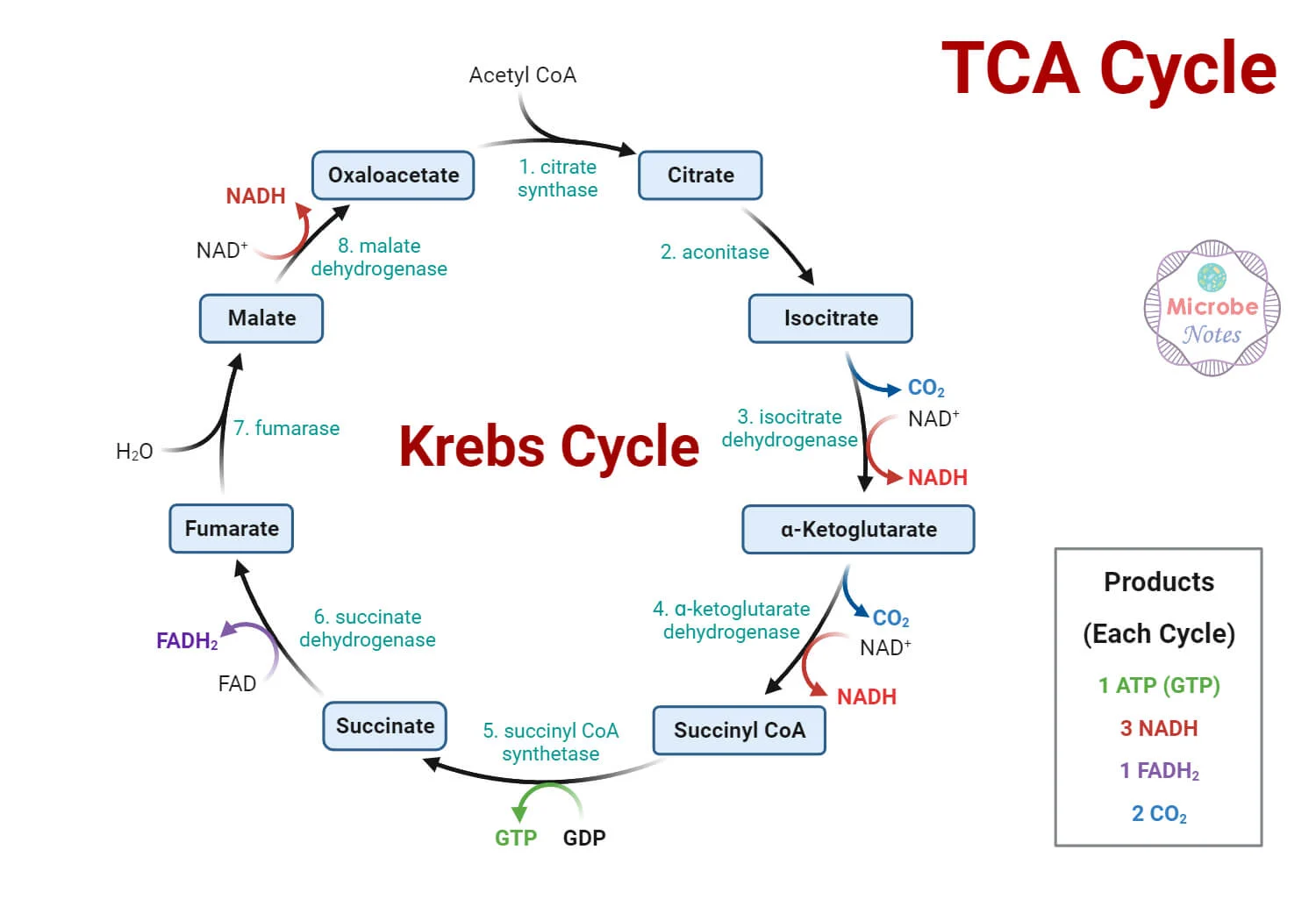
Citric acid cycle (CAC) can also be called the Krebs cycle
Overall how many ATP are created through aerobic cellular respiration? Gross 34 net 32 because transport
The ATP/ADP pair represents a reversible means of conserving, transferring, and releasing energy within the cell