PM150 Lecture 10 - Simple Lipids WATCH LECTURE RECORDING
Lipids
Lipids are a large and varied group of compounds with a number of biological functions:
Major structural elements of membranes
Fuel molecules and can act as energy stores (e.g. TAGs)
Some lipids act as hormones, intracellular messengers and vitamins
Some lipids have specialist functions e.g. protective and insulating barriers as in leaf cuticle or the bile salts that act as biological detergents in digestion.
Lipids are “simple” or “complex”
Simple: Waxes and neutral lipids (storage fats)
Complex: Phospholipids and glycolipids that have a structural role.
Simple lipids
Are esters- which contain the -O- alkyl group
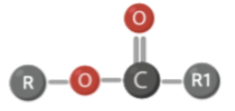
Their hydrolysis yields an alcohol and fatty acids. The fatty acids are typically long chain (more than fourteen carbon atoms).
e.g. waxes are esters formed from a long chain fatty acid and a long chain alcohol; a typical example of a wax is myricyl palmitate, which is the ester formed from myricyl alcohol and palmitic acid and is the major component of beeswax.
Structure of Fatty acids
The general formula of fatty acids:
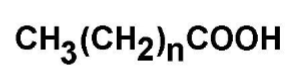
Saturated fatty acids: contain no carbon-carbon double bonds. The most abundant examples are palmitic and stearic acids (where n = 16 and 18 respectively).

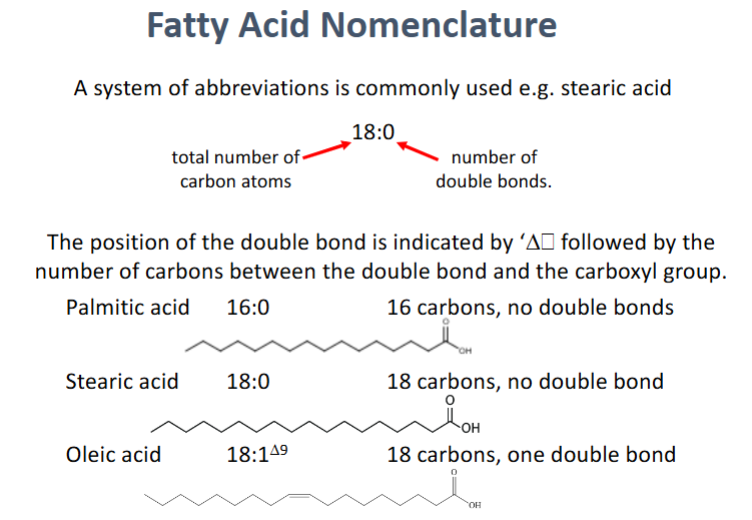
Fatty acids have “common” and “systematic” names
Systematic name is derived from the name of the parent hydrocarbon with substitution of the suffix (-oic in place of -e)
e.g. for stearic acid (18 carbons), the parent hydrocarbon is octadecane and the systematic name is octadecanoic acid.
Unsaturated fatty acids: have carbon-carbon double bonds in the fatty acid chain. Monounsaturated fatty acids have a single double bond whereas polyunsaturated fatty acids have more than one.

Systematic nomenclature of unsaturated fatty acids: the suffix -e of the parent hydrocarbon is replaced with:
-enoic for one double bond
-dienoic for two
-trienoic for three
We can have octadecenoic, octadienoic and octadecatrienoic acids.
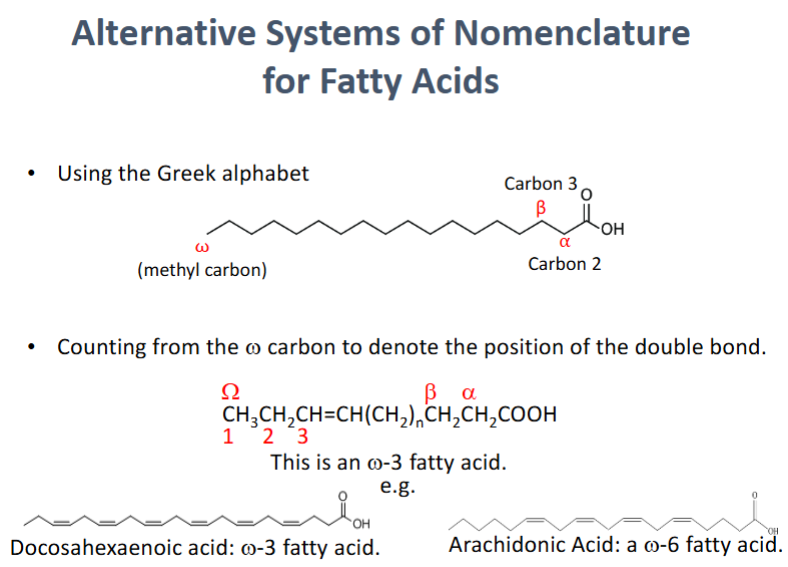
Alternative nomenclature:
Omega
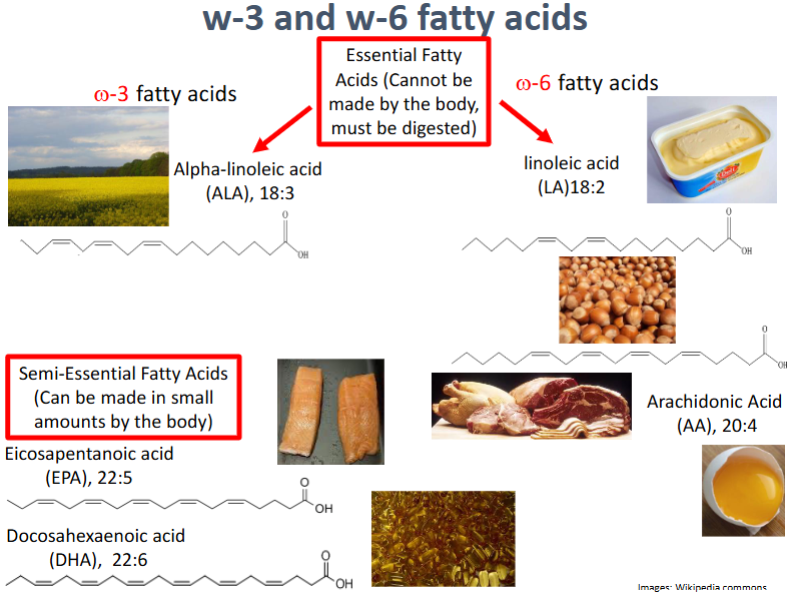
Essential fatty acids - essential because body cannot make it. dependent on diet
w-3 fatty acids health implications: regulates blood cholesterol, reduces blood pressure, maintains health brain health, important in foetal development
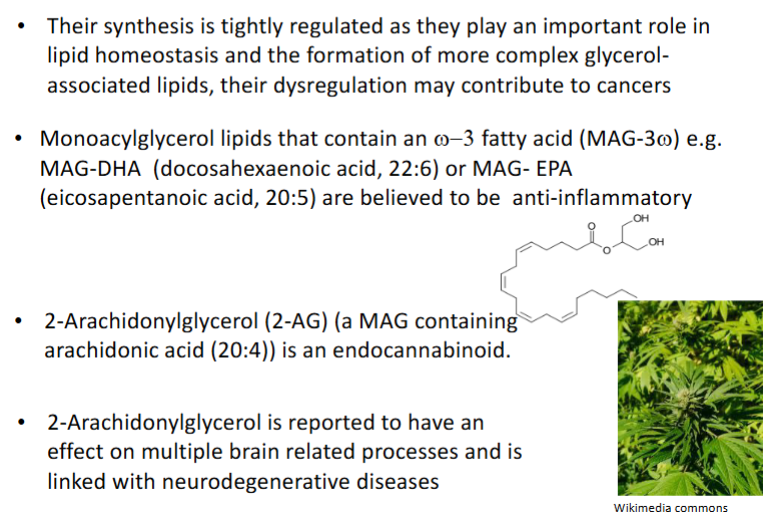
w-6 fatty acids as precursor molecules: arachidonic acid and linoleic acid are important molecules that can be used to synthesise endocannabinoids and eicosanoids
Fatty acids have many roles associated with the membrane
Signalling molecules
Disease pathology, clinical outcomes
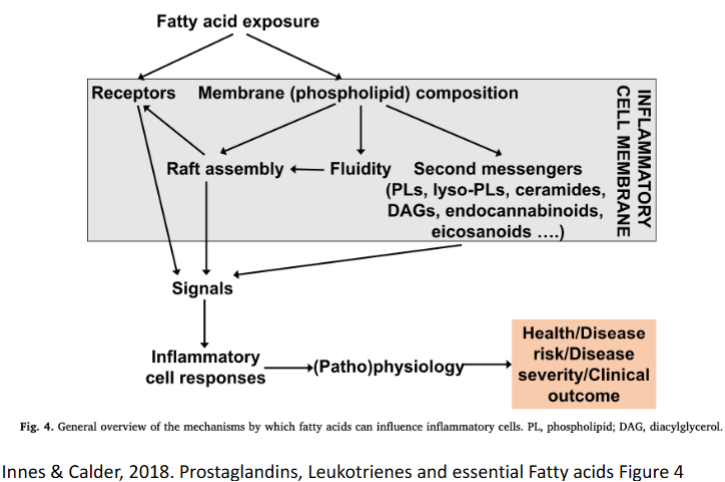
General features of naturally occuring fatty acids
Fatty acids found in nature tend to have an even number of carbon atoms
However odd chain fatty acids are present in small amounts in nature, generally in plants and microorganisms.
C11-C33 are present in small amounts (up to 3%) in the animal kingdom, usually present in ruminant fat and milk.
The most common odd chain fatty acids are C15 and C17.
Fatty acids from animals are generally unbranched (straight chain)
The configuration of the double bonds in most fatty acids is cis, not trans
The double bonds in polyunsaturated fatty acids are separated by at least one methylene group (never conjugated)
Categorisation of fatty acids
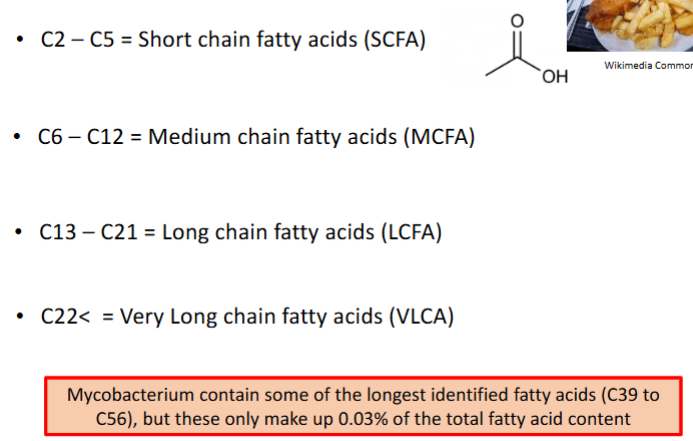
Fatty acids can be categorised according to their length
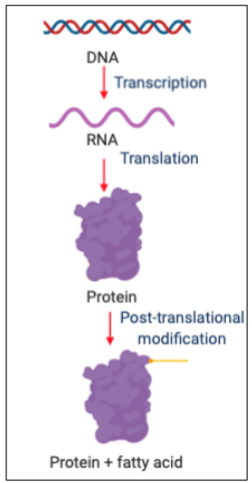
Protein modification by fatty acids
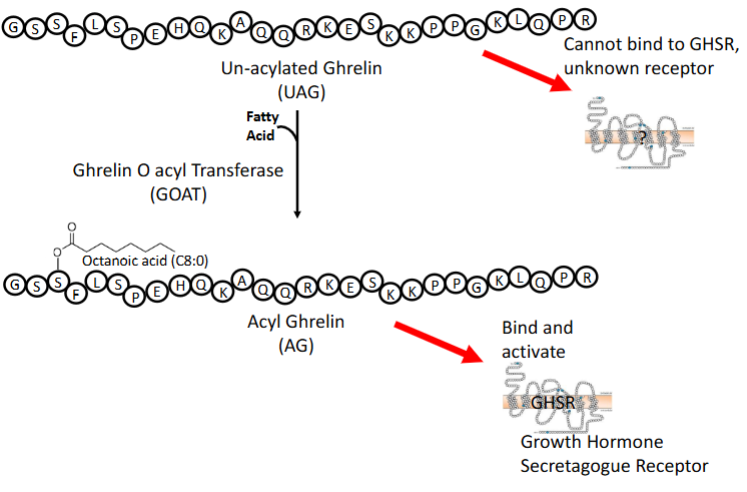
Post-translational modification of proteins with a fatty acid
Alter protein function e.g. alter their localization within a cell, facilitate attachment to a cell membrane or specific receptor.
New area of research
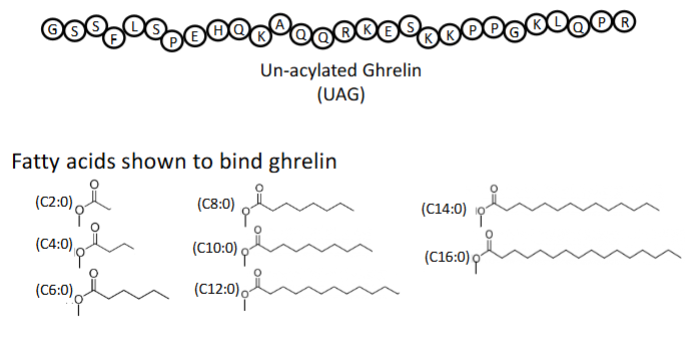
Fatty acids reported to bind to proteins
C2:0, C4:0, C6:0, C8:0, C10:0, C12:0, C14:0, C16:0, C16:1, C18:0, C20:4 (most reported to bind to proteins)
The effect of modification by fatty acids
Ghrelin - a stomach hormone that travels to the brain to cause the sensation of hunger
Only active when bound to a fatty acid
Summary - Learning outcomes for simple fatty acids
Fatty acids can be saturated or unsaturated (MUFAs or PUFAs)
Fatty acids can contain various number of carbon atoms and can be classified accordingly
Can be classified according to the location of the double bond (e.g. w-3 and w-6 fatty acids
Involved in membrane structure and precursors for many important signalling molecules
The degree of saturated will ultimately affect the physical properties of the fatty acid
Can be attached to proteins to alter signalling properties
Complex lipids part 1
Fatty acids and glycerol
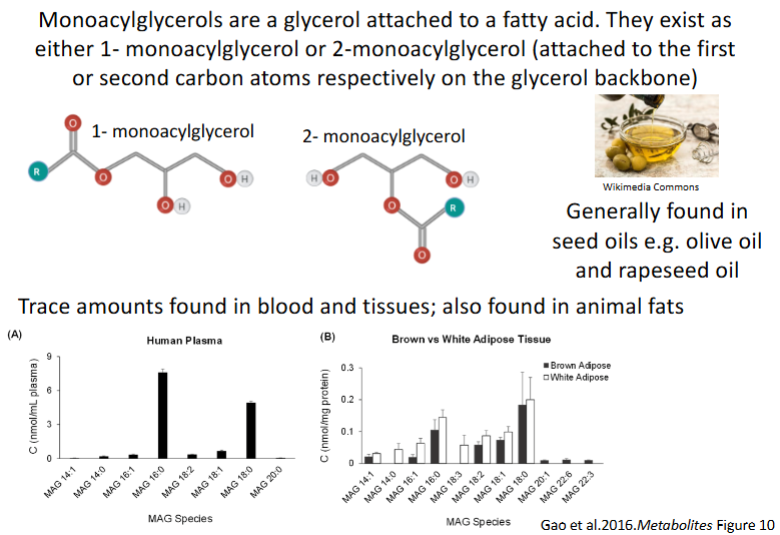
Only a very small percentage of fatty acid residues present in living systems exist as free fatty acids, they are normally found esterified to a glycerol moiety.
Glycerol is a simple polyol that forms a backbone for many complex lipids.
Monoacylglycerides (MAGs)
Diacylglycerols
Are two fatty acid residues esterified to glycerol.
Exist either as 1, 2-diacylglycerols or 1,3-diacylgylcerols
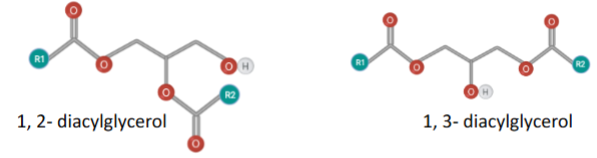
Acyl migration can occur, so these forms can be in equilibrium
Common diacylglycerols contain C14:0, C16:0, C16:1, C18:0, C18:1, C18:2
or C20:0
Are found in both animal and plant cells
Both monoacylglycerides and diacylglycerides are widely used as emulsifies in food products
Are formed either as a byproduct of triacylglyceride biosynthesis or its metabolism
Acts as secondary lipid mediators during cellular signaling
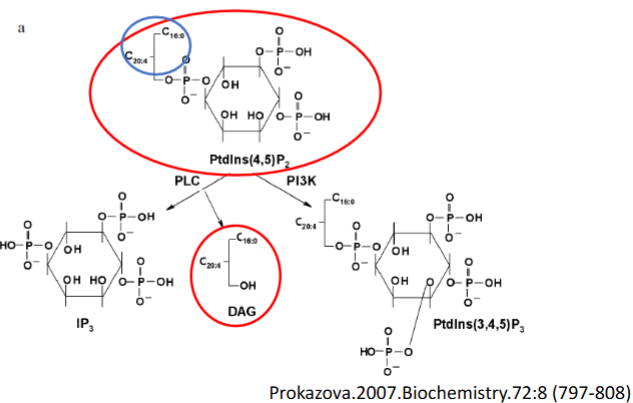
Diacylglycerides activates protein kinase C (PKC) and induces the release of intracellular CA2+
Fatty acid composition of some Diacylglycerols reported to be involved with cellular signaling - C18:0, C18:1, C18:2, C20:4
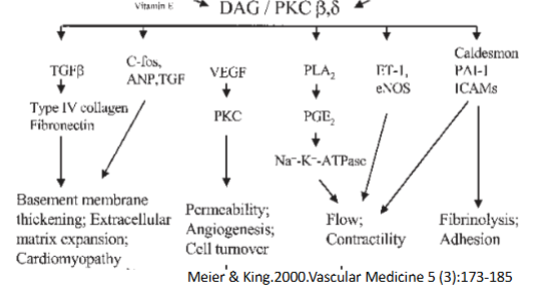
These processes are important for many aspects of cell life, including the ability of a cell to respond to external growth factors - cellular growth, differentiation and movement e.g. important during healing
Triacylglycerols (Triglycerides)
These are three fatty acid residues esterified to glycerol. Mainly found in storage fats.
The molecule is drawn with the secondary fatty acid to the left of the central carbon with the carbons numbered from top to bottom.
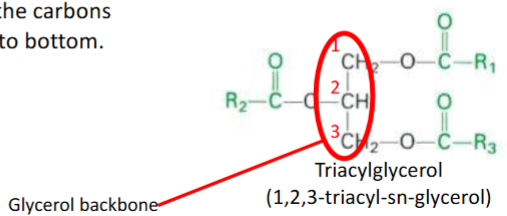
Triacylglycerols are primarily found in adipocytes
Found in both the liver and the intestine but chiefly located in adipose tissue.
The specialised cell in the tissue is the adipocyte.
The cytoplasm of these adipocytes is full of lipid vacuoles that are almost exclusively composed of triaglycerols.
Triacylglycerols are effective storage molecules.
When metabolised fatty acids can contain more energy than carbohydrates.
Metabolism of 1 x glucose (C6H12O6) (via Glycolysis and TCA cycles and Oxidative phosphorylation) leads to the generation of about 30 molecules of ATP see Table 18.4: ATP yield from complete oxidation of glucose, page 518 Berg, Stryer
Metabolism of 1 x Palmitate (16:0) (C16H32O2) via fatty acid oxidation (Beta-oxidation)leads to the generation of 106 molecules of ATP
Homotriglycerides: all three fatty acids are identical, those that aren’t found naturally can be synthesised