Midterm Exam Review
tenebrism: the use of strong chiaroscuro and artificially illuminated areas to create a dramatic contrast of light and dark in a painting
camera obscura: an early cameralike device used in the Ren. and later for recording images from the real world. It consists of a dark box (or room) with a hole in one side (sometimes fitted with a lens). The camera obscura operates when bright light shines through the hole, casting an upside-down image of an object outside onto the inside wall of the box.
impasto: thick applications of paint that give a painting a palpable surface texture.
etching: an intaglio printmaking process in which a metal plate is coated with acid-resistant resin and then inscribed with a stylus in a design, revealing the plate below. Plate then immersed in acid, and exposed metal of the design is eaten away by the acid. Resin is removed, leaving design etched permanently into the metal and the plate ready to be inked, wiped, and printed.
parterre: an ornamental, highly regimented flowerbed; especially as an element of the ornate gradens of a seventeenth-century palace of chateau
genre painting: A term used to loosely categorize paintings depicting scenes of everyday life, including (among others) domestic interiors, parties, inn scenes, and street scenes.
drypoint: an intaglio printmaking process by which a metal (usually copper) plate is directly inscribed with a pointed instrument (stylus). The resulting design of scratched lines is inked, wiped, and printed. Also: the print made by this process.
“Baroque”
Dutch Republic independence 1648
Catholicism in Southern Europe, HRE, and France
Jesuit Order (Society of Jesus)
Scientific advances compelled ppl to question their worldview
Geocentric Theory disproven by Heliocentric Theory
Artists’ Patrons
Church
Secular state
Newly confident and prosperous urban middle classes
barocco (Italian for irregularly shaped pearl—something beautiful, fascinating, strange)
evokes intense emotional responses from viewers
dramatically lit, theatrical compositions
seventeenth-century artists painted…
portraiture, genre paintings, still life, and religious scenes enacted by ordinary people in ordinary settings
intense emotional involvement, lifelike renderings, and Classical references may all exist in same work
sought to engage viewers as participants in the work of art and often reached out to incorporate or activate the surrounding env. into the meaning of the work itself
Catholic countries: horrific scenes of martyrdom, passionate spiritual life of mystics
Protestant countries: images of communal parades, vity views
23.2 Italy
Churchmen and families remained powerful patrons of art (using it to revitalize Roman Catholic Church)
Council of Trent (1563) set guidelines for church art
Pope Sixtus V (1585-1590) begun renewal in Rome by cutting avenues through city to link major pilgrimage churches w/ one another and with main gates of Rome; piazzas in front of major churches
Counter-Reformation Churches
long, wide naves to accommodate large congregations assembled to hear inspiring sermons as well as to participate in the Mass
17th-18th Century Catholic Churches
opulent and spectacular visual effects to heighten the emotional involvement of worshipers
Maderno and Bernini at St. Peter’s
Carlo Maderno (1556-1629)
commissioned by Pope Paul V Borghese to provide church w/ longitudinal nave and new facade
began in 1607 to 1615
Gianlorenzo Bernini (1598-1680)
collaborator of Maderno for five years
succeded maderno as Vatican architect
taught by his father
admired antique art
considered himself a Classicist
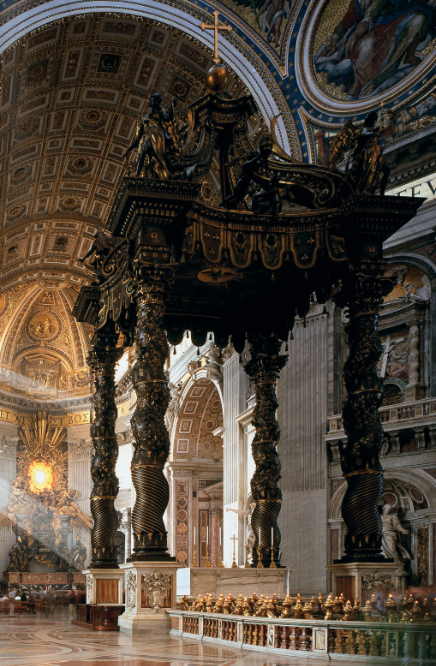
Baldacchino canopy over high altar of St. Peter’s
architecture, sculpture, even painting
commissioned by Pope Urban VIII
Chair of Peter

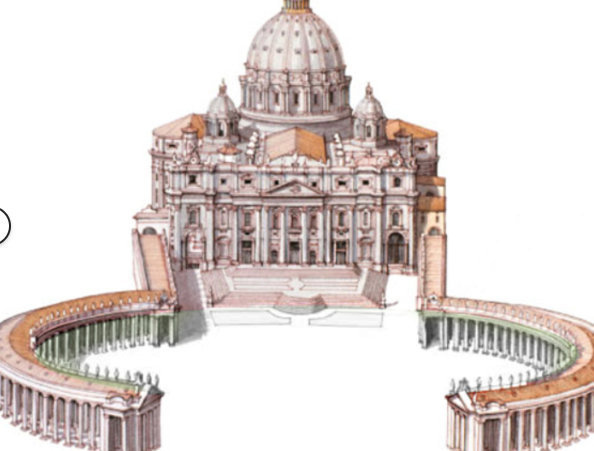
Double Piazza in front of the entrace to St. Peter’s
Bernini as Sculptor
Bernini appointed as Vatican architect in 1629
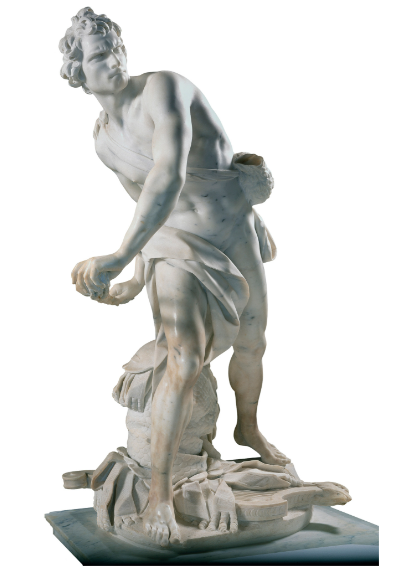
David (for nephew of Pope Paul V in 1623)
decorated of funerary chapel of Venetian cardinal Federigo Cornaro in the Roman church of Santa Maria della Vittoria, designed by Carlo Maderno earlier in the century
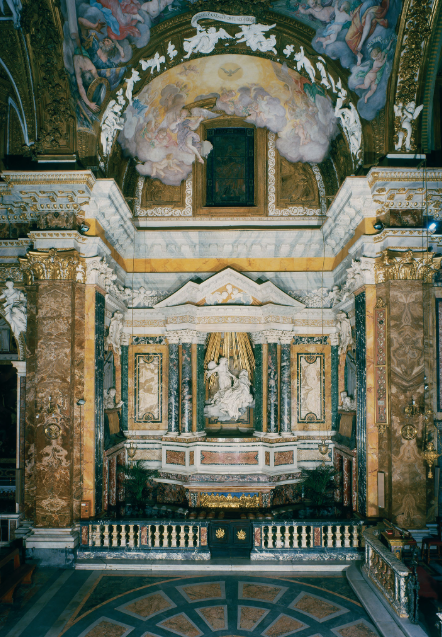
St. Teresa of Avila in Ecstasy
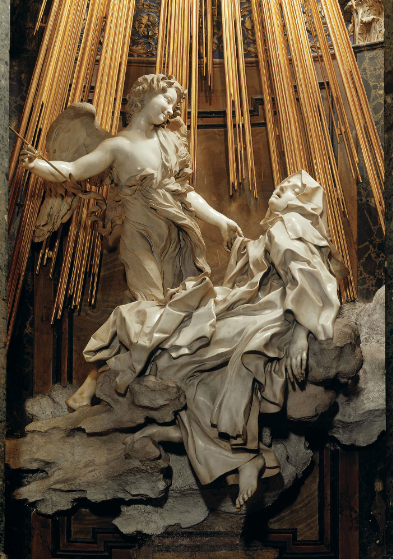
“Bernini’s intent was not to produce a spectacle for its own sake, but to capture a critical, dramatic moment at its emotional and sensual height, and by doing so guide viewers to identify totally with the event—and perhaps be transformed in the process.”
Borromini
nephew of Carlo Maderno
later worked under Bernini
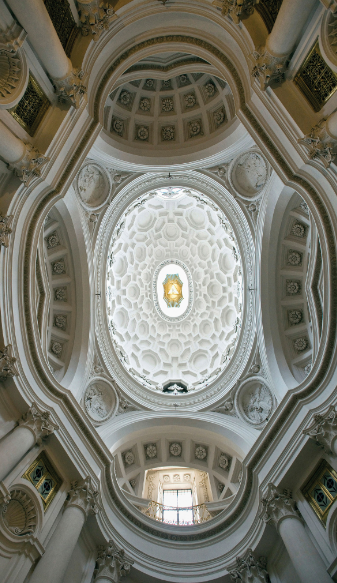
San Carlo Alle Quattro Fontane
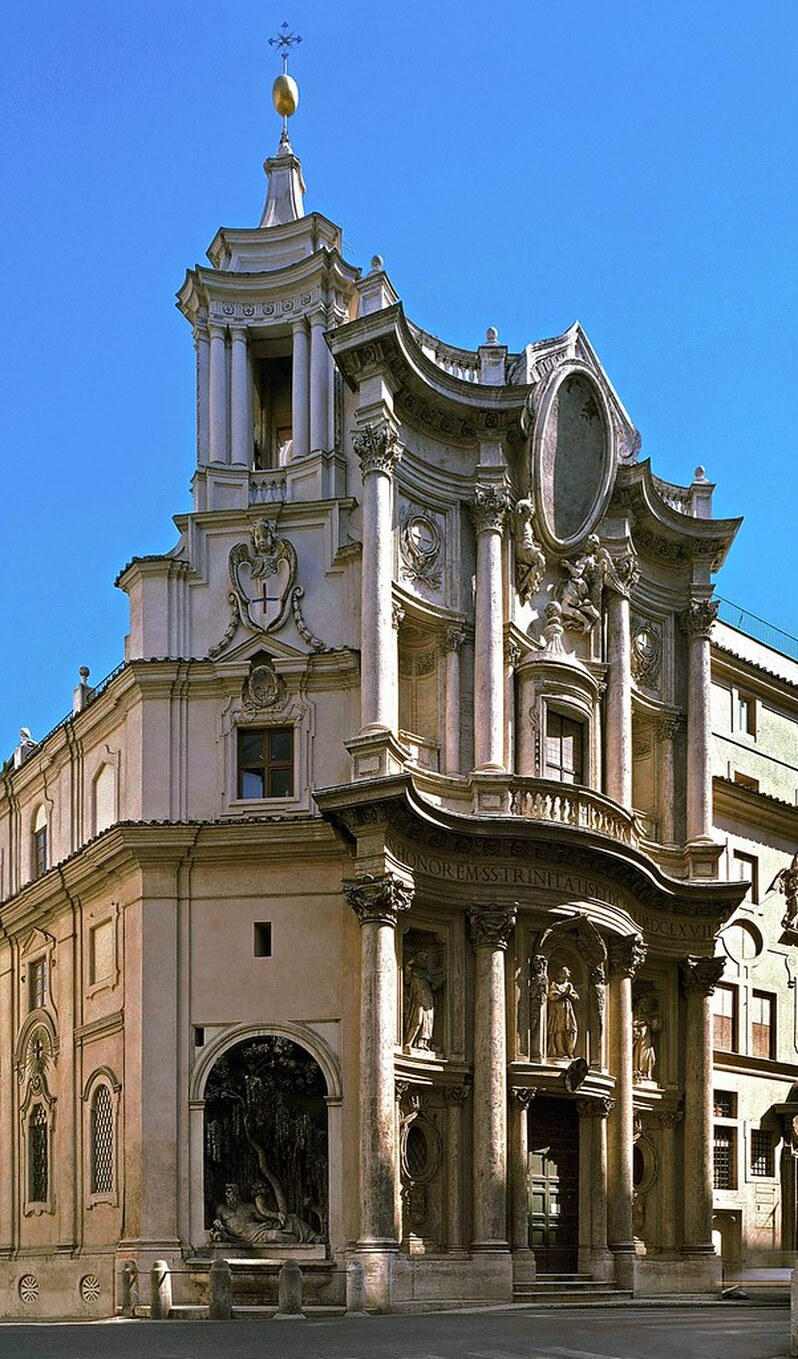
Rome, Italy
Painting
Two paths: Ordered Classicism of Carracci family OR dramatic naturalism of Caravaggio
Carracci
from Bologna
Agostino (1557-1602)
Annibale (1560-1609)
Ceiling of Gallery, Palazzo Farnese
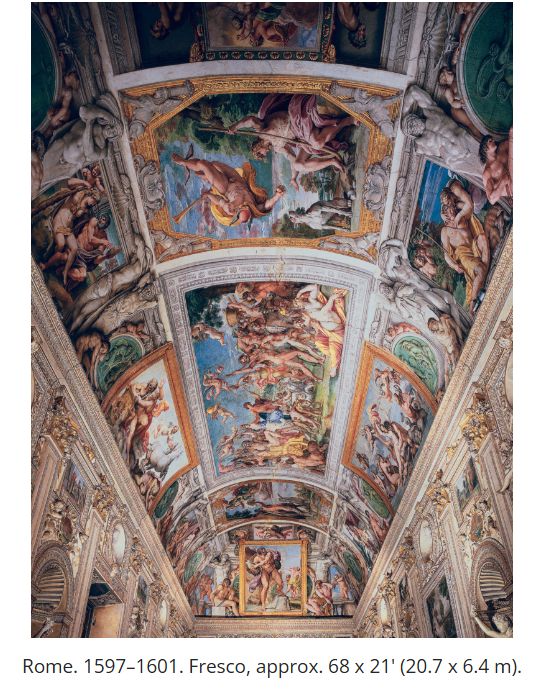
cousin Ludovico (1555-1619)
All three shared studio in Bologna
founded an art academy in 1582
placed high value on accurate drawing, complex figure compositions, complicated narratives, technical expertise in oil and fresco painting
life drawing (to achieve naturalism) and aesthetic theory (to achieve artistic harmony)
Caravaggio
Milan
satisfied Baroque demand for drama and clarity through realism
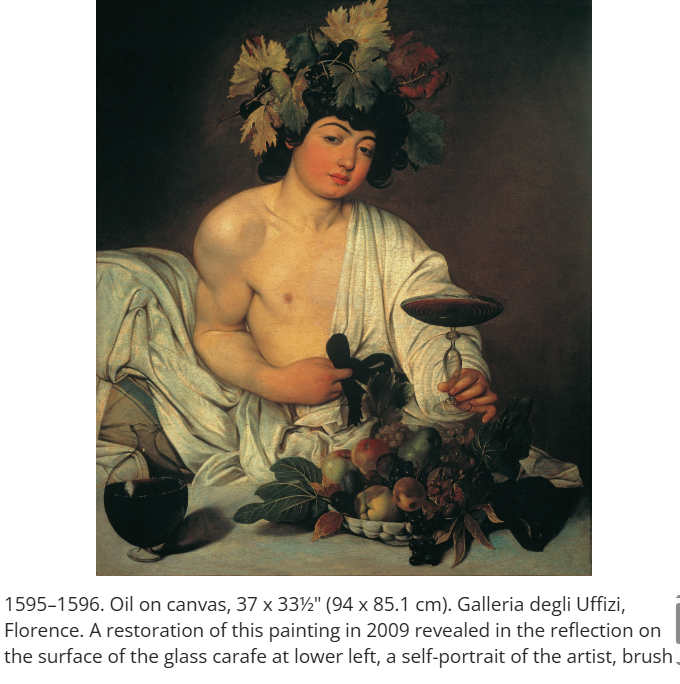
Bacchus
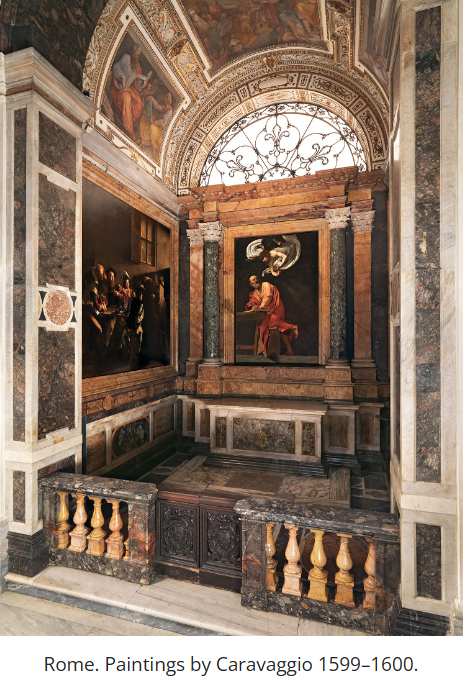
Contarelli Chapel
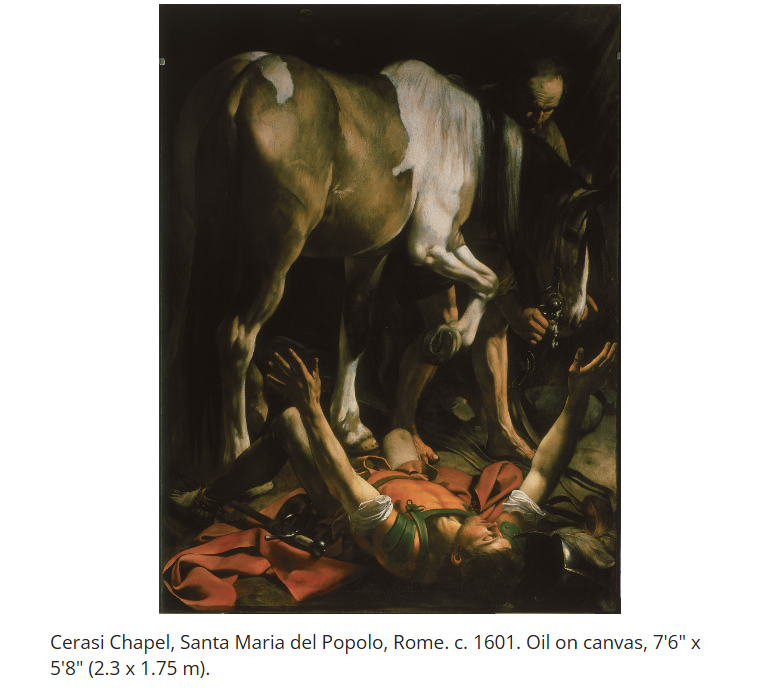
The Conversion of St. Paul
All drawn to Rome, center of power and patronage
All schooled in northern Italian Renaissance traditions
chiaroscuro
Venetian color
sfumato
23.3 Spain
Portugal established independence in 1640
Juan Sanchez Cotan
Still Life with Quince, Cabbage, Melon, and Cucumber
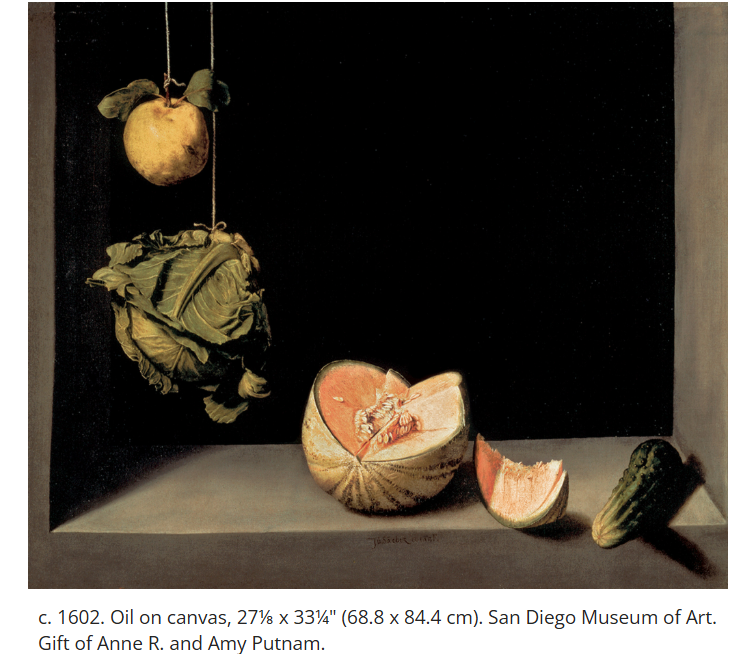
one of the earliest painters of these pure still lives in Spain
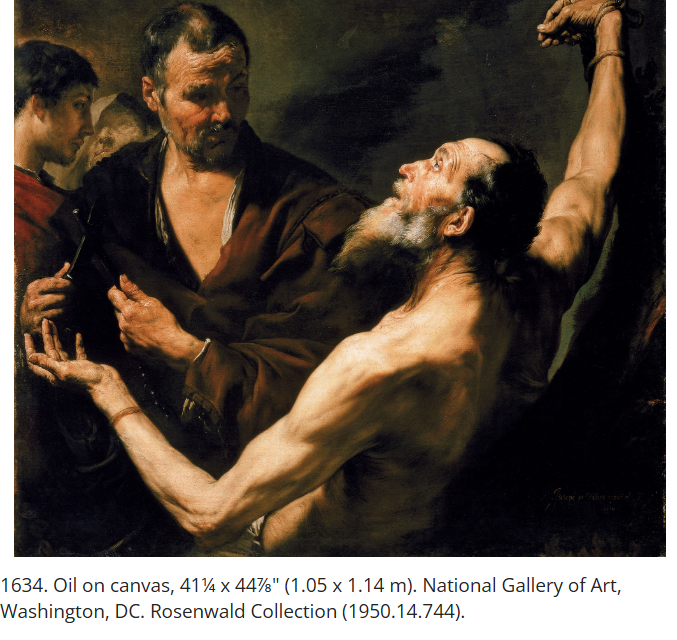
Jusepe de Ribera (c. 1591-1652)
combined Classical and Caravaggesque styles
Martyrdom of St. Bartholomew
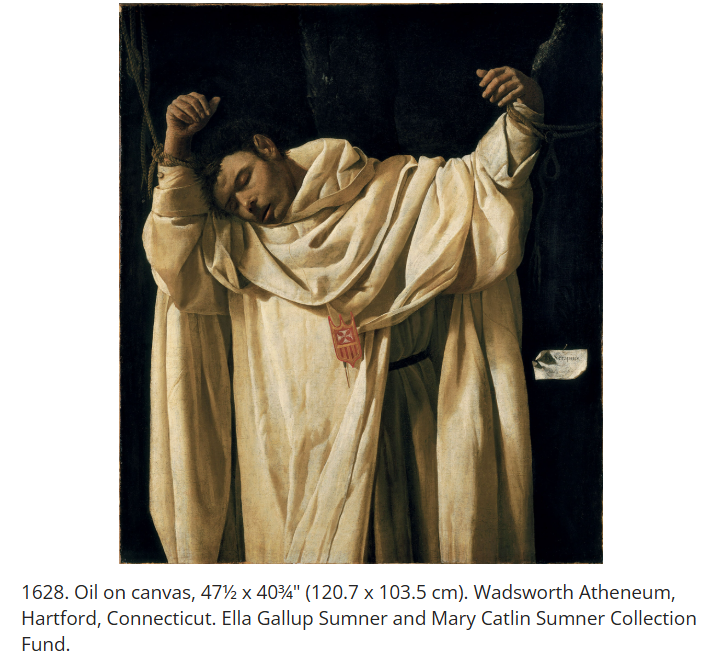
Franscisco de Zurbaran
St. Serapion
Architecture
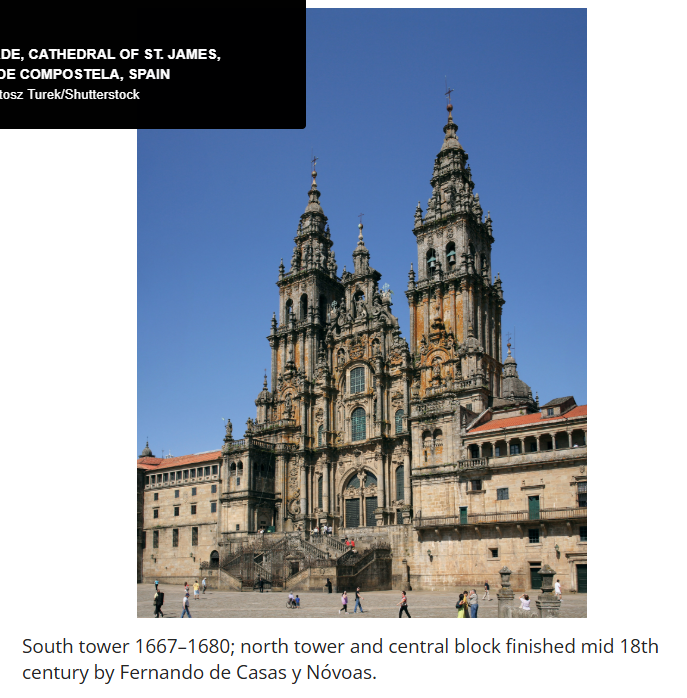
[rpfusions of ornament swept back into fashion
retablos(altarpieces)
portals (main doors often embellished with sculpture)
23.4 Flanders
Netherlands’ Protestant northern provinces (present-day Holland) began to rebel against Spain in 1568
led by nobleman Prince William of Orange
Peace of Westphalia officially recognized independence of northern Netherlands
Flanders
southern, Catholic part of Netherlands
under Habsburgs starting 1598 then Spanish in 1621
Most commissions focused on sacred art after Spanish
Antwerp is capital city
Peter Paul Rubens, Anthony van Dyck
Peter Paul Rubens (1577-1640)
Flemish Baroque art
born in Germany, father from Antwerp
accepted to painter guild at 21
left for Italy in 1600
worked for duke of Mantua in Venice
studied Caravaggio and Annibale Carracci
convinced duke to buy Death of the Virgin by Caravaggio

back to antwerp in 1608
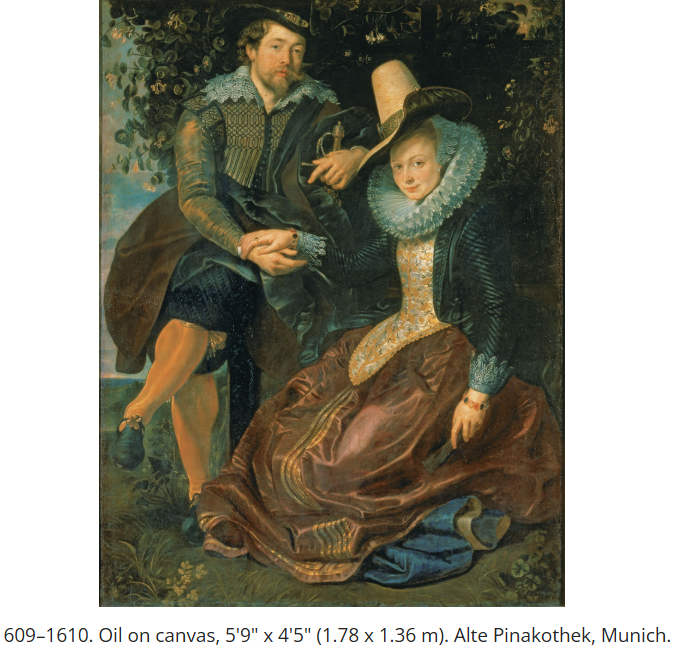
self portrait with Isabella Brandt (his wife half his age)
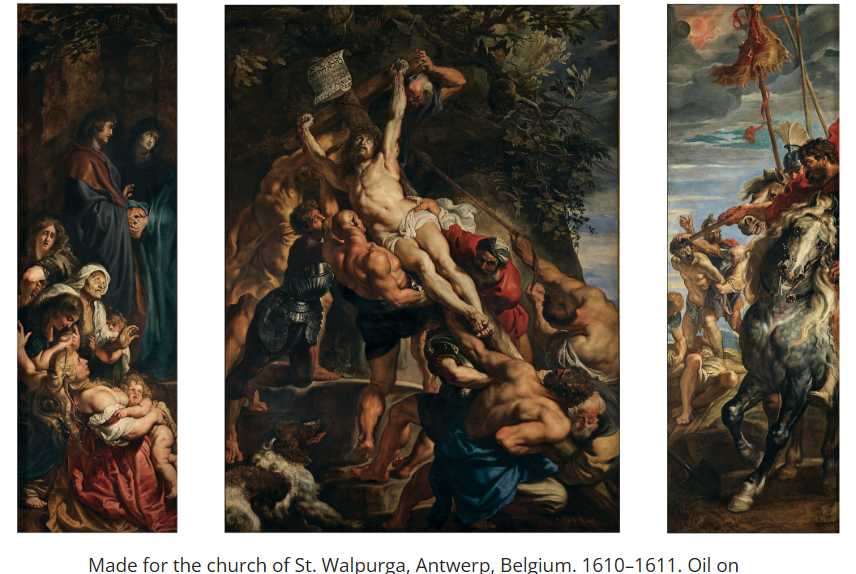
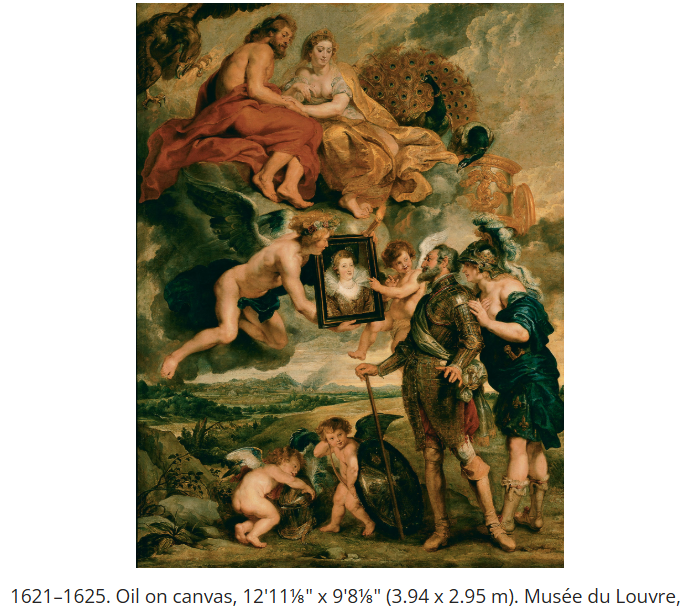
HENRY IV RECEIVING THE PORTRAIT OF MARIE DE’ MEDICI
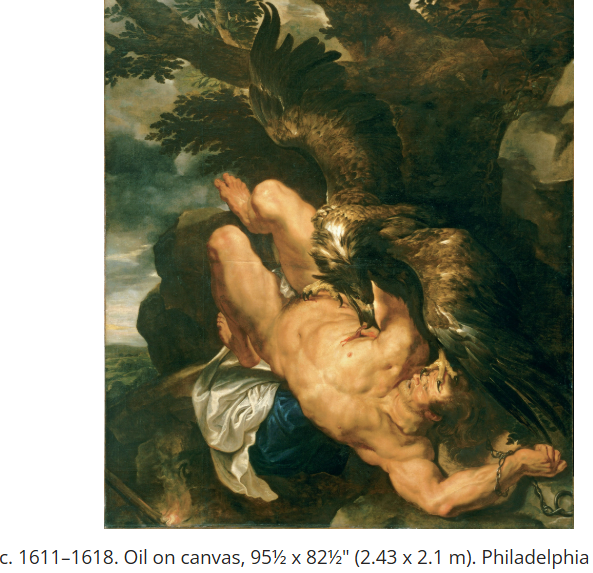
PROMETHEUS BOUND
Flemish Baroque style
Van Dyck and Peeters: Portraits and Still Lifes
Anthony van Dyck (1599-1641)
portraitist
had studio and pupils at 16, member of guild until 1618
1632
court painter to Charles I
knighted, given a studio, summer home, and large salary
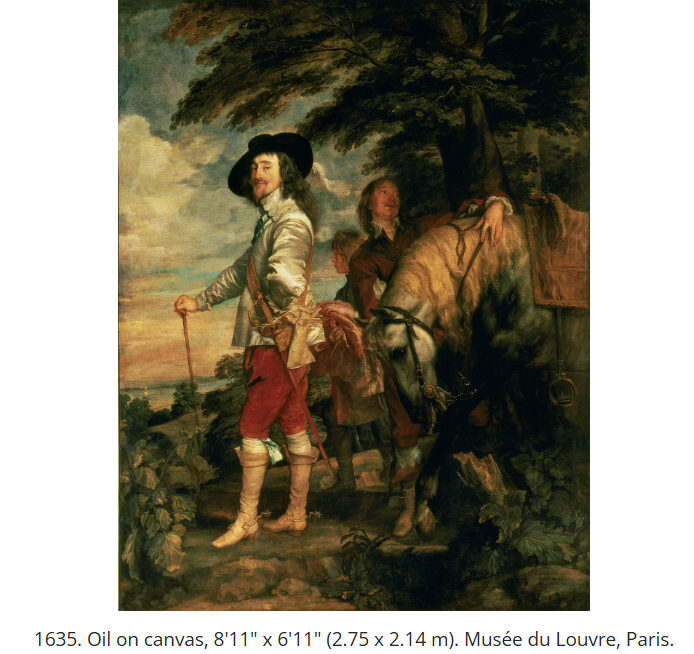
CHARLES I AT THE HUNT
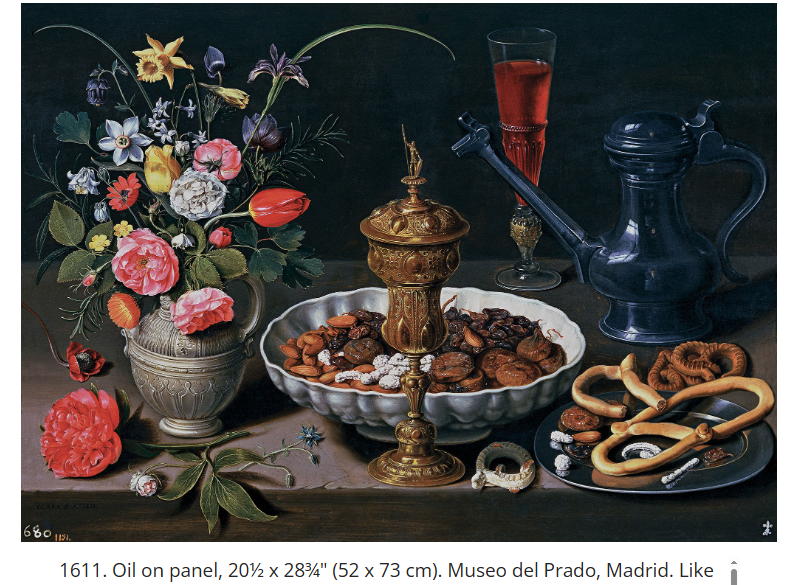
Clara Peeters (1594-c. 1657)
Dutch stilleven a word coined about 1650 (still life)
“breakfast pieces” table set for a meal of bread and fruit
combined flowers and food in single painting
STILL LIFE WITH FLOWERS, GOBLET, DRIED FRUIT, AND PRETZELS
30: European and American Art, 1715-1840
academy: an institution established for the training of artists; replaced guilds
sublime: of a concept, thing, or state of greatness or vastness with high spiritual, moral, intellectual, or emotional value; or something awe-inspiring. The sublime was a goal to which many nineteenth-century artists aspired in their artworks.
memento more: Latin “remember that you must die.” skull, extinguished cngdle,
capriccio: (p. capricci) a painting or print of fantastic, imaginary landscape, usually w architecture
Grand Manner: elevated style of painting popular in the eighteenth century in which the artist looked to the ancients and to the Renaissance for inspiration; for portraits as well as history painting, the artists would adopt poses, compositions, and attitudes of Renaissance and antique models.
veduta: Italian for “vista” or “view” expansive city scenes or of harbors
salon: large room for entertaining guests; hall or gallery
esquisse: French for “sketch”
odalisque: Turkish word for “harem slave girl” or “concubine”

The leading Neoclassical sculptor of the late eighteenth and early nineteenth centuries was Antonio Canvo
Most Enlightenment philosophers believed that, when freed of past religious and political shackles, people would act rationally and morally
The Industrial Revolution created a class that can best be described as middle-class consumers
Which intellectual mvmt can best be described as idealistic? Enlightenment
Which intellectual movement embraced imagination and emotion? Romanticism
How do French eighteenth-century salons embody the spirit of the Rococo style? They are the center of aristocratic social life
Paintings in Rococo salons commonly picture Classical love stories
Watteau’s Pilgrimage to the Island of Cythera typifies Rococo painting for its Classical theme
Fragonard’s The Swing exemplifies Rococo’s conformity to the tastes of an aristocratic clientele
Compared to Italian Baroque architecture, the Rococo architecture of Vierzehnheiligen is lighter
How does Mengs’s Parnassus embody the Neoclassical style? It employs the shallow space of ancient relief sculpture
The Grand Tour focused on the art from The Classical past and Italian Renaissance
A common souvenir of the Grand Tour was a portrait
Canaletto is best known for selling views of Venice to British visitors
Johann Joachim Winckelmann is thought to be the first author to organize art’s history into period styles
Neoclassicism was especially popular in Britain as a visual expression of the state and political stability
Early Romanticism in Britain is characterized by its interest in the individual and subjective experience
Who was the primary source for the Neoclassical style in British country homes such as Chiswick House? Andrea Palladio
Hogarth’s Marriage a la Mode series is an example of British interest in moralizing subjects
Benjamin’s West’s Death of General Wolfe challenged academic history painting by its modern subject
Soufflot’s Pantheron embodies Neoclassical architecture’s severity
In what way is Chardin’s painting like Hogarth’s? moralizing theme
Which Neoclassical painting champions the virtues of stoicism, masculinity, and patriotism? David’s Oath of the Horatii
The genre paintings of Jean-Baptist Greuze were considered the visual counterparts to what contemporary literary genre? drame bourgeois
Which artist painted genre scenes inspired by seventeenth-century Dutch paintings Jean-Simeon Chardin
Goya’s print series known as Los Caprichos aimed to alert the Spanish people to the error of their foolish ways
How is The Sleep of Reason Produces Monsters an example of Enlightenment principles? It champions rational thought.
In his portrait of the family of Charles IV, Francisco Goya referenced the work of Velazquez by including himself in the paint
The image of the Virgin of Guadalupe is significant in Latin America because it documents Mary’s miraculous appearance to a Mexican peasant
The mission san Xavie Del Bac is an example of a church built to promote Spain’s colonial efforts
What group or institution helped Neoclassicism survive for so long art academies