Geriatrics
Think of it as people 60+.
Respiratory Changes:
Pneumonia is leading cause of death from infection in Americans older than 65 years
Increased mucus production, pulmonary secretions, and infection that all interfere with ability of the alveoli to oxygenate blood.
Management is same as any other patient, oxygen, shock treatment, transport.
Pulmonary Embolism:
Sudden blockage of an artery by a venous clot. Patient will present with shortness of breath and sometimes chest pain. Tachycardia, apprehension, low grade fever, hemoptysis, fatigue, leg pain, unilateral pedal edema.
Risk factor are living in nursing home, recent surgery, blood clot history, sedentary, presence of pacemaker or central venous catheter, recent long distance travel.
Cardiac:
Atherosclerosis, accumulation of fat and cholesterol in the arteries. Complications include myocardial infarction and stroke.
Older people are at increased risk for formation of an aneurysm. Abnormal, blood-filled dilation of the blood vessel wall. Blood vessels and heart valves becomes stiff and degenerate.
Venous Stasis/Vein Insufficiency, loss of proper function of the veins in the legs that carry blood back to the heart, causes blood clots, DVT can lead to pulmonary embolism, people usually exhibit edema of the legs and ankles.
Heart Attack:
Sudden fatigue, difficulty breathing, confusion. Loss of bladder or bowel control, nausea and vomiting, epigastric and abdominal pain.
Standard heart attack treatment.
Heart Failure:
Signs and symptoms will differ depending on whether the right or left side of the heart is not functioning correctly.
Right sided occurs when fluid backs up in body.
JVD, ascites, peripheral edema, and enlarged liver. Often caused by left sided heart failure, so it’s a common to see signs of both.
With left you get pulmonary edema and crackling sounds.
Paroxysmal nocturnal dyspnea: Sudden attack of respiratory distress that wakes the person when he or she is reclining. Caused by fluid accumulation in the lungs.
Coughing, feeling suffocated, and cold sweats. You will notice tachycardia.
Stroke:
Leading cause of death in older people.
S/S: Acute altered LOC, FAST, incontinence, seizure
Hemorrhagic are less common and more likely to be fatal.
Thunderclap headache, 10/10 headache, then unconscious.
Ischemic occur when blood clot blocks flow of blood.
TIA can present with same signs, usually from smaller clot that breaks apart.
Nervous System:
Vision: Acuity, depth perception, and ability to accommodate light change with age. Cataracts interfere with vision. Decreased tear production leads to drier eyes.
Hearing: High frequency sounds are difficult to hear. Falls more likely due to inner ear changes affecting balance.
Taste: Decrease in number of taste buds, negative result might be lessened interest in eating which can lead to weight loss, malnutrition, complaints of fatigue.
Touch: Decreased sense of touch and pain perception, could be injured and not know it and decreased sensation of hot and cold.
Dementia:
Slow onset of progressive disorientation, shortened attention span, and loss of cognitive function.
Caused by Alzheimer, Parkinson’s, Cerebrovascular accidents, genetic factors
Delirium:
Sudden change in mental status, consciousness, or cognitive processes.
Marked inability to focus, think logically, and maintain attention. Affects 15 - 50% of hospitalized people aged 70 or older. Acute anxiety may be present
Generally the result of a reversible physical ailment, such as tumors, fever, or metabolic causes.
Assess and manage patient for:
Hypoxia, hypovolemia, hypoglycemia, hypothermia. May see changes in circulation, breath sounds, motor function, and pupillary response.
Syncope:
Assume life threatening until proven otherwise
Neuropathy:
Disorder of nerves of peripheral nervous system, function and structure are impaired. Symptoms depend on nerves and location.
Gastrointestinal System:
Reduction of volume of saliva, dental loss, gastric secretions reduced, changes in gastric motility, incidence of certain diseases involving bowel increases, blood flow to liver declines.
Dental issues, poor muscle tone of sphincter, decrease hydrochloric acid.
GI bleeding can be caused by inflammation, infection, or obstruction of the upper or lower GI. Hematemesis (bloody vomit) can indicate upper tract bleed, melena can indicate lower (not always 100% accurate in terms of where bleeding is).
Specific problems include: Diverticulitis, bleeding in upper/lower GI, peptic ulcer disease, gallbladder disease, bowel obstruction.
When assessing ask about NSAID and alcohol use. Orthostatic vital signs can help determine if a patient is hypovolemic. BP dropping when standing up after having been checked laying down can indicate low fluid in body.
Acute Abdomen - nongastrointestinal complaints:
Most serious threat from abdominal complaints is blood loss.
Abdominal aortic aneurysm (AAA) is one of most rapidly fatal conditions.
Renal Changes:
Decreased bladder capacity, decline in sphincter muscle control, decline in voiding senses, increase in nocturnal voiding, benign prostatic hypertrophy (enlarged prostate).
Incontinence is not a normal part of aging and can lead to skin irritation, skin breakdown, and urinary tract infections. Stress incontinence occurs during activities such as coughing, laughing, sneezing, lifting, and exercise.
Urge incontinence is triggered by hot or cold fluids, running water, etc
Opposite of incontinence is urinary retention.
Endocrine System:
Reduction in thyroid hormones (thyroxine)
S/S: Slower heart rate, fatigue, drier skin and hair, cold intolerance, weight gain
An increase in secretion of ADH, antidiuretic hormone, causing fluid imbalance. Hyperglycemia. Increases in levels of norepinephrine, possibly having a harmful effect on the cardiovascular system.
Hyperosmolar hyperglycemic nonketotic syndrome (HHNS) is a type 2 diabetic complication in older people.
Assessment may see: warm, flushed skin; poor skin turgor; pale, dry, oral mucosa; furrowed tongue; signs of shock.
Immune System:
Infections are common due to weaker immune system.
S/S may be decreased because of loss of sensation, lack of awareness, or fear of being hospitalized.
Musculoskeletal System:
Decrease in bone mass, joins lose flexibility, decrease in amount of muscle mass often results in less strength.
Osteoporosis is characterized by a decrease in bone mass.
Osteoarthritis is progressive disease of joints that destroy cartilage.
Skin:
Bruising becomes common, sweat glands are slower to respond.
Pressure ulcers become a problem. Pressure from weight of body cuts of blood flow to area of skin, and a sore develops.
Ulcer Stages of Development:
1: Nonbalanching redness with damage under the skin
2: Blister or ulcer that can affect the dermis and epidermis
3: Invasion of the fat layer through to the fascia
4: Invasion to muscle or bone
Depression:
Not a normal part of aging, treatable with medication and therapy. Untreated depression is associated with a higher suicide rate in geriatric population.
Suicide:
Older men have highest suicide rate of any group in US.
When assessing patient, can ask if they’re considering suicide. If answer is “yes” next question should be “do you have a plan?”
Include this info in report.
GEMS Diamond:
Created to remember what is different about older patient.
Geriatric Patient
Environmental assessment
Medical Assessment
Social Assessment
Response to Nursing and Skilled Care Facilities:
Ask “What is wrong with the patient that is new or different today?”
Infection control needs to be high priority
Methicillin-resistance Staphylococcus aureus (MRSA) infections are common
Many infections in hospitals are caused by vancomycin-resistant enterococci
Respiratory syncytial virus causes an infection of upper and lower respiratory tracts
Clostridium difficile is a bacterium responsible for the most common cause of hospital-acquired infectious diarrhea. Typical alcohol-based sanitizers do not inactivate or kill C difficile
SARS-CoV-2 is problematic
Dying Patients:
Be understanding and compassionate.
Advance Directives:
Specific legal papers that direct relatives and caregivers about what kind of medical treatment may be given to patients who cannot speak for themselves.
Can be DNR order. Basic ABCs should still be provided.
POLST (Physician Orders for Life Sustaining Treatment) gives medical orders in addition to the advanced directives. If there is any question regarding orders or when there are no written orders, initiate resuscitation.
Elder Abuse and Neglect:
Any action on the part of an older person’s family member, caregiver, or other person that takes advantage of the older person’s: person, property, emotional state. Includes acts of commission and acts of omission.
Elder abuse occurs more often in women older than 75 years.
Suspect abuse when answers are concealed or avoided, or when given unbelievable answers.
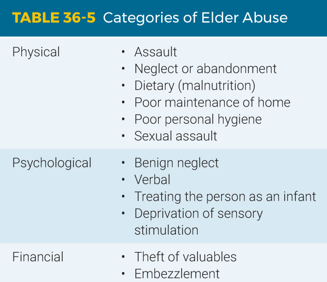
Signs of Physical Abuse:
Bruises on buttocks, lower back, genitals, inner thighs, face, and ears.
Hand pressure bruises look like oval grab marks, pinch marks, or handprints. Human bites are usually on upper extremities.
Abuse burns caused by cigarettes, matches, heated metal, immersion in hot liquids, chemicals, electrical power sources.
Lack of hygiene, dental hygiene, poor temperature regulation, lack of reasonable amenities in the home.
Regard injuries to the genitals or rectum with no reported trauma as evidence of sexual abuse in any patient. Shame or dementia can prevent reporting.