the resting potential
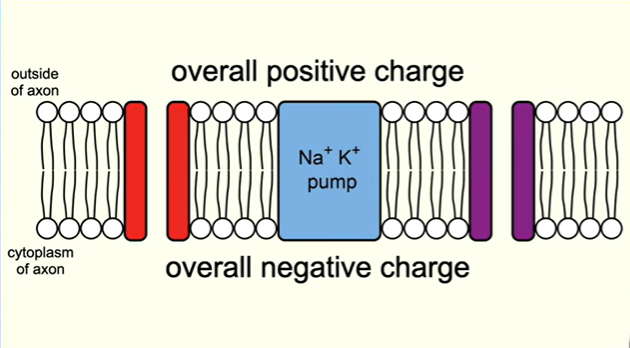
in a resting neurone the inside of the membrane has a negative charge compared to the outside - the membrane is polarised
the value of this charge difference is called the resting potential = 65 millivolts
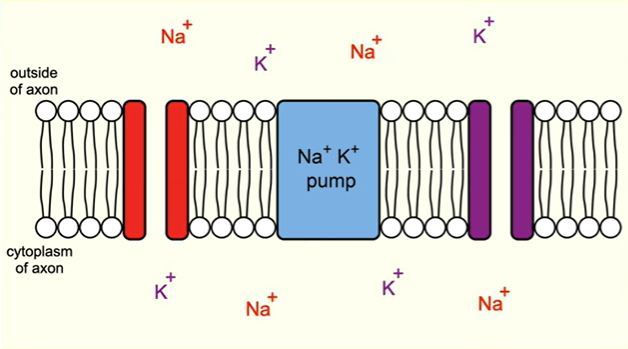
on either side of the membrane we have sodium ions and potassium ions
ions cannot move directly through the phospholipid bilayer, in the membrane we have an integral membrane protein called the sodium-potassium pump
using ATP the pump actively transports sodium ions out of the axon and at the same time it actively transports potassium ions into the axon
now we have a higher concentration of sodium ions outside the membrane than inside and a higher concentration of potassium ions inside
for every 3 sodium ions transported out, only 2 potassium ions are transported in
therefore the number of positive ions outside the membrane is greater than inside so due to this charge difference we are establishing the membrane potential
because of the sodium potassium pump we have a concentration gradient for both sodium and potassium ions
because these ions are charged they are called electrochemical gradient
sodium ion channels are mainly closed so we have a low rate of diffusion of sodium ions into the axon
while potassium ion channels are mainly open so we have a high rate of diffusion of potassium ions out of the axon
→ the outward diffusion of potassium ions makes the inside of the membrane more negative compared to the outside