Teamwork work
The combination of skills, knowledge and experiences of different people working together to achieve a common goal.
Two Types of Teams
Informal Teams
People who choose to associate with each other.
Activities after work such as get togethers.
Valuable for employees
Formal Teams
Put together by management as a team.
Held responsible for the execution of assignments, tasks and objectives.
There are different types of formal teams.
Four Stages to Develop and Establish a Team
Number 1:
Forming stage: Introductions and socialisation take place.
Number 2:
Storming stage: Friction and competition for roles in the team.
Number 3:
Norming stage: Strong bonds are formed between team members.
Number 4:
Performing stage: Team members work together actively as a team
What Makes Up a Successful Team?
Work towards a common and clear purpose to achieve the vision.
Honest and open discussions and communication between team members.
good co-ordination and willingness to perform tasks and share responsibilities.
Good and strong leadership.
Continuous team building.
Clear conflict-related policies, decision making and disciplinary procedures.
Benefits of a successful team
Improved confidence, motivation and personal satisfaction.
Clear understanding of members contributions and roles within a team.
Greater level of brainstorming of ideas/greater range of ideas (synergy).
Sustainable use of team’s resources.
Flexibility response to change, trust and communication.
Pitfalls of Teamwork
Waster of time occurs due to arguments over personal matter that diverts focus.
When a team member’s ego overshadows the purpose of the team.
Team members can leave which causes a gap.
If the person leaving has critical skills, knowledge and experience which are essential to the progress of the team it may cause problems.
Team members who like each other will fallback on what worked in the past and not challenge each other.
It can create complacency which reduces competitive nature, thus creating group thinking.
Team Roles
Contributors:
Help the team stay on track and get things done
They keep the team focused
Provides expertise and drives for results while optimising resources.
Collaborator:
Reminds the team of the main goal.
Breaks big steps into small manageable steps
Often done by the project manager.
Communicator:
Promotes positive relationships.
The glue that holds the team together.
Challenger:
Asks the tough questions that others might avoid
Helps the team be honest about how well they’re doing and if they are on track to succeed.
How to Achieve The Goals of a Team-Project Plan?
Decide on the goal(s) of the team to ensure that all steps are aimed at the overall goal(s)
List all the vital steps that need to be followed to achieve the goals of the team.
Brainstorm potential problems the team may encounter while trying to achieve set goals.
Identify possible strategies that could be used to prevent or overcome problems as they occur.
How to Achieve The Goals of a Team - A GAP Analysis
A GAP Analysis is a tool that helps you understand the difference between where your business currently is and where you want it to be in the future.
It identifies the areas that need improvement to achieve the desired goals.
Ensures that all team members have a common vision to determine what must be done now to achieve the intended result/outcome of the plan.
Functional vs. Dysfunctional Teams
A functional team is characterised by effective collaboration, clear communication, shared goals, and mutual respect, leading to increased productivity.
When a team does not work together, it is detrimental to the team’s ability to achieve its goals, and it is know as a dysfunctional team.
The distinguishing features are:
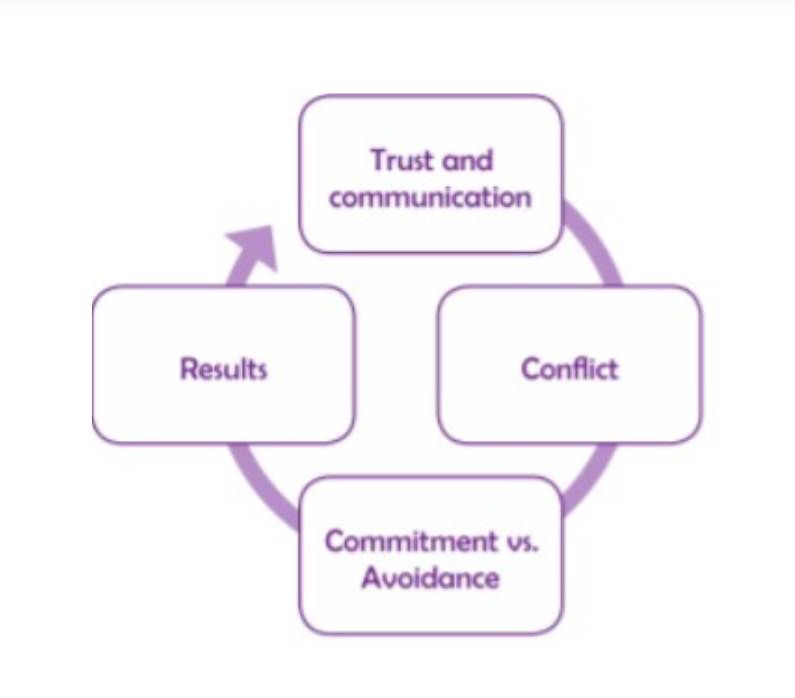
Elements to Build a Winning Team:
Balance of skills
Identify and promote talent
Play to strengths
Develop people
Lead by example
Prepared to move people
Collective responsibility