Chapter 10
Iodine deficiency disrupts thyroid function and can cause goiter
goiter, an enlargement of the thyroid gland.
trace minerals similar to minerals but trace minerals ar less required in body
trace minerals -
Circulate freely in the blood, Found in both plant and animal foods, Absorbed mostly in the small intestine
Trace minerals are found in both animal and plant foods, but the bioavailability varies
Bioavailability is influenced by: Form of the food Nutrition status Age Pregnancy
Iodine is an essential component of thyroid hormone
thyroid gland, thyroid stimulating hormone, thyroid hormones
Hypothyroidism
- Slow metabolic rate
- Goiter
Cretinism
- Mental retardation, deafness, stunted growth, and other abnormalities
- Mild forms of iodine deficiency in pregnancy can affect neurological development
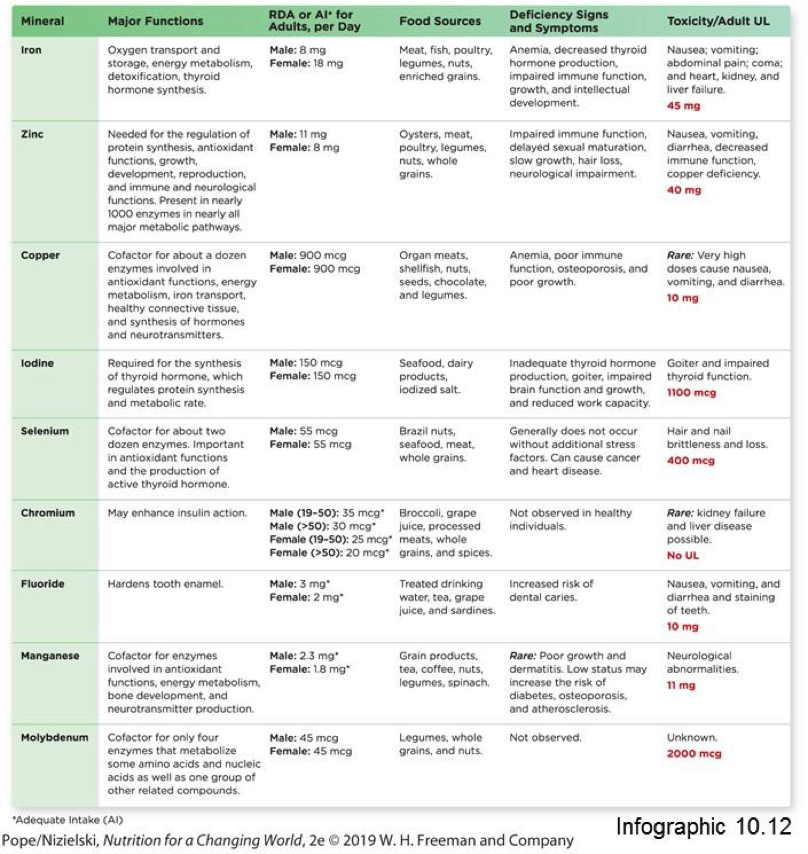
The RDA for iodine for adults is 150 micrograms
to much iodine: causes goiter, hypothyroidism
Iron
Required for chemical processes
- Energy metabolism
- Immune response
- DNA synthesis
Present in:
- Heme iron
-Hemoglobin
-Myoglobin
- Nonheme iron
Heme iron is a critical part of the ==hemoglobin (found in red blood cells)== protein
The iron-containing protein in muscle is ==myoglobin (found in muscle cells)==
Oxygen is carried by hemoglobin in blood and supplied by myoglobin in muscle
Food sources
- Heme in red meats, poultry, and fish
- Nonheme in plant foods: beans, dried and grain products
Absorption
- Increased by vitamin C, acid, and meat
- Decreased by soy protein, phytates, and polyphenols, as well as by calcium intake
Iron-deficiency anemia
- Caused by blood loss
- Insufficient iron intake
- High-risk groups
Excess iron intake causes adverse effects in adults and can be lethal in children
Zinc (Zn) is required for the function of more proteins in the body than any other mineral
Required for almost every essential process in the body
- Regulation of protein synthesis
- Reproduction
- Cell division
- Growth and development
- Immune responses
- Neurological functions
Zinc (Zn) supplementation in at-risk children may help improve immunity, growth, and development
Copper
Functions
- Cofactor in oxygen-dependent enzymes
- Energy metabolism
- Formation of connective tissues
- Regulation of iron storage and transport
- Antioxidant functions
- May slow progression of age-related macular degeneration
factors:
Malabsorption from other conditions Gastric bypass surgery Excessive zinc intake
About two dozen selenium-containing human proteins have been identified
Essential for normal growth, development, and metabolism
deficiency increases risk of vitamin E
Low selenium status
- Increases risk for a particular form of heart disease
- May increase risk of some cancers
- Decreases immune function
Fluoride has a well-established role in preventing cavities through hardening and maintaining tooth enamel
Excess intake can cause fluorosis of teeth and bone
Manganese
- Cofactor for enzymes in antioxidant function, energy metabolism, bone development, and neurotransmitter production
Molybdenum
- Cofactor for four enzymes in metabolism
Chromium (Cr)
- Evidence is lacking for claims, including that it enhances the action of insulin in blood glucose control
ultratrace minerals
Animal data suggest these may be important: Arsenic (As) Boron (B) Nickel (N) Silicon (Si) Vanadium (V)