Module 8: Bone Health and Remodeling
Bone Structure and the Remodeling Cycle
Wolff’s Law – bones will develop a structure that is best able to resist the forces acting upon them
Exercise and strength training increase bone strength
Bone Remodeling: process in which bone tissue is broken down and then rebuilt at the same location.
Osteoblasts: bone builders
Osteoclasts: cells that break bone down
Osteocytes: star-shaped cells that are the most abundant cell type in bone tissue and exchange nutrients and other factors from bone to blood and lymph
~10% of bone tissue is remodeled in adults each year
Nutrients calcium, phosphorus, magnesium, fluoride, vitamin D, and vitamin K are required for bone tissues to remodel.

Sequential Steps of Remodeling:
Resorption: Osteoclasts mobilize to the bone surface and secrete hydrogen ions () to acidify the microenvironment and dissolve mineralized matrix.
Reversal: Mononuclear cells prepare the site; sugars and proteins form a cement line interface between old and prospective bone; osteoblast recruitment begins.
Formation: Osteoblasts lay down non-mineralized collagenous matrix termed osteoid tissue.
Mineralization: Gradual deposition and dense crystallization of minerals occurring over several months.
Calcium
Most abundant mineral in the body
>99% is stored in bone tissue
Four functions:
1. Bone and tooth formation
aids the mineralization process, where calcium salts crystallize into hydroxyapatite, increasing bone mineral density and strength.
2. Nerve impulse transmission
triggers the release of neurotransmitters at synapses, facilitating ion flow between nerve cells, and without sufficient calcium, nerve function fails.
3. Muscle contraction
when calcium levels are too low, muscles may become stiff and twitch involuntarily, leading to a condition called tetany.
4. Clotting factors
activates clotting factors during blood vessel injury, enabling the formation of blood clots to stop bleeding.

Endocrine Control:
Parathyroid Hormone (PTH): Secreted during hypocalcemia; stimulates osteoclastic bone resorption, increases renal calcium reabsorption, and converts calcidiol into active calcitriol.
Calcitriol (Active Vitamin D): Operates synergistically with PTH to maximize intestinal calcium absorption and minimize urinary losses.
Calcitonin: Secreted by the thyroid during hypercalcemia; inhibits osteoclast-mediated bone breakdown and enhances renal calcium excretion.
Calcium Homeostasis:
Low Calcium: PTH and calcitriol raise calcium levels.
High Calcium: Calcitonin reduces calcium levels
Supplement Guidelines: Gastrointestinal absorption saturates at approximately per dose. Single massive doses impair the absorption of calcium, iron, and zinc.
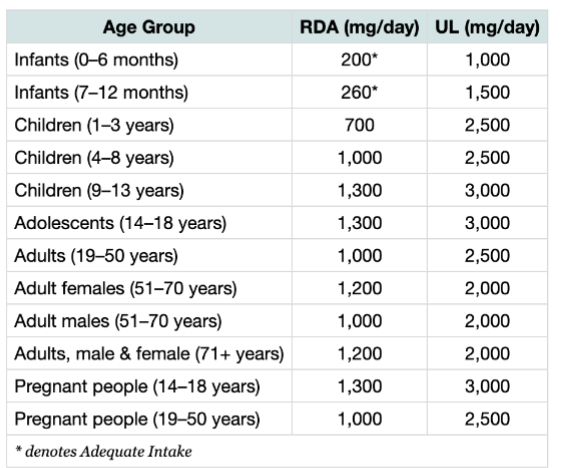
CALCIUM NEEDS AND SOURCES
DRI: higher during adolescents and older age
Dietary Sources: Dairy
Cheese 1 slice ~200mg
1 cup nonfat milk ~300mg
fortified orange juice, nondairy milk alternatives, cereals
Can see content on the nutrition label
Calcium bioavailability.
Increases absorption: adequate vitamin D, stomach acid, and estrogen
Decreases absorption: oxalates, phytates, high fiber and low-fat diets, aging, decreased stomach acid, and certain health conditions
VITAMIN D: BOTH A VITAMIN AND A HORMONE
Types:
D2 and D3: Found in supplements or dietary sources
(oily fish, egg yolks, fortified milk)
Can synthesize D3 from sunlight
Functions:
Calcium absorption/homeostasis, cell growth, immune function
Without vitamin D, < 15% of calcium is absorbed
Deficiency Risks:
Rickets: Childhood disease, soft/weak bones, fracture-prone
Osteomalacia: Adult disease, softening/weakening of bones
Compromised bone health
Recommended Intake:
RDA: 600IU/day
National Osteoporosis Foundation: 400-800IU/da
PHOSPHORUS
Facts:
2nd most abundant mineral in the body
85% stored in bones
Adequate intake in American diet
Facts:
2nd most abundant mineral in the body
85% stored in bones
Adequate intake in American diet
Dietary Sources:
Meat: Beef, chicken crab
Dairy: Milk, yogurt, buttermilk
Grains: Wheat, rice
Vegetables: Broccoli, carrots
Processed food: Cheese, cake mix, granola bars
Beverages: Soda
MAGNESIUM
Facts:
60% stored in the skeleton
Deficiency linked to reduced parathyroid hormone and impaired vitamin D activation
Supports strong bones, and a deficiency can compromise bone health
Functions:
Bone maintenance, protein synthesis, muscle and nerve function, glucose and blood pressure control
Recommended Intake (RDA):
Males: 400mg/day (Increases to 420mg/day after 30)
Females: 310mg/day (Increases to 320mg/day after 30)
Dietary Sources:
Green leafy vegetables, fish, dairy, whole grains, nuts
Most people do not meet the RDA through diet alone
FLUORIDE
Functions:
Tooth and bone development and maintenance
Combats tooth decay by:
Blocking acid formation by bacteria
Preventing demineralization of teeth
Enhancing remineralization of enamel
Dietary Source:
Fluoridated drinking water
VITAMIN K
Functions:
Fat-soluble vitamin acting as a coenzyme
Critical for blood coagulation (required for blood clotting)
Supports bone health by modifying osteocalcin, a protein involved in bone remodeling
Dietary Source:
Green vegetables
BONE DEVELOPMENT ACROSS LIFE STAGES:
Infancy to Puberty: Bone growth exceeds bone loss
Age 20: Bone growth is nearly complete
Age 30: Peak bone mass reached
Age 40: Bone loss exceeds bone growth (osteoclasts > osteoblasts)
BONE MINERAL DENSITY
Bone Mineral Density (BMD): Indicator of Bone Strength
BMD measures the amount of calcified tissue in grams per cm2 of bone
High BMD – strong bones
Measured by Dual X-ray Absorptiometry (DEXA), with a T- score calculated
-1.0 or above: Normal BMD
-1.0 to -2.5: Low BMD
-2.5 or below: Osteoporosis
OSTEOPOROSIS: A DISEASE OF BONE LOSS
Osteoporosis: Excessive bone loss over time, leading to decreased bone strength and increased risk of fractures
Silent Disease
Osteopenia: Lower than normal bone mass, often a precursor to osteoporosis
Osteopenia: Lower than normal bone mass, often a precursor to osteoporosis
Prevalence:
10 million people with osteoporosis
44 million with osteopenia
Affects more women than men excessive bone loss over time
Types of Osteoporosis:
Type 1: Postmenopausal (50-70 years), affects wrist and spine due to estrogen decline
Type 2: Senile (>70 years), affects hip and spine (2x more common in women)
RISK FACTORS
Non-Modifiable Risk Factors:
Age (>50), sex (female), small body frame, genetics (White or Asian)
Low estrogen levels, endocrine disorders (e.g., hyperthyroidism)
Family history of osteoporosis
Medications: Glucocorticoids (stimulate bone resorption)
Diseases: Conditions causing nutrient malabsorption (e.g., CKD, Crohn’s, anorexia), bone remodeling issues (e.g., diabetes)
Modifiable Risk Factors:
Physical inactivity, being underweight
Smoking, alcohol, and caffeine intake
Poor nutrition: Low calcium, vitamin D, and protein intake

PREVENTION
Primary Prevention
Actions to avoid disease development before it starts
Key Factors:
50% of mineralized bone is built during puberty
Focus on nutrition, physical activity, and fall prevention
Secondary Prevention:
Strategies to halt or reverse osteoporosis after it has developed
Aim: Prevent further bone loss and reduce fracture risk

POPULATIONS AT RISK
Adolescent teens
Women with amenorrhea or female athlete triad
Older adults
Postmenopausal women
Lactose-intolerant individuals
Vegans