L6: Cannabis
Learning Outcome 1: Botanical Profile of Cannabis
more knowledge
Although it has been used in a great number of diseases, its real medical applications are not very extensive
not really know how to use it to prep med
paraqout, counters cannabis
Cannabis Species
Cannabis sativa – tall, narrow leaves, energizing effects.
Cannabis indica – shorter, broad leaves, sedative effects.
Cannabis ruderalis – low THC, used in breeding for autoflowering traits.
Cannabis Forms
Ganja – dried flowers.
Hashish (Charas) – resin from trichomes.
Bhang – seeds and leaves, often consumed as a drink.
Butane Hash Oil (BHO) – concentrated extract, made with butanr.
Rosin – solventless extract, heated hydraulic press.
Edibles – infused food products.
Learning Outcome 2: Cultural History of Cannabis (US & Australia)
Historical Use
1838 – Medicinal cannabis listed in the Therapeutic Handbook of the United States Pharmacopoeia.
1894–1895 – Indian Hemp Drugs Commission in British India recognized cannabis use.
Cultural References
Louis Armstrong – “Muggles” (1928).
Cab Calloway – “Reefer Man” (1932).
Reefer Madness (1936) – propaganda film.
The Night of the Hunter (1955), Cape Fear (1962) – cannabis references in cinema.
Australia
WA didn't ban it till 1950, and Tasmania didn't ban it till 1959
1977 – Australian Marijuana Party formed in ACT.
Why Am I Telling You This?
It's very hard to get the important people to take a product seriously as an avenue for pharmacological research when they don't take it's consumers seriously at all
Learning Outcomes 3 & 4: Pharmacodynamics & Pharmacokinetics
Pharmacodynamics
Active Compounds:
THC (Tetrahydrocannabinol) – psychoactive, binds to CB1 receptors.
was actually isolated in 1964 by an Israeli team of researchers
it might be causing short-term dopamine flooding in the
brain, and of course, the long-term effects of that is
that, you know, your need for dopamine threshold gets higher
CBD (Cannabidiol) – non-psychoactive, modulates various receptors, antagonist (μ-opioid, 5-HT).
Endocannabinoids
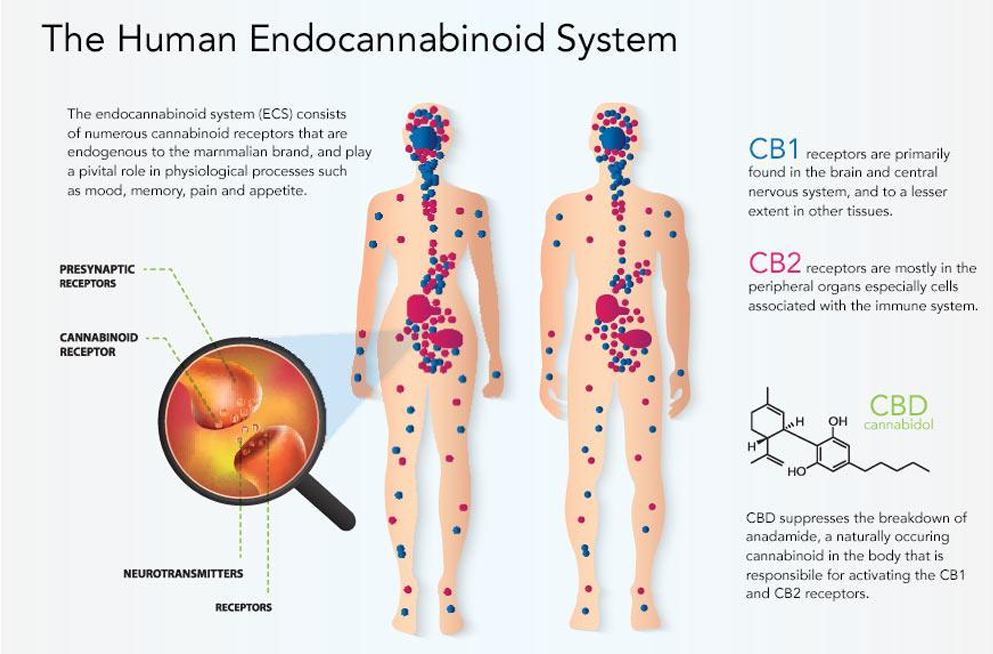
One is called anandamide.
as discovered and named in 1992 by the same Israeli team.
responsible for effects like increasing appetite, decreasing
nausea, decreasing pain sensitivity, and providing anti-inflammatory like pain relief activity.
Receptors:
CB1 – central nervous system.
CB2 – immune system.
Both are G-protein-coupled receptors.
interact with important cell signalling molecules known as guanine nucleotides (known by their abbreviations of GTP and GDP). These receptors live in cell membranes and help the cell to communicate with the outside world
Pharmacokinetics
Routes of Administration:
Smoking – rapid absorption, short duration.
when we inhale cannabis products as smoke the cannabinoids travel very rapidly from the lungs to the blood and to the brain—> higher level of THC in your blood plasma
Edibles – slower onset, longer duration.
When you're eating it, it's absorbed into your body through the intestines, it goes to the liver for the first pass metabolism, and this will give you lower levels of THC in your blood plasma
Absorption – varies by route.
Distribution – lipophilic, accumulates in fat.
Metabolism – primarily in liver via CYP enzymes.
Excretion – via urine and feces.
Effects on major organs
Brain
reduced cognitive and motivational abilities, verbal memory and attention
can be potentially reversed with abstinence from
cannabis
However, there's a lot of other variables like the amount you're using and your THC content and your age
There is a risk with psychosis and schizophrenia type illnesses
robust relationship between chronic cannabis use and increased risk of suicide.
Lungs
increases the risk of pneumonia, bronchiolitis, pneumothorax, emphysema, and pulmonary haemorrhage.
Heart
increased myocardial oxygen demand, decreased myocardial contractility.
Promotion of atrial and ventricular arrhythmia, stroke, arterial dissection, possibly leading to stroke, myocardial infarction and sudden cardiac death
Learning Outcome 5: Medicinal Cannabis – Benefits & Limitations
Therapeutic Uses (TGA Guidance)
Multiple Sclerosis – moderate evidence (mostly Bs, Cs, Ds).
Palliative Care – limited evidence (Cs, Ds).
Nausea/Vomiting – mixed evidence.
Chronic Non-Cancer Pain – moderate to low evidence.
Epilepsy (Paediatric/Young Adults) – low to very low evidence.
Best Performing Product
Nabiximols (Sativex) – THC-based spray.
Effective for MS spasticity and non-cancer pain.
Learning Outcome 6: Regulation of Medicinal Cannabis
TGA Scheduling Categories
Category | Description | Schedule |
|---|---|---|
1 | CBD ≥ 98% | Schedule 4 |
2 | CBD ≥ 60% and < 98% | Schedule 8 |
3 | CBD < 60% and ≥ 40% | Schedule 8 |
4 | THC 60–98% | Schedule 8 |
5 | THC > 98% | Schedule 8 |
Access Pathways
ARTG – few approved products.
Special Access Scheme (SAS):
SAS A – for seriously ill patients.
SAS B – requires TGA approval and clinical justification.
Authorised Prescriber Scheme – for ongoing access.
GP Perspectives
Knowledge Gaps – many GPs lack accurate information.
Stigma – affects both prescribers and non-prescribers.
Safety Concerns – adverse event monitoring is limited.
Access Inequality – rural patients face more barriers.
Cost Barriers – travel, consults, and prescriptions are expensive.
Prescription Complexity – lengthy process and limited evidence.