rad physics(halflife).docx
RADIOACTIVITY or RADIOACTIVE DECAY
•The process by which atoms spontaneously emit high energy particles or rays from their nucleus.
WHY ATOMS DECAY?
•Some nuclear arrangements are les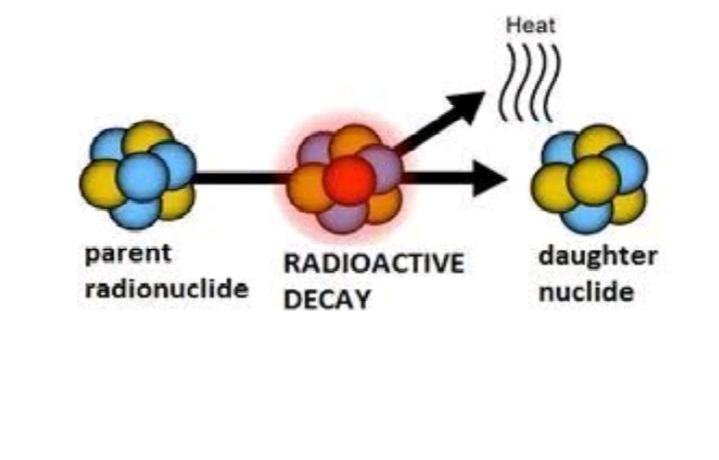 s stable than other.
•A radioactive isotope decays to form a more stable nucleus
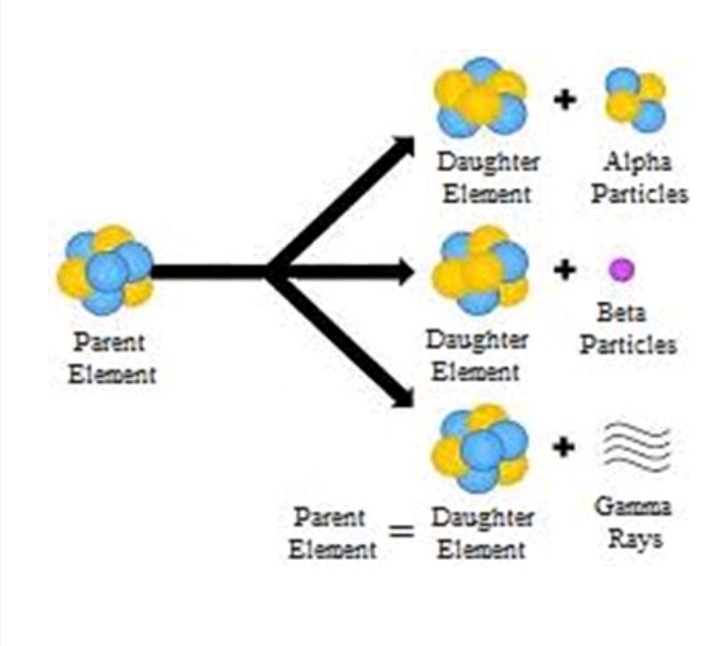
It decays by spitting out:•Mass (alpha particles)•Charge (beta particles)•Energy (gamma rays)
PARENT NUCLIDE: the original nuclide which undergoes radioactive decay.
•DAUGHTER NUCLIDE OR PROGENY: the more stable nuclide which results from radioactive decay.
NUCLIDE – any atomic species characterized by the number of protons and number of neutrons.•NOTATION: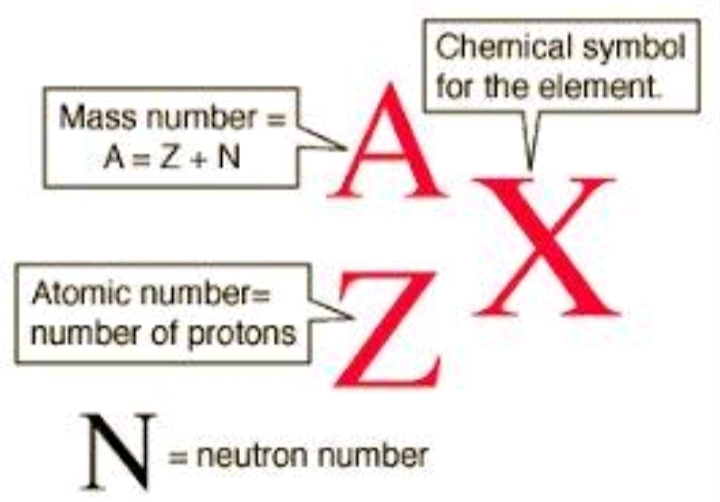
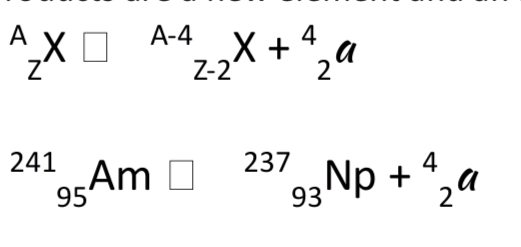
• Examples: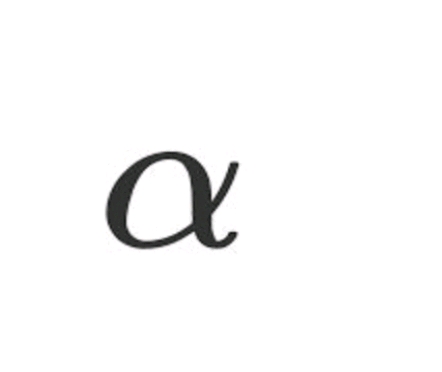
ALPHA PARTICLE, •A helium nucleus, ⁴He•With 2 protons and 2 neutrons tightly bound together•Heavy ( mass: 4 units or 7340 times than beta particle)• Charge: +2•Hugh energy ( energy range: 4 to 8 MeV)• Slow moving ( speed: 2 X 10⁷ m/s)• Emitted when the nucleus is too big• Least penetrating ( limited range <10cm in air; 60um in tissue)• Easily shielded (e.g. paper, skin)
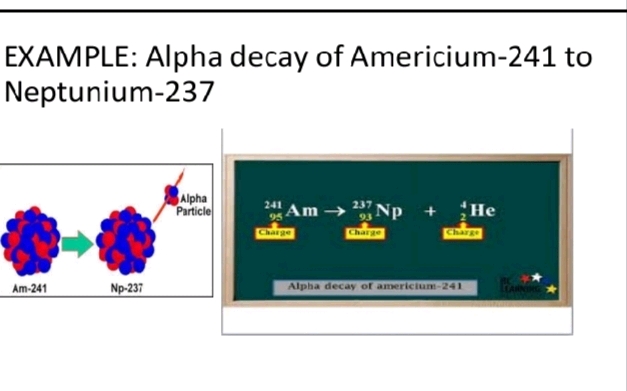
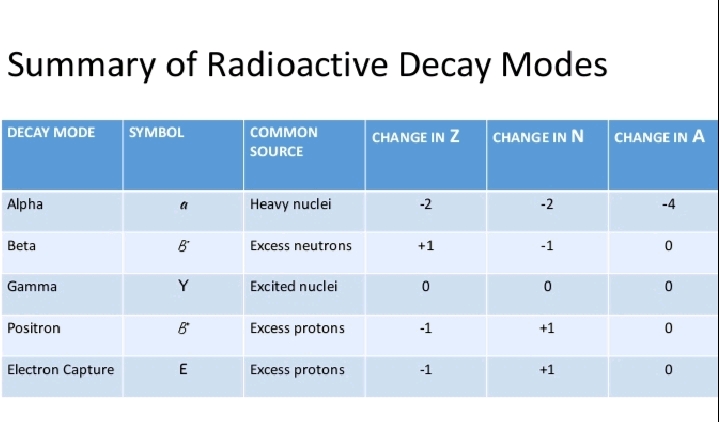
ALPHA DECAY a•Heavy nuclei more massive than Pb decay by this method•Atomic number Z decreases by 2•Atomic mass number A decreases by 4• Products are a new element and an alpha particle
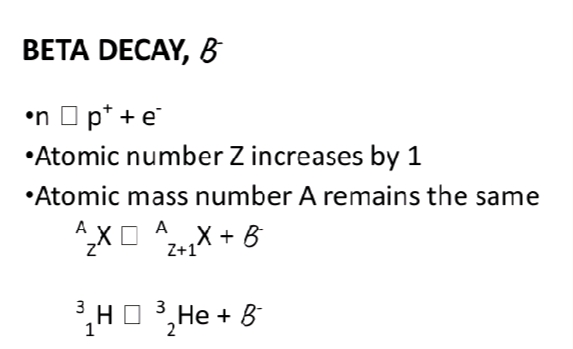
BETA PARTICLE, 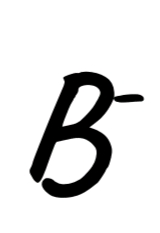 •A fast moving electron originating from the nucleus.•Comes from a neutron which has change into a proton and an electron.•Very light (mass : 0.0055 amu)•Charge: -1•Energy dependent on radionuclide- (energy range: several KeV to 5 MeV)
•Emitted when the nucleus has too many neutrons
•Range: approx: 12'/MeV in air; few mm in tissue•Shielding (Al and other light (Z<14) materials, plastics)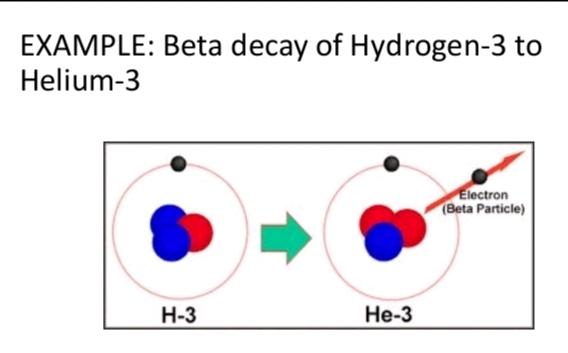
GAMMA RAY, Y
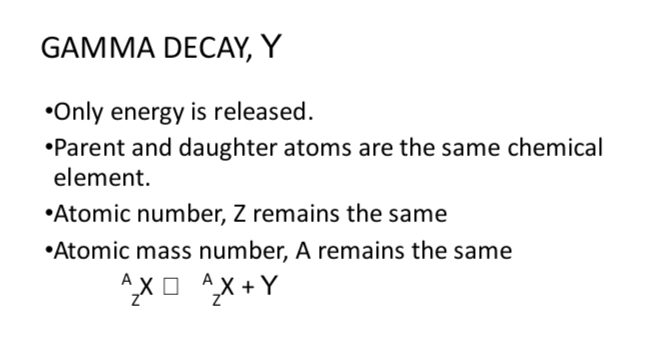
•Not a particle, but a burst of very high energy as electromagnetic radiations of very high frequency.•Results from the transition of nuclei from an excited state to their ground state.•No mass, zero charge•Has the highest energy of all EM radiations
Very dangerous (can do a lot of biological damage)
•Energies well-defined and characteristics of the emitting radionuclide (up to several MeV)
•Speed: speed of light•Long range: km in air; m in body•Shielding; large amount of lea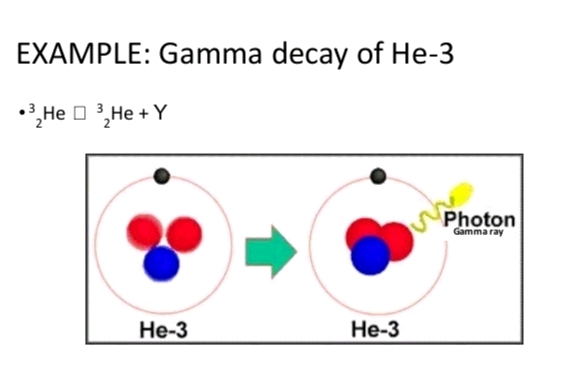 d or concrete
ELECTRON CAPTURE, E•Occurs in atoms with excess protons.• e- in the innermost shell (k-shell) is captured by a p+ in the nucleus to form a neutron.•Always accompanied by the emission of x-rays• X-rays emitted are characteristics of the progeny nuclide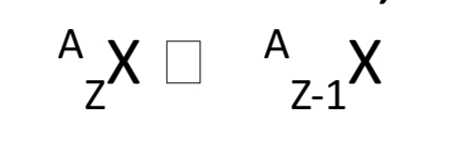 •Atomic number, Z reduces by 1•Atomic mass number, A remains
 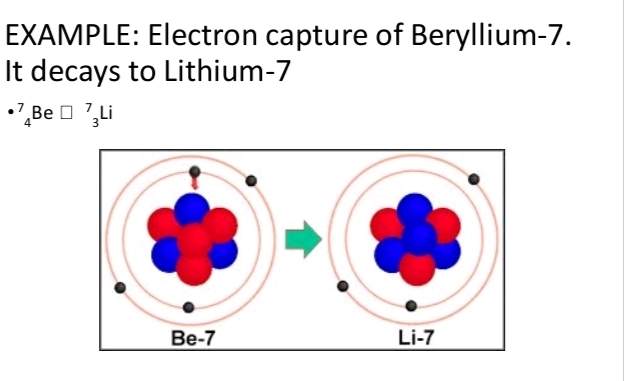 the same.
POSITRON,•Similar to e- but opposite charge.•Comes from a proton which has changed ito a neutron and a positron.
•The neutron stays in the nucleus stays in the nucleus and the positron i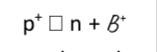 s ejected at high speed.•Charge: +1
POSITRON DECAY•Occurs in nuclei which have an excess protons.
•Atomic number, Z reduces by 1
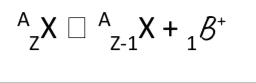 •Atomic mass number
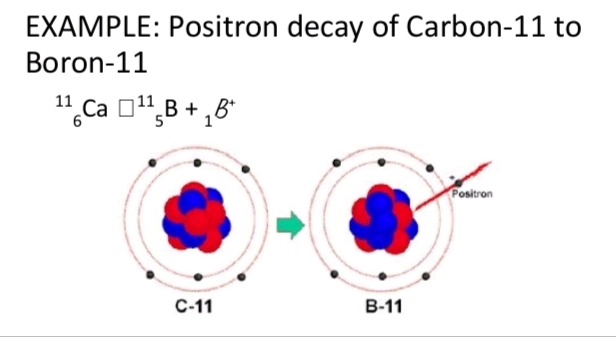 , A remains the same
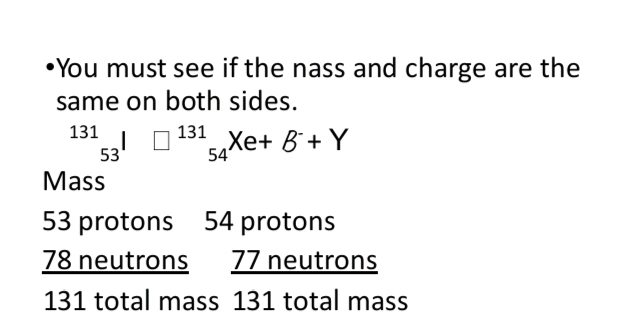
NUCLEAR EQUATION•Nuclear equations show how atoms decay.•Similar to chemical equation 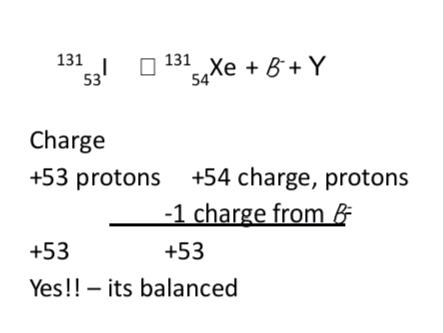
- must still balance 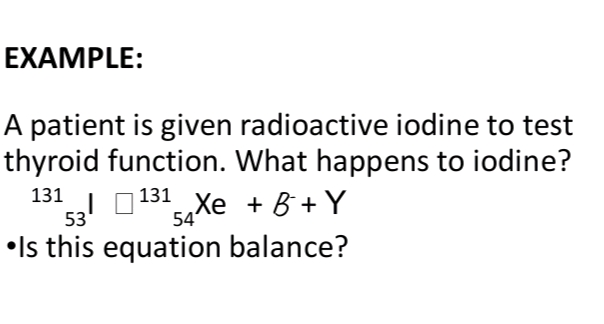 mass and charge.
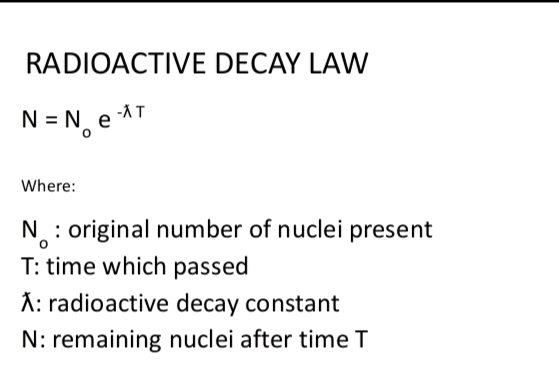
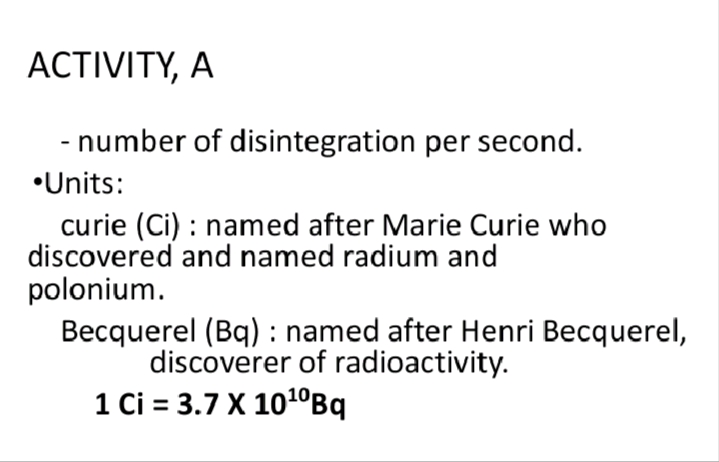
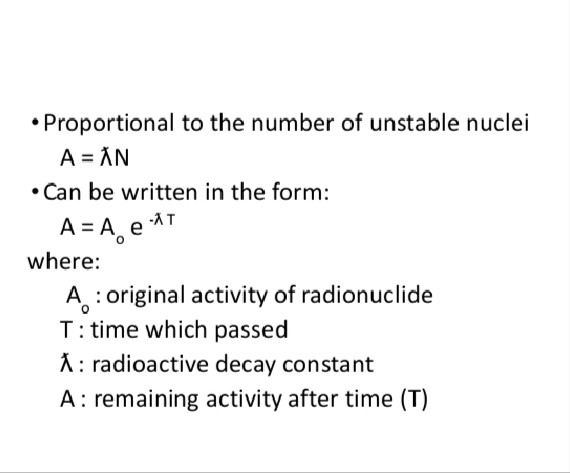
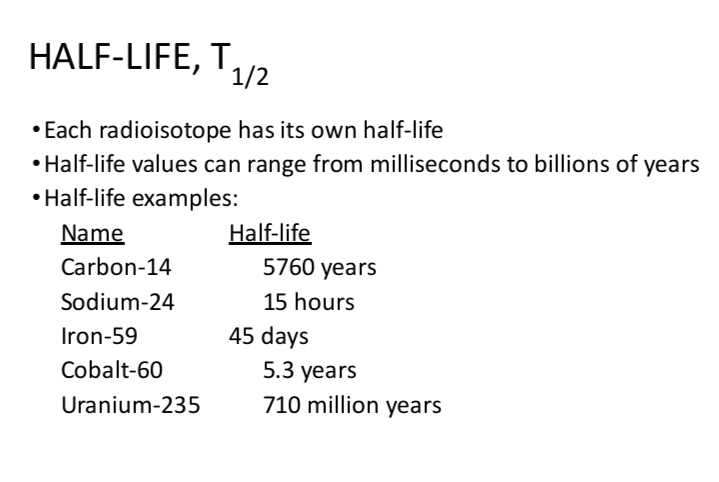
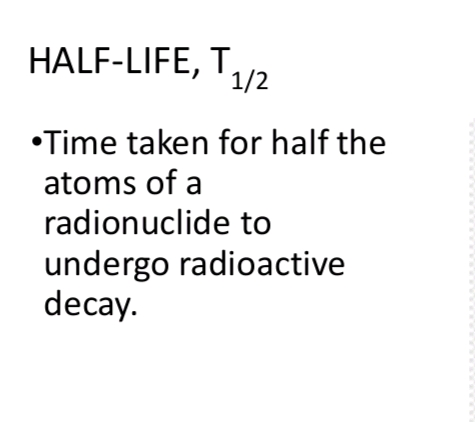
DECAY PARAMETERS: characteristics of specific radionuclide•ACTIVITY, A - number of disintegration of a nucleus occurring per second•DECAY CONSTANT, - the fractions of atoms which undergo decay per unit timeHALF-LIFE, T 1/2
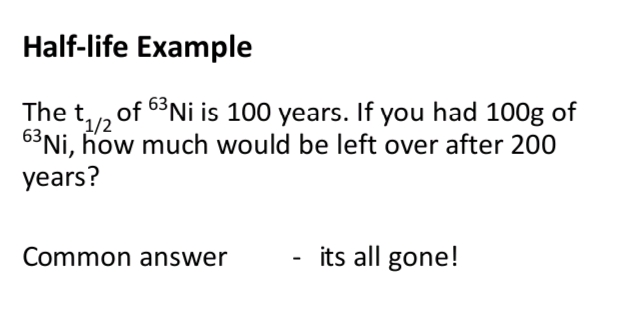
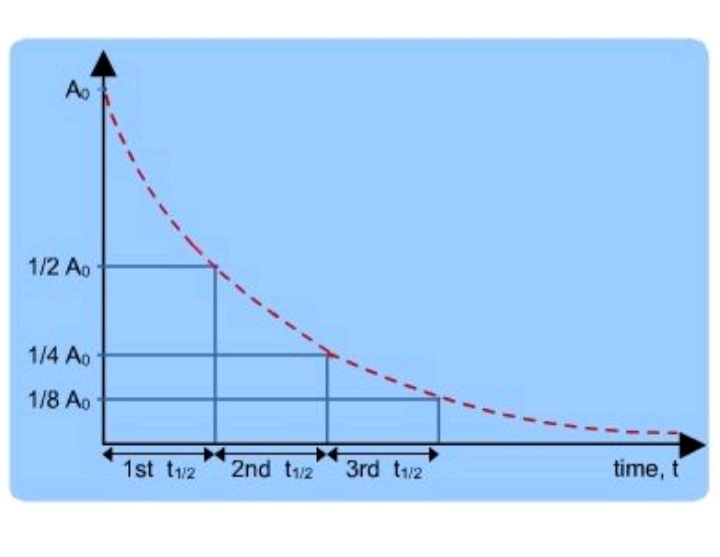
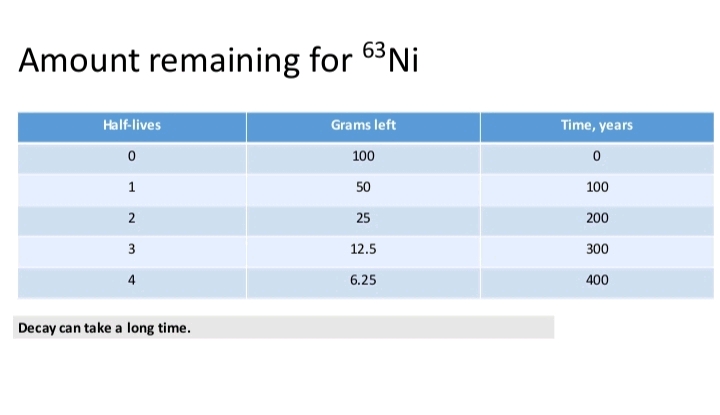
- time taken for half the atoms of a radionuclide to undergo radioactive decay.