Lesson 20
Introduction to animal development
development = zygote develops into a multicellular organisms
all complex and organized changes in development are driven by gene expression changes
major processes of development
cell division = makes more cell
cell differentiation = cells become specializes
pattern formation = determines where body parts develop
morphogenesis = actual construction of body plan
Cell division in early development
Early embryonic cell division ( cell cleavage )
rapid divisions
minimal cell growth between divisons
abbreviated cell cycle ( primarily S and M phases )
goes back and forth between S and M phases
so synthesis of DNA then mitotic division
original zygote cytoplasm into smaller volumes
Later development
cell cycle slows
G1 and G2 phases become established or lengthen
cells grow between divisions
Cell differentiation and stem cell s
makes specialized cells
as time goes by number of possible cell it can be gets smaller
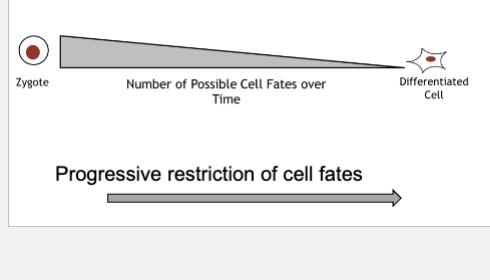
so cells as an adult are going to be fully differentiated and specialized
Stem cells = unspecialied cells with potential to become differnt cell types/divide continually
catorgrized by degree of potency ( number of potential fates of a stem cell )
being more potent means less differentiated
stem cell = possibilities of becoming different cell
Process of differentiation
driven by changes in gene expression
Gradual process occurring over multiple cell division
progressively restricts possible cell fates
→ cells with specific functions and characteristics
REMEMBER ALL CELLS IN AN ORGANISM HAVE THE SAME DNA SEQUENCE BUT DIFFERENT GENES ARE EXPRESSED IN DIFFERENT CELL TYPES
Stem cells = unspecialized cells with potential to become different cell types/divide continually
categorized by degree of potency ( number of potential fates of a stem cell )
Stem cell potency ( MEMORIZE ) ( ordered from early development to later development )
Totipotent : can form all embryonic and extra embryonic tissues
zygote, early blastomeres
Pluripotent : can form all embryonic tissues, but NOT extra embryonic tissues
embryonic stem cells
Multipotent : differentiate into few different cell types
adult stem cells
Unipotent : can only differentiate into on cell type
Spermatogonia ( differentiate into sperm ) F
Pattern formation
body plan of organism
HOX genes. = specify where structures should be in body regions along the head-to-tail axis
highly conserved,
over years still see them from fruit flies to higher mammals
universal blueprint for almost all aninmals
control head-to-tail development
regulate basic fundemental aspects of body plan development
because they do this, if there are many changes it has deleterious(harmful) effects
Key concept : specific sets of expressed genes create discrete segments that become differnt body parts in teh correct sptial location
HOX genes in evolution
highly conserved
small changes in when, whee, or how strongly HOX genes are expressed can alter body structure and contribute to the evolution of different body parts
ex: frnot legs on lobsters is pincers, but other legs are normal
mutation can be harmful,
duplication can get
Morphogensis
actuala generation of an organisms body form
processes:
cell grwoth
cell divison
cell migration
change sin cell shape
apopotosis
cell migration in morphogeneiss
cell msust migrate to difffernet location for proper body development
migration occurs throuugh the exracellular matrix ( ECM )

Cell shape in morphogensis
changes in cell shape are imp. for proper ufnctoin
differetn cel types can adopt differnet shapes:
adipocyes ( fat cells )
muscle cell
sneurons
form = function
imporper shape means improper function
Apoptosis in morphogensis
programmed cell death
activated by “cell death pathway” genes
contents broken down and ingested and recycled
used ot ‘sculpt’ appendages or reduce cell #’s

necrosis = cell death due to injury [ not controlled ]
cell membrane ruptures and cellular contents are related into extra cellular space
Nuclear reprogramming
resetting gene expression patterns in differentiated cells so they behave like stem cells
requires reversal of epigenetic modifications that maintain cell identity
demonstrates that cell differentiation can be reversed under certain conditions
Application of nucleur reprogramming
reproductive cloning = creates genetically identical copies of organisms
Potential uses
reintroduction of extinct species
replication of livestock
Therapeutic cloning
produces patient specific tissues for medical treatments
potential to provide rejection-free organs and tissues
treatment for autoimmune diseases
SCNT in therapeutic cloning [ ? ]
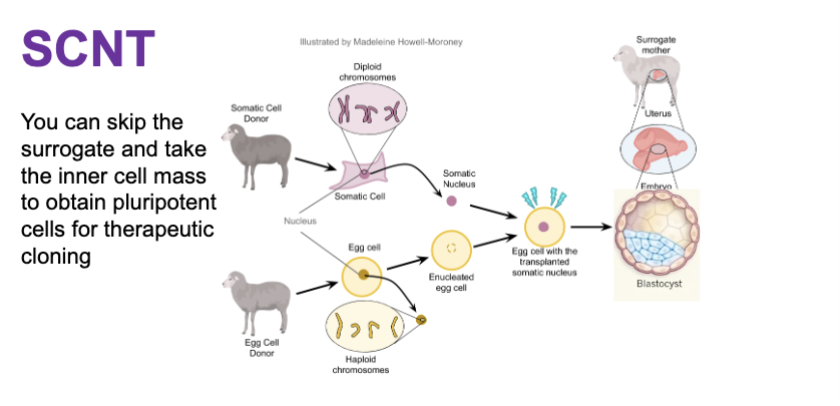
somatic cell nuclear transfer ( SCNT )
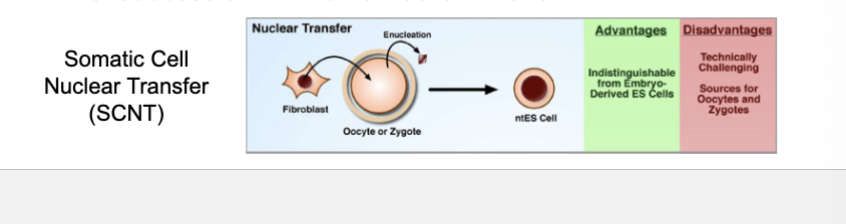
transferring the nucleus and adding it to the donor ( egg/Oocyte without nucleus now becomes egg cell with transplanted somatic nucleus) , this new cell ( blastocyte ) can be cultured to produce pluripotent cell which can be used to make the tissue that you want
take inner cell mass from blastocyst (early-stage, pre-implantation mammalian embryo that forms roughly 5 to 7 days after fertilization ) , grow in petri dish to obtain pluripotent stem cells
the inner cell mass cells can be then transferred to the injured tissues
first successful with human cells in 2013
Induced Pluripotent Stem Cell ( iPSC )
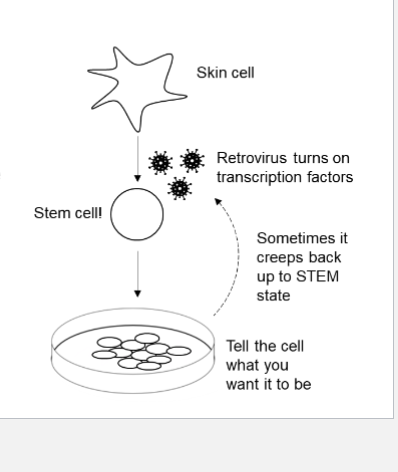
Start with somatic cell ( ex: skin fibroblast )
introduce transcription factors
reprogram gene expression to produce a pluripotent stem cell
use specific signals to direct differentiation into desired cells types kinds of tissues into the cultured stem cells
chemical signals, environmental signals could be used to develop differnt
Pros: ethically, no eggs involved, only ever get pluripotent stem cell so less chance of making new organism
