Circular Flow of Economic Activity
So far in the course, we've talked extensively about the role of producers and consumers in deciding how resources are used. We've also discussed how prices are set through the interaction of producers and consumers in the supply-and-demand price system. In today's lesson, we're going to look at how resources flow between producers and consumers to keep the wheels of the economy turning.
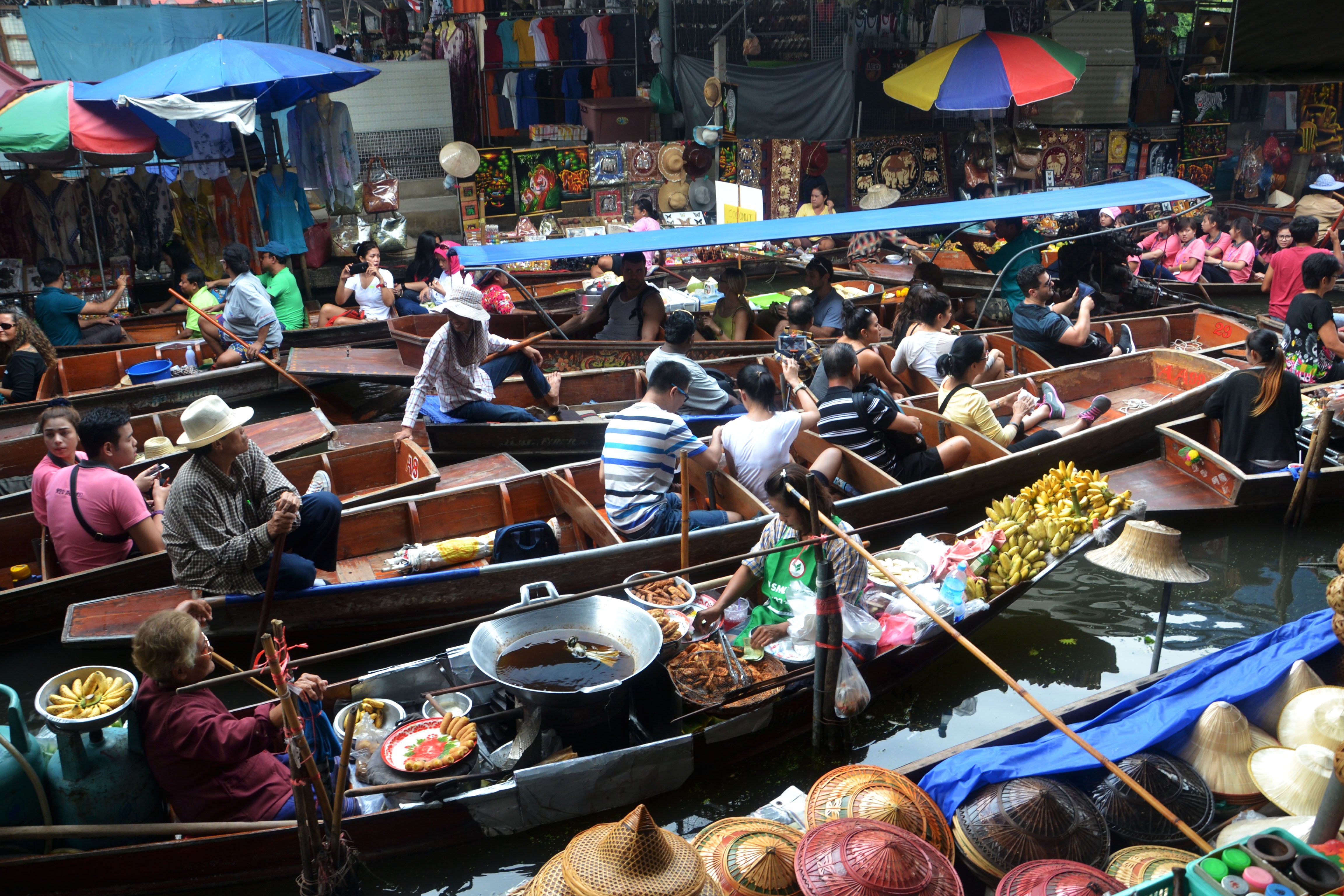
A nation's overall levels of employment, income, and prices are determined by the spending and production decisions made by all households, businesses, and governments in the economy. One person's spending is another person's income. When consumers make purchases, goods and services are transferred from businesses to households in exchange for money. That money is then used by the businesses to pay for the resources they need for production as well as to pay taxes to the government. Many of the resources that businesses use for production come from the very households that buy their goods. Households sell their resources (such as their labor) to businesses in exchange for money, which they then use to buy products from businesses.
Circular Flow Model
The circular flow model illustrates how resources, goods and services, and money flow between individuals, businesses, and governments in a market economy. Before we look at the model, there are a couple of key definitions to learn.
First, there is the factor market, the market in which factors of production are bought and sold. Remember that there are many different types of markets, such as the goods and services market or the stock market. The factor market involves the purchase and sale of the four factors of production—natural resources, human resources, capital resources, and entrepreneurship. (Note that a particular item can be a part of multiple "markets." For example, iron is both a good and a natural resource. Therefore, iron can be considered part of the goods and services market as well as part of the factor market.)
In a market economy, the factors of production are owned by households. A household is a social unit of individuals, usually a family, living in the same dwelling.
All households have access to at least one factor of production. As an individual, you own your own labor (human resources). You get to choose which business you want to sell your labor to. You might also have entrepreneurial skills you could sell to businesses. The household could also own natural or capital resources that it can sell.
Individuals in households can take these resources to the factor market and sell them. They may also choose not to sell them. Individuals usually sell their labor; but sometimes, often when they retire, people choose not to sell their labor. Instead, they may work for free as a volunteer or devote the majority of their time to leisure.
Businesses buy (or hire) the resources they need to produce goods and services. They buy these resources from households, usually in the form of wages.
Households can spend or save the money they receive in return for the sale of their resources (often their own labor, or human resources). Often, they spend the money to buy goods and services from producers themselves or retailers that specialize in selling the goods made by producers.
Firms that sell goods and services then take the money from those sales to order more products from the businesses that produce those goods and services. Then, those businesses buy more resources from households to produce more products, and the cycle starts over again. Through this process, money continually flows through the economy.
Circular Flow Presentation
View the presentation below for a visual representation of the circular flow model. After beginning the presentation, click the tabs to view a step-by-step demonstration of the model. (Note: There is no audio in the presentation.)
Governments and Financial Institutions

Governments can be added to the flow as they buy goods, services, and resources in order to produce certain goods and services of their own. Taxes on income and sales provide governments with funds to pay for government-provided goods and services, such as roads or Social Security.
Financial institutions can also be added to the model to show how savings find their way back into the economy through borrowing and investment. When you put money in a savings account, the money doesn't just sit there. The bank uses your funds to give out loans to other households, which those households use to buy products from businesses. The bank also gives out loans to businesses, which use those funds to buy resources from households. In this way, even money set aside in bank accounts is flowing through the economy.
Review of Key Terms
circular flow model: illustrates how resources, goods and services, and money flow between individuals, businesses, and governments in a market economy
factor market: the market in which factors of production are bought and sold
household: a social unit of individuals living in the same dwelling
The circular flow model shows how resources and money pass back and forth between businesses and households. Businesses and households can each act as producers and consumers depending on which part of the model you're looking at. These interactions form the foundation of market economies and the supply-and-demand price system.